Frying Temperatures
Tempura Oil Temperature Stages
Also: tempura frying temperature, tempura oil heat, kakiage oil temperature
Tempura fries at 160–170°C for vegetables and 170–180°C for seafood, relying on an extreme temperature differential between ice-cold batter and hot oil to produce its signature gossamer-thin, shatteringly crisp coating.
Tempura is a Japanese frying technique in which lightly battered ingredients are cooked in hot oil at carefully controlled, ingredient-specific temperatures. The cold-batter-meets-hot-oil differential is the technique's defining physical event: the batter must be mixed minimally with ice water to remain both cold and lumpy, then immersed into oil hot enough to immediately flash its moisture to steam. This creates a uniquely airy, transparent crust rather than the thick, golden coatings of Western-style batters. Vegetable tempura is fried at the lower end (160–170°C / 320–340°F); seafood at the higher end (170–180°C / 340–355°F).
In photos


What happens
Tempura batter is made with ice-cold water or sparkling water and barely stirred, leaving flour pockets undeveloped (minimal gluten formation) and batter temperature close to 0–4°C. When this cold batter enters oil at 165–180°C, the thermal shock causes immediate, explosive steam release, creating hundreds of tiny air pockets in the batter layer before it sets. The low gluten content means the crust sets delicately rather than forming a chewy shell. At 160°C (vegetables): heat penetrates gently — ideal for roots and dense vegetables that need 3–4 minutes to cook through. At 170–180°C (seafood): shrimp and fish need only 1.5–2.5 minutes and their delicate proteins must not be overcooked. The crust color should remain pale gold to ivory, not deep brown — deep browning signals too-high temperature or too-long frying.
What to look for
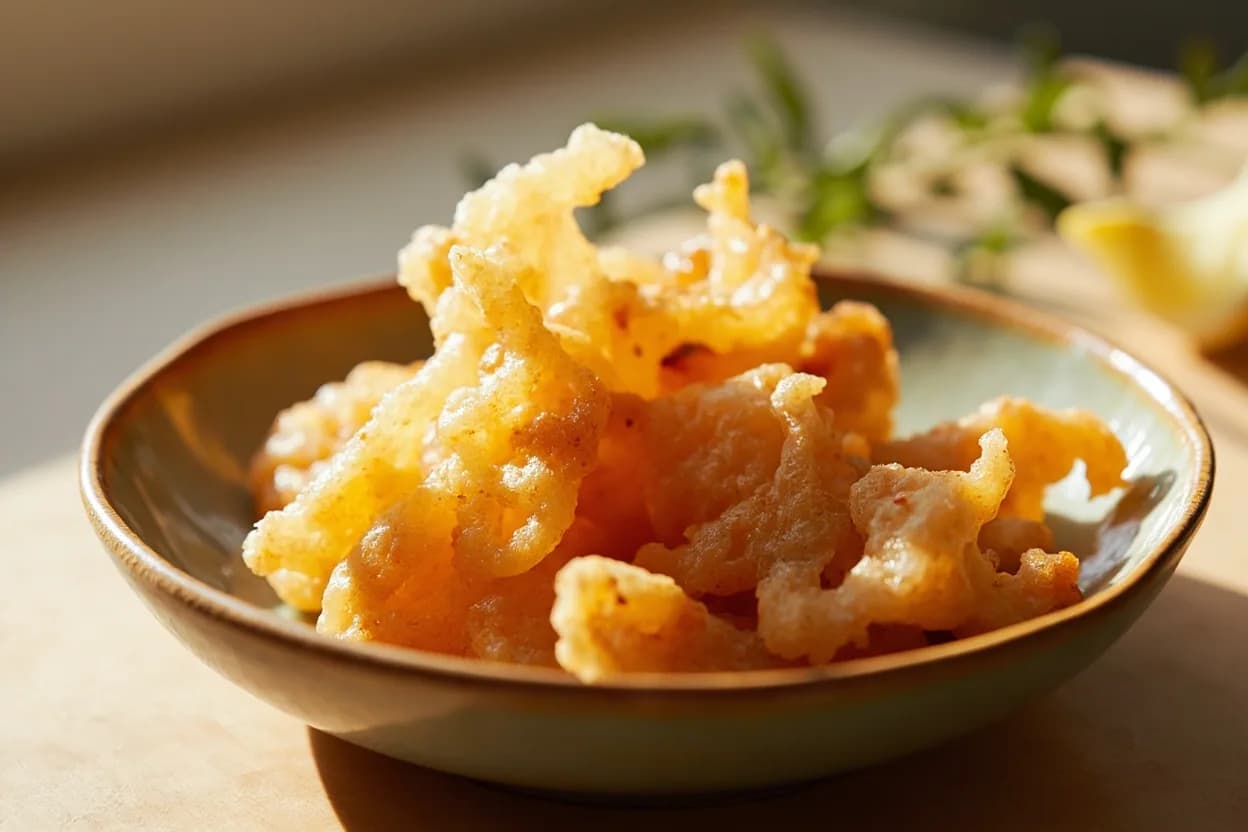
- Correct temperature: batter sets almost instantly into a pale, irregular, lacy crust with fine air pockets visible
- Too cool: batter droops and sinks, absorbs oil, turns greasy and thick before crisping
- Too hot: batter browns too quickly before ingredients cook through; crust is dense rather than lacy
- Finished tempura is ivory to pale gold, not deep amber; the crust crackles audibly when broken
- Properly fried tempura is notably lighter than it looks — oil absorption is minimal due to the steam barrier
How to check
- Use a precision deep-fry thermometer; maintain oil temperature strictly and adjust heat continuously to compensate for ingredient additions
- Batter drop test: drip a small amount of batter into the oil — it should sink halfway, then float immediately back up
- If batter drops sink to the bottom and stay, oil is too cool; if they never sink and spread on the surface, oil is too hot
- Use a candy or digital probe thermometer and monitor continuously; do not crowd the pan
Food safety
The science behind it
Tempura batter deliberately minimizes gluten by using cold water, low-protein flour, and minimal mixing — the opposite of a bread dough
- Steam Barrier Effect
The mechanism that prevents oil absorption and creates lightness in all fried coatings; maximized in tempura by the cold-batter differential
Tempura is kept deliberately pale — below the full Maillard browning range — to preserve the ingredient's flavor and the batter's delicacy
- Kakiage
Mixed vegetable tempura fritter variant using the same temperature range but with ingredients bound together in a loose batter
- Agemono
Japanese category of fried foods; tempura (tenpura) is its most internationally recognized subcategory
Appears in
References
- 1.Japanese Farm Food — Nancy Singleton Hachisu (Andrews McMeel, 2012)
- 2.The Japanese Kitchen — Hiroko Shimbo (Harvard Common Press, 2000)
- 3.Japan: The Cookbook — Nancy Singleton Hachisu (Phaidon, 2018)
- 4.On Food and Cooking — Harold McGee (Scribner, revised 2004)
Confidence: high
Notes
Cold batter: the non-negotiable foundation
The batter for tempura must be made immediately before frying and kept over ice during service. Using room-temperature or warm water activates gluten development and raises the batter temperature, destroying the thermal differential that makes the technique work. Many Japanese cooks use sparkling water because the dissolved CO₂ contributes additional aeration as it escapes. The batter should still be visibly lumpy — a smooth batter is overworked and will produce a thick, heavy crust.
Oil choice and clarity
Traditional tempura restaurants in Japan use sesame oil blended with neutral vegetable oil — typically 20–30% sesame to 70–80% vegetable — for a subtle, nutty background flavor. Modern approaches use 100% neutral oil (refined canola or sunflower) to allow the ingredient to dominate. Oil clarity degrades quickly during tempura frying as batter particles brown and accumulate; skimming the oil surface between batches with a fine-mesh strainer is essential to prevent off-flavors and early smoke point drop.