Fermentation & Culturing Temperatures
Tempeh Incubation Temperature
Also: tempeh fermentation temperature, Rhizopus incubation, tempeh culture temp
30–32°C for 24–48 hours — the precise window in which Rhizopus oligosporus mycelium binds soybeans into firm, sliceable tempeh without overheating itself to death.
Tempeh incubation temperature is the environmental heat maintained around inoculated, drained soybeans (or other legumes and grains) during the 24–48 hour mold cultivation period. The mold Rhizopus oligosporus (and to a lesser extent R. oryzae) grows aggressively in this range, sending white cottony hyphae through and around the beans, binding them into a firm, cohesive cake. The critical complication is that Rhizopus fermentation is exothermic: the mold generates its own metabolic heat as it grows, raising the internal temperature of a thick slab by 5–10°C above ambient. If ambient temperature is too high or the tempeh block is too thick, the centre can reach 40°C or above — temperatures that kill Rhizopus, cause ammonia off-flavors from uncontrolled bacterial growth, and turn the mycelium grey or black. The incubation environment must therefore be set 2–4°C below the organism's true optimum to account for self-generated heat.
In photos

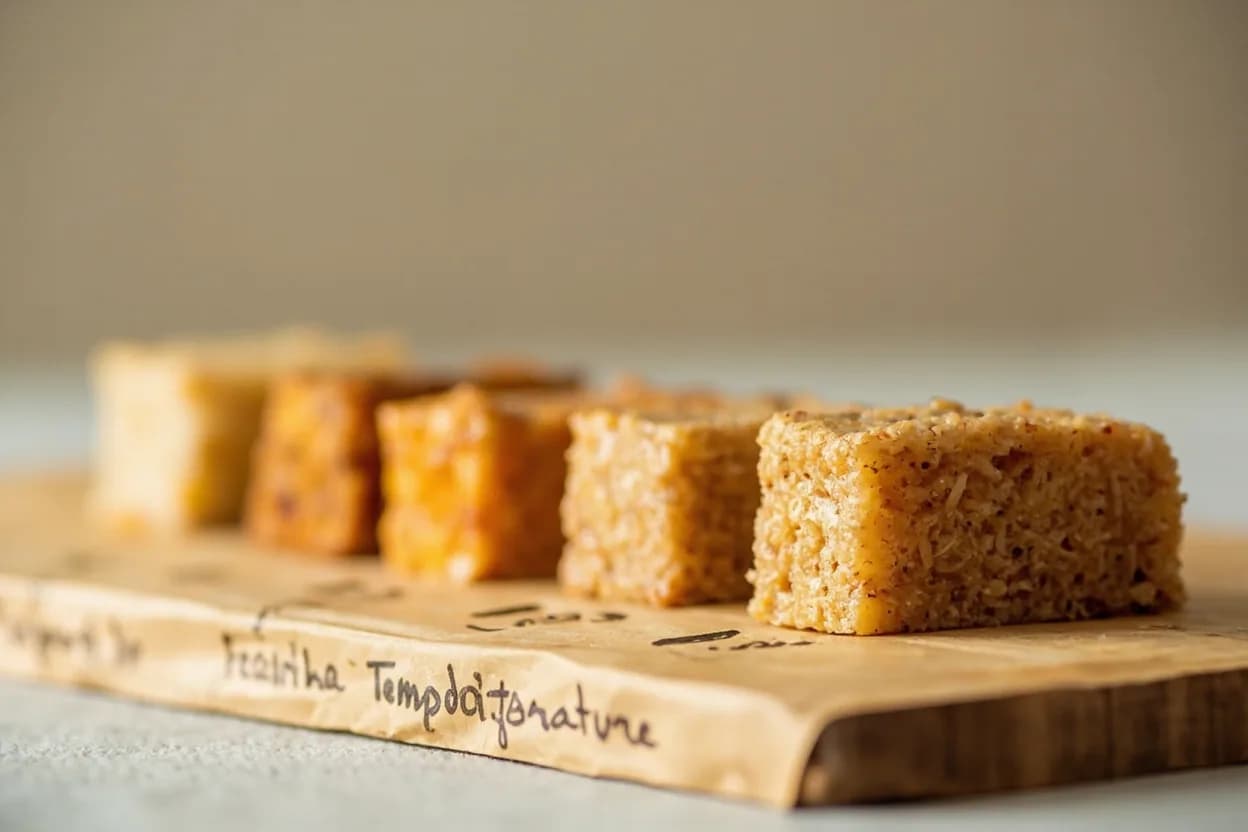

What happens
R. oligosporus spores germinate within 4–8 hours at 30–32°C. Hyphae penetrate the bean matrix, secreting lipases, proteases (notably acid proteases), and phytase. Proteolysis partially breaks down storage proteins, increasing digestibility and producing umami free amino acids. Phytase degrades phytic acid, improving mineral bioavailability. Lipase activity releases free fatty acids that contribute a mild nutty flavor. As hyphae knit into a dense mycelial network, the beans are physically bound into the tempeh cake. Between 16–24 hours, the mycelium whitens the surface uniformly; at 24–48 hours the cake should be fully firm with dense white coverage. Black sporulation indicates over-incubation — the mold has begun to reproduce sexually, which is harmless but signals the optimum window has passed. Ammonia off-odors indicate bacterial contamination enabled by excessive heat.
What to look for
- Dense white cottony mycelium visible on all surfaces at 24–36 hours — the key sign of success
- Cake lifts cleanly as a solid slab and holds its shape when sliced
- Mild, earthy, nutty aroma with a clean mushroom-like background note
- Slight warmth to the touch — the block self-heats several degrees above ambient
- Any grey or black patches indicate advancing sporulation (over-incubated but usually still edible)
- Ammonia smell signals problematic bacterial contamination — discard
How to check
- Ambient thermometer or probe inside the incubation chamber to verify 30–32°C before and during the first 12 hours
- Probe thermometer inserted into the centre of the tempeh block at the 20-hour mark — target under 36°C; if above, open the chamber briefly or increase airflow
- Visual inspection through the bag or perforations at 24 hours: uniform white mycelium = on track; bare patches = too cold or insufficient aeration
- Smell test: fresh earthy mushroom = good; ammonia or sour off-odor = temperature control failed
Food safety
The science behind it
Parallel concept: a different organism (bacteria vs. mold) but the same principle of narrow thermal optimum and consequence of temperature deviation.
- Miso Fermentation
Koji mold (Aspergillus oryzae) used in miso is cultivated at 25–30°C — slightly cooler than Rhizopus; both are Asian mold-based fermentations.
Aspergillus oryzae prefers 28–30°C for rice/grain koji; lower than Rhizopus but similar exothermic self-heating management challenge.
- Phytic Acid Reduction
Rhizopus phytase activity during tempeh fermentation reduces anti-nutritional phytic acid by 50–75%, a nutritional benefit of the process.
Appears in
References
- 1.The Art of Fermentation — Sandor Ellix Katz (Chelsea Green, 2012)
- 2.Tempe: A Nutritious and Wholesome Food — W. Shurtleff & A. Aoyagi (Soyinfo Center, 1979 / updated)
- 3.On Food and Cooking — Harold McGee (Scribner, 2004)
- 4.Handbook of Indigenous Fermented Foods — K. H. Steinkraus, ed. (Marcel Dekker, 1995)
Confidence: high
Notes
Managing exothermic self-heating
Between 20–36 hours, Rhizopus enters its most aggressive growth phase and generates significant metabolic heat. Traditional Javanese producers wrap tempeh in banana leaves — which breathe and allow evaporative cooling — rather than sealed plastic. Home fermenters using zip-lock bags should poke holes at 1 cm intervals and not stack bags. A styrofoam cooler with a 40-watt incandescent bulb and a small gap for airflow can hold 30–32°C reliably; a proofing drawer or Instant Pot yogurt mode works equally well.
Grain and black-bean tempeh
Soybeans are traditional but Rhizopus colonizes many substrates: chickpeas, black beans, lentils, barley, and oat groats all ferment successfully at the same temperature range. Harder grains need longer pre-cooking. Multi-grain tempeh may incubate slightly faster due to greater starch availability for the mold.