Cheese & Dairy Doneness
Tofu Coagulation & Setting Temperature
Also: soy milk coagulation temperature, douhua setting temperature, nigari tofu temperature
At 70–80°C, coagulants added to hot soy milk bind denatured soy proteins into curds — the hotter the soy milk and the more coagulant used, the firmer the resulting tofu.
Tofu is made by heating soy milk to near boiling, then adding a coagulant — traditionally nigari (bittern; mostly magnesium chloride) in Japan and Korea, or gypsum (calcium sulfate) in Chinese and Southeast Asian traditions — at 70–80°C (158–176°F) to precipitate soy protein (primarily glycinin and beta-conglycinin) into curds. Silken tofu is coagulated gently at the lower end of this range with gypsum and never pressed, yielding a custard-like gel; firm and extra-firm tofu are coagulated at higher temperatures with more nigari, then cut and pressed to expel whey. The coagulant, temperature, soy protein concentration, and pressure all interact to determine the final product's texture, water content, and flavor.
In photos
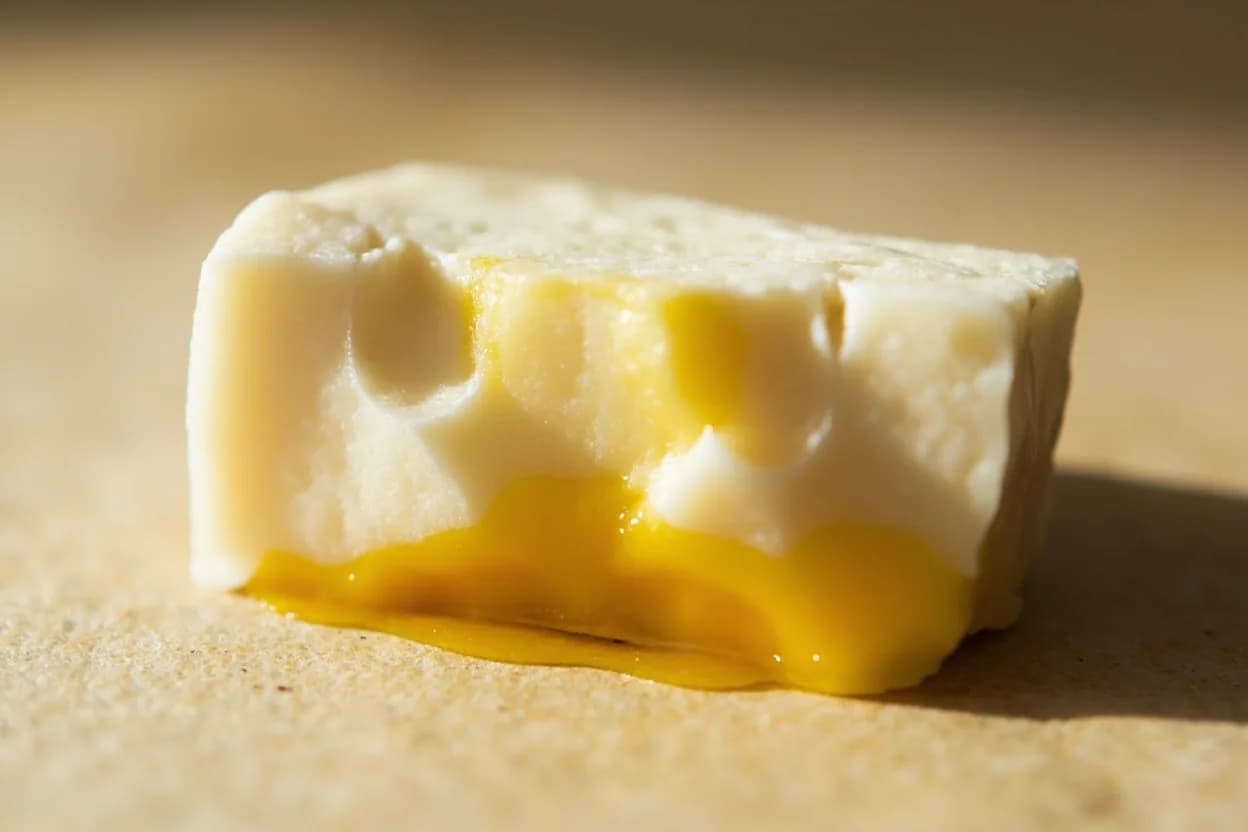
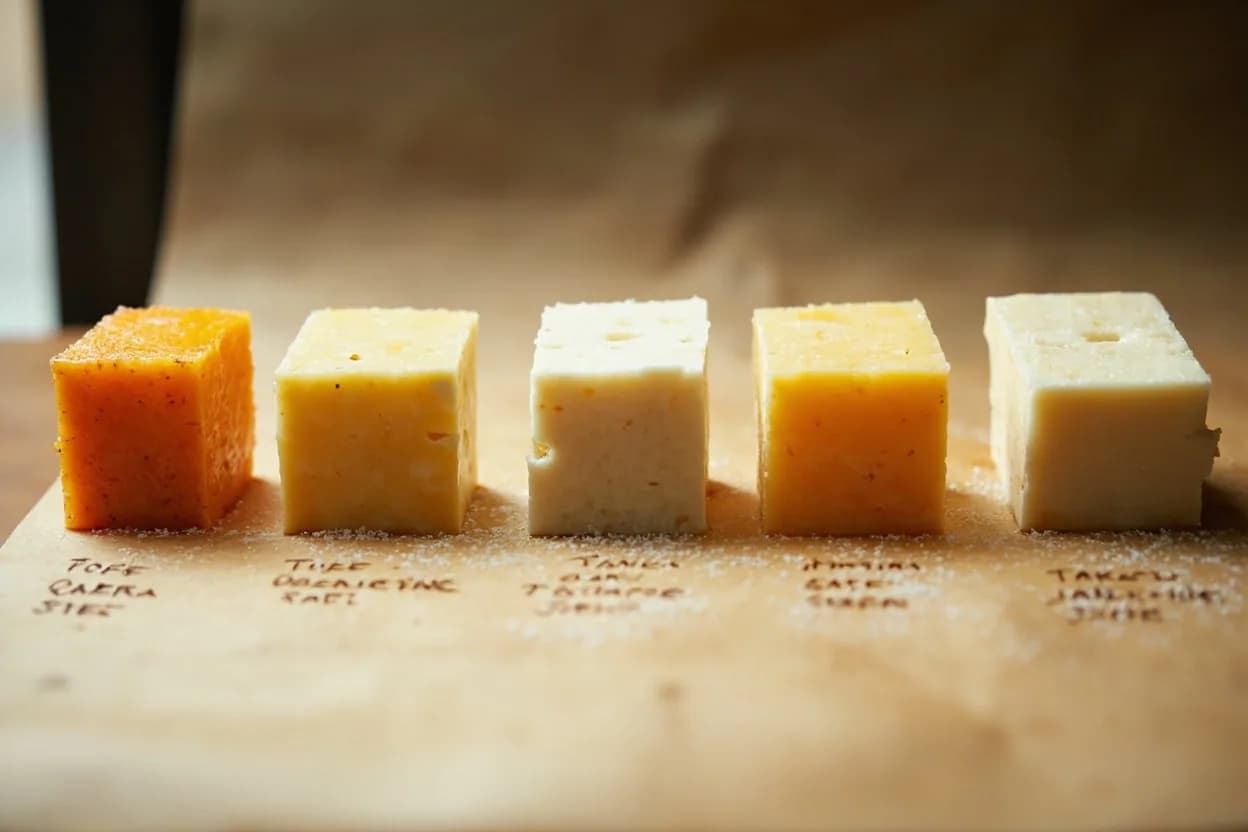
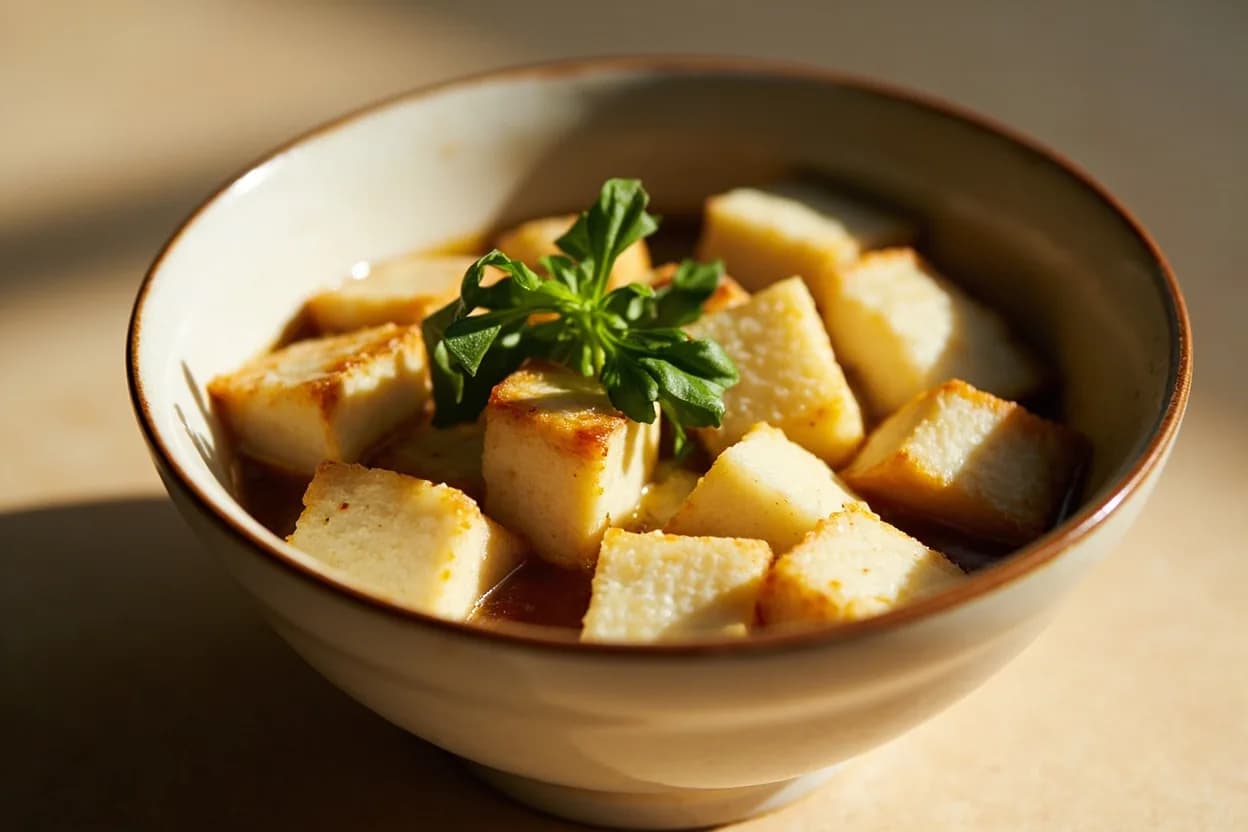
What happens
Soy milk must first be heated to 95–98°C for 5–10 minutes to fully denature the native globular proteins (glycinin and beta-conglycinin) and inactivate trypsin inhibitors. It is then cooled to 70–80°C before coagulant addition. At this temperature window, multivalent cations in nigari (Mg²⁺) or gypsum (Ca²⁺) bridge the exposed hydrophobic surfaces of denatured soy proteins, cross-linking them into a continuous three-dimensional network. Magnesium chloride reacts quickly and produces a coarser, more reactive curd with a slightly bitter mineral note favored in Japanese agedashi and silken preparations. Calcium sulfate is sparingly soluble and releases ions slowly, producing a smoother, finer-grained gel ideal for soft and silken tofu. Below 70°C, cross-linking is slow and incomplete; above 85°C at the point of coagulant addition, curd forms too rapidly and unevenly.
What to look for
- Soy milk develops a visible skim at the surface as it approaches 95°C — skim before cooling to prevent a papery film in the finished tofu
- After coagulant is gently stirred in, the liquid transitions from opaque white to a more translucent yellow-green within 3–5 minutes as protein binds
- Firm white curds separate from pale yellowish whey (okara water); when whey runs clear and yellow the coagulation is complete
- Silken tofu coagulated in individual molds sets into a trembling, mirror-smooth gel — no visible curd separation
How to check
- Use a probe thermometer to confirm soy milk has cooled to 70–80°C before adding coagulant; addition above 85°C produces uneven, lumpy curd
- Add coagulant in a single, brief, gentle stir and then stop agitating — continued stirring after coagulation begins breaks the forming gel
- Cut the set curd gently with a long knife and observe the whey: clean, pale yellow separation indicates proper coagulation; milky whey means under-coagulation or under-temperature
The science behind it
- Nigari (magnesium chloride)
Fast-reacting, strongly mineral coagulant; preferred for Japanese momen and silken tofu and for its clean, beany flavor
- Gypsum (calcium sulfate)
Slow-releasing coagulant producing finer, smoother curd; adds bioavailable calcium and is the dominant coagulant in Chinese and Southeast Asian tofu traditions
- Glucono-delta-lactone (GDL)
Acid coagulant that hydrolyzes slowly to lower pH; used for ultra-smooth silken tofu in sealed containers — all-acid coagulation with no ionic bridging
- Okara
The fibrous soy pulp removed during soy milk pressing; not present in the tofu but a by-product of the process
- Douhua / tofu pudding
Very soft tofu coagulated at the lower end of the range (70–72°C) with minimal gypsum and served immediately, without pressing
Appears in
References
- 1.On Food and Cooking — Harold McGee (revised ed., 2004)
- 2.Tofu & Soymilk Production — William Shurtleff & Akiko Aoyagi (3rd ed., 2000)
- 3.Food Chemistry — H.-D. Belitz, W. Grosch & P. Schieberle (4th ed., 2009)
Confidence: high
Notes
Firm vs. silken: a product of coagulant dose and pressing, not just temperature
The same 75°C coagulation temperature can yield silken or firm tofu depending on coagulant concentration and post-coagulation handling. Silken tofu uses a small dose of gypsum or GDL and is never cut or pressed — whey stays incorporated in the gel matrix. Firm tofu uses more coagulant, is cut after setting, and is pressed under weighted molds for 20–60 minutes to expel whey; extra-firm is pressed longer and/or at higher weight.
Regional flavor differences
Japanese tofu tradition — especially in Kyoto (kyo-tofu) — favors high soy-to-water ratios and nigari coagulation, producing tofu with pronounced beany sweetness and a just-firm curd. Cantonese and Sichuan traditions use gypsum, a higher water ratio, and a softer set, calibrated for braising and stewing applications where the tofu must absorb sauce without disintegrating.