Cured Meats & Umami Proteins
Lap Cheong (Chinese Sausage)
Also: 腊肠, lap cheung, lop cheung, Chinese dried sausage, Cantonese sausage
Sweet, fatty, and deeply savory — the dried Cantonese sausage that perfumes everything it cooks alongside.
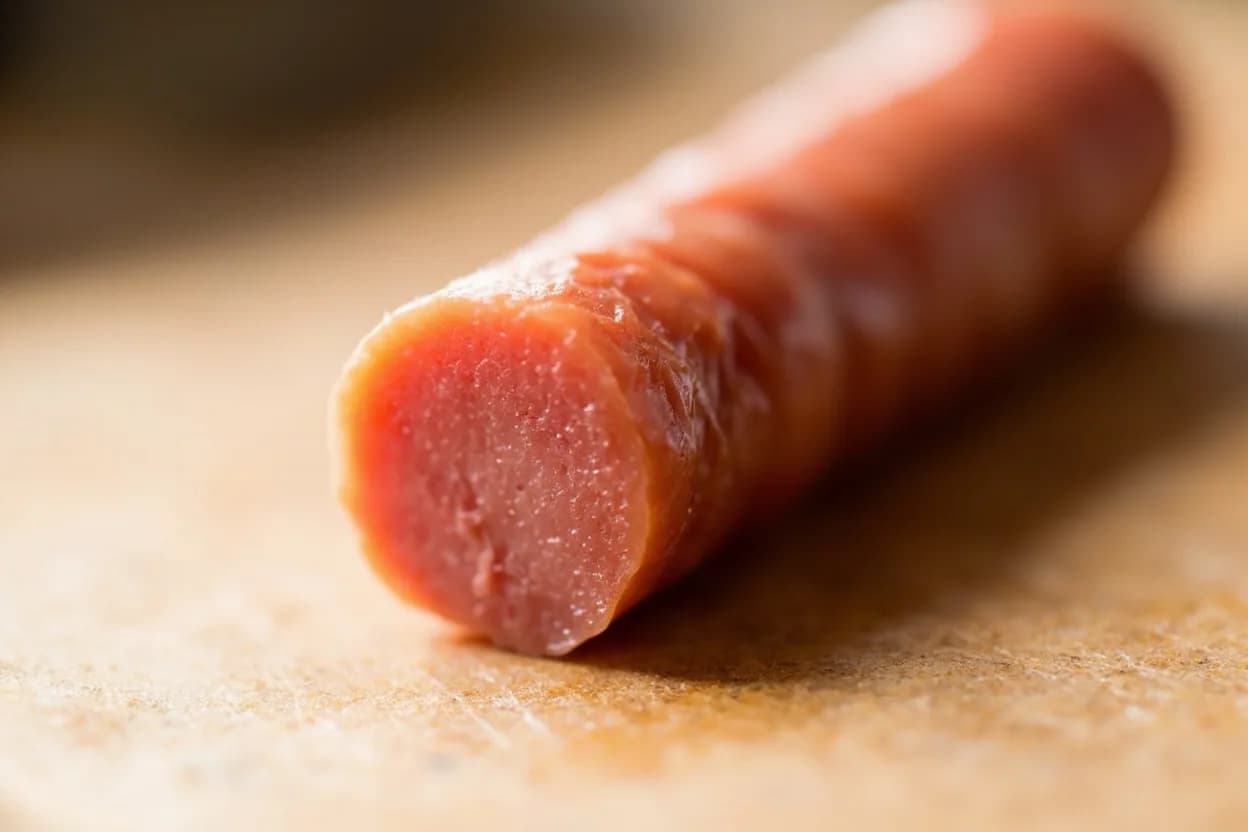
Lap cheong (腊肠, literally 'wax sausage') is a Cantonese dried cured pork sausage made from pork meat and fat, seasoned with soy sauce, rose wine (rose rice wine or Mei Gui Lu Jiu), five-spice, sugar, and salt. The mixture is packed into natural casings and hung to air-dry for several days, producing a firm, dense sausage with a high fat-to-meat ratio, a deep reddish-brown color, and an intensely sweet-savory-fatty flavor. The rose wine is the defining aromatic note — a faintly floral, slightly fermented fragrance that blooms during steaming or frying. Lap cheong is always cooked before eating; it is most commonly steamed, stir-fried, or cooked on top of rice as it steams in a clay pot. Its rendered fat is an ingredient as much as the sausage itself.
In photos
Flavour profile
Classic pairings
- steamed white rice (rice cooker method)Cantonese Chinese
The most iconic preparation: lap cheong sliced on top of uncooked rice, cooked together so the sausage fat and juices drip down and perfume every grain — the single most common way the sausage is eaten across southern China.
- clay pot rice (boh jai fan)Cantonese Chinese
Lap cheong layered with dark soy-marinated chicken, salted fish, or preserved vegetables in a clay pot, finished over high heat to create a crispy rice crust and a perfumed interior — the canonical Cantonese winter dish.
- fried riceCantonese Chinese
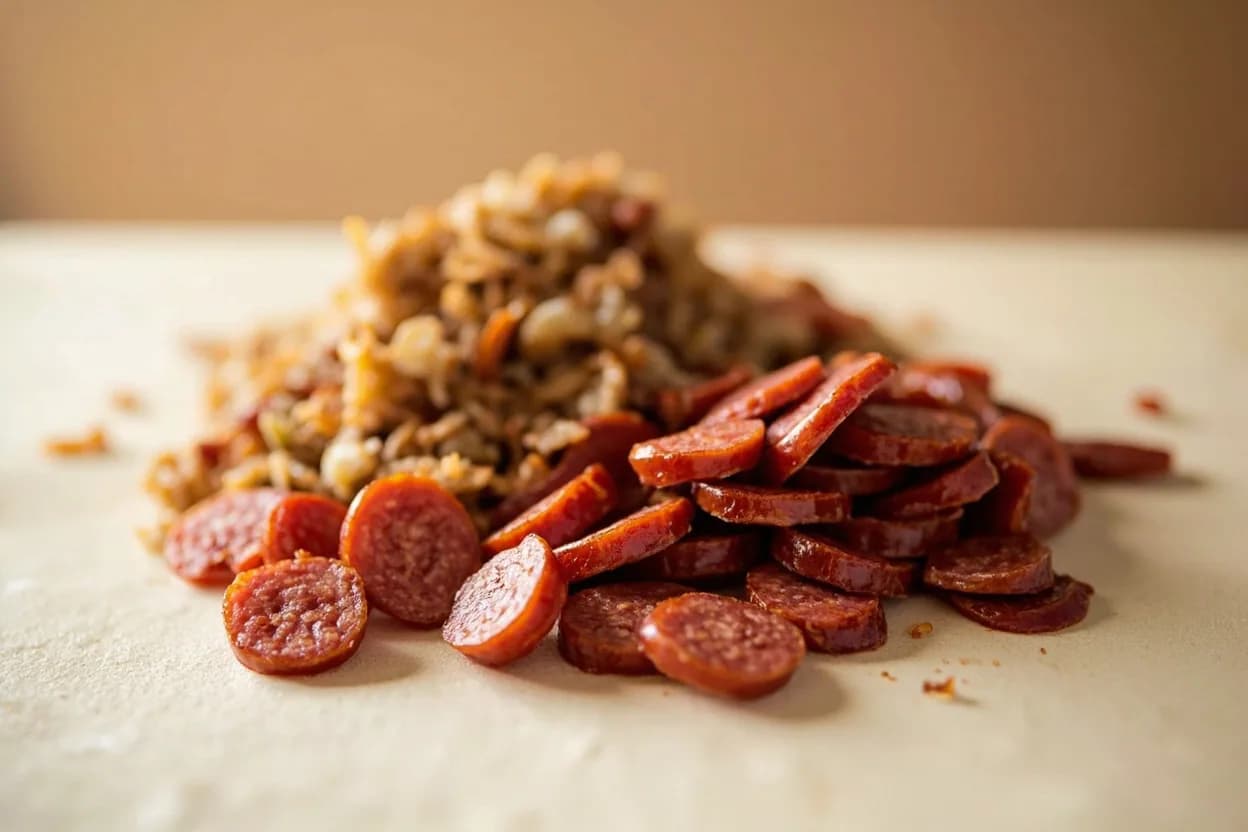
Diced lap cheong is the richest and most aromatic protein addition to Cantonese-style fried rice; its rendered fat seasons the wok and its sweet pork flavor penetrates every grain.
- turnip cake (lo bak go)Cantonese dim sum
Lap cheong is a standard addition to the Cantonese dim sum radish cake — steamed in the cake, it disperses throughout the starch, infusing sweet pork fat and the rose wine note.
- sticky rice in lotus leaf (lo mai gai)Cantonese dim sum
Lap cheong, shiitake mushrooms, and chicken wrapped in glutinous rice and steamed inside a lotus leaf — the sausage's fat bastes the sticky rice from within.
- stir-fried vegetables (gai lan, Chinese broccoli)Cantonese Chinese
Sliced lap cheong stir-fried with gai lan or water spinach uses the sausage's rendered fat as the cooking medium and flavoring — the bitterness of the vegetable offsets the sweetness of the sausage.
- Taro and yam preparationsHakka Chinese
In festive taro abacus seeds (suan pan zi) or braised taro, lap cheong adds pork richness and sweet umami depth to the starchy base.
Adventurous pairings
- pizza (Hong Kong style)
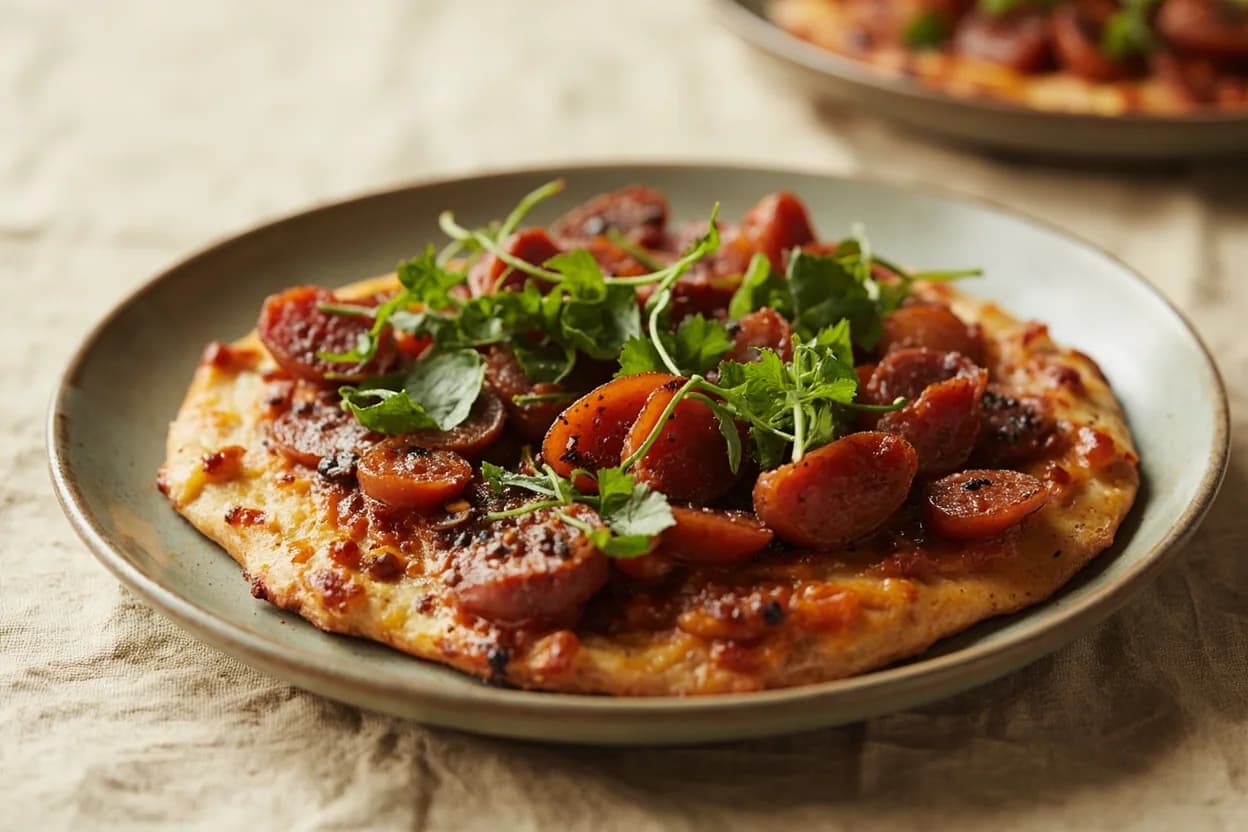
Hong Kong's cha chaan teng culture has embraced lap cheong as a pizza topping — its intense sweetness plays similarly to sweet Italian sausage and the rose wine fragrance is a distinctive differentiator.
- cornbread stuffing
Chinese American chefs have incorporated diced lap cheong into Thanksgiving stuffing in place of Italian sausage — the sweet pork and five-spice notes create a fragrant, unexpected stuffing with complementary warmth.
- pasta carbonara-style
Rendered lap cheong fat used in place of guanciale in a carbonara-style pasta contributes a sweeter, more aromatic fat with rose wine and five-spice notes — a cross-cultural fat substitution that works because rendered fat is the structural ingredient.
Finely diced lap cheong embedded in a Cantonese steamed egg (水蒸蛋) adds bursts of sweet pork savoriness against the silky neutral custard — a textural and flavor contrast pairing.
Tread carefully
- raw salad applicationsavoid
Lap cheong must be cooked — raw, it is dense, tough, and difficult to digest; its fats need heat to render and its curing aromatics need warmth to bloom.
- beef dishesavoid
The sweet rose-wine aromatic profile of lap cheong collides with beef's own iron-forward richness in a way that makes both flavors muddier — the sausage belongs with poultry, pork, and vegetables.
- light seafood dishes (white fish, clams)avoid
The sausage's intense sweetness and fat content overwhelm delicate seafood; preserved Chinese sausage overpowers rather than complements subtle oceanic flavors.
How to use it
- Steam over rice for the final 15 minutes of cooking — this is the traditional method and allows sausage fat to drip through the rice
- Render in a dry pan over medium heat before adding other ingredients — the rendered fat becomes the cooking medium
- Slice on a bias (diagonal cuts) to maximize surface area for rendering and to look more elegant when plated
- Soak in warm water for 5 minutes before slicing if the casing has hardened — this softens it for easier handling without affecting flavor
- Store at room temperature in a cool pantry for up to a week, or refrigerate for months — the high salt, sugar, and dry environment give it excellent shelf life
Appears in
Related flavours
- Dried Salted Fish (Hom Yue)
The classic pairing partner in clay pot rice — lap cheong provides sweet fat, salted fish provides salty umami punch; together they season rice without any additional sauce
- Shiitake Mushroom (dried)
Lap cheong and reconstituted dried shiitake are paired in virtually every sticky rice or clay pot preparation — the mushroom's glutamate umami amplifies the sausage's savory depth
- Char Siu (Cantonese BBQ pork)
A flavor sibling — both are sweet-savory Cantonese pork preparations using five-spice, soy, and rose wine; lap cheong is the preserved, shelf-stable form
References
- 1.The Food of China — E.N. Anderson
- 2.Land of Plenty — Fuchsia Dunlop
- 3.Complete Chinese Cookbook — Ken Hom
- 4.Charcuterie: The Craft of Salting, Smoking, and Curing — Michael Ruhlman & Brian Polcyn
Confidence: high
Notes
The rose wine signature
The defining aromatic of lap cheong that separates it from other Asian cured sausages is Mei Gui Lu Jiu (玫瑰露酒) — a clear, high-alcohol Chinese rose wine distilled from sorghum with added rose essence. A small amount in the cure gives lap cheong its distinctive floral-fruity fragrance that blooms during steaming and perfumes everything it cooks with. This aroma is what makes lap cheong immediately recognizable across a kitchen; without it, the sausage would simply be a sweet pork sausage. Some budget versions substitute Shaoxing rice wine, producing a flatter, less distinctive product.
Varieties beyond pork
While pork is the standard, there are several important regional variants: yun chang (润肠) uses a higher fat ratio for a more unctuous texture; duck liver sausage (鸭肝肠) substitutes duck liver for part of the pork, producing a deeper, more mineral character; and in some Shanghainese preparations the sausage leans saltier and less sweet. The Taiwanese version (香腸, xiāngcháng) is a thicker, grilled sausage distinct in preparation. Lap cheong specifically refers to the Cantonese air-dried, sweet-heavy variety.