Seaweed & Sea Vegetables
Miyeok (Wakame Seaweed)
Also: 미역, wakame, Undaria pinnatifida, sea mustard
The tender, silky seaweed at the heart of Korean birthday soup and Japanese miso — its mild oceanic sweetness and slippery texture pair beautifully with clear broths, sesame, and vinegar.
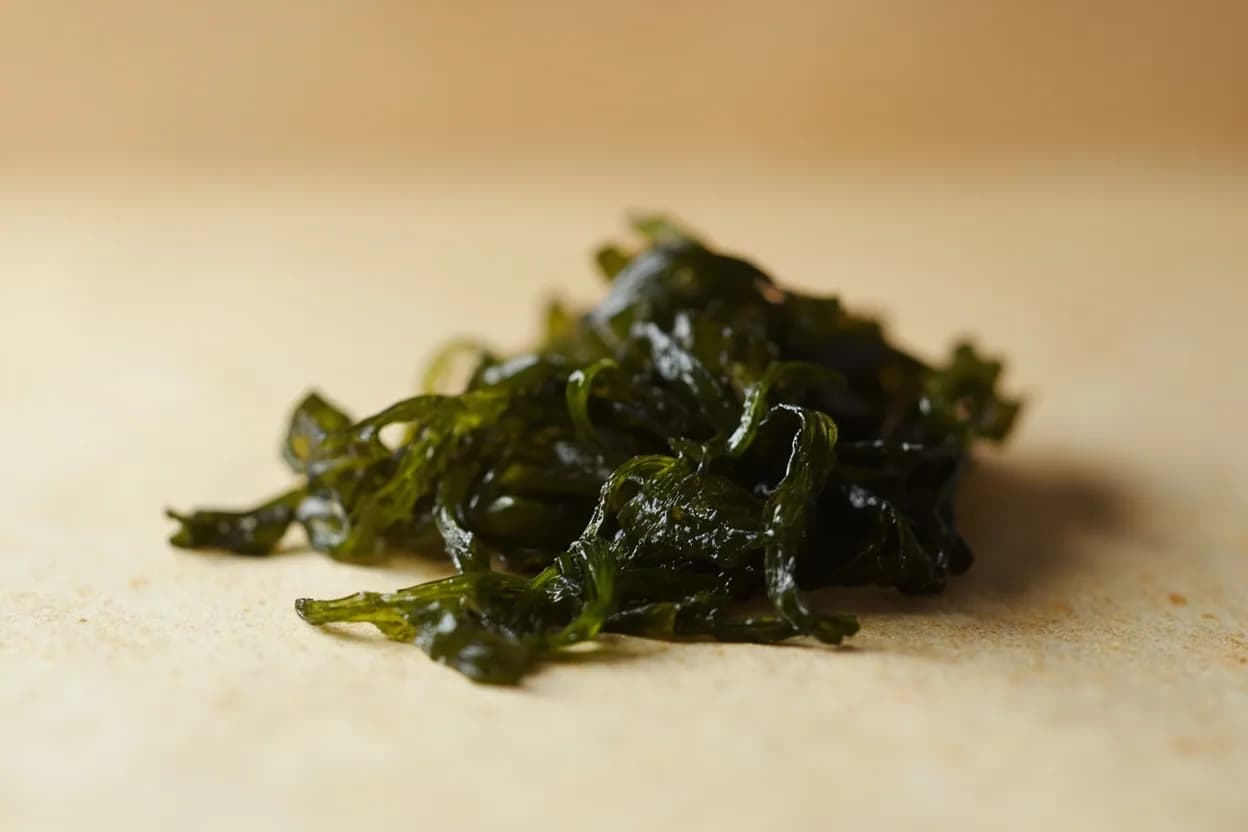
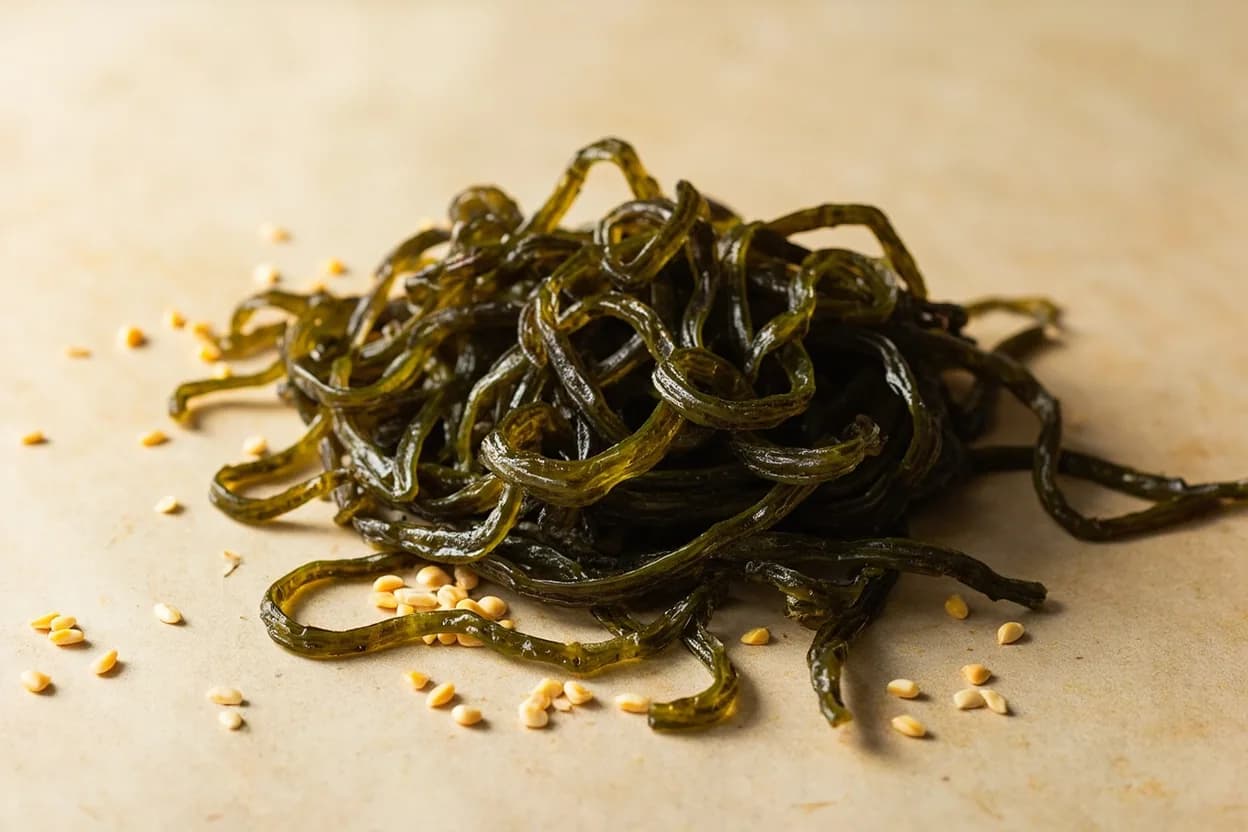
Miyeok (Korean) and wakame (Japanese) are the same species, Undaria pinnatifida, a brown kelp harvested along coastal East and Southeast Asia. Unlike kombu, which is used primarily as a dashi-making ingredient and discarded, wakame is eaten directly — sold dried (rehydrates in minutes), semi-dried, or fresh-salted. Its flavour is mild, slightly sweet, and gently oceanic with a glutamate undertone that makes it naturally savoury without any aggressive 'fishy' quality. Its most distinctive characteristic is texture: once rehydrated, the fronds become silky, slippery, and tender — almost gelatinous at the edges — which makes it prized in soups and salads for the way it accepts and holds broth or dressing. In Korea, miyeok guk (seaweed soup) is eaten on birthdays and after childbirth; in Japan, wakame is omnipresent in miso soup and sunomono (vinegar salads).
In photos
Flavour profile
Classic pairings
- Beef bone broth (gomtang / seolleongtang)Korean
Miyeok guk — the Korean birthday soup — combines miyeok with a clear, long-simmered beef bone or brisket broth; the seaweed's mild sweetness absorbs the rich collagen-heavy stock without competing, creating a nourishing, deeply satisfying soup.
- Miso (shiro / white miso)Japanese
Wakame in miso soup is one of Japan's most ubiquitous food combinations; the seaweed's mild oceanic note echoes and extends the miso's fermented depth, while the tofu it frequently accompanies provides contrasting density.
- Sesame oil and sesame seedsKorean
Miyeok muchim (seasoned wakame salad) dresses briefly blanched seaweed with toasted sesame oil, sesame seeds, soy, garlic, and rice vinegar — the nuttiness of sesame is the natural aromatic complement to seaweed's oceanic quality throughout East Asian cooking.
- Rice vinegarJapanese
Japanese sunomono (vinegar salad) pairs wakame with cucumber in sweetened rice vinegar — the acid brightens the seaweed's mild flavour and firms its texture slightly, making the salad clean and refreshing.
- Garlic and spring onionKorean
In Korean miyeok guk, garlic and spring onion are the aromatic base; the allium sharpness punctuates the seaweed's gentleness and prevents the soup from reading as bland.
- Tofu (silken)Japanese
The classic miso soup trio — wakame, silken tofu, spring onion — works because all three are mild and yielding in texture; tofu's protein adds satiation without overwhelming the seaweed's delicacy.
- Clams and musselsKorean
Short-necked clam (ba지락) miyeok guk is a common variant; shellfish and seaweed are a natural sea-to-sea pairing, the bivalves' brine amplifying the wakame's oceanic sweetness.
Adventurous pairings
- Avocado
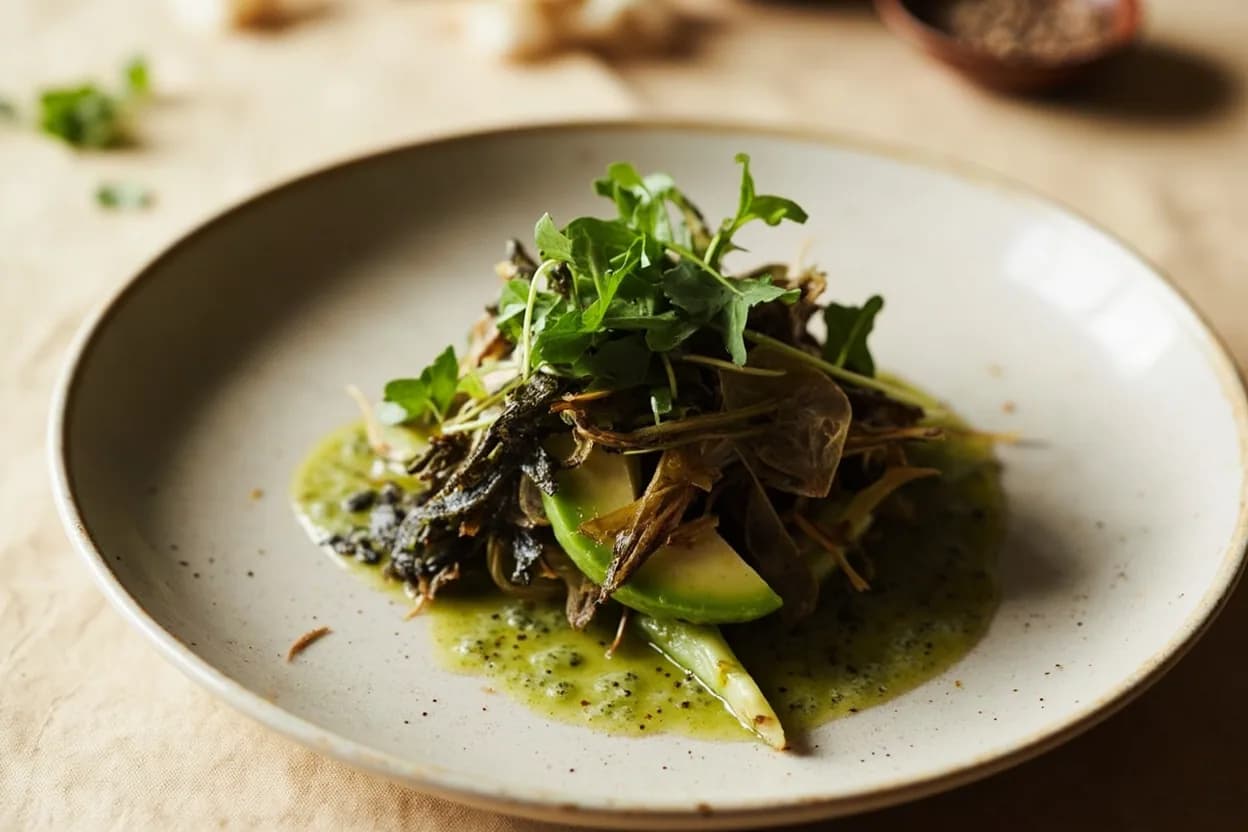
The creamy fat of avocado and the slippery, briny tenderness of rehydrated wakame work together in a Pacific Rim salad with yuzu and sesame — the avocado's richness carries the seaweed's mineral note the way cream carries herbs.
- Grapefruit or yuzu
The bitter-floral citrus of grapefruit or yuzu cuts through any muddy oceanic notes in wakame and lifts the whole salad into a clean, bright register — particularly effective in a sunomono variant with cucumber and compressed grapefruit.
- Buttermilk or labneh
Inspired by Nordic seaweed cooking, briefly blanched wakame tossed with labneh, dill, and lemon produces an unusual Middle Eastern-sea vegetable encounter where the dairy tang mirrors the mild brine of the seaweed.
- Corn
The sweetness of fresh or roasted corn and the oceanic sweetness of wakame reinforce each other in a summer salad with ponzu and chilli — a Japanese-American combination that makes both ingredients taste more intensely of themselves.
- Olive oil and lemon (Mediterranean application)
Wakame treated as a salad green — rinsed, briefly blanched, dressed with good olive oil, lemon, and capers — produces a simple Mediterranean-Japanese hybrid that works alongside grilled fish without any adaptation.
Tread carefully
- Strong spices (cumin, fenugreek, curry powder)avoid
Wakame's delicacy is overwhelmed by assertive spice blends; the seaweed's mild maritime character disappears beneath even moderate spice heat, leaving only a textural remnant.
- Long cooking / high heatavoid
Extended cooking (beyond 3–5 minutes in broth) degrades wakame's silky texture into a slimy, structureless mass — it should always be added near the end of cooking.
- Heavy cream saucesavoid
The seaweed's oceanic sweetness produces an unappealing 'fishy cream' quality in dairy-heavy European sauce contexts; dairy requires careful calibration (light yoghurt or crème fraîche in small amounts works better than cream).
How to use it
- Rehydrate dried miyeok in cold water for 5–10 minutes — it expands dramatically (up to 6× its dried volume); rinse thoroughly to remove excess salt from salted-packed varieties
- Add to hot soup off-heat or in the final 2 minutes — it requires no cooking and degrades with prolonged heat
- Blanch briefly (30 seconds in boiling water) and shock in ice water to set its brilliant green colour for salads
- Use the soaking water in cooking — it contains mild glutamates and minerals, functioning as a light dashi
- In miyeok guk, sauté rehydrated seaweed briefly in sesame oil before adding water/broth — this step coats each frond and deepens the sesame character
Appears in
Related flavours
- Konbu (kombu)
The other major edible kelp in East Asian cooking — konbu is firmer, more intensely savoury, and used primarily for dashi rather than direct eating; they serve completely different culinary functions.
- Nori (dried laver)
A drier, more intensely flavoured seaweed used in sheets; shares the oceanic sweetness but delivers it in a concentrated, crisp format rather than silky rehydrated fronds.
- Hijiki
Another Japanese sea vegetable — much stronger, earthier, and more mineral than wakame; used in simmered preparations rather than soups or raw salads.
References
- 1.Korean Home Cooking — Sohui Kim
- 2.Japanese Farm Food — Nancy Singleton Hachisu
- 3.The Complete Book of Japanese Cooking — Elisabeth Lambert Ortiz
- 4.Sea Vegetables: Harvesting and Cooking Seaweed — Jill Laidlaw
- 5.Umami: Unlocking the Secrets of the Fifth Taste — Ole Mouritsen & Klavs Styrbæk
Confidence: high
Notes
Cultural significance of miyeok guk
In Korea, miyeok guk carries profound cultural weight beyond its flavour. Mothers eat it after childbirth to restore iron and iodine levels lost during delivery, and the soup is then eaten on every birthday as a way of honouring the mother's labour and recovery. This means miyeok guk is never merely food — it is a ritual. Restaurants in Korea stop serving it on days of national exam results (considered bad luck for students who 'slip' like seaweed), illustrating how deeply the ingredient is woven into cultural life.
Dried vs. salted-packed vs. fresh
Most Western markets carry only dried miyeok/wakame. Salted-packed (semi-dried) wakame from Korean and Japanese grocery stores is preferred by many cooks for its closer-to-fresh texture once rinsed. Fresh wakame — rare outside coastal Japan and Korea — has a more vivid flavour and requires no rehydration. Dried is the most convenient but also the most texturally aggressive; always soak in cold water (not hot) to maintain the best texture.