Preserved & Cured Fish
Niboshi (Dried Sardines)
Also: 煮干し, iriko (関西), dried baby sardines, dried baby anchovies (loose translation), dried katakuchi iwashi
Japan's most assertive dashi base — niboshi deliver a bold, mineral-rich broth with a deeper, more rustic sea character than the delicate refinement of katsuobushi.
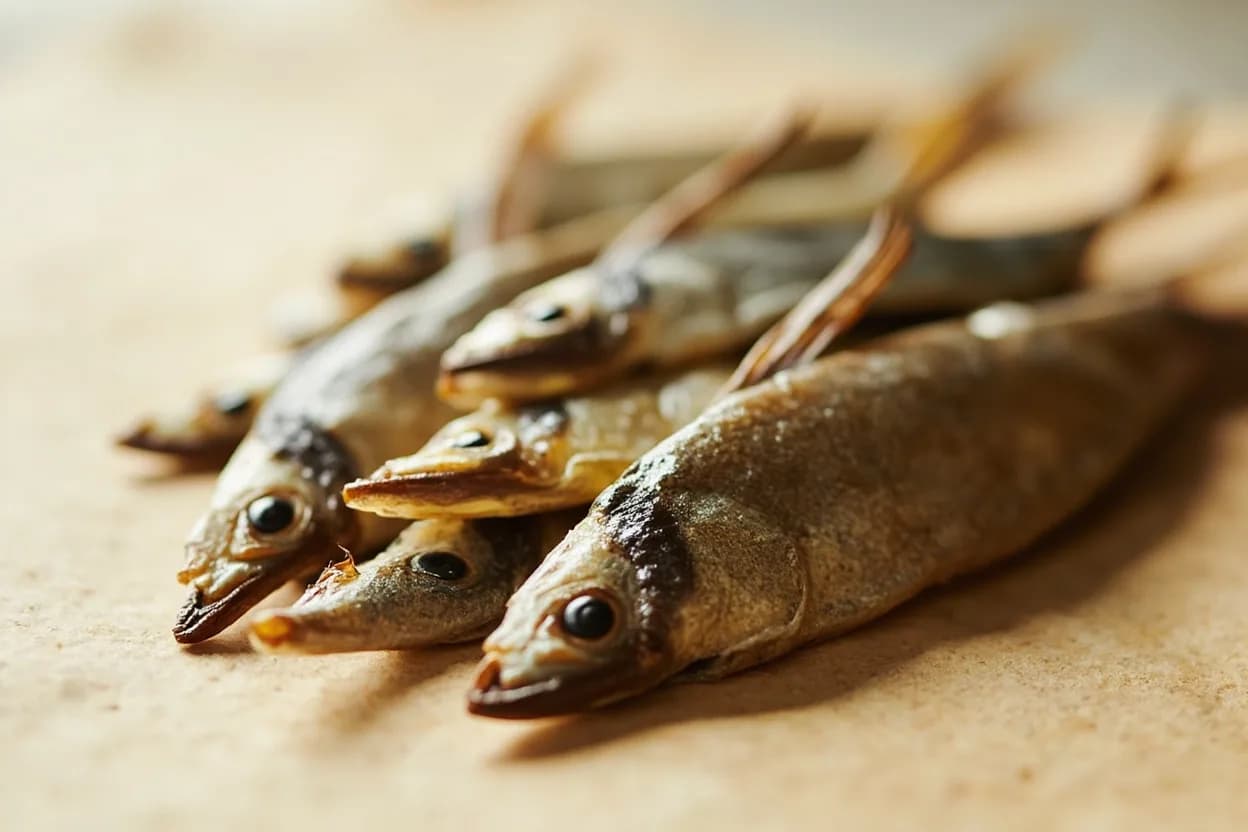
Niboshi are small dried fish — predominantly Japanese anchovy (katakuchi iwashi, Engraulis japonicus) or sardines — that have been briefly boiled in salted water to denature enzymes that would otherwise cause rapid spoilage, then sun- or machine-dried. The boiling step (煮る, niru, meaning 'to boil') distinguishes them from truly raw dried fish. The result is a compact, shelf-stable product with a pronounced inosinate-rich umami character, a distinct marine bitterness contributed by the head and viscera (which many cooks remove before steeping), and a full, almost earthy depth. Niboshi dashi is the classic base for ramen in northern Honshu (particularly Iwate and Aomori), for rural miso soups, and for any dish where a more assertive, less refined fish stock is valued over katsuobushi's elegant smokiness.
In photos

Flavour profile
Classic pairings
- Miso (especially mugi and hatcho)Japanese
Niboshi dashi is the traditional base for rustic miso soups throughout Tohoku and western Japan; the paste's fermented depth absorbs and complements the sardines' mineral assertiveness in a way that katsuobushi dashi cannot match.
- Shoyu (soy sauce)Japanese
Shoyu-based ramen in northern Japan consistently uses niboshi dashi — the soy sauce's amino-acid salinity and the sardines' inosinate synergize for an unusually deep broth.
- Soba noodlesJapanese
In the soba regions of eastern Honshu, niboshi dashi is used as the base for cold tsuyu — its slightly bitter edge cuts through the buckwheat's earthiness, sharpening the contrast.
- Konbu (kelp)Japanese
The synergistic pairing of konbu's glutamate and niboshi's inosinate produces far more umami than either alone; the standard combination in Kyushu ramen shops running tonkotsu broth enhancements.
- Root vegetables (daikon, gobo, carrot)Japanese
Simmered root vegetables in niboshi dashi absorb the broth's mineral depth, which suits their own earthiness; daikon in niboshi broth is a canonical autumn and winter dish in rural Japan.
- Tofu (silken and firm)Japanese
The mild protein of tofu acts as a blank canvas for niboshi dashi's character; agedashi tofu variations using niboshi tsuyu have a more rustic, assertive quality than those made with katsuobushi broth.
- Ramen (shio and shoyu styles)Japanese
Niboshi ramen is a distinct style, particularly in Iwate Prefecture; the concentrated sardine dashi is typically supplemented with chicken or pork, and the bitterness of the head is often left in for character.
Adventurous pairings
- Tomato (roasted or sun-dried)
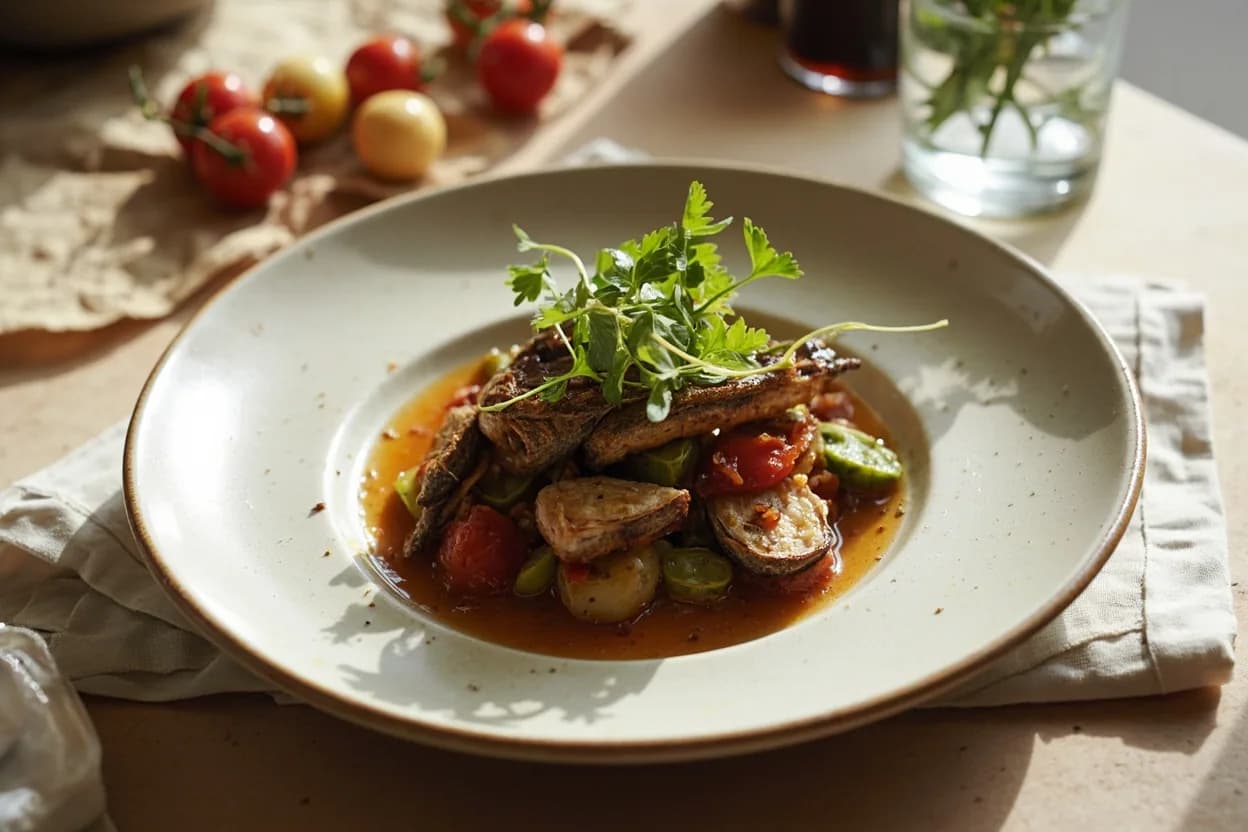
Tomato's glutamate and niboshi's inosinate are a textbook umami synergy — a niboshi-tomato broth for a Japanese-inspired bouillabaisse produces remarkable depth for the amount of effort.
Inspired by sesame-based Japanese dressings, blending niboshi dashi with tahini and rice vinegar produces a savoury, nutty dressing for soba or glass noodle salads with a complexity far beyond standard sesame sauce.
- Dried shiitake mushroom
A niboshi-shiitake combined dashi (with konbu) creates a three-source umami broth used in some elaborate Japanese country cooking — the result has an almost meaty character without any animal flesh.
- Olive oil (cold-pressed)
Italian cooks have adopted niboshi alongside anchovies — crushing a few dried sardines into olive oil before building a pasta sauce gives a deeper, more mineral baseline than preserved anchovy alone.
- Butter and leek (western application)
Niboshi steeped in hot cream or milk and then strained delivers a Japanese marine character to a leek soup or potato gratin that differs intriguingly from using fresh fish or shellfish stock.
Tread carefully
- Delicate dashi applications (ichiban dashi for clear soups)avoid
Niboshi's assertive bitterness and opaque character make it unsuitable for ichiban dashi in refined Japanese clear soups (suimono) where the transparent, barely-there character of katsuobushi is essential.
- Light vinaigrettes and fresh green saladsavoid
The mineral, slightly bitter quality of niboshi broth overwhelms tender salad greens — its intensity is calibrated for simmered preparations, not raw applications.
- Sweet dessert applicationsavoid
Unlike kombu dashi which can add a gentle oceanic mineral note to some Japanese sweets, niboshi's bitterness reads as out-of-place in sweet contexts.
How to use it
- Remove heads and viscera before steeping to reduce bitterness — essential for delicate miso soups; leave them in for ramen dashi where assertiveness is desired
- Cold steep: soak niboshi in cold water overnight (12 hours) for a cleaner, sweeter extraction with less bitterness — ideal for miso soup
- Hot steep: bring to 60–80°C for 20 minutes without boiling — boiling releases more bitter compounds; filter before use
- Toast lightly in a dry pan before steeping to develop roasted nutty notes and reduce raw fish character
- Combine with konbu for maximum umami synergy — the glutamate-inosinate ratio produces an umami intensity neither ingredient achieves alone
Appears in
Related flavours
- Katsuobushi (bonito flakes)
The classic alternative dashi base — katsuobushi is more delicate, more refined, with a smoky sweetness that niboshi lacks; the choice between them defines the character of the entire dish.
- Konbu (kelp)
The synergistic umami pairing with niboshi is fundamental — konbu's glutamate + niboshi's inosinate = 8× the perceived umami of either alone.
- Dried shiitake mushroom
Shares the rustic, assertive umami lane; in vegan Japanese cooking, shiitake replaces niboshi as the inosinate source when combined with konbu.
References
- 1.Japanese Farm Food — Nancy Singleton Hachisu
- 2.Dashi and Umami: The Heart of Japanese Cuisine — Eat-Japan (Cross Media Ltd.)
- 3.The Japanese Kitchen — Hiroko Shimbo
- 4.Umami: Unlocking the Secrets of the Fifth Taste — Ole Mouritsen & Klavs Styrbæk
Confidence: high
Notes
Niboshi vs. katsuobushi: regional character
The choice between niboshi and katsuobushi dashi is often regional and cultural. Katsuobushi dashi is the Kyoto and high Japanese restaurant standard — refined, clear, elegant. Niboshi dashi is the working kitchen standard in Tohoku, Shikoku, and Kyushu — bolder, more assertive, better suited to the stronger flavours of miso, soy, and root vegetables. Neither is superior; they serve different flavour registers.
The bitterness factor
The primary technical decision with niboshi is whether to remove the head (and especially the guts — kigo) before steeping. The bitterness these parts contribute is significant and considered a flaw in delicate soups but a feature in ramen broths where it sharpens the overall flavour profile. There is no single correct answer — it depends entirely on the intended use.