Preserved & Cured Fish
Oyster
Also: huître, ostra, kaki, Pacific oyster, Kumamoto, Belon, flat oyster, eastern oyster
The sea in a shell — mineral, briny, and sweetly oceanic, demanding only the lightest hand to reveal rather than conceal its terroir.
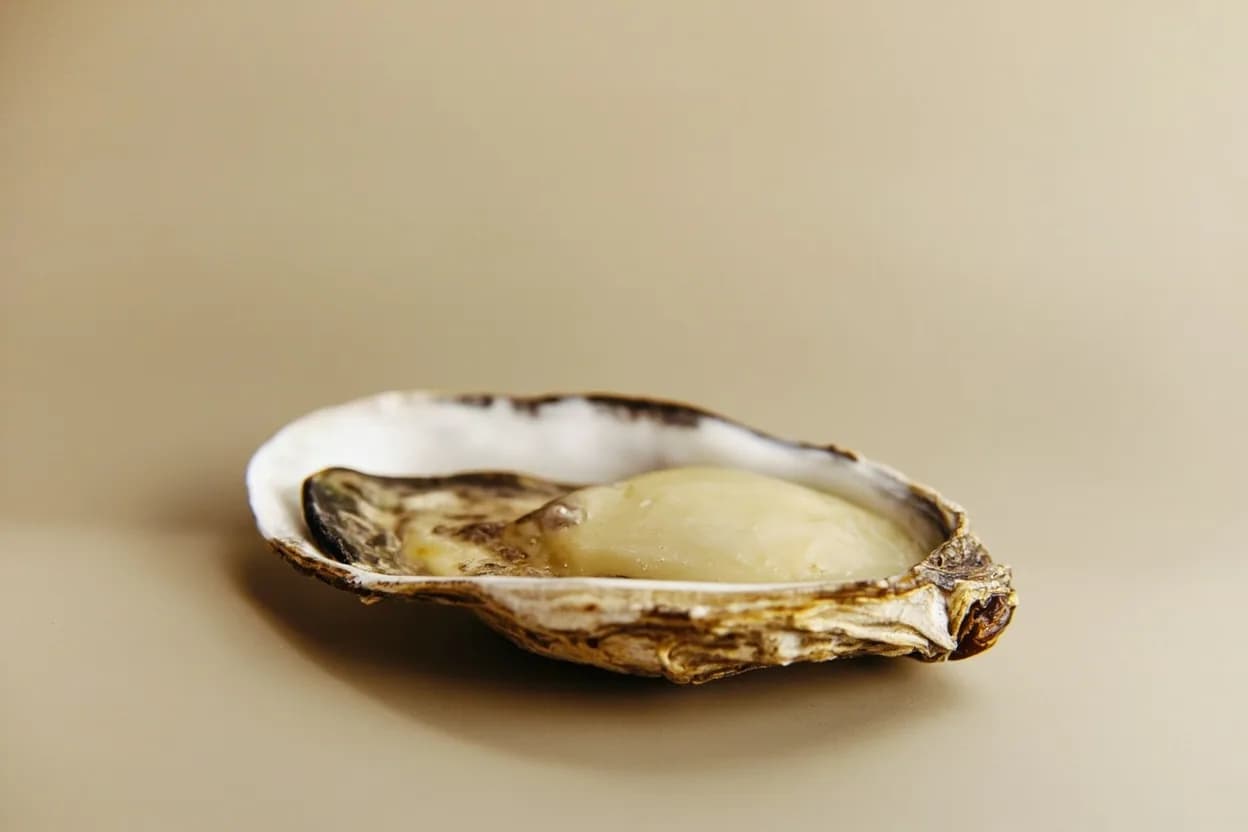
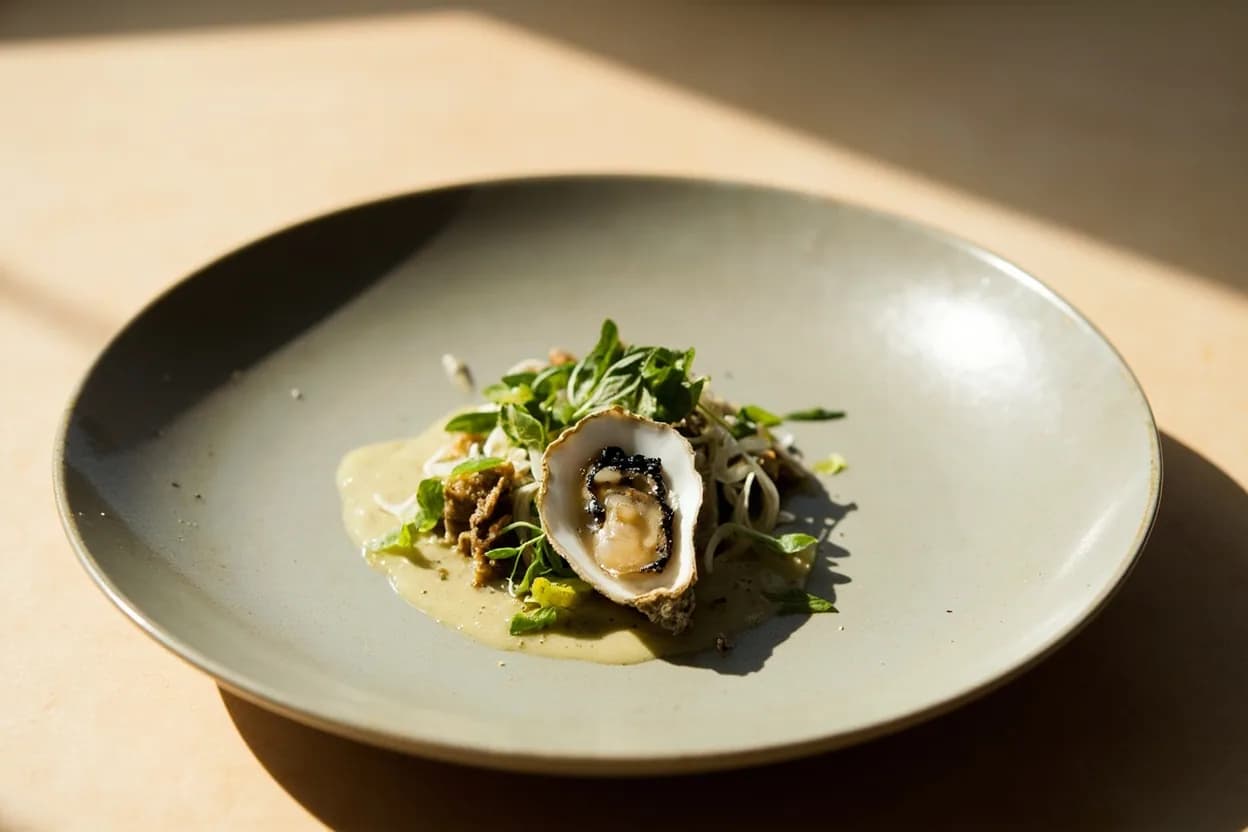
Oysters are bivalve molluscs whose edible flesh (mantle, adductor muscle, and roe) concentrates the minerals, salinity, and phytoplankton of the water they filter. Flavour varies enormously by species and merroir: Pacific oysters (Crassostrea gigas) tend toward cucumber-melon sweetness; Belons (Ostrea edulis) lean copper-metallic and intensely briny; Kumamotos are sweet and mild; eastern oysters (C. virginica) are saltier and more assertive. Raw, the flesh is yielding, slightly gelatinous, and cupped in a liquor that smells of clean ocean. Cooked, they firm slightly and release a more pronounced seafood flavour.
In photos
Flavour profile
Classic pairings
- Champagne / sparkling wineFrench
High acidity and fine bubbles cut brine and amplify the oyster's mineral finish — the most celebrated pairing in the beverage world.
- Mignonette (shallot and vinegar)French
The classic French condiment: shallot's sulfur compounds and red wine vinegar's acidity provide counterpoint without masking.
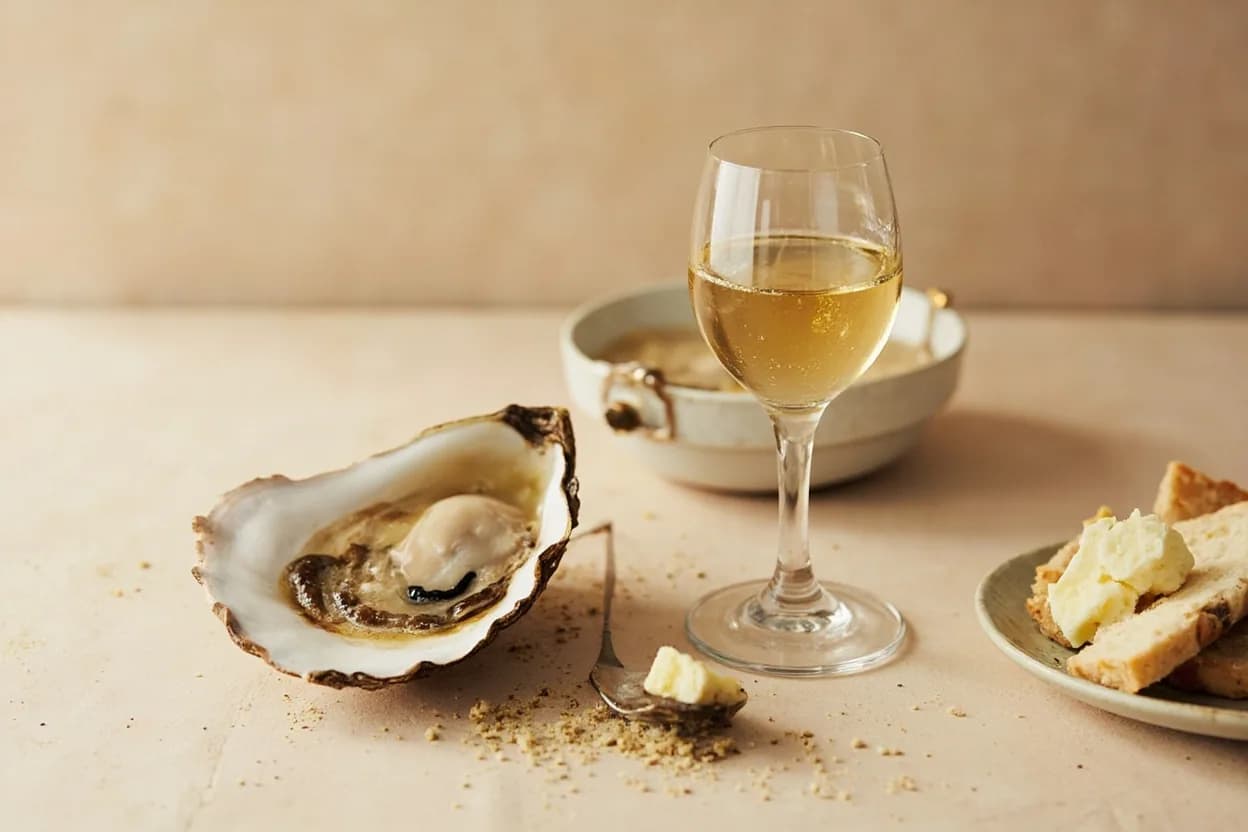
- Rye bread with cultured butterNordic
Nordic tradition — rye's earthy acidity and butter fat soften the brine while bread carbohydrate provides structural contrast.
- Tabasco and lemonAmerican (Gulf Coast)
American Gulf Coast formula: acid and gentle heat emphasise the mineral note without overwhelming the delicate flesh.
- Muscadet or ChablisFrench
Both wines share marine minerality from their terroir — limestone soils in Burgundy, crystalline schist in the Loire Valley.
- Cream and leek (oyster gratin)French, Irish
The mildness of cooked leek and the richness of cream are classic foils in the baked preparation; butter and breadcrumb add Maillard contrast.
- Bacon (Oysters Rockefeller / Kilpatrick)American, Australian
Smoked pork fat provides a fatty, smoky anchor for the oyster's brine in classic Anglo-American baked preparations.
Adventurous pairings
- Cucumber granita
A frozen cucumber granita played against a raw oyster amplifies the natural melon-cucumber note in Pacific varieties — a modern fine-dining intermezzo.
- Kimchi brine
A few drops of aged kimchi liquid bring fermented umami, acid, and heat; a Korean-accented mignonette that suits plump eastern oysters.
- Sake (junmai daiginjo)
The polished rice cleanness and faint melon-anise notes of premium sake create an East-meets-West mineral synergy.
- Green apple sorbet
Malic acid's bright sharpness and the fruit's vegetal sweetness emphasise the oyster's freshness; popular in tasting-menu amuse-bouche contexts.
- Wakame and ponzu
Seaweed deepens the marine base note, ponzu provides citrus-umami — a Japanese raw oyster dressing that reinforces rather than masks.
Tread carefully
- Red wine (especially tannic reds)avoid
Tannins bind marine proteins and produce a pronounced metallic-fishy taste — the classic pairing mistake that makes both wine and oyster suffer.
- Heavy cream sauces (raw preparations)avoid
Rich dairy drowns the delicate liquor and merroir of raw oysters; cream works only in cooked, gratin-style preparations.
- Strong blue cheeseavoid
Ammonia and aggressive lactic acids create an unbridgeable clash; the oyster's marine delicacy is completely lost.
- Very sweet sauces or fruit chutneysavoid
Excessive sugar obscures the clean brine and mineral notes that make oysters worth eating; small tartness (lemon, vinegar) is welcome, sweetness is not.
How to use it
- Shuck to order and serve on a bed of crushed ice or sea salt to keep the shell level and preserve the liquor
- Never rinse after shucking — the liquor is half the flavour
- To grill or broil: place flat-side up so the shell acts as a cup, top minimally, and cook just until the edges curl
- For poaching: steep in their own liquor over very low heat until barely firm — 1–2 minutes maximum
- For tempura: drain well, dredge in rice flour for a lighter coating, and fry at 180 °C for 90 seconds
Appears in
Related flavours
- Clam
Shares bivalve oceanic sweetness but is milder and more neutral; many raw-bar preparations interchangeable at the condiment level.
- Sea urchin (uni)
Both are mineral-briny luxury shellfish products; paired together in fine-dining as complementary ocean flavour layers.
- Champagne (as ingredient)
Used not just as drink pairing but as a cooking liquid — a splash of Champagne in oyster cream sauces or mignonette lifts without overpowering.
References
- 1.On Food and Cooking: The Science and Lore of the Kitchen — Harold McGee (2004)
- 2.Consider the Oyster — M.F.K. Fisher (1941)
- 3.The Flavor Bible — Karen Page & Andrew Dornenburg (2008)
- 4.Wine & Food: A New Way of Cooking — Fiona Beckett (2019)
Confidence: high
Notes
Merroir matters
Like wine terroir, an oyster's flavour is inseparable from its growing environment — salinity, temperature, phytoplankton species, and water mineral composition. A Kumamoto from Humboldt Bay will be sweeter and more delicate than a Kumamoto from Tomales Bay in the same season. When pairing, taste the specific oyster first: metal-forward Belons can handle more assertive acid; melon-sweet Kumamotos need the lightest possible touch.