Produce
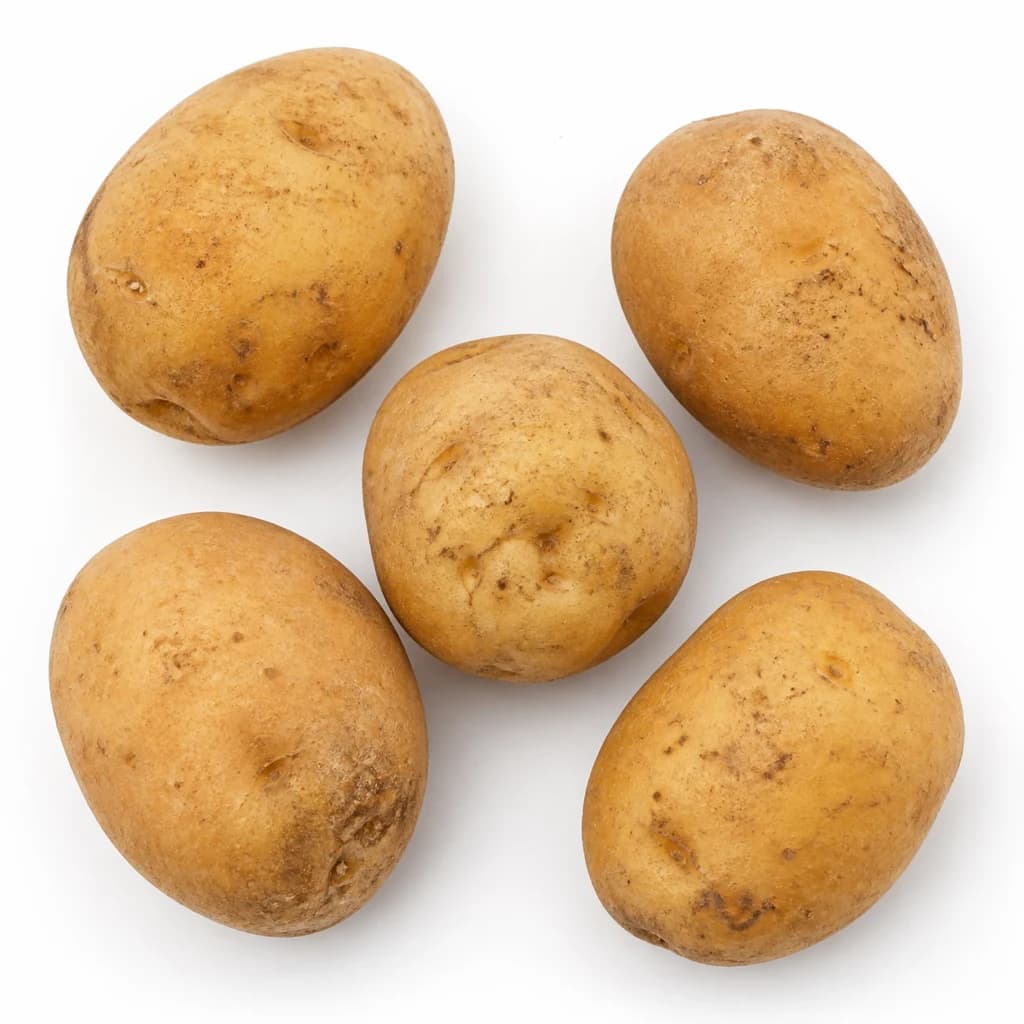
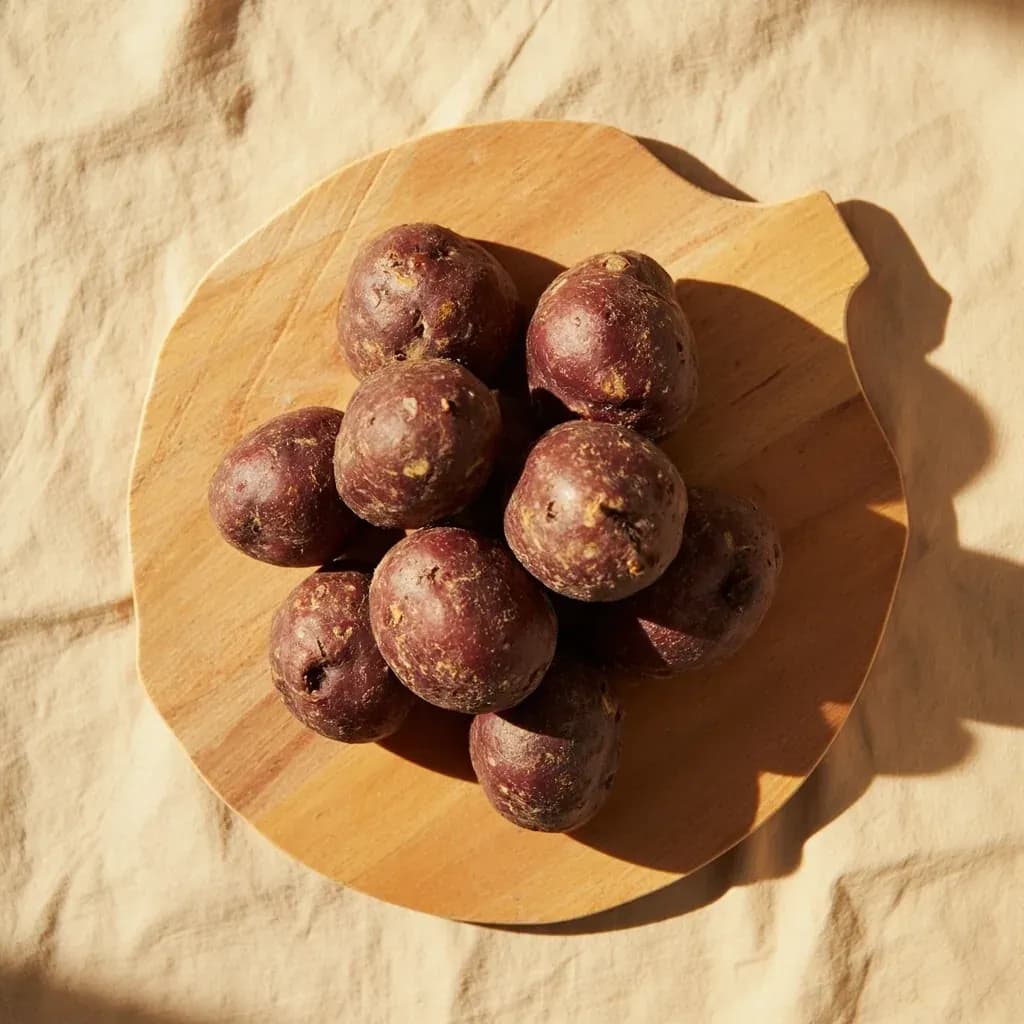
Purple Potato
Dense, waxy purple-fleshed potato that holds its violet color when steamed or roasted but bleeds gray if boiled hard; great for vivid salads and gratins.
Purple potatoes are not a single variety but a loose family of cultivars whose flesh — and often skin — is saturated with anthocyanins, the same water-soluble flavonoid pigments that color blueberries, blackberries, and red cabbage. Most trace their ancestry to the Andes, where farmers in present-day Peru and Bolivia have been selecting deeply pigmented landraces for thousands of years; French and American breeders have since added modern releases like Adirondack Blue and Purple Majesty to the mix. A useful first distinction for any cook: some potatoes are purple only in the skin (Purple Viking, many blue-skinned fingerlings), while others carry pigment all the way to the core (Vitelotte, All Blue, Magic Molly, Adirondack Blue, Purple Majesty). The latter are what most recipes mean when they call for a "purple potato," and they are the ones that deliver the dramatic violet color on the plate.
In the kitchen these tubers behave a little differently from the familiar russet or Yukon Gold. Anthocyanins are remarkably heat-stable when the cooking is dry or gentle — roasting, baking, frying, and steaming all preserve a vivid violet — but they leach freely into boiling water and react to pH. Hard-boiled or cooked in alkaline water, the flesh fades to a muddy gray-blue; cook gently in lightly acidulated water and the color holds. Texture varies more than color does: most heirloom purple potatoes are waxy and firm (Vitelotte, Magic Molly, Purple Peruvian) and hold their shape for salads and gratins, while Purple Majesty trends drier and fluffier, closer to a russet and a better choice for fries and mash.
Flavor is earthier and more savory than a white potato, with a faintly nutty or chestnut cast in the waxier varieties, and it pairs naturally with rich dairy, smoked meats, and woody herbs. Nutritionally they offer the same calories and potassium as other potatoes but a meaningful dose of anthocyanin antioxidants. The real reason to cook them, though, is visual: a layer of violet in a gratin, a scatter of purple through a potato salad, or a plate of properly crisped purple fries turns a familiar dish into something memorable.
- Measured in
- g
- Storage
- Store In A Cool, Dark, Dry Place Away From Onions; Do Not Refrigerate.
Find it in
Suits
Types & varieties
Heirloom with purple skin and deep blue-purple flesh; waxy, holds shape well; excellent for chips and roasting.
Cornell University release (2003); purple skin and flesh, round to oval; moderately starchy, good all-purpose.
Uniformly purple skin and flesh, oval; fairly dry and starchy — closer to a russet, suited to fries and mash.
Old French heirloom with very dark, almost black-purple skin and intensely violet flesh; deeply nutty, very waxy; prized for salads and purées.
Purple-skinned fingerling with purple flesh; waxy, creamy, holds shape; ideal roasted whole or in salads.
Small, elongated Peruvian heirloom; deep purple skin and flesh, firm and waxy with a faintly chestnut flavor.
Purple skin splashed with pink and white, but white or pale yellow flesh — a purple-skin potato, not a purple-fleshed one.
Round to oblong, purple skin and flesh; moderately firm, versatile for boiling, roasting, and gratin.
Purple skin vs purple flesh: read the label
Not every potato marketed as "purple" actually shows color on the plate. Purple Viking and several specialty fingerlings wear a purple jacket over pale, ordinary-looking flesh; steam or roast them and you get a cream-colored potato with a purple rim. Purple-fleshed types — All Blue, Adirondack Blue, Purple Majesty, Vitelotte, Magic Molly, Purple Peruvian, Purple Fiesta — are pigmented all the way through and will deliver the dramatic ribbons of violet you see in cookbooks. When color matters, slice a sample in half before committing the batch to a recipe.
- Purple-skin only: Purple Viking, many blue-skinned fingerlings — flesh stays pale when cooked.
- Purple-fleshed: All Blue, Adirondack Blue, Purple Majesty, Vitelotte, Magic Molly, Purple Peruvian, Purple Fiesta.
- The richest, most theatrical color comes from the waxier heirlooms (Vitelotte, All Blue) and the medium-starchy modern releases (Adirondack Blue, Purple Majesty).
Keeping the color: a short course in anthocyanins
Anthocyanins are remarkably stable to heat when dry but leach out of the potato the moment they meet free water, and they shift color depending on pH. Two practical rules cover most situations: cook with as little water as possible (roast, steam, bake, fry) or, when you must boil, add a small splash of vinegar or lemon juice to the water and stop cooking the instant the potatoes are tender — then shock them in cold water to lock in color. Alkaline conditions push the pigment toward blue and gray; acid conditions pull it toward red. Both reactions are reversible and harmless, but if you want a clean violet, lean gently acidic.
- Dry-heat methods (roast, bake, fry) preserve the most color and develop a deeply browned, vivid crust.
- Boiling in plain water bleeds pigment and turns flesh gray-blue; a teaspoon of vinegar per quart of water helps.
- Alkaline water (hard tap water with bicarbonate) shifts color blue; acidify to hold violet.
- Don't dress cold salads with vinegar or citrus too far ahead — acid slowly pulls anthocyanins toward red over several hours.
- A pinch of cream of tartar (acid) in mash or purée deepens and stabilizes the violet.
Common uses
Tips & pitfalls
- Roast or steam rather than boil when color matters; hard-boiling is the single biggest reason purple potatoes turn muddy gray.
- If you must boil, add 1–2 teaspoons of vinegar or lemon juice per quart of water, cook gently just until tender, and shock in cold water to stop the cooking.
- Leave the skin on — most pigment sits just under the skin, and peeling washes both color and flavor away.
- Cut pieces to a uniform size so they finish cooking together; overcooking is the main cause of faded, gray flesh.
- Toss with oil and salt before roasting — surface dehydration is what gives purple potatoes their crisp, deeply colored crust.
- Never store in the fridge: cold temperatures convert starch to sugar and can darken the flesh on cooking.
- Keep tubers out of strong light; like all potatoes they will turn green and develop bitter solanine.
- For gratins, slice on a mandoline for even layers and even color from edge to edge.
Nutrition
Energy
243 kJ · per 100 g
Where the calories come from
Protein
2.6g
5% DV
Carbs
12.4g
5% DV
Fat
0.1g
0% DV
Fiber
2.5g
9% DV
Sodium
10mg
0% DV
Source · USDA FoodData Central · approx. Potatoes, raw, skin
View on FDC →In the shops
Matched grocery products
 €0.40
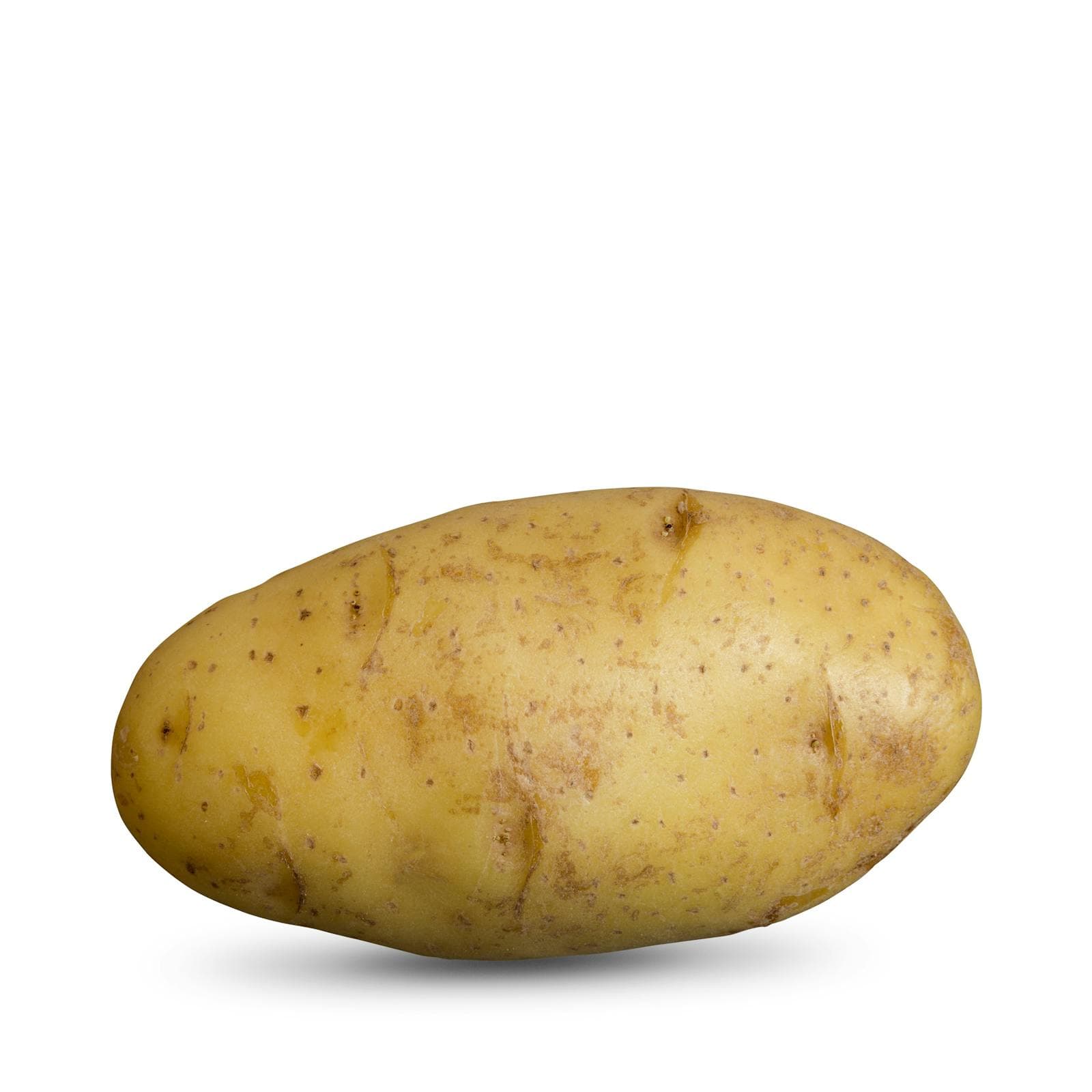
€0.40Potato
210 g · Mercadona
 €4.65
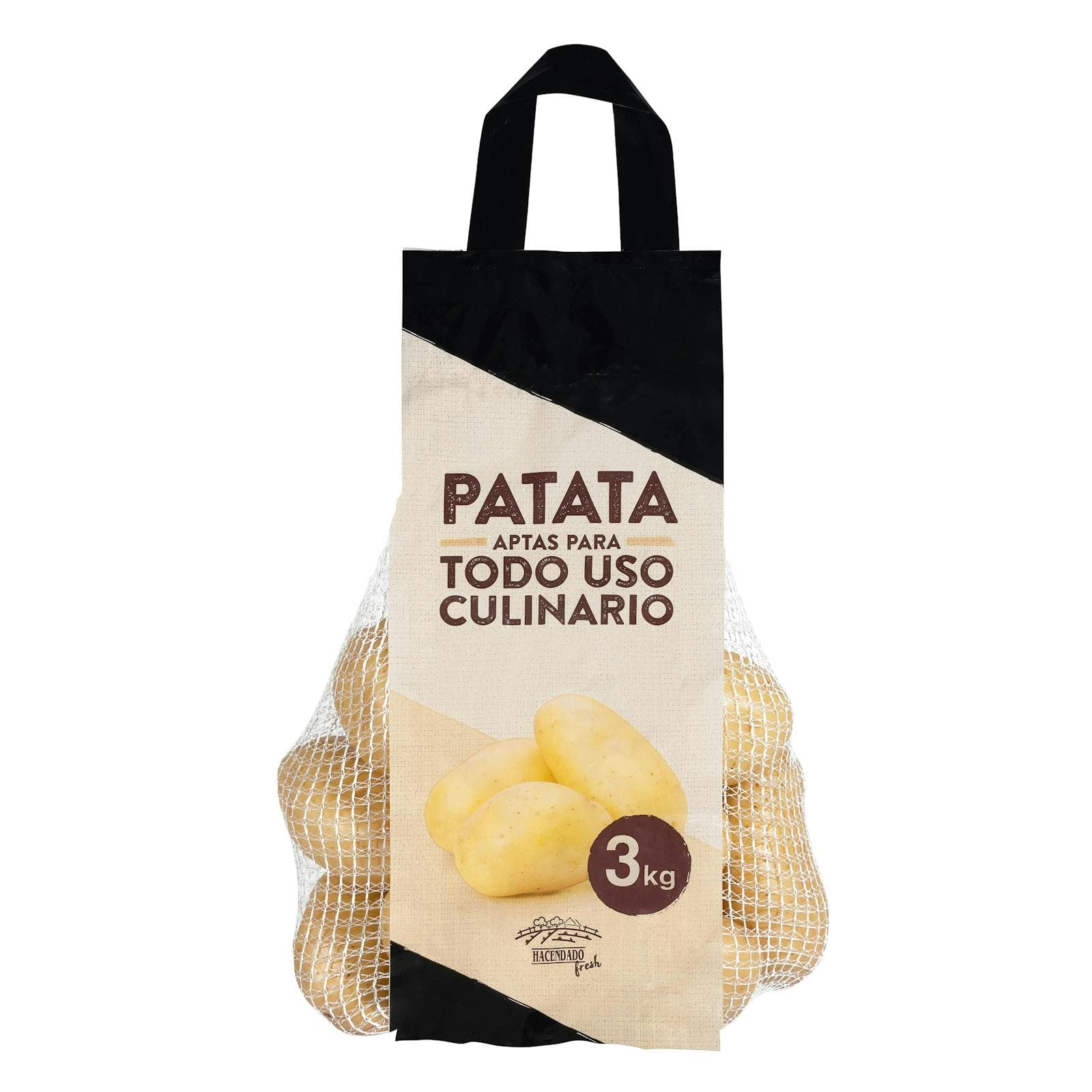
€4.65Potatoes
3 kg · Mercadona
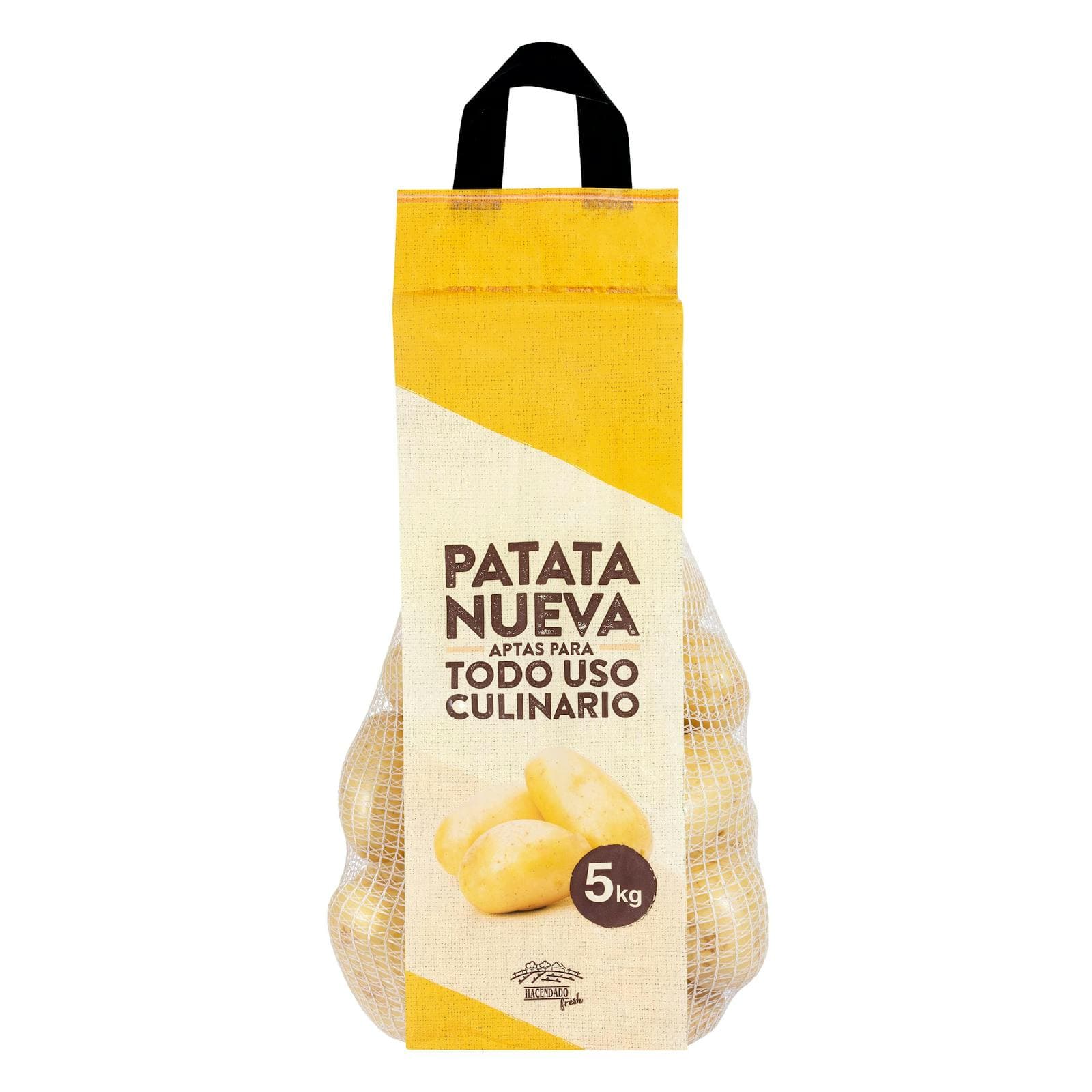 €5.60
€5.60Potatoes
5 kg · Mercadona
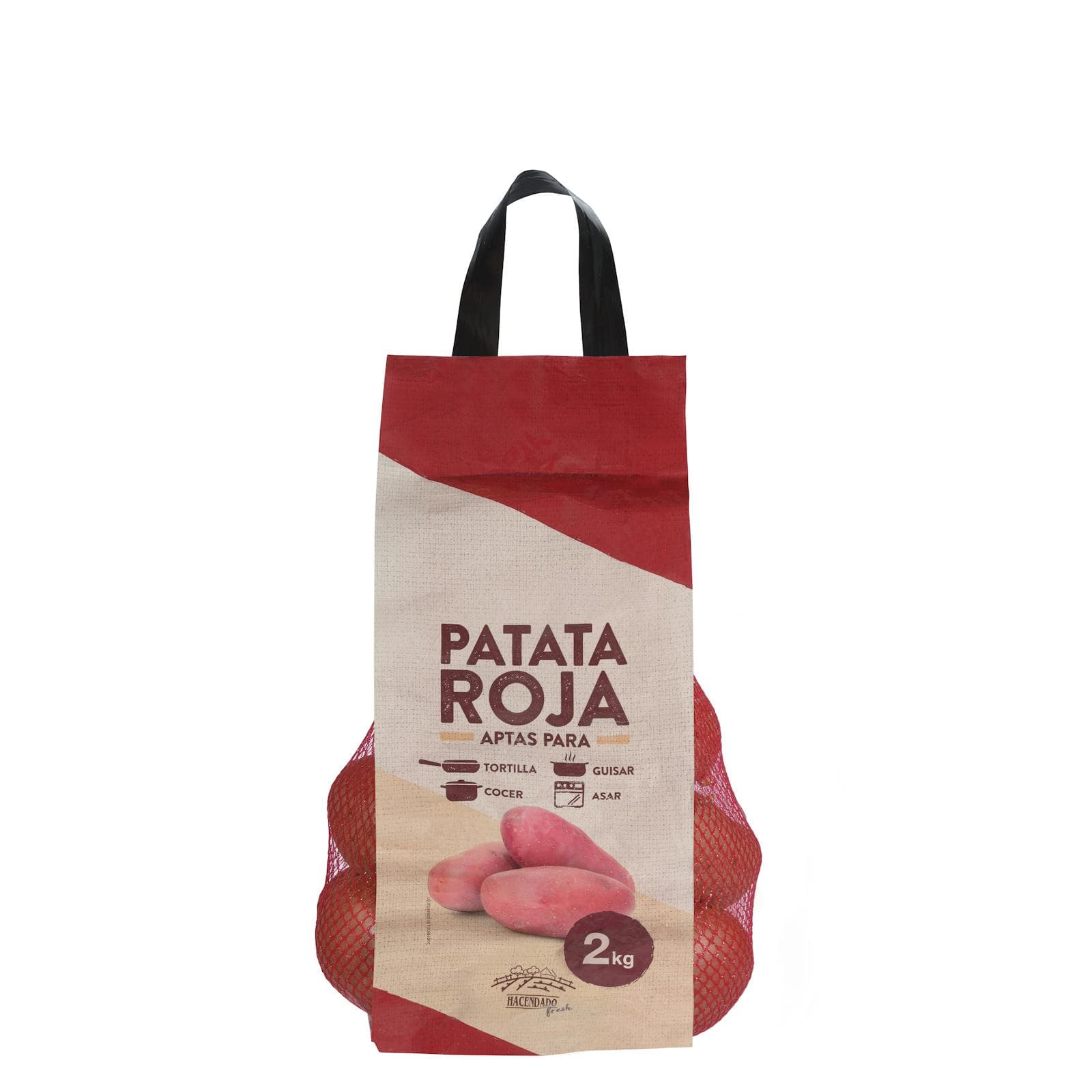 €3.80
€3.80Red Potatoes
2 kg · Mercadona
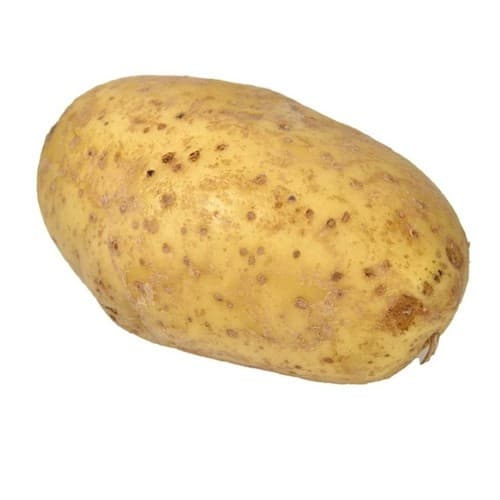 €0.45
€0.45Potato 1 unit
Bonpreu
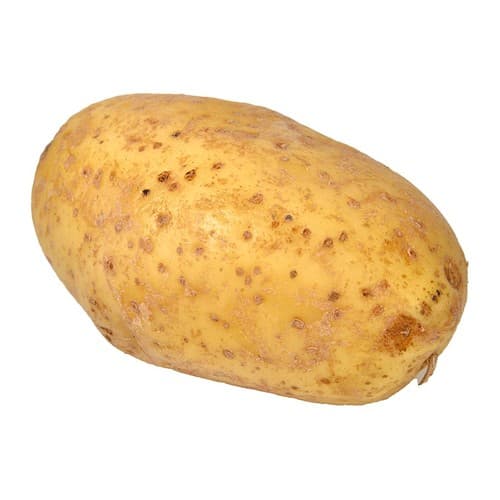 €0.70
€0.70Potato 1 unit
ud · Bonpreu
Good to know
- Origin
- Andean region of South America (Peru, Bolivia); cultivated for thousands of years before European contact
- Color source
- Anthocyanins — the same water-soluble pigments that color blueberries and red cabbage
- Texture range
- From waxy/firm (Vitelotte, Magic Molly) to moderately starchy (Purple Majesty, closer to a russet)
- Flavor
- Earthy, slightly nutty, more savory than white potatoes; some varieties carry a subtle chestnut note
- Color behavior when cooked
- Holds violet when roasted, steamed, baked, or fried; fades to gray-blue when boiled hard or cooked in alkaline water
- Peak season
- Late summer through fall at harvest; available year-round from cold storage
- Storage
- Cool (45–50°F / 7–10°C), dark, dry, well-ventilated; never refrigerate (cold converts starch to sugar) and keep away from onions and light
- Nutrition note
- Higher in anthocyanin antioxidants than white or yellow potatoes; comparable carbohydrates, potassium, and vitamin C
- pH sensitivity
- Anthocyanins shift blue in alkaline conditions and redder in acid; a splash of vinegar or lemon juice in cooking water keeps color vivid
- Yield
- About 1 lb (450 g) raw yields roughly 2½–3 cups cooked, diced — comparable to other potatoes
Substitutes
- Other purple-fleshed varieties — All Blue, Adirondack Blue, or Purple Majesty can stand in for one another with only minor texture differences.
- Yellow or red waxy fingerling — Russian Banana or a French fingerling gives similar size and a waxy bite, though color will be lost.
- Baby Yukon Gold — Closest waxy-but-buttery substitute when you need flavor and texture more than color.
- Stokes Purple or Okinawan sweet potato — Delivers the same dramatic color but a markedly sweeter, denser flesh.
- Blue Peruvian fingerlings — Best swap for salads when you want to keep both color and a firm, waxy texture.
Pairs with
Also called
purple majesty · vitelotte · blue potato · purple peruvian