Wraps & Liners
Acetate Sheet
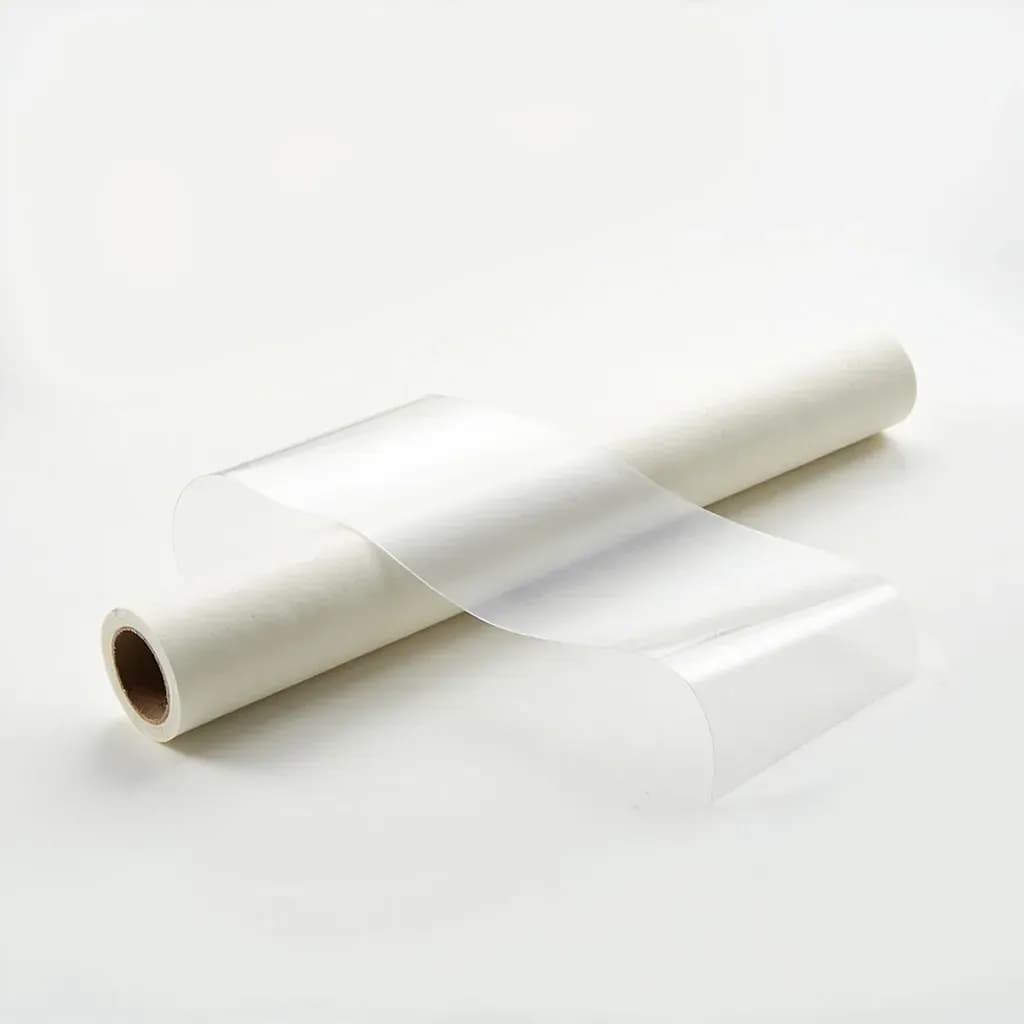
Smooth clear plastic sheet used in pastry for mousse collars and glossy chocolate work.
An acetate sheet is a thin, smooth, clear plastic film used in pastry and chocolate work. Cut into strips, it lines cake rings and mousse molds to give clean sides and easy release, and it sets chocolate and ganache with a high-gloss mirror finish. Cooks also use it to spread tempered chocolate for shards and decorations, peeling it away once set.
Acetate sheet is a food-grade cellulose plastic indispensable in professional pastry kitchens for achieving surfaces that are impossible to replicate with mold walls alone. The sheet acts as a barrier between the dessert and the container, preventing the adhesion that causes tearing or marring when a chilled mousse or entremet is unmolded. Because acetate is crystal clear and entirely smooth, it transfers a flawless, mirror-like finish to chocolate and frozen mousses alike—a standard of precision that defines contemporary French-style pâtisserie.
The material behaves predictably under the temperatures encountered in pastry work: it remains rigid and stable when chilled or at room temperature, tolerating brief contact with warm glazes up to about 60°C before warping. Above 90°C, it melts and becomes unusable. This temperature sensitivity means acetate is best suited to cold-work applications—assembling chilled desserts, working with tempered chocolate, and setting transfers at cool ambient temperatures. Its reusability makes it economical in high-volume production, though clarity degrades with scratches from rough handling or cleaning.
The sheets come in several thicknesses serving different purposes. Thicker gauges (0.8–1mm) offer rigidity for tall mousse collars and entremet sides where the acetate must hold its shape under pressure from the filling. Thinner gauges (0.3–0.5mm) flex easily for draping over forms or creating curved chocolate work. All food-grade acetate is transparent, allowing you to monitor the product inside without disturbing it—particularly useful when building layered desserts where each layer must be set before the next is added.
Alternatives
Types & varieties
Narrow strips (2–5cm wide, 30–60cm long) marketed specifically for mousse collars; the most common format in pastry kitchens
A4 or similar size; can be cut to custom dimensions as needed for non-standard mold sizes or specialty work
Continuous acetate on a roll; economical for high-volume production; must be cut to desired length before use
Stiffer and more rigid; preferred for tall mousse collars and entremet sides where structural integrity matters
More flexible and drapeable; used for chocolate work where sheets need to curve around forms or create scrolls
Why Acetate Outperforms Other Liners
Pastry chefs often experiment with alternatives—heavy-duty plastic wrap, parchment paper, even silicone mats—but acetate remains the professional standard for demanding chocolate and mousse work. Plastic wrap stretches and traps air pockets, producing an uneven surface. Parchment is too porous and absorbent for chocolate, which seizes on paper fibers. Acetate provides a completely non-stick, non-porous barrier that releases cleanly from both fat-based and water-based mousses. Its rigidity also means it stays in place better than flexible films when building layered desserts, where the acetate collar must hold its position as successive layers are poured and set.
- Acetate releases cleanly from both chocolate and water-based mousses without residue
- Rigid enough to hold position when building tall or layered desserts
- Thin enough to wrap snugly around small-ring molds without buckling
- Transparent so you can monitor the dessert's appearance without dislodging the liner
Cleaning and Storage
Proper maintenance extends acetate's usable life significantly. After use, wipe the sheet with a soft, barely damp cloth to remove any chocolate or cream residue. Never use abrasive sponges, paper towels, or harsh detergents—any of these will scratch the surface, and scratches transfer directly to tempered chocolate in the next use. For stubborn chocolate residue, allow it to set completely, then peel it off gently rather than scraping. Once clean, store acetate flat under a heavy book or in a flat zip-lock bag to prevent curling. Curled strips are difficult to secure around molds and create gaps where fillings can leak.
- Wipe clean with a soft, barely damp cloth only
- Never use abrasive materials that will scratch the surface
- Peel off set chocolate rather than scraping to avoid damage
- Store flat under weight or in a sealed flat bag to prevent curling
Common uses
Tips & pitfalls
- Always use food-grade acetate specifically sold for culinary use—general-purpose plastic sheets may contain solvents or plasticizers not intended for food contact
- Clean acetate with a soft damp cloth only; abrasive sponges scratch the surface, and scratches transfer marks to tempered chocolate
- Store acetate flat under a weight or in a zip-lock bag to prevent curling; curled strips are difficult to secure around molds and create leak points
- For mousse collars, wrap the acetate strip tightly around the chilled dessert and secure with a clip or tape before pouring the final layer
- When making chocolate scrolls, work on a marble or cool stone surface to slow the set time of tempered chocolate and give you more working time
- If acetate sticks to chocolate, the chocolate was poured too warm—allow it to cool slightly before applying acetate next time
- Cut acetate with sharp scissors or a craft knife; ragged edges can puncture plastic wrap or damage delicate chocolate decorations
- Reuse acetate up to 10–15 times if kept clean and unscratched; discard when clarity is lost or scratches become visible
- For tall entremets (over 5cm), use heavy-gauge acetate and consider adding a second strip at the seam for reinforcement against the weight of mousse pressure
- When lining multiple small rings for verrines, cut acetate into strips slightly wider than the ring height, wrap, and secure with a single clip each—more efficient than custom pre-cut strips
Good to know
- Material
- Food-grade cellulose acetate, a thin clear plastic derived from natural cellulose
- Typical Thickness
- 0.3mm to 1mm (0.012" to 0.040")
- Common Formats
- Pre-cut strips (2–5cm wide), full sheets (A4/A3), and rolls
- Temperature Range
- Safe to 60°C (140°F); warps and melts above 90°C (195°F)
- Reusable
- Yes, if cleaned and stored flat; typically 10–15 uses before clarity degrades
- Transparency
- Crystal clear, allowing visibility of the product inside without disturbing it
- Flexibility by Gauge
- Thin gauge (0.3–0.5mm) for curved chocolate work; heavy gauge (0.8–1mm) for rigid mousse collars
- Food-Safety Note
- Must be specifically marketed as food-grade; general-purpose plastic sheets may contain solvents or plasticizers not approved for culinary use
Also called
acetate-sheet · Acetate Roll · acetate-strip · cake-collar
Related

Aluminum Foil
Wraps, covers, and tents food for the oven and grill

Parchment Paper
Nonstick liner for clean, even baking and easy release

Wax Paper
Moisture-resistant sheet for wrapping and counter prep

Plastic Wrap
Clings tight to cover bowls and wrap leftovers

Silicone Baking Mat
Reusable nonstick liner that replaces parchment

Cheesecloth
Loose-woven cloth for straining stock and bundling herbs

Beeswax Food Wrap
Reusable wax wrap that molds around bowls and produce

Piping Tips
Shaped nozzles that turn frosting into stars and rosettes