Storage & Containers
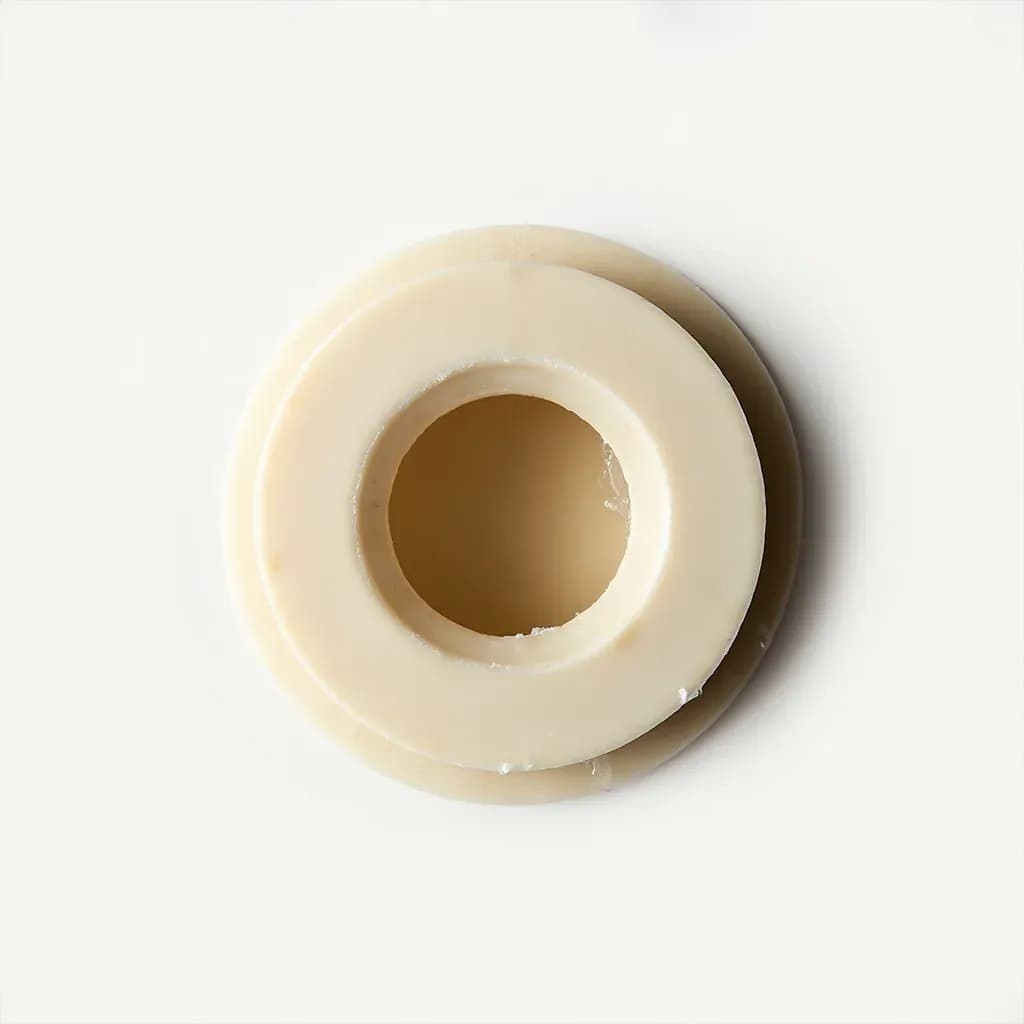
Airlock Grommet / Bung
A rubber stopper that seals a fermentation vessel and holds an airlock in place.
An airlock grommet or bung is a flexible rubber plug fitted into the mouth of a carboy, jar lid, or bucket to seal it during fermentation. It holds an airlock so carbon dioxide can escape while keeping oxygen and contaminants out. Brewers, vintners, and fermenters rely on the tight seal to protect kraut, wine, and beer.
The airlock grommet — more often called a "bung" by brewers and winemakers — is the small but essential sealing stopper that sits in the mouth of a fermentation vessel. Its two jobs are deceptively simple: keep oxygen and spoilage organisms out while letting the CO2 produced by yeast vent freely through an airlock or blow-off tube. Because fermentation is a controlled biological process that can run for days, weeks, or months, the seal has to be reliable, food-safe, and chemically stable in acidic and alcoholic environments. A leaking or poorly seated bung is one of the most common causes of oxidation, vinegar taint, and stalled ferments in home winemaking and brewing.
Most bungs are made from either food-grade natural rubber or food-grade silicone and are sized to the laboratory rubber-stopper numbering system (#6, #6.5, #7, #8, #10), where a higher number indicates a larger diameter. A #7 is the everyday workhorse for a standard 5-gallon glass carboy, typically sold pre-drilled with a single hole just wide enough to accept the stem of a 3-piece or S-shaped airlock. The same numbering also applies to undrilled "solid" bungs used for sealing a vessel during bulk aging. Choosing the right size, the right material, and keeping the bung clean are the three habits that separate consistent ferments from frustrating ones.
In strict homebrewing parlance the words are not quite interchangeable: "bung" usually means the stopper that fits into the neck of a glass carboy or demijohn, while "grommet" more often refers to the rubber ring set into the lid of a plastic bucket or PET carboy. For practical purposes the two belong to the same family — the function, materials, and care are identical.
Alternatives
Types & varieties
Seals the vessel completely; used for bulk aging, cold-crashes, or short-term storage once active fermentation has finished.
The standard airlock grommet; one hole sized for a 3-piece, S-shaped, or twin-bubble airlock stem.
Two openings; used with a blow-off tube during vigorous primary fermentation, or to run a thermometer probe alongside an airlock.
Traditional, pliable, and inexpensive; degrades faster than silicone and can swell, dry out, or pick up off-odors over time.
Modern upgrade; tolerates boiling-water sanitation, does not dry out, and outlasts rubber — usually at a higher price.
Pre-sized for common glass carboys: #7 for 5 gal, #6.5 for 3 gal, #10 for some 6.5 gal Italian-style carboys.
The rubber ring that seats in the lid of a plastic bucket or PET carboy; often sold as a replacement part for a specific fermenter.
Blank food-grade silicone that the brewer drills to a custom diameter — useful for unusual vessels or odd airlock sizes.
Choosing the Right Size
Sizing is the single most important decision, and the lab numbering system exists for a reason. Measure the opening of your vessel at its widest point — typically the inside of the neck for a glass carboy — and compare against manufacturer charts rather than guessing by eye. A bung that is one number too small will not seal and can be sucked inward as the vessel cools, drawing in oxygen. A bung that is one number too large may be impossible to seat without tearing it, and forcing it can crack a glass carboy neck.
- #6 or #6.5 fits most 1-gallon glass jugs and 3-gallon carboys.
- #7 is the standard fit for a 5-gallon glass carboy.
- #8 and #10 are used for larger vessels, including some 6.5-gallon Italian-style carboys and small commercial fermenters.
- When in doubt, buy a sampler pack with two adjacent sizes — the cost is trivial compared to a ruined batch.
Care and Long-Term Maintenance
A bung lives a hard life: soaked in alcohol, dunked in sanitizer, baked by fermentation heat, and clamped for months on end. Treat it as a consumable rather than a permanent piece of equipment. Natural rubber in particular slowly oxidizes, especially when exposed to UV light through a window or stored dry between uses.
- Sanitize before every batch — at minimum a few minutes in a no-rinse sanitizer; boiling is fine for silicone only.
- Inspect the seal surface before each use; replace any bung that is cracked, crumbly, sticky, or sour-smelling.
- Store clean bungs in a sealed bag or jar of dilute sanitizer so they do not dry out between batches.
- Keep natural rubber away from direct sunlight; UV is the fastest route to a cracked, leaking seal.
- For long aging of wine or mead, switch from a drilled rubber bung to a solid silicone bung — the seal stays reliable for years instead of months.
Common uses
Tips & pitfalls
- Match the bung number to the actual neck of your vessel — too loose leaks, too tight cracks the rubber or the glass when forced.
- Lubricate the bung with water, sanitizer solution, or StarSan before seating it; never use petroleum jelly or cooking oil, which can contaminate the batch.
- Sanitize the bung every time you use it; soak for several minutes in a no-rinse sanitizer, or boil it if the bung is silicone.
- Inspect rubber bungs before each batch and replace any that are cracked, sticky, crumbly, or smell sour — natural rubber is the usual failure point.
- Keep at least one spare bung and airlock on hand; mid-fermentation seal failures happen more often than anyone expects.
- For a vigorous primary fermentation, use a two-hole bung with a blow-off tube in a jar of sanitizer instead of an airlock — airlocks can clog with kraeusen and pop off under pressure.
- Do not leave a rubber bung in direct sunlight for long periods; UV degrades natural rubber quickly and ruins the seal.
- When aging wine or mead for many months, swap a drilled rubber bung for a solid silicone one to avoid slow oxygen ingress from a degrading seal.
- Make sure the airlock stem is pushed fully through the drilled hole; a partially seated airlock can pop out under pressure and break.
Good to know
- Function
- Seals the opening of a fermentation vessel and holds an airlock or blow-off tube in place so CO2 can escape while blocking oxygen and contaminants.
- Common materials
- Food-grade natural rubber (traditional, soft, inexpensive) or food-grade silicone (more durable, heat-tolerant, longer-lasting).
- Sizing system
- Lab rubber-stopper numbering; higher number equals larger diameter. Common homebrew sizes are #6, #6.5, #7, #8, and #10.
- Size for 5-gal glass carboy
- #7 (sometimes #6.5) drilled with a hole that accepts a standard 3-piece airlock stem.
- Size for 1-gal glass jug
- #6 or #6.5, depending on the neck diameter.
- Standard drilled hole
- Roughly 7–10 mm (about 5/16" to 3/8") for an airlock; larger for a blow-off tube.
- Sanitation
- Soak in a no-rinse sanitizer such as StarSan before each batch; silicone bungs can also be boiled.
- Service life
- Natural rubber bungs last about 2–5 years before drying or cracking; silicone bungs can last many years with proper care.
- Temperature tolerance
- Natural rubber roughly -20 °C to 80 °C; food-grade silicone from about -40 °C up to 230 °C, depending on brand.
- Origin
- Adapted from laboratory rubber stoppers; widely adopted by home winemakers and brewers from the late 20th century onward.
Also called
Airlock Bung · Fermentation Grommet · Carboy Bung
Related

Freezer Bags
Thick, sealable bags built to fight freezer burn

Storage Bags
Resealable bags for fridge storage and marinating

Storage Container
Lidded container for leftovers, prep, and meal kits

Glass Container
Oven-to-fridge glass that won't stain or hold odors

Plastic Container
Lightweight, stackable storage for everyday leftovers

Vacuum Sealer Bags
Airtight bags for long freezing and sous-vide

Reusable Bags
Washable silicone bags that replace single-use plastic

Mason Jar
Sealed glass jar for preserves, pickles, and storage