Storage & Containers
Airtight Storage Container
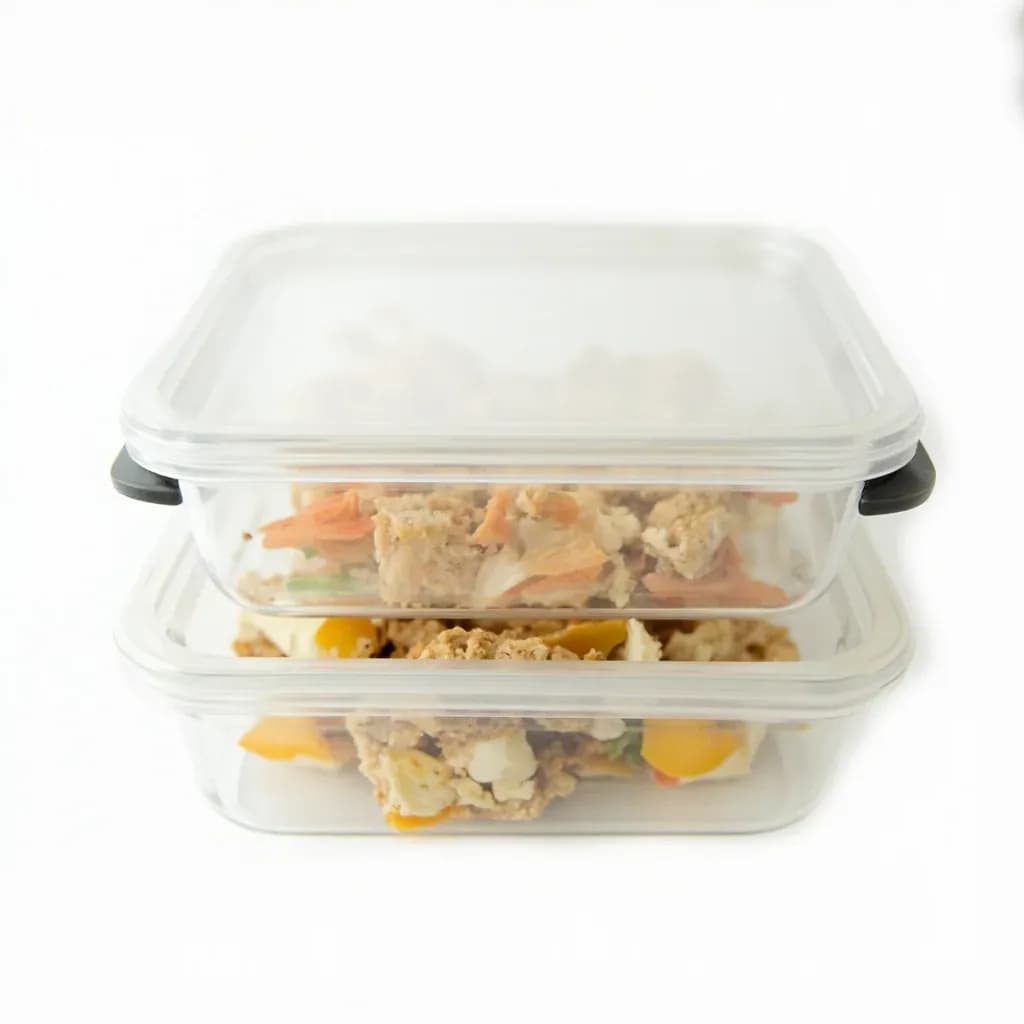
A sealed-lid container that keeps dry goods fresh and leftovers from spilling.
An airtight storage container has a gasketed or clamped lid that seals out air and moisture to keep flour, coffee, cereals, and leftovers fresh longer. The seal also prevents odors and pests from getting in and liquids from leaking out in transit. Clear bodies let cooks see contents and gauge quantities at a glance.
An airtight storage container is a rigid or semi-rigid vessel engineered with a gasketed, clamped, threaded, or snap-fit lid that resists air exchange. The seal is what distinguishes it from a merely covered bowl or a friction-fit deli tub: an elastomer gasket compressed against a rigid rim blocks moisture, oxygen, and pests while holding aroma in. That single feature is why flour stays powdery, coffee stays aromatic, and leftover soup does not perfume the entire fridge.
The category spans everything from a hinged snap-lock plastic box to a tempered-glass jar with a silicone rim, a Fido clamp jar, and a stainless canister with a pump-extracted vacuum. Materials vary — borosilicate or tempered soda-lime glass, polypropylene, Tritan copolyester, food-grade stainless steel, platinum-cure silicone, glazed ceramic — and each behaves differently in the freezer, microwave, and dishwasher. Knowing the limits of a container matters more than the brand on the lid: a chipped glass base will shatter in thermal shock, and a perished silicone gasket quietly lets in the very air you bought the vessel to keep out.
Used well, these containers are the connective tissue of a working kitchen. They keep staples dry and legible, leftovers safe for days rather than hours, and the fridge and pantry orderly enough that you actually cook from them. Used carelessly — sealed while hot, microwaved with the lid snapped shut, frozen without headspace — they leak, warp, crack, or quietly contaminate the food they hold.
Alternatives
Types & varieties
Polypropylene boxes with hinged lids and a silicone gasket — Tupperware, Sistema, Lock & Lock, Rubbermaid Brilliance, OXO Good Grips.
Heat- and shock-resistant glass bases with plastic or glass lids and silicone seals — Pyrex, Lock & Lock Glass, Glasslock.
Threaded glass jars with two-piece metal lids (flat disc and screw band); the standard home-canning closure since John Landis Mason's 1858 patent.
Hinged wire-bail jars with a rubber gasket, originally Italian; popular for pantry staples and small-batch ferments.
Bins and canisters fitted with a manual or electric pump that extracts air before the lid locks — FoodSaver, Vacu Vin, OXO vacuum.
Flexible lids or plunger-tops that mechanically push out air; often used for dry goods and leftovers in the fridge.
Non-reactive, dent-resistant, lightweight; Klean Kanteen, RSVP; lids typically have a silicone gasket and clamp or screw closure.
Collapsible, freezer-to-microwave vessels with pinch-lock or snap seals — Stasher, Zip Top.
Polycarbonate or PP containers used in commercial kitchens; graduated markings, colour-coded lids, and very durable seals.
Glazed stoneware jars with cork or silicone-gasketed lids; mainly for countertop dry-good display.
Multi-section plastic or steel bento-style boxes with a single sealed outer lid; often paired with separate inner cups and cutlery.
Square stackable bins with side-clamp closures — Oggi, Joseph Joseph; designed for uniform cupboard storage.
Material and seal trade-offs
Each material earns its place in a kitchen by handling a different set of conditions, so it pays to choose by job rather than by brand.
- Glass is the most food-neutral and the most forgiving in the oven and microwave, but it is heavy, breaks on impact, and can shatter from thermal shock if moved between extreme temperatures.
- Stainless steel is durable and non-reactive but cannot go in the microwave; best for pantry, fridge, and lunch transport.
- Polypropylene (#5) is light, cheap, and freezer-flexible, but it eventually stains from tomato sauce, turmeric, and curry, and absorbs odours over time.
- Silicone bags and lids collapse flat for storage and tolerate wide temperature swings, though fine powders can occasionally work into the seal track.
- A gasket is the weakest link in any container. A clean, dry, fully seated silicone or rubber gasket is the difference between a true airtight seal and a misleadingly marketed box.
Matching container to task
A short practical guide to picking the right vessel for each kind of food.
- Dry pantry staples — flour, sugar, rice, pasta, oats, coffee, tea, nuts, dried beans — belong in uniform, stackable, wide-mouthed containers so you can scoop without spillage.
- Liquids and soups — choose tempered glass or PP with a true gasketed snap or threaded closure; avoid friction-fit deli tubs for the freezer.
- Freezer batch cooking — leave 2–3 cm of headspace, prefer PP or silicone for flexibility, and label with date and contents.
- Marinating — vacuum pump containers or simple screw-lid jars keep food submerged in the marinade without leaking.
- Strongly spiced or oily foods (curry, kimchi, tomato sauce) — use glass or stainless rather than plastic to prevent permanent staining and flavour carry-over.
- Countertop display — glazed ceramic canisters suit countertop dry-goods, but cork-lidded versions are not truly airtight; choose silicone-gasketed ceramic for long-term storage.
Common uses
Tips & pitfalls
- Seat the gasket fully into its channel before closing the lid; a twisted or pinched gasket is the single most common cause of a leaky seal.
- Let hot food cool to at least room temperature before sealing — warmth softens gaskets, warps plastic lids, and creates condensation that promotes mould and sogginess.
- Square and rectangular containers pack more efficiently in a fridge or pantry than round ones, often saving 25–30% of usable space.
- Decant bulk goods into clean, bone-dry containers; even a trace of moisture in a sealed bin can cause clumping in flour, sugar, and salt.
- Remove and hand-wash gaskets regularly with warm soapy water, and replace any that are cracked, stretched, or no longer rebound — a tired seal is the silent cause of freezer burn and stale pantry goods.
- Never move a glass container directly from freezer to oven or vice versa; thermal shock can shatter tempered glass even when the vessel is rated for both ends of the range.
- Vent plastic lids or set them askew when microwaving to prevent pressure build-up; never put metal lids or hand-tightened metal clamps in the microwave.
- For vacuum-style containers, wipe the sealing rim clean of crumbs or grease before pumping — debris breaks the seal and the pump will not hold vacuum.
Good to know
- Common materials
- Borosilicate or tempered soda-lime glass; polypropylene (PP #5); Tritan copolyester; 18/8 or 18/10 food-grade stainless steel; platinum-cure silicone; glazed ceramic.
- Seal mechanism
- A continuous silicone or food-grade rubber gasket compressed by a snap-lock, hinged clamp, threaded ring, or screw band creates the airtight closure; some lids use a polyethylene or plastisol liner in place of a separate gasket.
- Temperature tolerance
- Glass and stainless steel: roughly −40 °C to 300 °C. Polypropylene: typically −20 °C to 120 °C. Always defer to the manufacturer's printed rating.
- Microwave and freezer use
- Glass and PP #5 are microwave-safe when the lid is vented or removed; metal lids and most gaskets must not go in the microwave. Glass is freezer-safe if not subjected to thermal shock.
- Freezer headspace
- Leave 2–3 cm of headspace when freezing liquids so the container does not crack or pop its lid as contents expand.
- Recycling codes
- PP (#5) is the safest food-grade plastic for repeated use; PET (#1) is generally single-use; avoid scratched polycarbonate (#7) that may leach BPA.
- Lifespan
- Plastic containers typically 2–5 years before warping, staining, or seal fatigue; glass and stainless can last decades if not chipped; gaskets should be replaced every 1–2 years.
Also called
sealed-storage-container · food storage container · lidded canister
Related

Freezer Bags
Thick, sealable bags built to fight freezer burn

Storage Bags
Resealable bags for fridge storage and marinating

Storage Container
Lidded container for leftovers, prep, and meal kits

Glass Container
Oven-to-fridge glass that won't stain or hold odors

Plastic Container
Lightweight, stackable storage for everyday leftovers

Vacuum Sealer Bags
Airtight bags for long freezing and sous-vide

Reusable Bags
Washable silicone bags that replace single-use plastic

Mason Jar
Sealed glass jar for preserves, pickles, and storage