Heat & Safety
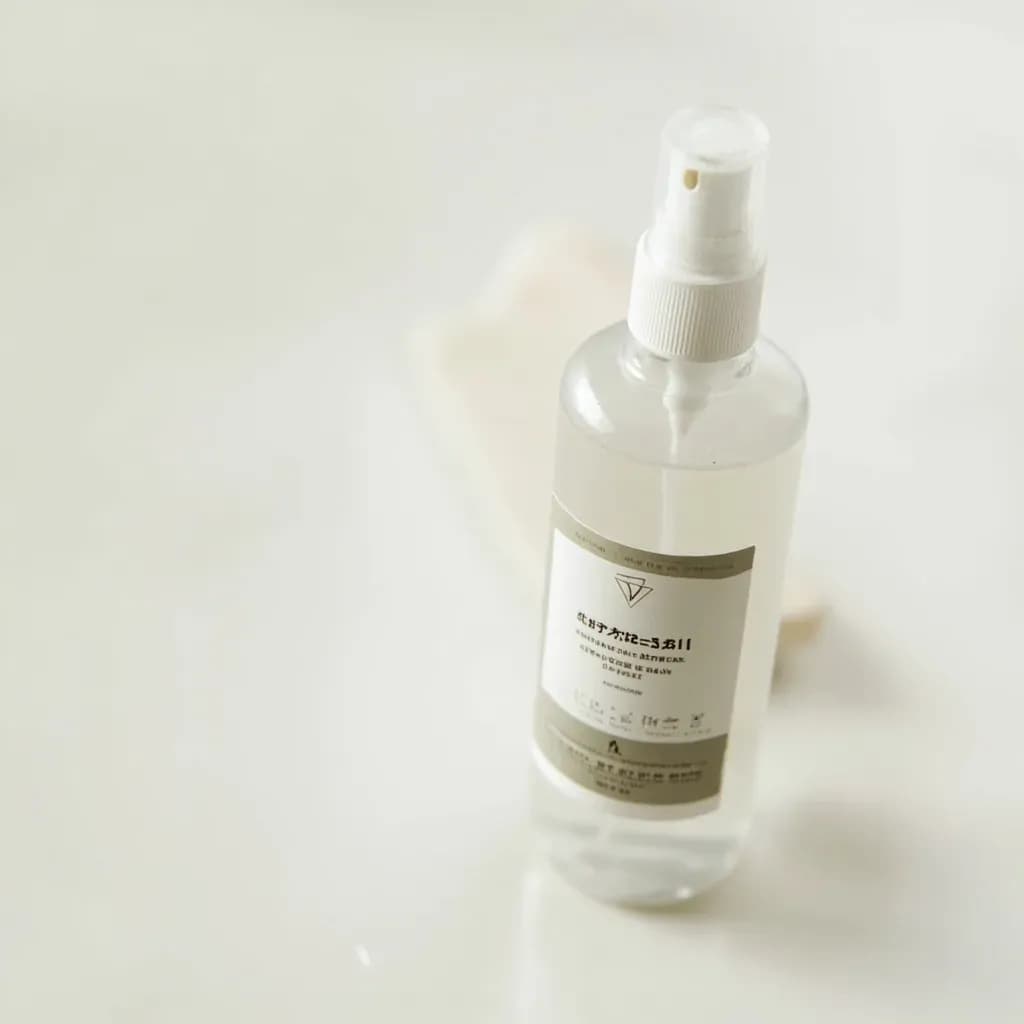
Isopropyl Sanitizing Spray
A high-proof isopropyl alcohol spray for quickly sanitizing surfaces, tools, and hands in the kitchen.
Isopropyl sanitizing spray is a 70-percent alcohol solution that kills most surface microbes within seconds and evaporates without residue. Cooks and fermenters spritz it on cutting surfaces, jar rims, tools, and gloved hands for fast sanitation between tasks. The 70-percent concentration works better than higher proofs because the small amount of water helps the alcohol penetrate and disrupt cells.
Isopropyl sanitizing spray is a diluted solution of isopropyl alcohol (2-propanol) in water, dispensed from a pump or trigger sprayer, used to knock down bacteria, fungi, and enveloped viruses on hard kitchen surfaces and small tools between tasks. The standard kitchen formulation is 70% alcohol by volume, and that figure is not arbitrary: the 30% water content slows evaporation just enough to keep the surface wet through the required contact time, and the water itself helps denature microbial proteins more thoroughly than neat alcohol. Because it evaporates within seconds and leaves no residue, it is the closest thing in a working kitchen to a "spray and walk away" sanitizer.
Its behavior is defined by a few key trade-offs. It is fast, broad-spectrum against vegetative (non-sporing) microorganisms, and permitted on food-contact hard surfaces once it has dried. It is also highly flammable, attacks certain plastics and finishes, and does not penetrate grease or food soils — so it sits between full cleaning (which removes soil) and sterilization (which kills spores) in any sensible food-safety program. In a home or professional kitchen, think of it as the middle step: clean first with soap and water, then sanitize with 70% IPA, and reserve chlorine-based sanitizers or heat for cases where spores or heavy contamination are a concern.
The 70% concentration is also the regulatory and practical benchmark in most jurisdictions. Higher-proof alcohol (91% or 99%) evaporates before it can do its work and is really a cleaner or solvent, not a sanitizer; concentrations well below 70% are too weak to be reliable on the line. For routine kitchen use, 70% isopropyl alcohol in a clearly labeled spray bottle is the version to keep within arm's reach of the prep area.
Alternatives
Types & varieties
The kitchen standard. The 30% water content slows evaporation and improves protein denaturation, making it more effective at killing microbes than higher concentrations.
Faster-drying and useful for streak-free cleaning of glass and stainless, but evaporates before the recommended contact time — a marginal sanitizer.
A solvent, not a sanitizer. Evaporates almost instantly and is best reserved for electronics, residue removal, and moisture-sensitive tasks.
Often sold with aloe, fragrance, or glycerin. The additives can leave a film on food-contact surfaces and are not recommended for kitchen use.
Bulk 70% concentrate used to refill smaller labeled spray bottles in professional kitchens.
How 70% alcohol actually kills microbes
Pure alcohol is a dehydrating agent and a protein denaturant, but it works on microbes only while it is in liquid contact. At 99% it evaporates in a few seconds and pulls surface water with it, so cells often survive. At 70% the water acts as a carrier: it swells the cell wall and keeps the alcohol in solution long enough to coagulate the internal proteins irreversibly. This is why a 70/30 mix is the laboratory and regulatory benchmark, and why "more concentrated" is not the same as "more effective."
- Water carries alcohol into the cell rather than letting it bounce off the dehydrated surface.
- Below ~50% alcohol, the solution is too weak to denature proteins reliably.
- Contact time matters more than concentration once you are at or above 70%.
Common uses
Tips & pitfalls
- Use 70%, not 99% — the water is what makes it an effective sanitizer rather than a fast-evaporating solvent.
- Pre-clean visibly soiled surfaces with soap and water first; alcohol does not penetrate grease or food film.
- Spray generously and let the surface air dry; wiping it off early wastes the contact time and reduces efficacy.
- Keep the bottle at least a foot from open flames, gas burners, pilot lights, and any sparking equipment — the vapor is highly flammable.
- Avoid acrylic, polycarbonate, shellac finishes, and unsealed wood; repeated use will cloud or dissolve the surface.
- Never mix isopropyl alcohol with bleach or ammonia — toxic gases can form, even in small kitchen quantities.
- For thermometer probes, spray, hold 10–15 seconds, then wipe — do not dip the probe back into the bottle to prevent cross-contamination.
- Label the bottle clearly and store it away from food, heat sources, and oxidizers; replace empty spray bottles rather than refilling them without washing, since biofilm can build up inside.
Good to know
- Active ingredient
- Isopropyl alcohol (2-propanol), typically at 70% v/v in water
- Effective concentration
- 70% is the standard; the water is essential for full antimicrobial action
- Contact time
- Surface should stay visibly wet for at least 30 seconds
- Flash point (70%)
- About 18–21 °C (64–70 °F) — highly flammable
- Evaporation
- Fast; no rinse required on most hard, sealed surfaces
- Material safety
- Safe on stainless steel and glass; can dull acrylic, polycarbonate, shellac, and unsealed wood
- Regulatory status
- EPA-registered surface sanitizer; not approved for direct food contact or ingestion
- Typical container
- 16 oz (473 mL) spray bottle; commercial kitchens refill from 1-gallon stock
Also called
Isopropyl Spray · Rubbing Alcohol Spray · Alcohol Sanitizer
Related

Paper Towels
Disposable sheets for spills, drying, and patting dry

Kitchen Towels
Reusable cloths for drying, gripping, and wiping

Oven Mitts
Heatproof gloves to handle hot pans and trays safely

Disposable Gloves
Single-use gloves for safe, mess-free handling

Cleaning Cloths
Reusable cloths for wiping counters and spills

Tortilla Warmer
Insulated holder that keeps tortillas warm and soft

Trivet
Heatproof stand that shields surfaces from hot pots

Ice Bath Setup
Bowl of ice water that halts cooking and sets color