Heat & Safety
All-Purpose Cleaner
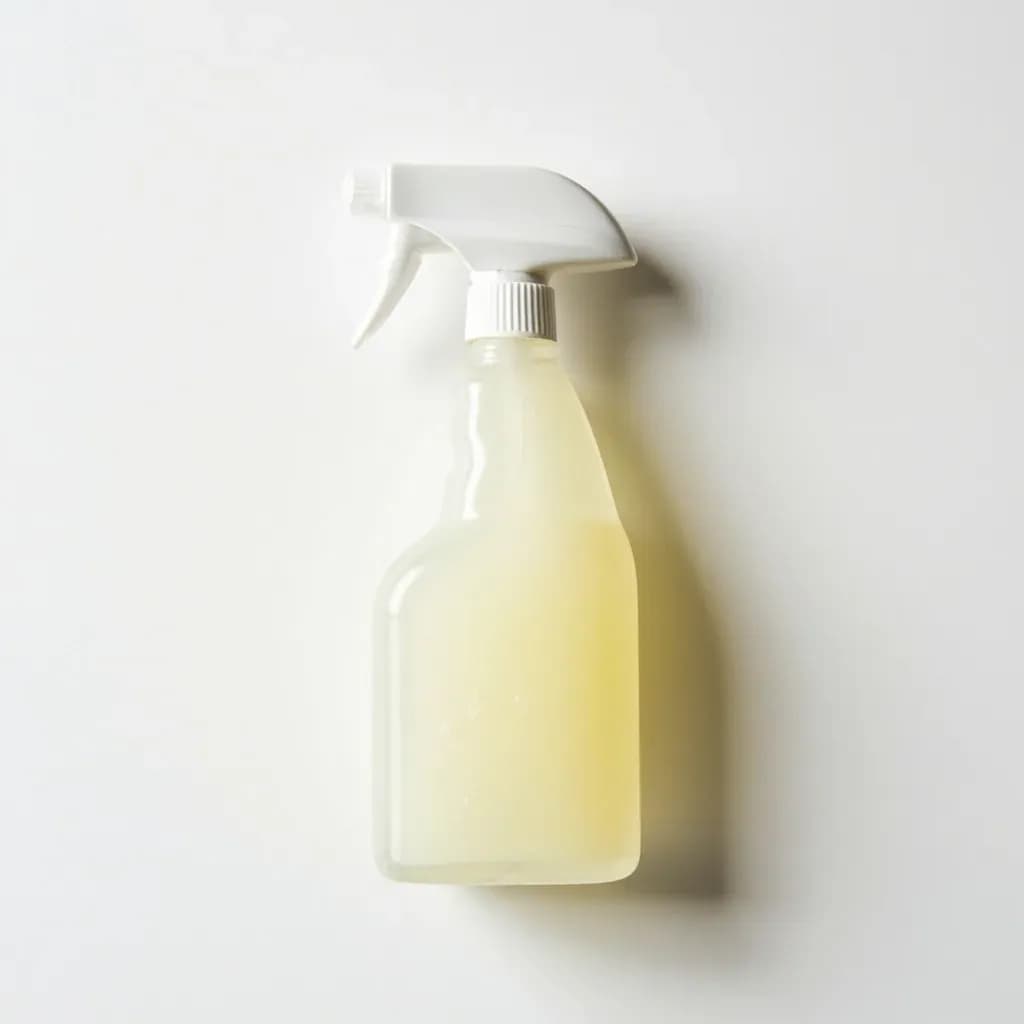
General-duty spray for cleaning countertops, surfaces, and equipment.
All-purpose cleaner is a versatile mild detergent spray for everyday kitchen cleaning of countertops, tables, appliances, and equipment exteriors. It cuts light grease and food soil without the harshness of a dedicated degreaser, making it the go-to for routine wipe-downs. Food-contact surfaces are typically rinsed and sanitized after cleaning, and many formulas are designed to be streak-free on stainless and glass.
An all-purpose cleaner is the workhorse of kitchen sanitation — a water-based liquid built on synthetic surfactants (the lifting-and-carrying molecules, typically sodium lauryl sulfate, sodium laureth sulfate, or alcohol ethoxylates) and a solvent such as a glycol ether or isopropyl alcohol that dissolves cooking grease. It sits in the mildly neutral-to-alkaline range, roughly pH 7–11, which is high enough to emulsify fats and food film but low enough to be safe on sealed countertops, stainless steel, glass, and most appliance finishes. Every serious kitchen keeps one within arm's reach because it handles roughly 80% of what gets dirty — countertops between tasks, hoods, cabinet fronts, appliance exteriors, floors, equipment frames — without needing a different product for each surface.
What it is not, and this matters as much as what it is, is a sanitizer. An all-purpose cleaner removes soil; a sanitizer reduces pathogens on a surface that is already clean. On any surface that food actually touches — cutting boards, butcher blocks, prep tables under produce or raw protein — the FDA Food Code (§4-703.11) requires a separate sanitizer step. The common food-contact sanitizers are a chlorine solution (50–100 ppm prepared from unscented 5.25–6% household bleach), a quaternary ammonium product at the label's ppm, or 3% hydrogen peroxide diluted per manufacturer. These are not interchangeable with all-purpose cleaner, even when the cleaner carries an "antibacterial" claim on the label.
The formulation choices carry real trade-offs. Concentrates are cheaper per use and generate less plastic waste, but they only perform as well as the dilution — guesswork underperforms or leaves residue. Disinfecting all-purpose cleaners are EPA-registered to kill specific pathogens, yet the claim is valid only if the surface stays visibly wet for the labeled dwell time (often 30 seconds to 10 minutes); a quick wipe that dries in 10 seconds sanitizes nothing. And the mixing rules are not optional guidance: combining an all-purpose cleaner with bleach, ammonia, vinegar, or lemon juice produces chloramine or chlorine gas and has sent people to the emergency room.
Alternatives
Types & varieties
Pre-diluted in a trigger-spray bottle; the most common household and small-kitchen format.
Diluted with water at point of use; lower cost per application and less packaging waste, but only as effective as the dilution accuracy.
EPA-registered to kill specific pathogens; the surface must remain visibly wet for the full labeled dwell time.
Higher alkalinity and solvent load, formulated for kitchen grease on hoods, backsplashes, and stovetops.
Surfactants derived from corn, coconut, or sugar; often fragrance-free or lightly scented with essential oils.
Non-woven cellulose or polyester substrate; convenient for quick wipe-downs, more expensive per use.
No synthetic fragrance; preferred in commercial kitchens, by people with sensitivities, and near open food.
Triclosan- or triclocarban-based formulas; largely phased out of U.S. consumer products since 2016 by FDA rule.
All-purpose cleaner vs. food-contact sanitizer
The most common sanitation mistake in a home or small-pro kitchen is treating an all-purpose cleaner as a sanitizer. The two products do different jobs and must be used in sequence on any surface that touches ready-to-eat food.
- Clean first, then sanitize. Soil left on a surface shields pathogens from the sanitizer and uses up its active ingredient. Wipe with all-purpose cleaner, rinse with potable water if the cleaner is not food-contact rated, then apply sanitizer at the correct concentration.
- Chlorine (bleach) at 50–100 ppm is the most common food-contact sanitizer. From unscented 5.25–6% sodium hypochlorite, that works out to roughly 1 teaspoon per gallon for ~50–75 ppm; verify with chlorine test strips until the ratio is dialed in. (A full tablespoon per gallon yields ~200 ppm, which is appropriate for some jurisdictions but is above the no-rinse range.)
- Quaternary ammonium sanitizers (quat) typically run 200–400 ppm and are easier on the skin than chlorine, but they can leave a residue; follow the label for whether a potable-water rinse is required on food-contact surfaces.
- A disinfecting all-purpose cleaner is a useful third product for high-touch non-food zones — light switches, refrigerator handles, faucet levers — where the EPA-registered dwell time is worth the extra minute.
The mixing rules you don't break
All-purpose cleaner chemistry is forgiving on a countertop and dangerous in a bottle. Three combinations account for most cleaning-related ER visits and are worth memorizing.
- Bleach + ammonia → chloramine gas. Both can be present in the same kitchen (some glass cleaners contain ammonia); never use them back-to-back on the same surface without a water rinse in between, and never mix them in a bucket.
- Bleach + any acid (vinegar, lemon juice, citric-acid bathroom cleaners) → chlorine gas. Even a vinegar rinse just before bleach is enough to liberate it in a small room.
- Two different cleaners with active chemistries (for example, hydrogen peroxide with bleach, or one alkaline degreaser with an acid descaler) can react unpredictably. Stick to one active system at a time, rinse thoroughly with water between products, and ventilate the room whenever you switch.
Common uses
Tips & pitfalls
- Never mix all-purpose cleaner with bleach, ammonia, or acids like vinegar or lemon juice — chloramine and chlorine gas reactions can send people to the hospital.
- Spot-test on an inconspicuous area before using on painted, stained, lacquered, or newly sealed surfaces; surfactants and solvents can cloud finishes that look indestructible.
- Avoid use on natural marble, travertine, limestone, onyx, unsealed concrete, unsealed wood, and bare aluminum — the alkalinity etches calcite-based stone and corrodes aluminum, and the damage does not buff out.
- On surfaces that directly touch food, rinse thoroughly with potable water after cleaning or follow with a dedicated food-contact sanitizer at the correct concentration.
- Apply cleaner to the cloth rather than spraying directly to limit aerosol drift over open food, prep zones, and your face.
- Color-code microfiber cloths (commonly red for raw protein, green for produce, blue for general surfaces, yellow for restrooms) and send them straight to the laundry — never back into the cleaning solution.
- For an EPA-registered disinfecting claim to hold, the surface must stay visibly wet for the full labeled dwell time; re-wet with more product if it dries early.
- Let stovetops, ovens, and ranges cool fully before applying — heat flashes off the carrier water and bakes cleaner residue onto the surface, which is then much harder to remove.
- Label every diluted spray bottle with the product name and dilution date, and discard the solution after about a month.
- Clean top-to-bottom and from the cleanest area toward the dirtiest to avoid re-soiling.
- Use microfiber over paper towels where possible — it lifts grease and bacteria more effectively and is washable.
- Replace the spray head periodically; biofilm and product buildup clog nozzles and weaken the spray pattern.
Good to know
- Form
- Liquid — ready-to-use spray, dilutable concentrate, or pre-moistened wipe
- Typical pH
- 7–11 (neutral to mildly alkaline)
- Core cleaning actives
- Synthetic surfactants such as sodium lauryl sulfate, sodium laureth sulfate, and alcohol ethoxylates
- Solvent system
- Water plus glycol ethers (e.g., butoxyethanol) or isopropyl alcohol for grease-cutting
- Disinfecting variants
- Quaternary ammonium compounds, hydrogen peroxide, lactic acid, or citric acid
- Concentrate dilution
- Typically 1:10 to 1:64 with water, per label
- EPA-registered dwell time
- 30 seconds to 10 minutes, depending on product and target pathogen
- Common certifications
- EPA Safer Choice, USDA BioPreferred, EPA Design for the Environment (DfE)
- Storage
- Cool, dry, sealed; keep away from heat sources and direct sunlight
- Shelf life
- Approximately 2 years unopened; diluted solutions should be used within about 1 month
- Packaging
- HDPE or PET bottles; trigger sprayers commonly polypropylene
Also called
surface-spray · surface cleaner · general cleaner · multi-surface spray
Related

Paper Towels
Disposable sheets for spills, drying, and patting dry

Kitchen Towels
Reusable cloths for drying, gripping, and wiping

Oven Mitts
Heatproof gloves to handle hot pans and trays safely

Disposable Gloves
Single-use gloves for safe, mess-free handling

Cleaning Cloths
Reusable cloths for wiping counters and spills

Tortilla Warmer
Insulated holder that keeps tortillas warm and soft

Trivet
Heatproof stand that shields surfaces from hot pots

Ice Bath Setup
Bowl of ice water that halts cooking and sets color