Heat & Safety
Apron
A protective garment that shields clothing from splashes, grease, and stains while cooking.
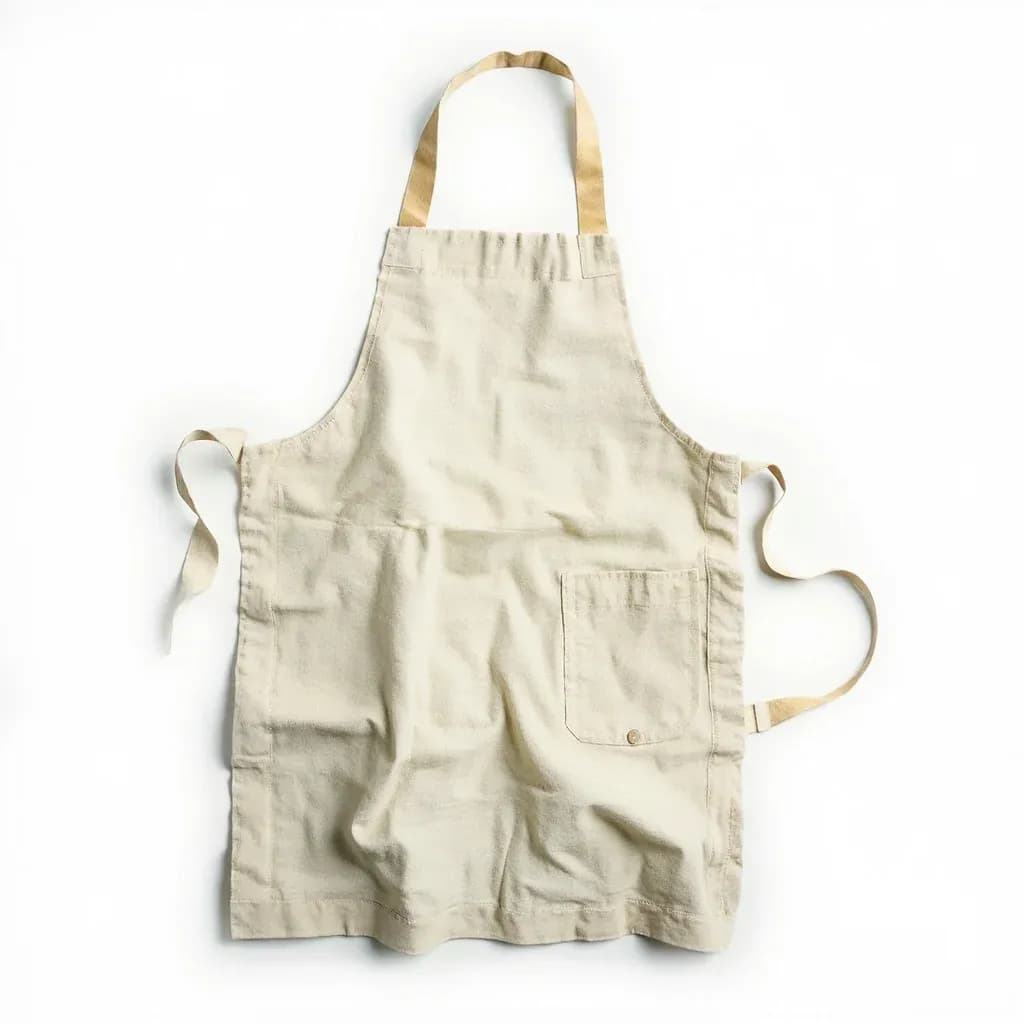
An apron is a worn covering tied at the waist or neck to protect clothing from spills, grease, flour, and food stains during cooking and prep. Heavier vinyl or rubber styles guard against water and blood in butchery and dishwashing, while cotton ones suit general kitchen work. Pockets and towel loops add utility on the line.
An apron is the most basic and most overlooked piece of kitchen protective equipment — a wearable barrier between you and everything your cooking wants to throw at you. Beyond keeping clothes clean, it catches the hot-oil splatter and boiling-liquid spray that would otherwise soak through to skin, gives you a built-in hand-wiping surface, and adds a thin layer of protection against the steam, splashes, and minor burns that account for the bulk of home kitchen injuries. In professional kitchens it is essentially uniform, often color- or length-coded by station, but at home a single well-chosen bib apron covers most cooking, grilling, and prep work for years.
The right apron comes down to material, length, and strap style. Lightweight cotton and linen breathe well and launder easily, making them the everyday choice; heavy canvas, denim, or waxed cotton earn their keep around grills, smokers, and wet prep like fish or oysters; leather and treated fabrics step in for high-heat work where sparks and radiant heat are real concerns. A bib reaching mid-thigh to knee protects the lap when stirring pots at the stove, and a cross-back strap takes weight off the neck during long sessions. Match the apron to the task and the way you cook, and the garment disappears into the workflow instead of fighting it.
Alternatives
Types & varieties
Full-coverage style from chest to knees; the workhorse of restaurant line cooks and serious home cooks.
Tied at the waist only, 30–45 cm deep; common in cafés, bars, and for light kitchen tasks and serving.
Straps form an X across the back, taking weight off the neck; favored for long shifts and heavy use.
Pull-over or buttoned garment covering torso and arms; used in pastry, butchery, and painting.
Sleeveless dress-style garment, often with a bib; traditional in home and farmhouse kitchens.
Open-sided tunic reaching the hips; quick on and off for short tasks.
Heavy canvas or leather, full coverage, often split-leg for mobility; standard in BBQ, butchery, and craft work.
Apron with divided legs for kneeling, climbing, or moving freely around large equipment.
Thin polyethylene or vinyl, single-use; common in food processing, healthcare, and messy cleaning.
Water-resistant; classic for baristas, fishmongers, oyster shuckers, and outdoor cooks.
Heavy leather or treated fabric for forge, grill, and welding protection; not for everyday stovetop cooking.
Cut- and heat-resistant; used in butchery with band saws and in glass or metal work, rarely in domestic kitchens.
Smaller bib or waist styles, often plastic-coated for easy wipe-down; sized for cooking with kids.
Matching material to the task
The single most useful decision is which fabric to put on. Aprons don't protect equally, and the wrong material is worse than useless near heat. Use this as a working guide:
- Lightweight cotton or linen — everyday stovetop cooking, baking, and prep. Breathes, washes hot, and chars (rather than melts) if it contacts a flame.
- Heavy canvas, denim, or waxed cotton — grilling, smoking, shucking, filleting, and any work that throws liquid, fat, or fish slime. The weight absorbs splatter and the weave resists soak-through.
- Rubberized, PVC, or silicone-coated — wet prep, dishwashing, oyster shucking, and any task where you expect the apron to be soaked through.
- Leather — high-heat work in front of a grill, fire pit, or forge. Good against sparks and radiant heat; not breathable, and never put it in a washing machine.
- Kevlar, Nomex, and other aramid blends — band saws, glass, and metalwork. Overkill for the kitchen, but the right call when cut and spark risk is real.
Strap styles and fit
Straps matter more than most buyers realize. A neck loop concentrates weight on the back of the neck and becomes uncomfortable during long cooking sessions; a cross-back or halter distributes it across the shoulders and stays comfortable all shift. Coverage should reach at least mid-thigh — anything shorter leaves the lap exposed when you stir a stockpot or lean over a griddle. The back ties should be snug enough to keep the bib in place but loose enough that you can slip the whole apron off quickly if it catches on a pot handle.
Common uses
Tips & pitfalls
- Avoid loose synthetic fabrics like nylon and polyester near open flames and stovetops — they melt onto skin. Cotton and other natural fibers char rather than melt, which is far safer.
- Choose a length that reaches at least mid-thigh so your lap is covered when you lean over a pot on the stove.
- Cross-back or halter strap styles prevent the neck strain that builds up over long cooking sessions.
- Pre-wash dark denim or indigo-dyed aprons separately in cold water to set the dye and keep it from bleeding onto light clothing underneath.
- Skip fabric softener on flame-resistant or treated work aprons — softener can coat the fibers and reduce their protective performance.
- Replace an apron with grease deeply set into the fabric. Embedded oil can smoke and even ignite near high heat, turning a protective garment into a hazard.
- Keep a dedicated messy-tasks apron for trash, fish, and cleaning, separate from your cooking aprons, to cut down on cross-contamination.
- Hang aprons by the neck strap rather than folding them in a drawer, which creases leather and traps moisture in fabric.
Good to know
- Category
- Protective garment in the Heat & Safety family
- Common materials
- Cotton, linen, canvas, denim, polyester, waxed cotton, rubberized/PVC, leather, silicone-coated fabric
- Standard bib dimensions
- Roughly 70 x 80 cm (27 x 31 in) for adults, covering chest to mid-thigh or knee
- Strap styles
- Neck loop with back ties, cross-back (X-strap), over-the-head halter, or buckled bib
- Heat-resistant materials
- Leather, waxed/treated canvas, Nomex and Kevlar blends for forge, welding, and very hot grills
- Care (fabric)
- Most cotton, linen, and canvas aprons are machine-washable hot; leather is wiped down and conditioned periodically
- Origin of word
- From Middle English "napron" (a cloth or napkin), misanalyzed over time as "an napron" and contracted to "apron"
- Pocket options
- Front kangaroo pocket, divided pockets, pen/towel loops, tool loops, and hammer loops on craft aprons
Also called
vinyl-apron · Butcher's Apron · Disposable Apron · Chef's Apron
Related

Paper Towels
Disposable sheets for spills, drying, and patting dry

Kitchen Towels
Reusable cloths for drying, gripping, and wiping

Oven Mitts
Heatproof gloves to handle hot pans and trays safely

Disposable Gloves
Single-use gloves for safe, mess-free handling

Cleaning Cloths
Reusable cloths for wiping counters and spills

Tortilla Warmer
Insulated holder that keeps tortillas warm and soft

Trivet
Heatproof stand that shields surfaces from hot pots

Ice Bath Setup
Bowl of ice water that halts cooking and sets color