Heat & Safety
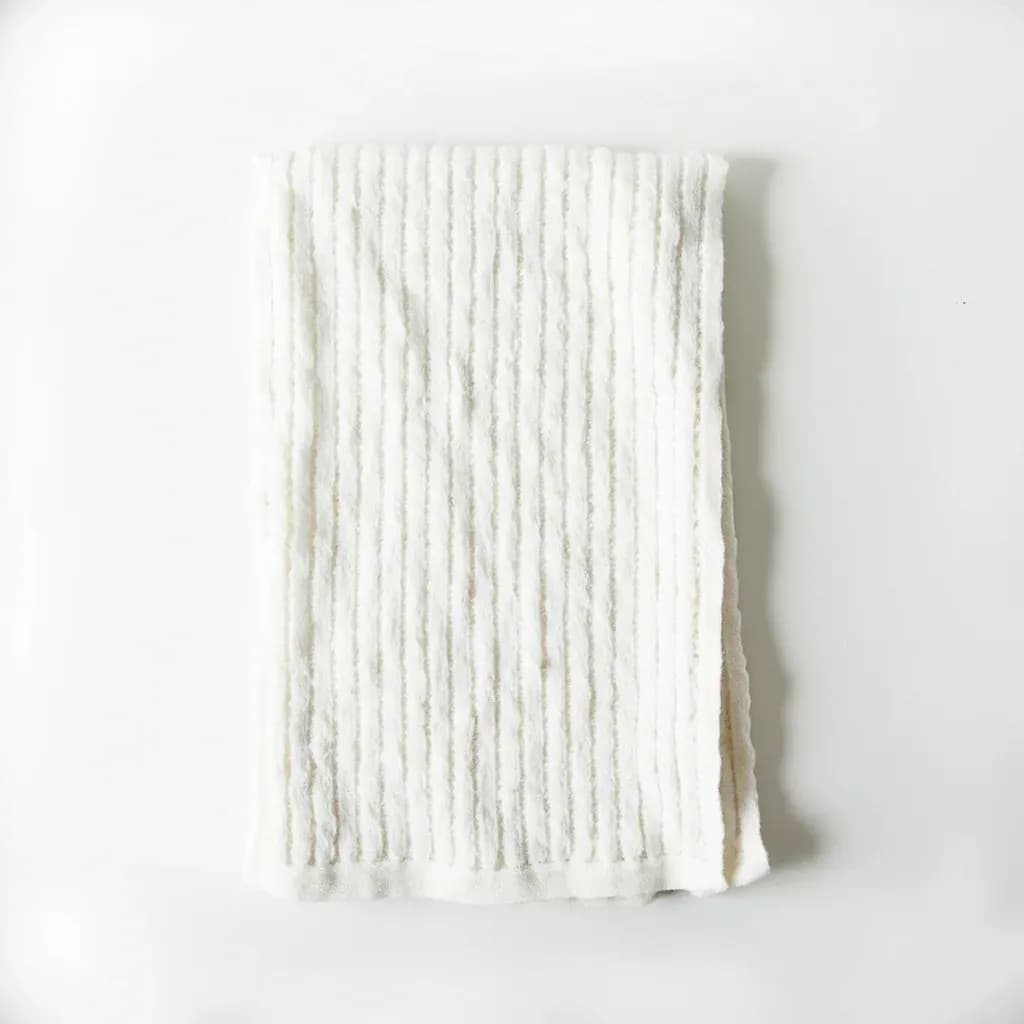
Bar-Mop Towel
Absorbent ribbed cotton towel for wiping spills, drying hands, and handling hot pans.
A bar-mop towel is a thick, ribbed cotton towel built for heavy kitchen and bar use. Its absorbent terry weave makes it the workhorse for wiping counters and spills, drying hands and glassware, and folding into a pad to grip hot pan handles. Sold in bulk and laundered repeatedly, they are sturdier than paper towels and a standard fixture on every line.
The bar-mop towel is the unsung workhorse of the working kitchen: a small, thick, ribbed cotton cloth that absorbs far more liquid than its size suggests and survives hundreds of laundry cycles. Its name comes from the bar — where bartenders originally used it to wipe up drink spills, dry hands, and polish glassware — but the same qualities that made it indispensable there made it indispensable everywhere else in a restaurant: line cooks fold one into a pad to grab a hot handle, dishwashers blot pans with one, prep cooks drape one over dough during bulk fermentation. A bar mop is denser, more absorbent, and more heat-tolerant than a typical kitchen dish towel, and far cheaper than a hand towel to launder, which is why a single home cook can own two dozen of them for less than the cost of a nice apron.
What makes a bar mop a bar mop is the dobby or ribbed weave — small horizontal ribs that add surface area and create channels for liquid to wick along, pulling it into the cotton. Out of the package the cotton is stiff with factory sizing (a starch applied during manufacturing to make the towel look crisp on the shelf), and it feels almost useless. Two or three washes strip that sizing away and the towel transforms: suddenly it drinks spills, dries a fistful of herbs in seconds, and leaves glassware streak-free. The colored stripe — usually green, blue, red, or brown — is not decoration. It marks ownership (restaurants buy or stitch a stripe color so towels don't walk out with staff), and in serious kitchens it has become a color-coding shorthand for cross-contamination control, the way cutting boards are color-coded.
For a home cook, a stash of bar mops is one of the best small upgrades you can make. They replace paper towels for most wiping tasks, take over the role of a clumsy oven mitt for quick grabs, polish a wine glass without lint, and cost almost nothing. Treat them right — no fabric softener, wash hot, replace when they smell — and a dozen will outlast a set of kitchen shears.
Alternatives
Types & varieties
The iconic form: white body with one stripe in green, blue, red, or brown. Brown-stripe and heavier white versions are typically the most absorbent per dollar.
Preferred where bleach-whitening is standard practice — delis, butcher shops, bars polishing glassware, and any kitchen that runs chlorine in the laundry.
Sold in red, green, yellow, and blue sets to enforce a cross-contamination system: red for raw meat, green for produce or sanitary tasks, yellow for poultry, blue for general use.
A looped-pile variant rather than ribbed. More absorbent but lintier and slower to dry — less common than the ribbed form but useful where maximum pickup matters more than a clean polish.
A smaller, lighter version around 12 × 12 inches, kept specifically for polishing glassware and stemware with minimal lint.
Thicker, denser versions sold under 'premium' or 'kitchen' lines at restaurant supply, with deeper ribs and a longer service life under hard daily use.
The color-stripe code
In a professional kitchen, the colored stripe on a bar mop is rarely picked at random. It is a low-tech but effective tag system that has been standard practice in the trade for decades, and it does three jobs at once.
- Theft deterrent: a restaurant buys one stripe color (or stitches its logo into a stripe) so towels are easy to identify when they show up in an employee's laundry, on the secondhand market, or in a staff locker.
- Ownership between businesses: a catering company and a bakery sharing a commercial laundry can keep their stock separate with one glance.
- Cross-contamination control: in kitchens that follow a color-coding system, red-stripe or solid red towels are assigned to raw meat, green to produce or sanitary tasks, yellow to poultry, and blue to general wiping or allergen zones. The same color logic that runs through cutting boards and tong handles runs through the towel bin.
- Brown-stripe and heavier white towels are often the most absorbent per dollar from the same manufacturer — the stripe is a dye job, but the underlying cloth is usually the densest in the line.
Bar mop vs. dish towel vs. huck towel
These three reusable cotton cloths overlap so much that the names are used loosely, but they are built for slightly different jobs. Knowing the difference helps you buy the right one.
- Bar mop: small (16 × 19 in), thick, ribbed, very absorbent, linty at first and then very low-lint. The general-purpose workhorse.
- Kitchen dish towel: usually larger, often flat-woven or with a looser weave, decorative as well as functional. Less absorbent per square inch than a bar mop, and the size makes it slower to wring.
- Huck towel: a surgical-style flat-weave towel, often 16 × 24 or larger, very thin, very low-lint, and prized for polishing glass and silver. Less absorbent than a bar mop because there is simply less cotton to hold liquid, but it leaves a streak-free finish on stemware.
- Microfiber: a different material entirely — absorbs oil as well as water and is the right choice for streak-free stainless and glass, but it melts near open flame and should not be used for hot-pan handling.
Common uses
Tips & pitfalls
- Wash new bar mops at least once before first use. The factory starch sizing makes them almost hydrophobic out of the package; two or three hot cycles strip it out and the cotton comes alive.
- Never use fabric softener or dryer sheets. They coat cotton fibers with a waxy film that repels liquid — the single most common reason a kitchen towel 'stops working.' If a towel has gone water-shedding on you, a hot wash with a cup of white vinegar will sometimes reset the fibers.
- Adopt a color-coding system, even at home. Keep one color for raw meat, one for produce, and one for general wiping. The habit costs almost nothing and prevents the kind of small cross-contamination that causes most home foodborne illness.
- Keep a clean towel and a dirty towel visually separated — a 'clean' hook and a 'wet/dirty' bucket in arm's reach. Confusing the two mid-service is how salad greens get wiped with a towel that just touched chicken.
- Bleach- or peroxide-wash solid-white bar mops regularly to keep them sanitary and bright. Colored-stripe versions usually tolerate chlorine, but check the care tag to be sure the dye is set.
- Fold a bar mop in thirds both ways to make a thick, multi-layer hot pad. It is not a substitute for an oven mitt over sustained heat, but it buys you the seconds you need to move a hot pan off a burner or pull a sheet tray from the top of the stove.
- Retire any towel that develops a persistent mildew smell, deep staining, or holes. The odor is bacterial colonization inside the fibers — laundering will not fully reset it, and the towel will start leaving smell on whatever it touches.
- Tumble dry on medium rather than high heat. Over-drying makes cotton stiff, brittle, and less absorbent, and it shortens the working life of the towel significantly.
Good to know
- Material
- 100% cotton in most cases; cotton-poly blends exist but absorb noticeably less
- Standard size
- 16 × 19 inches is the most common; 16 × 27 and 20 × 30 inch versions are sold for heavier work
- Weave
- Dobby or ribbed weave with horizontal ribs that create wicking channels and add surface area
- Weight
- Roughly 1.5–2 oz per towel; sold by weight, typically 18–24 oz per dozen
- Color stripe
- White body with one colored stripe (green, blue, red, or brown); also sold solid white or solid color for color-coding systems
- Origin of the name
- First used behind the bar to wipe counters, dry glassware, and mop up drink spills
- Break-in
- Becomes substantially more absorbent after 2–3 washes as factory starch sizing is removed
- Washability
- Machine washable; rated for hundreds of industrial laundry cycles
- Lint behavior
- Sheds noticeably when new; sheds very little once washed and dried several times
- Cost
- Among the cheapest reusable textiles in a kitchen; sold by the dozen at restaurant-supply stores, with cases of 50–200+ for professional kitchens
Also called
Bar Mop Towel · bar mop · kitchen towel · terry towel
Related

Paper Towels
Disposable sheets for spills, drying, and patting dry

Kitchen Towels
Reusable cloths for drying, gripping, and wiping

Oven Mitts
Heatproof gloves to handle hot pans and trays safely

Disposable Gloves
Single-use gloves for safe, mess-free handling

Cleaning Cloths
Reusable cloths for wiping counters and spills

Tortilla Warmer
Insulated holder that keeps tortillas warm and soft

Trivet
Heatproof stand that shields surfaces from hot pots

Ice Bath Setup
Bowl of ice water that halts cooking and sets color