Storage & Containers
Berry Punnet
A small vented basket or carton for holding and selling soft berries.
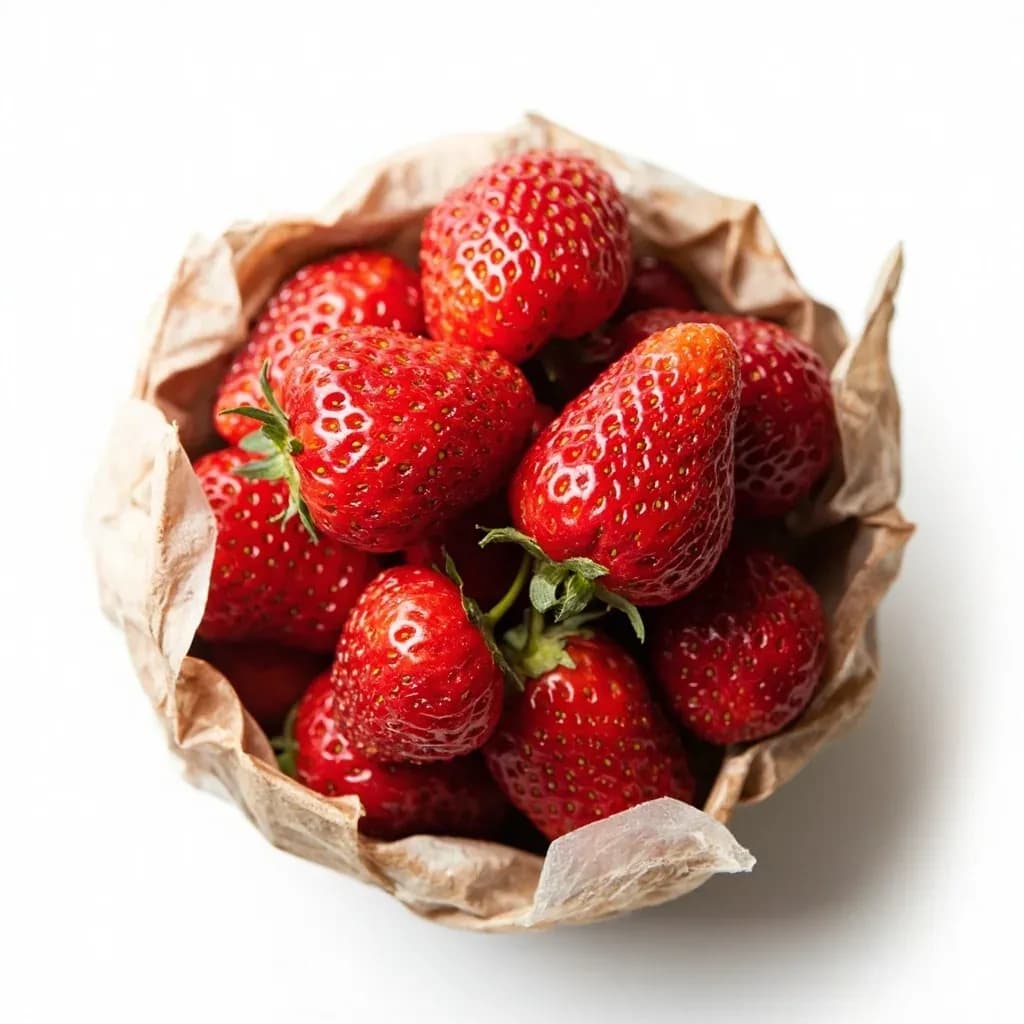
A berry punnet is a shallow, ventilated container used to hold strawberries, raspberries, and other delicate fruit. Its open construction lets air circulate to slow spoilage and prevents the soft berries from crushing under their own weight. Cooks reuse punnets to portion, rinse, and store small fruits.
A berry punnet is a small, shallow, vented tray or basket built to hold soft fruit — strawberries, raspberries, blackberries, blueberries, currants and the like — without crushing it. The low, wide footprint spreads the weight across a single layer, and the slotted or open-weave walls let ethylene gas and surface moisture escape, both of which shorten the life of ripe berries. In British and European retail the punnet is also a unit of trade: the modern weight-based punnet (125 g, 250 g, 400 g, 500 g) descends from the older "pint punnet," a volume measure of roughly 550 ml, which is why a 250 g strawberry punnet and a 250 g blueberry punnet are not the same shape — the trade still uses both conventions depending on the fruit.
The punnet you bring home is doing real work on the fruit before you ever open the fridge. Wood-pulp and moulded-bagasse punnets wick surface moisture and tolerate a little condensation, which is why British and European growers default to them for the softest fruit; clear PET clamshells dominate where the fruit benefits from being seen (strawberries, cherries, grapes) but trap humidity unless vented. That single material difference separates a punnet that lasts a week from one that slumps into grey mould overnight. A sealed rigid box, however pretty, suffocates fruit; an open, breathable tray keeps it alive.
In a serious home kitchen the punnet pulls double duty as a storage vessel, a portion gauge and a presentation piece. Standardise on a size — most cooks do well with a 250 g pulp punnet — and it becomes a default measure for fruit salads, tart fillings, pavlova toppings and jam batches, with the further advantage that the fruit goes from fridge to table in the same dish it was stored in.
Alternatives
Types & varieties
The workhorse of British and European berry retail; flat-packed with glued corners and side ventilation slits. Fully recyclable, and the best modern material at absorbing surface moisture from the fruit.
Clear hinged plastic with a tamper-evident tab; widely used for strawberries, cherries and grapes because it shows the fruit, but traps humidity unless vented — cracked lid or punched holes are usually necessary.
The classic supermarket 'pillow pack' tray; cheap, light and insulating, but being phased out across the EU and UK under environmental regulation.
Thin wood chips held with a stapled splint; the historical farm-gate punnet still sold at farmers' markets. Very breathable, single-use, and the most recognisably old-fashioned form.
Modern eco alternative made from sugarcane or bamboo pulp; rigid, vented, home-compostable, and now the default supermarket punnet in much of the UK.
Lightweight extruded plastic mesh sleeve or open net; mostly used for cherries, tangerines and small stone fruit, occasionally for hardier berries such as cranberries.
A wooden or pulp basket defined by volume — 1 dry pint — rather than weight; the original measure from which the modern punnet descends, still used at farm-gate stalls.
Material matters in practice
The punnet you buy your berries in is not just packaging — it is a piece of equipment that is already working for or against the fruit before you get it home. Wood-pulp and bagasse punnets are hygroscopic: they pull a thin film of moisture away from the surface of the berries, which is exactly what you want for soft fruit. PET clamshells do the opposite. They look better on the shelf and they protect the fruit from being bruised by other trolleys, baskets and customers, but they hold humidity inside the box; in a warm shop that humidity condenses on the lid, drips back down, and turns the bottom layer to compost within a day. If you are buying clamshell fruit, look for one with punched vent holes, or punch a few yourself with a skewer as soon as you get home.
- Pulp and bagasse: choose for strawberries, raspberries, blackberries, currants and any fruit that sweats after picking.
- PET clamshell: choose for fruit you want to inspect visually (strawberries, cherries, grapes) — but always open or vent it before refrigerating.
- Wooden chip punnets: best breathability of all, ideal for short-term transport from a PYO field or market stall.
- Polystyrene trays: increasingly hard to find; functionally similar to a clamshell and not worth seeking out.
Punnet sizing: weight vs. volume
Modern punnets are labelled by weight (125 g, 250 g, 400 g, 500 g) but the trade has never entirely abandoned the older volume measure of one dry pint, hence 'pint punnet'. In practice this means a 250 g punnet of dense, heavy fruit such as blueberries or cherries will be heaped almost level, while a 250 g punnet of light, hollow fruit such as raspberries will look half-empty even when correctly filled. For the cook this is useful information: a 250 g punnet is a reliable measure for cooked-down applications (jams, compotes, coulis) where weight is what matters, but a poor measure for raw presentation where volume and visual fullness are what the eye reads. Plan accordingly when portioning for a tart, a pavlova or a fruit salad.
As a kitchen tool
A punnet is one of the few items in a kitchen that legitimately functions as three things at once: a unit of measure, a storage vessel and a serving dish. Standardising on one size — most home cooks do well with a 250 g pulp or bagasse punnet — turns it into a default portion gauge for fruit-based desserts and a clean, breathable place to keep berries in the fridge. A handful of clean, dry punnets kept in a drawer is also useful for staging prepped fruit during a busy service, lined with paper towel to absorb the juice that bleeding berries release within an hour of picking.
- Use a 250 g punnet as a default portion for 4–6 servings of fruit salad or tart filling.
- Reserve a separate punnet (or line with paper) for any fruit you have hulled, topped or otherwise prepped, to keep the juices away from whole berries.
- For jam-making, weigh fruit directly in the punnet on kitchen scales, then tip into the pan — one fewer bowl to wash.
Common uses
Tips & pitfalls
- Never wash berries before they go into the punnet for storage — surface water is the single biggest cause of mould. Wash only just before eating or cooking.
- If the punnet is wet from the farm or market, tip the fruit out, dry the container and line it with a sheet of kitchen paper before returning the fruit.
- Store the punnet in the fridge's fruit drawer or on a middle shelf with the lid cracked or removed; sealed clamshells shorten berry life by trapping humidity and ethylene.
- Sort at purchase: pull out any crushed, split or mouldy berries immediately, because one bad berry will contaminate the whole punnet within 24 hours.
- A single layer beats piling. If your punnet is over-stacked, decant into a wider shallow container so berries are not bearing weight from above.
- Bring punnets to room temperature for 20–30 minutes before eating — cold mutes the volatile aromas that make berries taste like themselves.
- For longer keeping, transfer fruit to a container lined with a paper towel and place a second dry paper towel directly on top of the fruit, not under the lid where it cannot absorb anything.
- Recycle or compost the empty punnet rather than re-use it: pulp punnets absorb sugars and mould spores, and plastic clamshells can harbour bacteria in scratches even after washing.
Good to know
- Definition
- A small, shallow, vented container — historically a chip or wood-veneer basket — sized to hold a single serving-to-family portion of soft fruit, most commonly berries.
- Etymology
- British English; recorded from the early 19th century, of uncertain origin, possibly from dialect 'pun' meaning a small weight or measure. Originally a trader's measure for soft fruit, traditionally roughly 1 dry pint.
- Standard capacities
- 125 g, 250 g, 400 g and 500 g are the most common commercial sizes; the traditional British 'pint punnet' holds about 1 dry pint (~550 ml).
- Common materials
- Moulded wood-pulp (cardboard), r-PET clear plastic, polystyrene, traditional woven wood chips, and increasingly moulded sugarcane or bamboo bagasse.
- Ventilation
- Side slots, top perforations or open-weave construction allow ethylene and moisture to escape; sealed rigid boxes shorten berry life dramatically.
- Typical dimensions
- A 250 g strawberry punnet is roughly 18 × 12 × 6 cm; a 125 g berry punnet is closer to 13 × 10 × 5 cm.
- Where used
- Pick-your-own farms, farmers' markets, greengrocers, supermarket fresh-produce aisles, and restaurant pass-throughs.
- Fridge life (fruit in punnet)
- 2–5 days for strawberries, 3–7 days for blueberries, 2–3 days for raspberries and blackberries — assuming the punnet is dry, vented and not over-stacked.
Also called
Berry Basket · Fruit Punnet
Related

Freezer Bags
Thick, sealable bags built to fight freezer burn

Storage Bags
Resealable bags for fridge storage and marinating

Storage Container
Lidded container for leftovers, prep, and meal kits

Glass Container
Oven-to-fridge glass that won't stain or hold odors

Plastic Container
Lightweight, stackable storage for everyday leftovers

Vacuum Sealer Bags
Airtight bags for long freezing and sous-vide

Reusable Bags
Washable silicone bags that replace single-use plastic

Mason Jar
Sealed glass jar for preserves, pickles, and storage