Storage & Containers
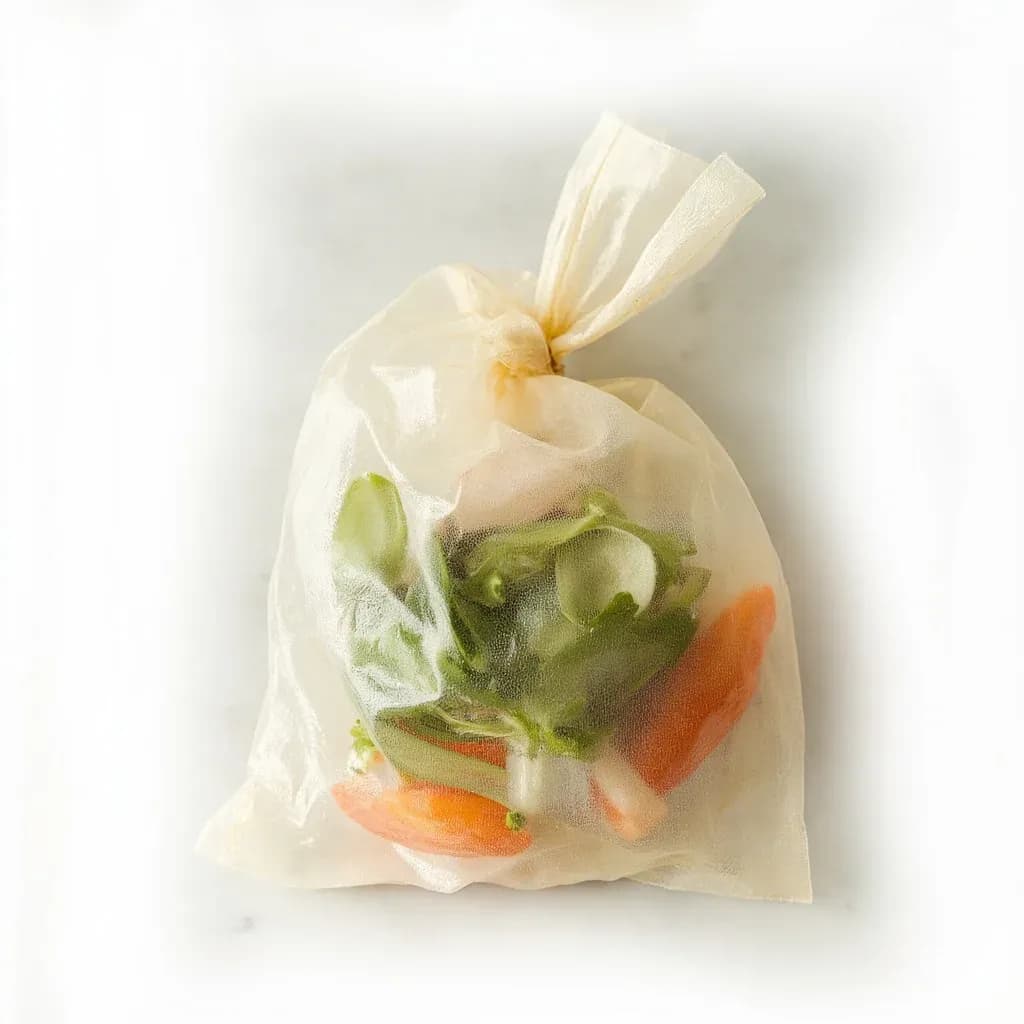
Biowaste / Food Waste Bag
Compostable liner for collecting food scraps and organic kitchen waste for composting.
A biowaste bag is a compostable liner used to collect food scraps, peelings, and other organic kitchen waste for composting or municipal food-waste collection. It lines a countertop caddy so trimmings can be gathered cleanly and tipped, bag and all, into the compost or biowaste bin. Certified-compostable paper or plant-starch bags break down with the contents, unlike ordinary plastic.
A biowaste bag is a compostable liner designed to collect food scraps and organic kitchen waste before composting. Unlike standard plastic bags, which persist in landfills for centuries, compostable biowaste bags break down into non-toxic components under the right conditions, returning nutrients to the soil. They serve as a practical bridge between daily food preparation and the composting process, containing moisture and odors while making it easy to transport organic material to an outdoor bin, municipal collection, or—in the case of certified home-compostable bags—directly into the compost pile. The bags are made from plant-based materials such as corn starch, tapioca, potato starch, or cellulose, and are engineered to decompose alongside the food waste they hold.
The critical distinction lies in understanding what "compostable" actually means. A bag labeled merely "biodegradable" may fragment into microplastics rather than fully breaking down. True compostable bags carry certifications from ASTM D6400 (US) or EN 13432 (EU), which verify that the material will decompose into CO₂, water, and biomass within a specified timeframe under controlled conditions. Different bag formulations suit different composting environments—some require industrial composting facilities with sustained high heat and microbial activity, while others will fully decompose in a home compost pile. Using the wrong bag type in the wrong system defeats the purpose of choosing a compostable product.
Material composition directly affects performance. PLA (polylactic acid), the most common formulation, softens and loses structural integrity above 140°F (60°C), making it unsuitable for hot liquid waste or prolonged sun exposure. Starch-based and paper bags handle moisture more naturally but may tear when saturated. Understanding these behaviors helps you select the right bag for your kitchen habits and composting setup, ensuring the bag performs its function until you're ready to empty it.
Alternatives
Types & varieties
Most common; clear to milky appearance; requires industrial composting for reliable breakdown
Kraft paper or waxed paper; fully home compostable; can absorb moisture and tear when wet; better odor control
Made from potato, wheat, or tapioca starch; often home compostable; may be less durable when wet
Combines petroleum-based biodegradable polymer with starch; balances durability and compostability; often home compost certified
Made from wood pulp or cotton; fully biodegradable; typically home compostable; thinner, less liquid-resistant
Using newspaper or cardboard to line bins instead of bags; creates carbon-rich brown material for compost
Choosing the Right Certification
The certification landscape can be confusing, but it matters for end-of-life outcomes. Industrial compostability certifications (ASTM D6400, EN 13432) test under specific high-heat, high-microbe conditions that most home composts cannot replicate consistently. Home compost certifications—such as TÜV Austria's Home Compostability seed logo or Vincotte's OK Compost HOME—verify breakdown at lower temperatures over a realistic timeframe. If you use a municipal green waste collection service, they may specify which bags they accept; some programs have approved brand lists or require industrial-compostable bags only. Always check local requirements before purchasing, as mixing bag types can contaminate a composting stream.
- ASTM D6400 is the US standard for industrial compostability
- EN 13432 is the EU equivalent covering the same conditions
- Look for the seedling logo or "home compostable" specifically for backyard systems
- Municipal programs often have their own approved materials lists—check before buying
Matching Bags to Your Composting Method
Your composting setup determines which bag type will actually break down as intended. Hot composting systems (which maintain internal temperatures of 140–160°F) can process most certified compostable bags, though thicker PLA bags may take longer than food scraps to fully break down. Cold composting and tumbler systems vary widely in their microbial activity and temperature, so home-compost-certified bags are the safer choice. Vermicomposting (worm bins) can accept paper and cellulose liners, but PLA bags may persist intact for long periods as worms typically avoid the material. Bokashi systems, which ferment food waste including meat and dairy in an anaerobic, acidic environment, present a different challenge: the fermentation liquid can compromise standard compostable bags, so specialized heavy-duty liners or direct fermentation without bags is often recommended.
- Hot composting (140–160°F) can process most certified bags
- Cold/home compost requires specifically home-compost-certified bags
- Vermicomposting prefers paper or cellulose liners; PLA may persist intact
- Bokashi fermentation often requires specialized heavy-duty liners or bag-free methods
Common uses
Tips & pitfalls
- Verify certification: ASTM D6400 or EN 13432 ensures actual compostability; unverified 'biodegradable' claims are misleading
- Match bag type to your composting method: municipal programs may require industrial-compostable bags; home composters need home-compost-certified products
- Size your bag to your bin: a bag too large will fold and create stagnant pockets; too small tears under moisture weight
- Keep a small counter bin (1–2 gallon) with a liner for daily scraps; empty into outdoor compost every 2–3 days in warm weather
- Freeze highly odorous scraps (onions, fish, meat scraps) in the bag before composting to control smell and pests
- Layer green (nitrogen-rich) and brown (carbon-rich) materials inside the bag to balance compost composition
- Do not add liquids or oily residues; these create anaerobic conditions and can cause bag failure
- Tie bags loosely when composting the whole bag, or seal tightly when transporting to prevent drip-through
- Avoid meat, dairy, and oils unless your composting method (hot composting or municipal program) explicitly accepts them
- Replace bags every 1–2 weeks even with light use; degradation begins on exposure and integrity fails over time
- Store spare bags in a cool, dry place; heat accelerates premature degradation of PLA bags
- Do not use compostable bags for hot waste or place them in direct sunlight; PLA loses structural integrity above 140°F
Good to know
- Primary Materials
- PLA (polylactic acid from corn/tapioca starch), PBAT (polybutyrate adipate terephthalate), starch blends, or certified compostable cellulose
- Certifications to Look For
- ASTM D6400 (US), EN 13432 (EU), TÜV Austria Seedling logo, BPI (Biodegradable Products Institute)
- Common Sizes
- 2.5–13 gallon (10–50 liter); kitchen sizes typically 3–5 gallon (10–20 liter)
- Temperature Limits
- PLA softens above 140°F (60°C); most compostable bags not suitable for hot liquid waste
- Composting Environment
- Home compostable vs. industrial composting; verify which type you have
- Typical Lifespan
- Full decomposition: 3–6 months in home compost, 2–3 months in industrial facility
- Odor Control
- Bags help contain odors but do not eliminate them; frequent emptying recommended
- Moisture Resistance
- Water-resistant when new, but degradation begins on exposure to moisture and microbes
Also called
biowaste-bag-fi · food-waste-bag · compost-bag · compost-bags · compost-caddy-liner · food-caddy-liner · paper-towel-blue
Related

Freezer Bags
Thick, sealable bags built to fight freezer burn

Storage Bags
Resealable bags for fridge storage and marinating

Storage Container
Lidded container for leftovers, prep, and meal kits

Glass Container
Oven-to-fridge glass that won't stain or hold odors

Plastic Container
Lightweight, stackable storage for everyday leftovers

Vacuum Sealer Bags
Airtight bags for long freezing and sous-vide

Reusable Bags
Washable silicone bags that replace single-use plastic

Mason Jar
Sealed glass jar for preserves, pickles, and storage