Heat & Safety
Blue Cleaning Cloth
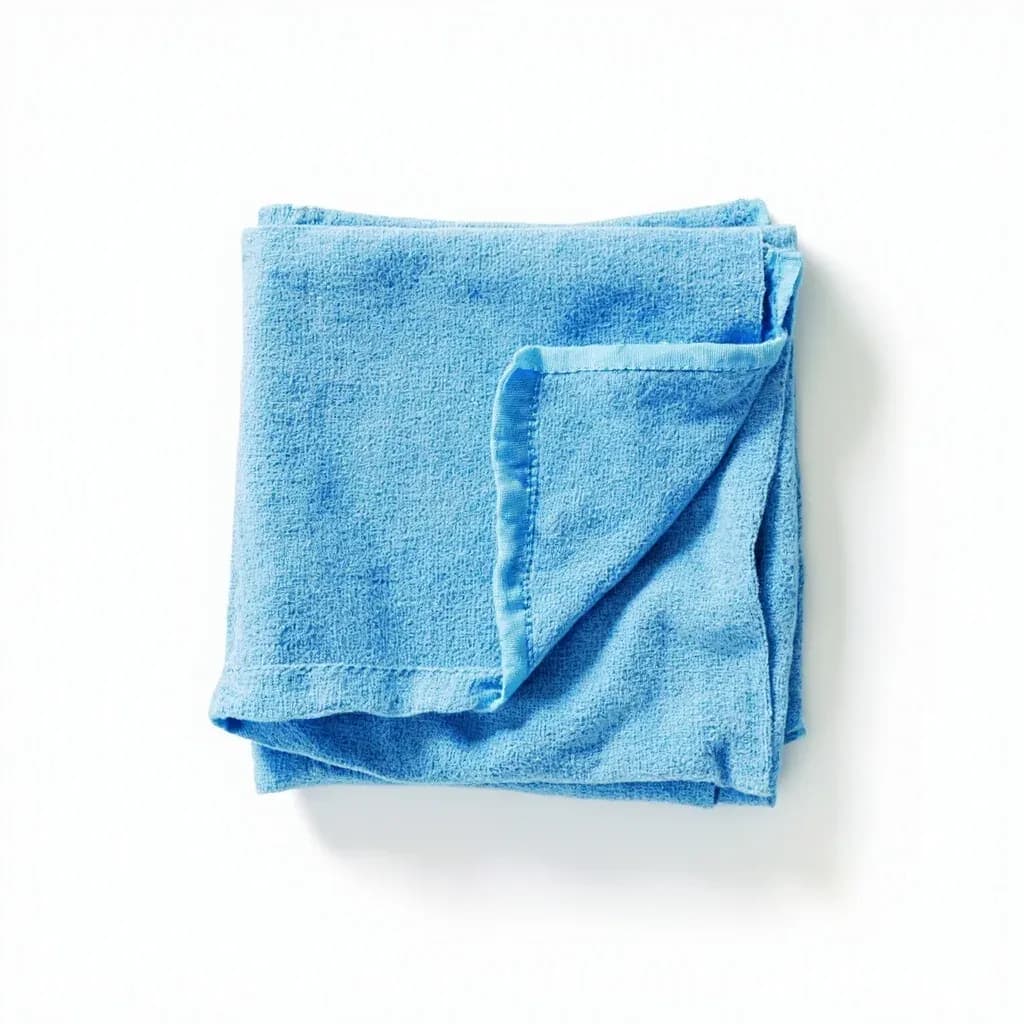
Disposable blue wiping cloth used to clean surfaces and wipe down stations in food prep.
A blue, lint-low disposable or semi-reusable cloth used to wipe down counters, equipment, and hands during food preparation. The blue color is a food-industry convention: any fragment that comes loose is easy to spot against most foods, aiding contamination control. They are typically used with sanitizing solution and discarded or laundered between tasks to avoid cross-contamination.
The blue cleaning cloth is the workhorse of a commercial kitchen's color-coded wiping system—a disposable, nonwoven wiper assigned to the "general" zone of a food operation: prep tables, bar stations, produce benches, and the exteriors of mixers, slicers, and scales. It is not a tool for cooking; it is a tool for managing the invisible traffic of bacteria, allergens, and food residues between tasks. The color does real work. Blue is rarely used as a food, so a stray cloth is impossible to miss against most prep surfaces, and it sits inside a broader map of color-coded cloths that keeps raw meat, raw poultry, produce, and allergens from ever sharing a wipe.
Most blue cloths are made of hydroentangled (spunlace) nonwoven fabric, typically a polyester and cellulose blend chosen for wet strength, absorbency, and acceptable lint behavior. Some are airlaid cellulose or 100% polypropylene for specific tasks. They are designed to be used once, on one surface, and discarded—so the value of the cloth is inseparable from the discipline of the system around it: the wall-mounted dispenser it comes from, the sanitizer it is paired with, and the lidded bin it lands in. Treat it as a single-use item and the cloth quietly prevents most of the cross-contamination incidents a serious kitchen will ever face.
Alternatives
Types & varieties
Standard dry or lightly treated nonwoven cloth for wiping prep tables, equipment exteriors, and spills in the general/blue zone.
Impregnated with a quat- or peroxide-based sanitizer for a wipe-and-discard sanitation step on cleaned, non-porous surfaces.
Thicker, higher-capacity variant for grease, oil, and liquid pickup at fry stations, butcher areas, and prep sinks.
Smooth, low-fiber-shed construction for use near open food, slicers, and stainless surfaces where loose lint would contaminate product.
A washable alternative kept strictly within the blue color zone; not a true disposable but governed by the same color-code rules.
The Color-Code System
A blue cloth is only as safe as the color map it belongs to. In most Western kitchens following HACCP-style practice, the convention is:
- Blue — general prep, bar, equipment exteriors, and any non-raw-meat, non-poultry surface; in many operations, also used on produce benches.
- Red — raw meat (beef, lamb, pork).
- Yellow — raw poultry.
- Green — produce, salad, fruit, and ready-to-eat vegetables.
- White — bakery, dairy, and allergen-dedicated tasks where a neutral, food-coded wipe is required.
- The rule that makes the system work: a cloth may move from a cleaner surface to a dirtier one, never the reverse, and it may never cross color zones. A blue cloth on a raw-meat station breaks the program as surely as a red cloth on a salad bar.
Matching Cloth to Sanitizer
The wiper and the chemical have to be specified together, because an incompatible pairing will either destroy the cloth, neutralize the sanitizer, or both. When auditing a cleaning program, treat cloth, dispenser location, sanitizer, and contact time as a single unit.
- Quaternary ammonium compounds (quats) — the common pairing for general-purpose and pre-treated blue cloths; gentle on the nonwoven and effective on most food-contact surfaces.
- Chlorine (bleach) solutions — effective sanitizer but aggressive; a cloth that falls apart when wet is a sign the wiper grade is not rated for that concentration.
- Peroxide-based sanitizers (peroxyacetic acid, accelerated hydrogen peroxide) — fast contact times and good compatibility with most spunlace wipers; preferred where staff want a rinse-free step.
- Contact time matters more than cloth choice: if the surface dries before the label's contact time is met, the wipe has not sanitized—re-wet and re-wipe.
Choosing the Right Grade
Buying the cheapest blue wiper in the catalog is a common false economy. Match the cloth to the worst thing you expect it to absorb, not the average.
- Bar and front-of-house: a thin, general-purpose cloth is fine—visibility on the counter and quick discard matter more than absorbency.
- Butcher, fish, and raw-prep areas: heavy-duty absorbent, used wet with a measured sanitizer; the wiper is doing real work, not just looking tidy.
- Slicer and deli stations: low-lint grade—lint on a blade ends up in the product, and a streaked stainless surface signals poor hygiene to the customer.
- Open-food and plating lines: a food-contact-rated wiper (check the label), used once and discarded, not laundered on site.
Common uses
Tips & pitfalls
- Use one cloth per surface, then discard—folding to expose a clean face is not the same as a fresh cloth and is the single most common cross-contamination mistake in a professional kitchen.
- Mount the dispenser at the point of use so a clean cloth is always within reach; cloths piled loose on the worktop become contamination sources within minutes.
- Never substitute a blue cloth for the color designated to the task—using blue on a raw-meat station breaks the color code and voids the cleaning program on paper as well as in practice.
- If using a pre-treated sanitizing cloth, respect the contact time; once the surface dries, the wipe has not finished its job and must be re-wet and re-wiped.
- Keep cloths in their original box or a closed wall dispenser; loose stacks in a drawer pick up dust, grease, and the bacteria of whatever drawer they sit in.
- Train staff to wipe with the flat side of the cloth, not the folded edge—creases trap debris and wear unevenly, and a worn edge is where fibers start to shed.
- Discard soiled cloths into a lidded, foot-pedal bin, never onto the prep table or the floor; a cloth on the floor is, by most health-department definitions, contaminated for the rest of the service.
- If the cloth leaves lint or streaks on stainless, switch to a low-lint grade; if it falls apart when wet, the sanitizer concentration is too aggressive for that wiper—dilute or change chemistry.
Good to know
- Common material
- Spunlace (hydroentangled) nonwoven fabric, typically a polyester/cellulose blend; some are 100% polypropylene or airlaid cellulose.
- Color rationale
- Standard color-coded wiper for general food-prep and bar/service zones in HACCP-style systems; blue is rarely a food color, so a stray cloth is easy to spot.
- Typical size
- Roughly 9×9 in (23×23 cm) folded to about 12×12 in (30×30 cm) laid flat; quarter-fold, interfold, and center-pull formats dominate.
- Form
- Sold in flat folded stacks, quarter-fold packs, interfold pop-up dispenser boxes, or center-pull rolls.
- Single-use
- Designed for one-task, one-surface use and disposal to prevent cross-contamination; not laundered and reused across color zones.
- Sanitizer compatibility
- Compatible with quaternary ammonium, chlorine, and peroxide-based sanitizers; some cloths arrive pre-impregnated for wipe-and-go sanitation.
- Food-contact status
- Varies by product: many are USDA/FDA compliant for indirect food contact; only specific grades are rated for direct food contact—always check the label.
- Storage
- Keep in the original dispenser or sealed box, in a dry area, off the floor; dispensers are typically wall- or station-mounted at the point of use.
- Disposal
- Discard into a lidded, foot-pedal bin immediately after use; never returned to the stack, the bench, or the sanitizer bucket.
- Cost tier
- Low unit cost; commonly purchased by the case (hundreds to thousands of cloths per order).
Also called
Blue Paper Towel · Blue Roll · Blue Wiping Cloth
Related

Paper Towels
Disposable sheets for spills, drying, and patting dry

Kitchen Towels
Reusable cloths for drying, gripping, and wiping

Oven Mitts
Heatproof gloves to handle hot pans and trays safely

Disposable Gloves
Single-use gloves for safe, mess-free handling

Cleaning Cloths
Reusable cloths for wiping counters and spills

Tortilla Warmer
Insulated holder that keeps tortillas warm and soft

Trivet
Heatproof stand that shields surfaces from hot pots

Ice Bath Setup
Bowl of ice water that halts cooking and sets color