Heat & Safety
Blue Metal-Detectable Bandage
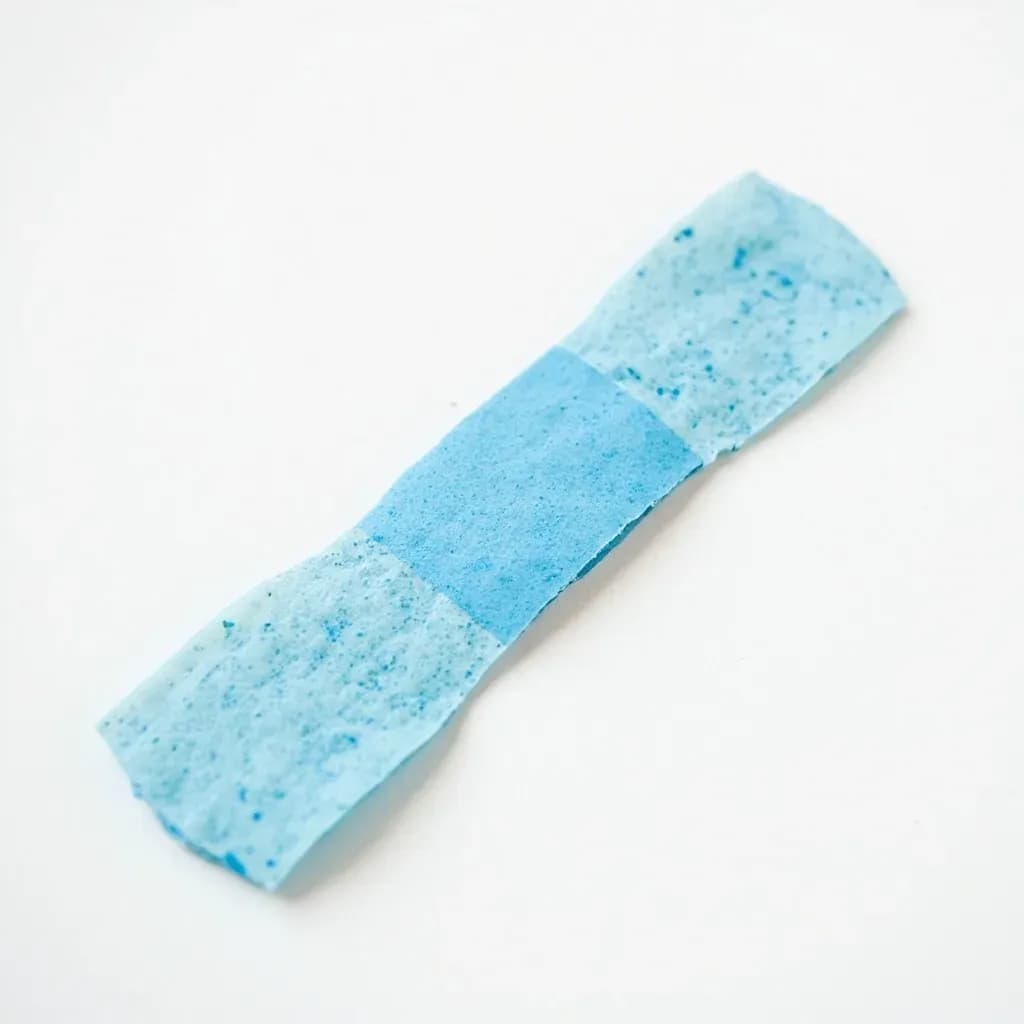
A bright blue food-safety bandage with a metal strip so it can be spotted if it falls into food.
Blue metal-detectable bandages are first-aid plasters designed for food handlers, dyed an unnatural blue so they stand out against food. Each contains a thin metal strip that production-line detectors can sense, preventing a lost bandage from contaminating product. Kitchens and food plants require them as a contamination-control measure.
The blue metal-detectable bandage is an adhesive wound cover engineered for the specific hazards of a food production line, where a dropped plaster is treated as a physical contaminant rather than a minor mishap. The bright blue color is the visual half of a deliberate two-layer detection system: blue is absent from the natural palette of almost every foodstuff, so a stray bandage on a conveyor or in a batch is visible to a human inspector before any equipment runs. Layered onto that visibility is an embedded aluminum strip that triggers industrial metal detectors on the line, which is what actually pulls a contaminated pack from commerce before it reaches a customer.
The category emerged in the late 1990s as HACCP and GFSI-benchmarked audits (BRC, SQF, FSSC 22000) tightened wound-covering rules across the food industry. A flesh-colored plaster that falls into a finished product is invisible to consumers and to most quality checks, and has triggered costly recalls in the meat, bakery, and ready-meal sectors. The blue detectable version addresses both halves of that problem with a single inexpensive item. Most versions are sterile, individually wrapped, latex-free, and made from materials approved for indirect food contact under FDA 21 CFR and EU food-contact frameworks, so a stray unit in product is treated as a physical foreign body and isolated, not a chemical hazard.
On the floor these bandages are unglamorous but quietly essential. A well-stocked dispenser at every handwash station, with matched strip, fingertip, and knuckle formats, lets a line worker cover a paper cut in seconds and return to work without compromising the production environment. They are first aid for food handlers, designed to fail safe if anything goes wrong, and any kitchen serious about food safety treats them as standard equipment rather than a special order.
Alternatives
Types & varieties
Standard rectangular adhesive for small cuts on fingers or hands
Pre-shaped to wrap around the fingertip, the most common finger injury site in kitchens
H-shape or butterfly shape designed to flex over the knuckle joint without lifting at the edges
Higher-spec variant with both metal and X-ray contrast agents for dual detection systems
Longer wraparound style worn over a glove or sleeve for burns or larger abrasions
Self-adhering wrap that grips itself but not skin or hair, used for finger support in heavy prep work
The lost-bandage protocol
A blue metal-detectable bandage is designed to fail safe, but only if staff know exactly what to do the moment one is unaccounted for. A clear, written protocol is one of the things auditors look for, and it is also the difference between a five-minute pause and a full product recall.
- Stop the line immediately and identify the last known position of the bandage on the worker, plus the time it was last seen secure.
- Quarantine every product produced from that moment until the last confirmed check, including rework bins, trays, and under-belt scrap.
- Run the affected batch through the metal detector if available, then physically inspect the rejected fraction before releasing any of it.
- Document the incident with time, operator, product code, quantity held, and final disposition, then review the root cause (loose adhesive, sweaty hands, glove slippage).
- Replace the lost unit from a fresh sealed sterile wrapper rather than reusing a partially worn plaster from elsewhere in the kitchen.
Common uses
Tips & pitfalls
- Use only the correct blue metal-detectable type in food zones; a regular flesh-colored plaster is invisible in product and a recall trigger.
- If a bandage falls into food, do not retrieve it — isolate the batch and follow your HACCP non-conforming product procedure.
- Check that the metal strip is intact and not hidden under adhesive before applying; a damaged strip defeats the purpose.
- Replace at the start of every shift if you have any wound, however minor; wet or soiled plasters must be changed immediately.
- Pair with a clean finger cot or single-use glove over the top for wet work to prevent the plaster from detaching.
- Train all staff to report any lost bandage so the line can be paused and checked, including reject bins and product between the last good check and the loss.
- Mount the dispenser box where it is visible from the sink so the behavior becomes automatic.
Good to know
- Primary purpose
- Cover minor wounds on food handlers while remaining visible and detectable if lost into a food product
- Color
- Bright blue, chosen because it does not occur in most natural foods and is easy to spot visually
- Detection method
- Embedded aluminum strip triggers industrial metal detectors; many versions are also X-ray detectable
- Adhesive
- Hypoallergenic, latex-free acrylic or hot-melt adhesive
- Regulatory status
- Materials approved for indirect food contact under FDA 21 CFR and EU food-contact regulations
- Typical sizes
- Finger strips (~72 x 19 mm), fingertip, knuckle, and longer patch formats
- Sterility
- Usually individually wrapped sterile; supplied in box dispensers near handwash stations
- Required by
- Most HACCP food-safety systems and GFSI-benchmarked audits (BRC, SQF, FSSC 22000)
- Single-use
- Disposable; should be replaced immediately if it becomes loose or detached
- Shelf life
- Typically 3–5 years when stored dry in original packaging
Also called
Blue Detectable Plaster · Food-Safe Bandage
Related

Paper Towels
Disposable sheets for spills, drying, and patting dry

Kitchen Towels
Reusable cloths for drying, gripping, and wiping

Oven Mitts
Heatproof gloves to handle hot pans and trays safely

Disposable Gloves
Single-use gloves for safe, mess-free handling

Cleaning Cloths
Reusable cloths for wiping counters and spills

Tortilla Warmer
Insulated holder that keeps tortillas warm and soft

Trivet
Heatproof stand that shields surfaces from hot pots

Ice Bath Setup
Bowl of ice water that halts cooking and sets color