Storage & Containers
Bonbon Box / Insert Tray
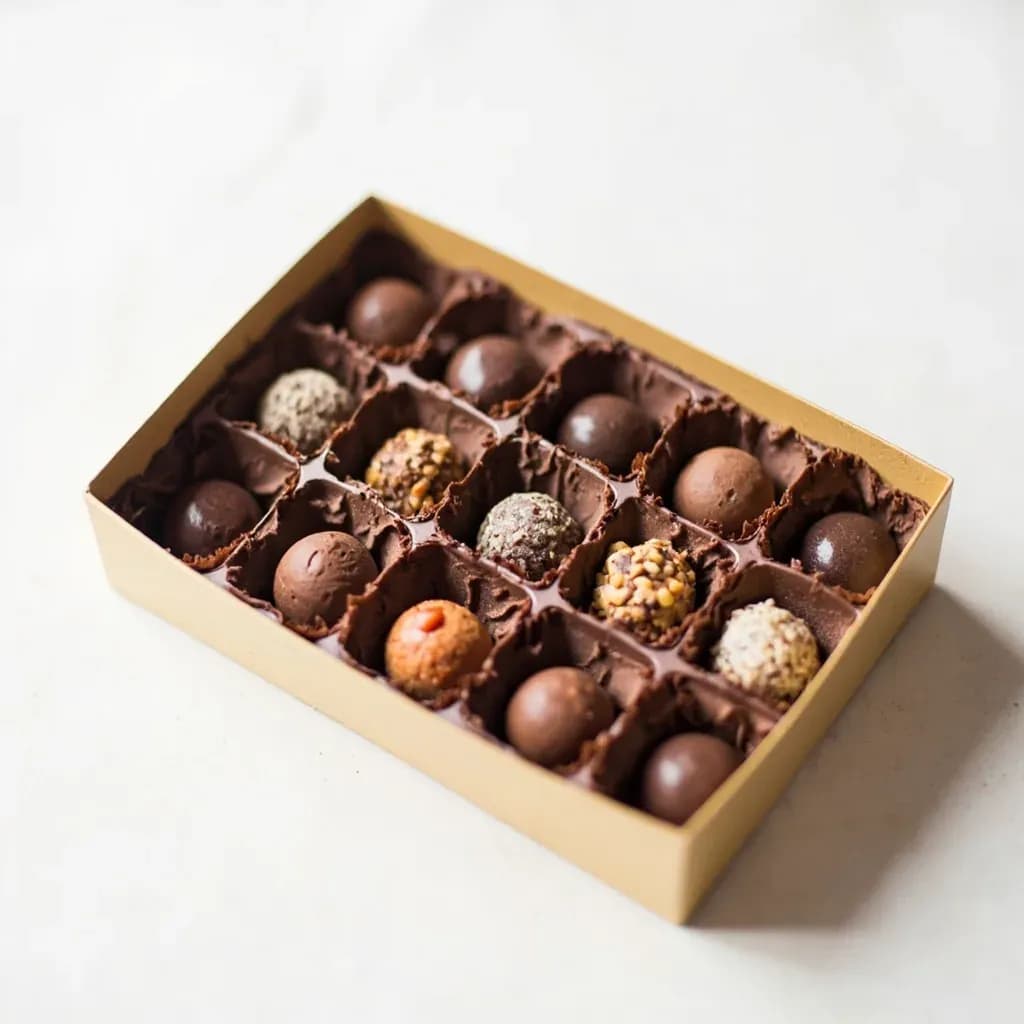
A presentation box with a molded insert that cradles chocolates and confections.
A bonbon box is a rigid presentation container fitted with a molded insert tray that holds individual chocolates or confections in place. Chocolatiers and pastry cooks use it to package, protect, and display finished bonbons and truffles. The insert keeps pieces from shifting and sticking together during storage and transport.
A bonbon box is really two objects working together: the outer container that does the presenting, and the insert tray that does the protecting. The shell can be paperboard, tinplate, wood, or rigid setup board, but the functional core is the tray — molded pulp, die-cut board, EVA foam, silicone, or clear PET — that holds each piece in its own cavity. Get the tray wrong and a beautifully tempered shell will scuff, bloom, or crack before it reaches the customer; get it right and the same confections can ride a courier across town unscathed.
Materials matter because chocolate is sensitive. Bare paperboard wicks cocoa butter from a tempered shell and leaves white bloom spots at every point of contact; PVC film off-gases plasticizer odor into delicate ganaches. Food-grade molded pulp, EVA foam, PET, and food-safe silicone are the safer defaults, and a small pleated paper cup — the traditional cachou or caissette — solves most contact problems cheaply. Sizes are loosely standardized around the 25–32 mm bonbon, so a 12-piece box from any supplier will accept a similar assortment, and most retail capacities still follow the old French ballotin weights of roughly 250 g, 500 g, and 1 kg.
The traditional form is the French ballotin, with its scored or pleated paperboard and two-piece lift-off lid, popularised in mid-19th-century Paris and still the default for serious chocolatiers. Modern rigid, magnetic-closure, and sliding-drawer boxes serve the gifting and shipping market, while molded-pulp boxes paired with molded-pulp inserts have become the standard for chocolatiers who want a fully compostable pack.
Alternatives
Types & varieties
Scored or pleated paperboard with a two-piece lift-off lid; the traditional French chocolatier's box.
Heavy, wrapped or laminated board with a finished interior; the standard for luxury and gifting.
Hidden magnets in the flap; ships flat, premium feel in the hand.
Inner tray slides from a sleeve; ideal for tall pralines and stacked assortments.
Die-cut aperture with a clear PET or acetate panel; showcases the assortment without opening.
Curved, fold-flat cardboard with end flaps; lightweight, used for single pieces and favors.
Single-piece construction with an attached lid; sturdy for shipping.
Tinplate or rigid board, often with a slip lid; common for truffles and seasonal assortments.
Reusable and keepsake-worthy; protects shaped and decorated bonbons well.
Beaded or dovetailed; used for artisan assortments and corporate gifting.
Recyclable and compostable; now widely available for sustainable chocolatiers.
Pre-formed cavities in sizes matching standard bonbon diameters; the workhorse insert.
Flat-packed with pop-out tabs; cheap to ship, assembled around the bonbons.
Soft flocked surface; high-end feel, protects delicate shells and decorations.
Lets the bonbons show through; used in window boxes and gift trays.
Reusable, freezer- and chocolate-safe; doubles as a setting surface for enrobed pieces.
Tiny fluted paper cups that cradle a single bonbon inside any box.
Materials in contact with chocolate
Anything that touches a finished bonbon is a potential source of bloom, odor, or staining. The four safe defaults are food-grade molded pulp, EVA foam (preferably flock-lined), PET or cellulose acetate, and food-safe silicone. Each behaves differently with tempered chocolate and at different temperatures, and the choice usually comes down to the bonbon's shell, the length of time it will sit in the pack, and the impression you want to make.
- Molded pulp is absorbent enough to cushion but smooth enough to avoid imprinting; the standard for single-use, compostable packs.
- EVA foam flock-lined trays give a jewel-box feel and are reusable, but foam can hold odors — keep it for ganaches, not strongly flavored caramels or pâte de fruit.
- PET and cellulose acetate are grease-resistant and odor-neutral; choose these for window panels and clear inserts.
- Silicone cup trays are the most durable, are freezer-safe, and can carry a bonbon from dipping through to boxing, but their smooth surface offers little grip — slip a paper cachou under each piece.
- Bare paperboard and PVC film are the two materials to avoid: the board wicks cocoa butter and the film off-gases plasticizer that mutes delicate flavors.
Sizing, count, and capacity
Retail piece counts — 4, 6, 8, 9, 12, 16, 18, 24, 25, 36 — are the lingua franca of the chocolate counter, and most suppliers agree on a 25–32 mm cavity diameter, so a 12-piece box from one maker will accept a 12-piece assortment from another. For a quick capacity check, assume 30–35 g per standard filled bonbon: a 12-piece box needs roughly 360–420 g of headroom, a 24-piece around 720–840 g, and a 36-piece about 1.1–1.3 kg. Traditional ballotin weights of 250 g, 500 g, and 1 kg still work as a reliable shorthand when ordering printed stock.
Common uses
Tips & pitfalls
- Match cavity diameter to the finished bonbon within 1–2 mm; loose pieces rattle and bloom at the contact point, while tight cavities chip the shell on insertion.
- Always slip a PET liner, acetate disc, or pleated paper cachou under each piece — bare paperboard wicks cocoa butter and leaves white spots on a tempered shell.
- Specify food-grade, grease-resistant, and odor-neutral materials from the supplier; cardboard off-gassing is the most common cause of off-flavors in delicate ganaches.
- Chill the empty rigid box briefly in the fridge before packing room-temperature bonbons to reduce condensation forming on the inside of the lid.
- Layer delicate assortments with a sheet of tissue or waxed paper between trays so decorations don't transfer from one row to the next.
- For tall pralines and piped ganaches, choose a deeper box or a drawer style — a shallow ballotin will crush hand-piped tops.
- Avoid PVC window film in windowed boxes; use PET or cellulose acetate so plasticizer odor does not transfer to the chocolate.
- If shipping, secure the insert to the box base with a small dot of food-safe glue or double-sided tape so the tray does not shift in transit and crush the bonbons against the lid.
- Decorative crinkle tissue cushions pieces but can imprint soft shells — use it only for hard-shelled bonbons or layer it above the tray, not directly on the chocolate.
- Label the underside of the insert or the inside of the lid with the bonbon name and any allergen icons; consumers rarely keep the original flavor card.
Good to know
- Also known as
- Ballotin (classic French paperboard box); coffret de bonbons; chocolate box
- Primary materials (box)
- Rigid paperboard, molded pulp, tinplate, wood, or food-grade plastic
- Primary materials (insert)
- Molded pulp, die-cut paperboard, EVA foam, PET/acetate, silicone, fluted paper cups (cachous)
- Standard bonbon diameter
- 25–32 mm (roughly 1–1¼ in); most insert cavities are sized to this range
- Typical piece counts
- 4, 6, 8, 9, 12, 16, 18, 24, 25, 36; classic ballotins also sold at 250 g, 500 g, and 1 kg
- Closure styles
- Two-piece lift-off lid, hinged lid, magnetic flap, sliding drawer, ribbon-tied, pillow fold
- Food-safety note
- Insert and tray materials must be food-grade, grease-resistant, and odor-neutral to prevent bloom and taint
- Window material
- Rigid PET or cellulose acetate; never PVC, which can transfer plasticizer odor to chocolate
Also called
Bonbon Box · Insert Tray · Chocolate Box
Related

Freezer Bags
Thick, sealable bags built to fight freezer burn

Storage Bags
Resealable bags for fridge storage and marinating

Storage Container
Lidded container for leftovers, prep, and meal kits

Glass Container
Oven-to-fridge glass that won't stain or hold odors

Plastic Container
Lightweight, stackable storage for everyday leftovers

Vacuum Sealer Bags
Airtight bags for long freezing and sous-vide

Reusable Bags
Washable silicone bags that replace single-use plastic

Mason Jar
Sealed glass jar for preserves, pickles, and storage