Heat & Safety
Bottle Brush
A long, narrow brush for scrubbing the inside of bottles, jars, and narrow vessels.
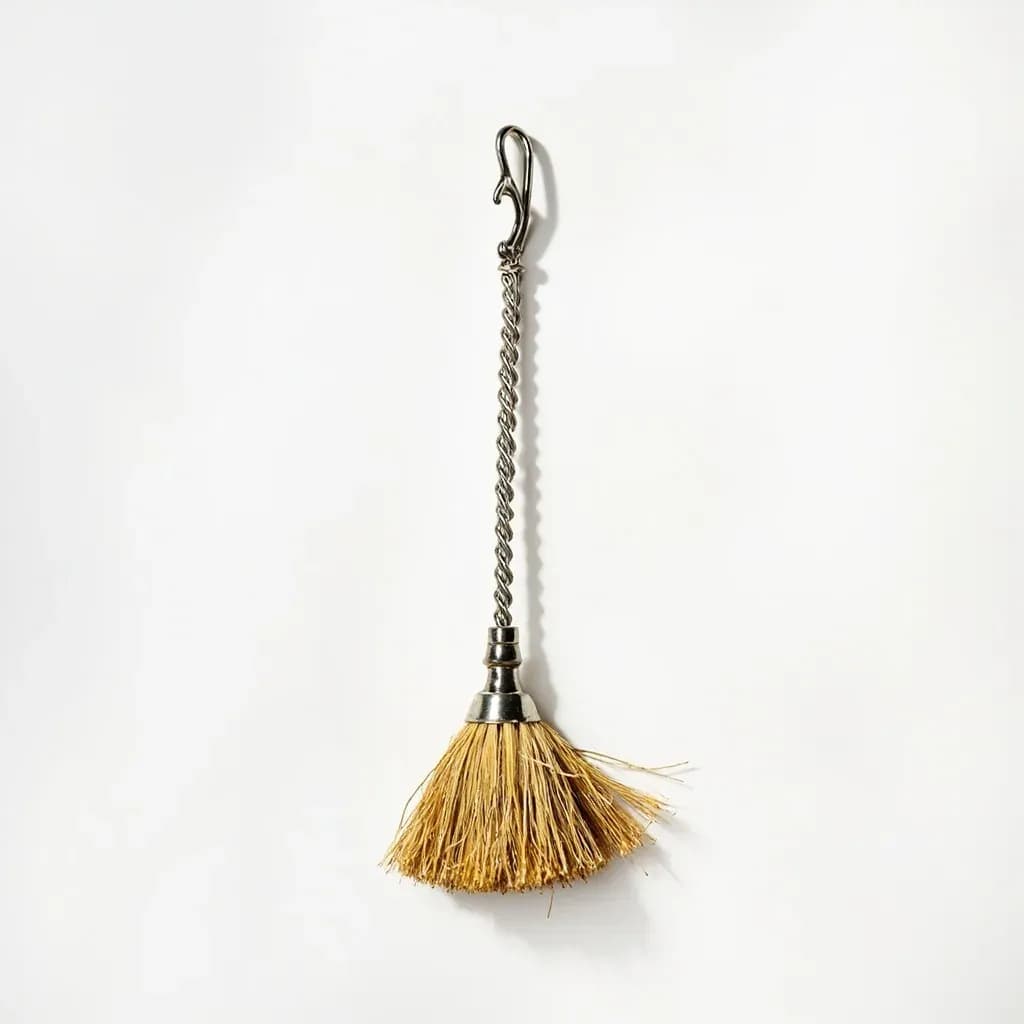
A bottle brush has a slim, twisted-wire handle topped with bristles to clean the interior of bottles, jars, and decanters that a sponge cannot reach. Cooks, brewers, and canners use it to scour away residue before sterilizing. The flexible neck and tapered head reach curved bottoms and tight necks.
A bottle brush is a long-handled scrubber built specifically to reach down into the narrow necks and curved shoulders of jars, bottles, and carafes. The basic anatomy is simple: a handle on one end, a flexible wire or plastic core running its length, and a tuft of nylon, polypropylene, foam, or natural fiber wrapped around the working end. The brush head is usually 1 to 2 inches across, and the whole tool typically runs 10 to 16 inches overall — long enough to reach the bottom of a standard mason jar and most wine bottles, short enough to control in a sink full of soapy water. The genius of the design is that the shaft flexes around shoulders and curves that a straight sponge or cloth simply cannot follow.
For cooks, a bottle brush is less about cleaning bottles and more about preserving reused vessels. Fermentation vessels, swing-top brewing bottles, oil cruets, and decorative olive-oil bottles all develop a film of fat, tannin, sugar, or milk solids that a dishwasher cannot shift. A worn or undersized brush leaves that residue behind, and it shows up as cloudiness in glassware, off-flavors in fermented or infused liquids, and odors that linger bottle to bottle. When reused jars and bottles develop off-flavors or cloudiness, the culprit is almost always a tired cleaning tool, not a tired container.
Material matters as much as size, because the brush itself has to survive the very hot water and sanitizing solutions used to clean the things it cleans. All-plastic and nylon-bristled brushes tolerate water up to roughly 200 °F / 95 °C and can go in the dishwasher; wooden-handled and natural-bristle versions cannot. That distinction, plus a strict rule about keeping one brush for bottles and a separate one for raw meat or non-food tasks, is what separates a hygienic bottle brush from a bacterial relay race.
Alternatives
Types & varieties
The everyday ~12 in plastic-handled brush with nylon bristles on a twisted-wire stem; the default for mason jars, sports bottles, and vases.
Slimmer head, longer (16–20 in) flexible shaft for decanters, wine bottles, and tall narrow carafes where a stiff rod cannot follow the shoulder.
Soft foam cylinder in place of bristles; gentle on crystal and antique glass, sheds less, but cannot scour baked-on residue.
Short (6–8 in) narrow brush sized for spice jars, shot glasses, and reusable straws.
Very small tip brush from baby-bottle cleaning sets; sized for bottle nipples, straw interiors, and narrow grommets.
Tampico or horsehair bristles; preferred for crystal decanters because it scrubs without scratching and sheds very little.
Stiffer stainless or brass-wire brush for laboratory glassware, thermos interiors, and heavy grime; never use on non-stick coatings or delicate glass.
Drying rack of coated wire arms that hold inverted bottles; sold alongside brushes as part of a complete bottle-care station.
Matching the brush to the vessel
Sizing a bottle brush is more about the narrowest point of the vessel than its overall volume. The head should pass through the neck with a little resistance and then spring back against the walls as you push it down — too small and it skips down the center without scrubbing, too large and it buckles or wedges before it reaches the residue. For straight-walled mason jars and most sports bottles, a standard head on a ~12-inch handle is plenty. For wine bottles and narrow decanters, the bottleneck often narrows into a shoulder that demands a flexible shaft and a slim head; a rigid brush will jam. For wide-mouth canning jars and thermoses, you can move up to a stiffer brush or even a steel-wire utility model. For crystal and antique glass, drop the abrasive level entirely and switch to a foam or natural-bristle brush — the goal is to lift tannin and dust, not to polish.
- Head diameter should be just slightly larger than the bottle's narrowest neck.
- Flexible shafts are required for any bottle with a shoulder — wine bottles, decanters, and other narrow-necked vessels.
- Match bristle stiffness to the surface: nylon for everyday glass, natural fiber for crystal, steel for industrial grime only.
- Reserve a separate mini brush for straws and nipples; a full-size head will not fit them, and a mini brush will not clean a mason jar.
Sanitizing the brush itself
A brush that lives in a wet holder, drips into its own handle, and is then pushed back into a clean bottle is one of the most common sources of musty odors and recontamination in a kitchen. Treat the brush like the small appliance it is: rinse it under hot running water after every use, shake out the excess, and store it bristle-end down in a dry cup or hung from its loop so gravity drains water away from the handle joint. Once a week, soak it for 10 minutes in a sanitizing solution — about 1 teaspoon of unscented household bleach or white vinegar per quart of water — then rinse thoroughly. Dishwasher-safe models can simply go on the top rack with the rest of the kitchen cleaning tools. A brush that smells sour, shows rust on the wire, or has bristles that splay outward has reached the end of its life; replace it rather than trying to rescue it.
- Rinse and shake out after every use; store bristle-end down so water drains away from the handle.
- Weekly sanitizing soak: about 1 tsp bleach or white vinegar per quart of water, 10 minutes, then rinse.
- Top-rack dishwasher cycle is fine for all-plastic, nylon-bristled brushes; keep wooden and natural-bristle models out of it.
- Replace immediately if you smell sourness, see rust, or notice splayed bristles.
Common uses
Tips & pitfalls
- Match the brush-head diameter to the bottle's narrowest point: too small and the head slips down the center, too large and it buckles before it reaches the residue.
- Pre-soak dried or sticky residue in warm soapy water, or a baking-soda solution, for 10–15 minutes before scrubbing to extend brush life and loosen residue.
- Always rinse the brush under clean water and shake it out after use; trapped soap shortens bristle life and can harbor odors that transfer to the next bottle.
- Store bristle-end down in a dry cup or hang it from its loop so water drains away from the handle joint and the brush dries between uses.
- Replace the brush as soon as you see bent wire, rust spots, or splayed bristles — a worn brush scratches more than it scrubs and sheds plastic into whatever you are cleaning.
- Keep a separate brush for raw meat and one for bottles or jars, and label the handles if your kitchen rotates more than one in service.
- For wine bottles, decanters, and any vessel with a shoulder, choose a flexible-shaft brush — a rigid stem will jam at the bend and can crack the glass.
- Never use a steel-wire utility brush on non-stick or coated thermos interiors; it strips the coating and exposes bare metal.
Good to know
- Overall length
- 10–16 in (25–40 cm); long-reach versions run 16–20 in for decanters and wine bottles.
- Brush-head diameter
- 1–2 in (2.5–5 cm) on standard brushes; mini and straw brushes are considerably narrower.
- Handle materials
- Plastic, wood, or coated stainless steel; sometimes with a hanging loop for drip-drying storage.
- Bristle and head materials
- Nylon, polypropylene, tampico or horsehair, foam cylinders, or sponge — chosen for stiffness, scratch resistance, and heat tolerance.
- Shaft construction
- Twisted galvanized or stainless wire, or a single flexible nylon or plastic stem; rigidity varies with intended use.
- Heat tolerance
- All-plastic and nylon brushes handle water up to about 200 °F / 95 °C and are top-rack dishwasher safe; wooden and natural-bristle versions should not be boiled.
- Replacement sign
- Discard when bristles splay, the wire core rusts or kinks, or the head loses its cylindrical shape.
- Cross-contamination
- Designate a separate brush for raw-meat and non-food uses; label handles if the kitchen has more than one in rotation.
Also called
Bottle Scrubber · Jar Brush
Related

Paper Towels
Disposable sheets for spills, drying, and patting dry

Kitchen Towels
Reusable cloths for drying, gripping, and wiping

Oven Mitts
Heatproof gloves to handle hot pans and trays safely

Disposable Gloves
Single-use gloves for safe, mess-free handling

Cleaning Cloths
Reusable cloths for wiping counters and spills

Tortilla Warmer
Insulated holder that keeps tortillas warm and soft

Trivet
Heatproof stand that shields surfaces from hot pots

Ice Bath Setup
Bowl of ice water that halts cooking and sets color