Storage & Containers
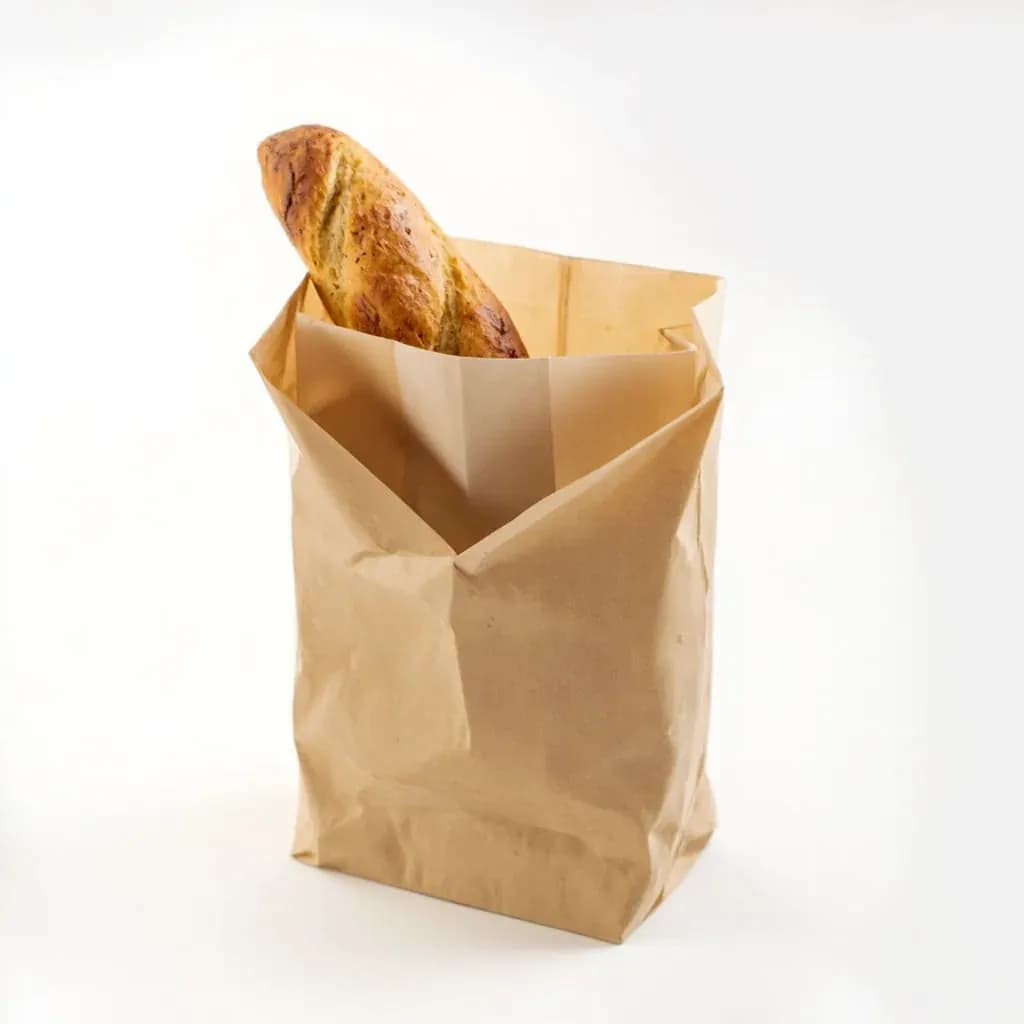
Paper Bread Bag
Breathable paper sleeve for storing and carrying loaves so the crust stays crisp.
A paper bread bag is a porous paper sack used to hold finished loaves and rolls. Unlike plastic, the paper lets moisture escape so the crust keeps its crackle instead of going soft and soggy. Bakeries use it to package fresh bread for sale, and home bakers reach for it to store crusty loaves for a day or two at room temperature.
A paper bread bag is a sleeve or sack of kraft paper designed to hold a loaf from bakery to kitchen and keep it on the counter for a few days afterward. Most are plain brown or bleached white paper, sized to a standard loaf, baguette, or round, and sealed at the top with a tin tie, twist tie, or a simple fold. They look humble, but the material is doing real work: paper is permeable to water vapor, so a loaf continues to breathe inside it rather than sitting in its own condensation.
That breathability is the whole reason bakers reach for paper instead of plastic. A crusty sourdough or baguette trapped in polyethylene will go limp and damp within hours as its interior moisture condenses against the film and soaks back into the crust. The same loaf in a paper bag stays audibly crackly for a day or two because vapor escapes through the walls. The trade-off is that paper is not a moisture barrier: it won't keep bread from drying out over the long term, and it won't survive a rainstorm, a humid climate, or a freezer without help.
In practice, the bag is a short-term tool — best for the first 24–72 hours of a loaf's life, when the crust is at its best and you want to preserve it. Beyond that window, even the most breathable paper bag cannot stop staling, and you are better off freezing the loaf or switching to a tighter container.
Alternatives
Types & varieties
The workhorse commercial bag: kraft paper with a flat paper-covered metal strip across the top that folds over to seal. Easy to open and reclose, good for 2–3 days of countertop storage.
Same kraft body with a small cellophane or PLA window so the loaf is visible; favored by retail bakeries for display.
Long, slim profile with a gusseted or flat base, designed so a baguette or ficelle sits without being crushed.
Wider, often square-bottomed gusset bag that cradles round sourdoughs and large hearth loaves without a seam pressing into the crust.
Simple kraft bag closed with a separate paper- or plastic-coated wire tie; cheaper, common for rolls and small loaves.
Paper outer with a thin foil or metallized inner ply for longer shelf life; used by some commercial bakeries for sliced sandwich bread.
Just a sleeve of kraft paper that the baker folds shut; inexpensive, used for short transit like handing bread across a counter.
Paper impregnated or coated with paraffin for moisture resistance; largely phased out in favor of plastic windowing but still seen for some dinner rolls.
Why paper wins for crusty bread
A just-baked loaf is still exhaling. Steam moves from the warm crumb outward through the crust, and if that vapor has nowhere to go, it condenses on the inside of whatever holds the loaf and migrates back into the bread. Plastic is essentially airtight at this scale, so the crust dampens and toughens within hours. Kraft paper is porous enough to let vapor diffuse through its walls, so the loaf dries on the surface as it was meant to. This is why every serious bakery hands over its sourdoughs and baguettes in paper, and why a homemade loaf wrapped in plastic feels wrong even before you taste it.
The flip side is honest: paper offers almost no protection against drying out over days, against humid air in summer, or against liquid water. It is a short-term, breathable solution, not a long-term preservation method.
- Plastic bag = sealed environment = soggy crust within hours
- Paper bag = vapor-permeable environment = crisp crust, but stales by day 2–3
- For soft-crusted breads (brioche, milk bread), the calculus flips and plastic actually serves the crumb better
Matching bag shape to loaf shape
Commercial bags are not one-size-fits-all. A flat-bottomed gusset lets a sandwich loaf stand upright; a long, narrow sleeve keeps a baguette from rolling and getting bruised; a wide round-bottom gusset cradles a boule so no sharp seam presses into the crust. Choosing the right profile matters less for an hour of transport and more for multi-day counter storage, when a poorly matched bag leaves a flat side, a crushed tip, or a wrinkled bottom on the loaf.
- Loaf-shaped bag: stand-up storage for sliced sandwich bread and pan loaves
- Baguette sleeve: prevents rolling and crushing during transit
- Boule bag: round or square gusset protects the fragile crust at the bottom of sourdough rounds
- Trim the top of any bag with scissors to fit a smaller loaf — the gusset still gives you a flat base
Common uses
Tips & pitfalls
- Let bread cool completely — at least 1–2 hours for a dense loaf, 30–60 minutes for a baguette — before bagging; trapping steam from warm bread is the number-one cause of a soggy crust and early mold.
- Fold or crimp the open end rather than leaving it gaping; even a breathable bag will dry the crust out faster than you want if left fully open.
- For really crisp crusts, leave the bag slightly untucked at the top for the first hour, then close it once surface moisture has equalized.
- If the loaf has a soft crust (brioche, milk bread, enriched sandwich loaves), a paper bag is fine for the first day; for longer keeping, switch to plastic or a foil-lined bag since these breads are meant to stay soft, not crusty.
- Reusing a bag is fine for dry bread, but if the previous loaf was rye or heavily seeded, give the bag an air-out or repurpose it for crouton-making — oils and aromatics linger in the paper.
- For gifting, line the bag with a piece of unbleached muslin or parchment for a more polished look and to keep the paper clean of any oil spots from the crust.
- Paper bags are not moisture-proof: if you are transporting bread in rain, slip the paper bag inside a second plastic bag or wrap the bottom in a sleeve — paper alone will wet through in minutes.
- Freeze bread in a paper bag only after an inner wrap of plastic or foil; the paper then acts as a crust protector and condensation absorber, not a freezer barrier.
- Don't rely on a paper bag for long-term storage; it neither blocks oxygen nor humidity well, and you will see staleness in 2–3 days for most loaves.
Good to know
- Material
- Unbleached or bleached kraft paper, typically 30–50 lb basis weight; some bags include a small cellophane or PLA viewing window
- Closure types
- Tin tie (paper-coated metal strip), twist tie, or plain fold-over top
- Breathability
- Permeable to water vapor, allowing crusty bread to release moisture so the crust stays crisp rather than going soggy as it does in plastic
- Typical loaf-bag size
- Roughly 8–12 in wide × 14–18 in tall with a side gusset for sandwich loaves
- Baguette bag size
- Long and narrow, commonly 4–6 in wide × 24–30 in tall, with a flat or gusseted base
- Boule / round bag
- Wider square or round-bottom gusset bags, often 10–14 in across, used for sourdough rounds and large country loaves
- Food safe
- Most commercial bread bags use FDA-compliant food-grade paper; printed inks are kept on the outer surface
- Compostability
- Plain kraft versions (no plastic window, no poly liner) are home-compostable; windowed and lined bags typically need commercial composting
- Freezer performance
- Paper alone is not a moisture barrier; wrap the loaf in plastic or foil first, then place it in the paper bag to protect the crust and absorb condensation
Also called
paper loaf bag · bakery bread bag
Related

Freezer Bags
Thick, sealable bags built to fight freezer burn

Storage Bags
Resealable bags for fridge storage and marinating

Storage Container
Lidded container for leftovers, prep, and meal kits

Glass Container
Oven-to-fridge glass that won't stain or hold odors

Plastic Container
Lightweight, stackable storage for everyday leftovers

Vacuum Sealer Bags
Airtight bags for long freezing and sous-vide

Reusable Bags
Washable silicone bags that replace single-use plastic

Mason Jar
Sealed glass jar for preserves, pickles, and storage