Wraps & Liners
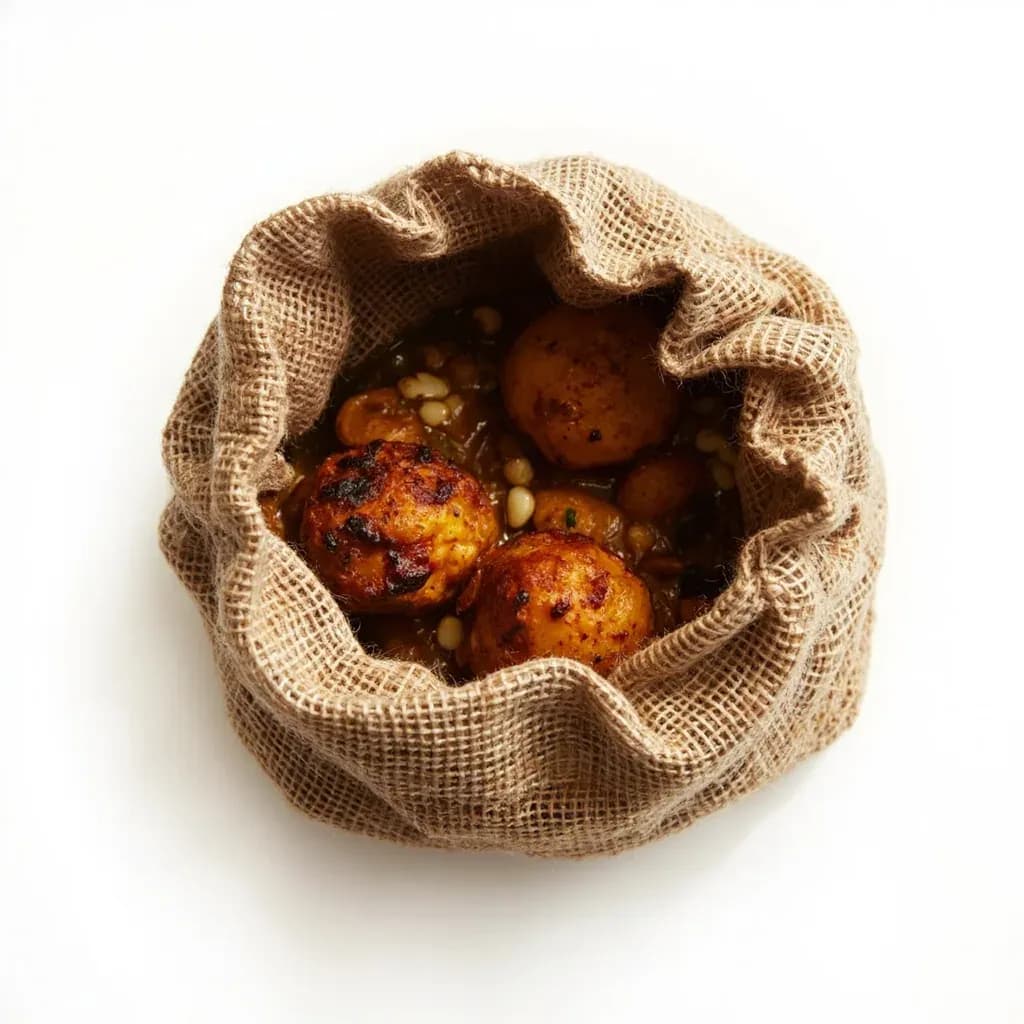
Burlap Sack (Imu Lining)
Coarse jute sacking soaked and layered in earth ovens to hold steam over the food.
A burlap sack is a coarse woven jute bag used in earth-oven cooking such as the Hawaiian imu and New Zealand hangi. Cooks soak the sacks in water and lay them over the food and hot rocks so they release steam that gently cooks everything underground. The wet burlap also traps heat and keeps soil and ash off the food.
Burlap, in the context of imu cooking, is a coarsely woven cloth of natural plant fiber — most often jute, sometimes hemp or sisal — that serves as the steam-trapping ceiling of a Polynesian underground oven. Its job is unromantic but essential: once a pit has been filled with burning wood, the wood raked aside, and a bed of fire-heated volcanic rocks exposed, the burlap is soaked in water and laid across the top of the pit (either directly on the rocks or over a layer of ti or banana leaves) before the food and remaining cover are piled on. The wet fibers will not burn at imu temperatures; instead they release their water as steam and force that steam to circulate back down around the food. The result is a moist, even, long-sustained heat that is gentler than dry pit-roasting and produces the soft, smoky-earth character associated with kalua pig and other luau staples.
The reason burlap works so well is structural. Its weave is loose enough to let steam pass through but tight enough to slow its escape, so the pit becomes a closed, humid environment rather than an open fire. Soaking the cloth before laying it in is non-negotiable: dry burlap will scorch, char, and eventually ignite. As the cook progresses, the layer closest to the hottest rocks dries and embrittles, but the layers above it continue to feed moisture downward. The cloth is treated as a consumable — by the end of a long imu cook it is brittle, blackened, and discarded — but during the cook it is doing the work of a lid, a steamer, and a smoke screen all at once.
Outside the imu, the same principle turns up wherever pit cooks want a wet, breathable cover: a soaked burlap sheet draped over a pork shoulder in a barrel pit, a layer of wet burlap above fish in a cold-smoker, or wet sacking on top of cabbage in a traditional Eastern European sauerkraut pit. Modern home cooks replicating an imu sometimes reach for wet canvas, wet towels, or a foil-and-water-pan lid, though none reproduce the slow smolder and faint earthy aroma that real burlap contributes.
Alternatives
Types & varieties
The standard traditional choice; loosely woven, softens when soaked, holds moisture well
Stronger and longer fibers; tolerates prolonged steaming without tearing
Stiffer, more open weave; sometimes used but less absorbent than jute
Sometimes used informally; only safe if confirmed untreated and clean of prior contents
How the Burlap Layer Works
Think of the burlap as a porous lid rather than a fabric. When the pit is assembled, the rocks are at or near the temperature of a wood fire (often 600°F / 315°C or more at the surface), and most of that radiant heat would otherwise flash off as dry oven air. Pouring water onto the rocks — and soaking the burlap in advance — converts that heat into a rolling cloud of low-temperature steam. The burlap holds enough water to keep producing steam for the entire cook, which for a whole pig can run 6 to 10 hours, and its weave lets the steam move around the food instead of escaping straight up. The leaves beneath the burlap (ti or banana) keep any loose fiber off the food; the dirt and rocks above the burlap press it down and slow evaporation from the top side. Net effect: steady 200–250°F (95–120°C) moist heat, which is why imu-cooked meat pulls cleanly off the bone without drying out.
- Dry burlap can ignite at roughly 450°F (230°C); wet burlap is held near boiling at the fiber surface and only begins to smolder as the upper, drier layers char.
- The hottest single point in an imu is the rock–water interface; the burlap is deliberately placed above that point so it steams rather than chars through immediately.
- As the bottom layer of burlap dries and embrittles, the steam continues to come from the layers above, so thickness matters — one sheet is rarely enough.
Sourcing Safe Burlap
Not every sack sold as burlap is safe to cook over. Industrial sacking — the kind used to ship coffee, grain, fertilizer, or chemicals — is often treated with sizing, rot-proofing, fungicides, anti-skid coatings, or printing inks, all of which can off-gas unpleasant or toxic fumes when heated. Even food-grade burlap can be dyed or bleached. The safe choice is unbleached, untreated, natural-fiber burlap sold specifically for gardening, crafts, or food use; many Hawaiian cultural-supply stores and mainland garden centers stock it. A simple sniff test helps: if the cloth smells of machine oil, mildew, or any sharp chemical note, do not use it for cooking. Repurposed feed or coffee sacks can work only if you can confirm they held a benign dry product and were never treated; when in doubt, buy new.
Common uses
Tips & pitfalls
- Use only untreated, food-grade burlap — synthetic fibers, burlap treated with rot-proofing, or printed sacks can release toxic fumes when heated.
- Soak the sacking fully in clean water for at least several minutes; the target is wring-damp, not dripping, so it steams steadily rather than flooding the rocks.
- Layer burlap on top of ti leaves or banana leaves rather than directly on the food to keep stray fibers out of the meal.
- Have extra soaked burlap ready; the first layer almost always dries and chars where it meets the hottest rocks, and a fresh sheet on top keeps the steam supply going.
- Wet the ground cover above the burlap too — sand, dirt, and any additional ti leaves — so steam condenses and cycles back down instead of escaping upward.
- Avoid any burlap that smells of machine oil, mildew, or chemicals; when in doubt, do not cook with it.
- Pre-cut burlap to roughly the size of the pit opening so assembly is fast once the rocks are hot and the cook window has started.
- Do not reuse burlap from a prior cook — by the end of a long imu session it is brittle, blackened, and contaminated with ash and drip; burn or discard it.
Good to know
- Material
- Coarsely woven natural fibers, primarily jute; sometimes hemp or sisal
- Traditional context
- Hawaiian and broader Polynesian imu (underground oven) cooking, especially luau-style pit roasts
- Primary function
- Traps and recirculates steam from water poured over hot volcanic rocks, distributing gentle, even heat around the food
- Placement in imu
- Laid over a layer of ti or banana leaves that cover the food (sometimes directly over the hot rocks before food is set on top), then weighted with dirt, sand, or more rocks
- Pre-use prep
- Soaked thoroughly in clean water so it steams rather than ignites on contact with hot stones
- Reusability
- Generally single-use; charred, embrittled, and discarded after the cook
- Food-safety note
- Must be natural, untreated, food-grade burlap; industrial sacking may carry machine oil, sizing, fungicides, or dyes
- Heat behavior
- The wet layer is pinned near boiling (about 212°F / 100°C) at the fiber surface; the upper, drier layers smolder and char as the cook progresses
Also called
Hessian Sack · Jute Sack · Imu Burlap
Related

Aluminum Foil
Wraps, covers, and tents food for the oven and grill

Parchment Paper
Nonstick liner for clean, even baking and easy release

Wax Paper
Moisture-resistant sheet for wrapping and counter prep

Plastic Wrap
Clings tight to cover bowls and wrap leftovers

Silicone Baking Mat
Reusable nonstick liner that replaces parchment

Cheesecloth
Loose-woven cloth for straining stock and bundling herbs

Beeswax Food Wrap
Reusable wax wrap that molds around bowls and produce

Piping Tips
Shaped nozzles that turn frosting into stars and rosettes