Heat & Safety
Calçotada Bib
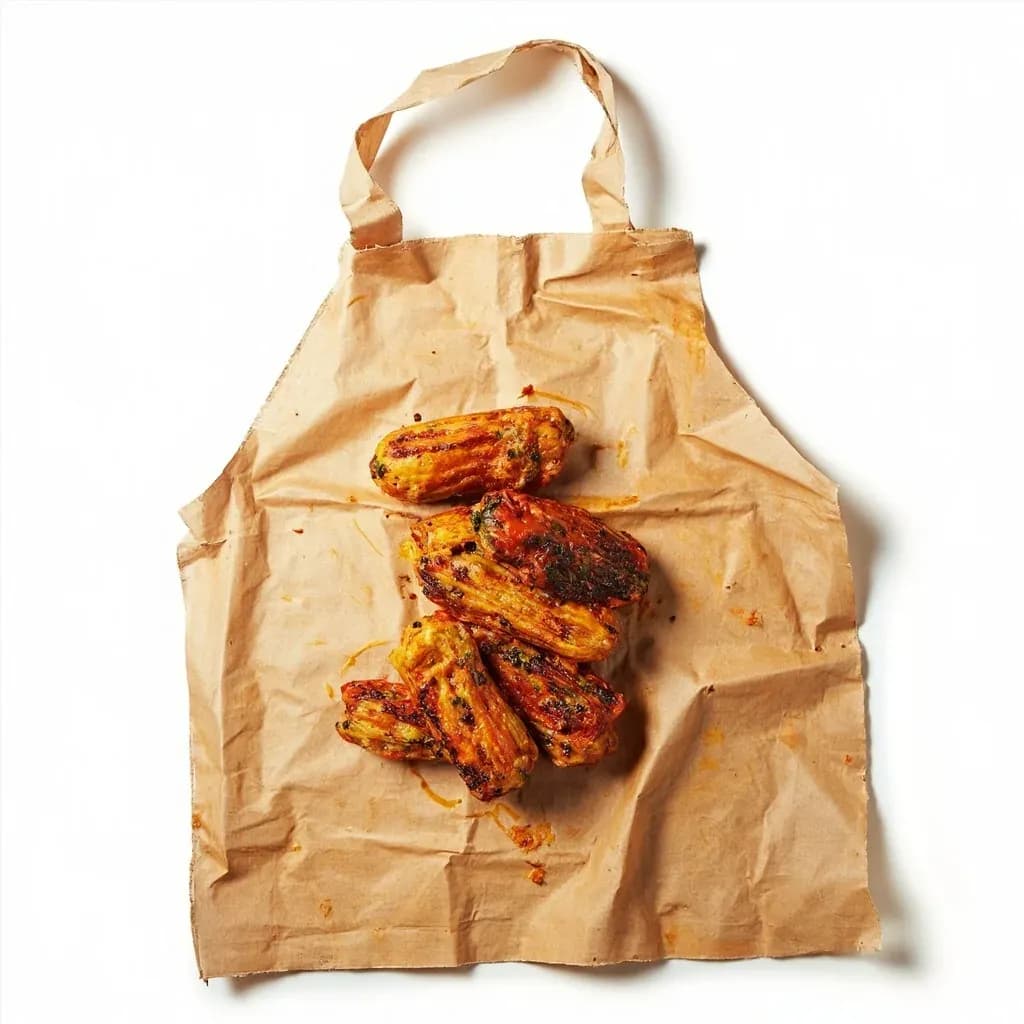
A large disposable bib worn at a calçotada to catch char and sauce from grilled spring onions.
A calçotada bib is an oversized paper or plastic bib worn at the Catalan calçotada feast, where diners peel and eat charred calçots dipped in romesco sauce by hand. It protects clothing from the soot and dripping sauce that come with the messy ritual. The bibs are handed out by the bundle and tossed after the meal.
The calçotada bib — known in Catalan as a *Bavall* (de calçotada) — is a large, single-use protective covering that diners tie over their chest before eating calçots, the long, sweet grilled spring onions of Catalonia. It exists for one specific, unavoidable reason: the traditional way to eat a calçot, the *penjar* (literally "to hang"), involves holding the charred onion by the green tops, suspending it from above the mouth, and biting upward while pulling the burnt outer sheath down with the free hand. Romesco sauce clings to the white interior, and gravity sends a steady stream of it down your chin, onto your shirt, and into your lap. No table napkin, no amount of caution, and no normal adult-sized dexterity prevents this; the bib is the local solution.
Most calçotada bibs are made of thin polyethylene or a paper-over-plastic laminate, large enough (roughly 60–80 cm wide, 70–90 cm long) to cover the chest and upper thighs, with a neck loop and back ties. The commercial product is cheap, sold in packs at Catalan markets, calçotada restaurants, and tourist shops, and is tied culturally to the late-January through April calçot season and the *Gran Festa de la Calçotada* in Valls. Outside Catalonia you will find them mainly through diaspora suppliers, food-tour operators, and home cooks staging their own calçotadas — but they remain one of the few pieces of eating-wear a serious cook will deliberately stock alongside butcher paper and grill gloves.
It is worth treating the bib as protective supply rather than a curiosity. Romesco is an aggressive stain: ñora peppers, tomato, olive oil, almonds, and hazelnuts all leave marks that set into fabric quickly, and the sauce carries a sheen of oil that a cloth bib will absorb and never fully release. A disposable plastic bib is not glamorous, but it is the only sensible answer to a meal designed to be eaten with your face above the table.
Alternatives
Types & varieties
The standard calçotada bib: thin polyethylene with a neck loop and back ties, sold in stacks at restaurants and market stalls in Catalonia.
Printed paper face with a plastic backing to stop sauce soaking through; slightly stiffer feel than the all-plastic version.
Heavier PVC or coated-fabric version sold to tourists and home hosts; wipeable and intended to survive multiple calçotada seasons.
Limited-edition designs from towns such as Valls, Montblanc, or Reus, printed with the local calçotada festival logo or the Catalan senyera.
Why the bib is necessary
The calçotada bib is a piece of eating-wear, not cooking equipment, and it exists because the dish it serves is unusually, consistently messy. A calçot is a long, immature onion — typically a *calçot* cultivar of *Allium cepa* — grilled whole over a high flame until the outer layers blacken and the interior turns silky and sweet. The correct way to eat it is to peel the charred sheath downward with your fingers, dip or drench the white interior in romesco, then lower the dripping onion from above the mouth and bite upward, pulling more of the burnt skin off as you go. That suspended posture guarantees two outcomes: sauce runs down the chin, and bits of char and ash fall into the lap. Romesco amplifies the problem because it is oil-based, deeply pigmented, and rich in ground nuts and ñora pepper. The bib is the simplest, cheapest, and most socially accepted answer — you will see one around the neck of nearly every diner at a Valls calçotada restaurant, from children to grandparents.
Choosing and stocking the bib
For a host staging a calçotada at home, a calçotada bib is a low-cost insurance policy against ruined tablecloths and shirts. Buy more than you think you need — diners forget them, tear them putting them on, or arrive in light clothing expecting a spare.
- Order at least one bib per diner plus two or three spares, especially for groups with children.
- Keep a roll of paper towels and a lined bin at the table; the bib catches the bulk of the mess but not all of it.
- If you host a calçotada annually, invest in one reusable rubberized bib per regular guest and store them folded in a single kitchen drawer.
- Outside Catalonia, source bibs from Catalan food importers, online calçotada kits, or specialty Spanish food retailers well before late January, when supply is most reliable.
Common uses
Tips & pitfalls
- Tie the back strings snugly so the bib lies flat against the chest; a bib that floats outward will let sauce drip behind it onto the shirt rather than onto it.
- Tuck the lower edge of the bib inside the shirt collar or fold it inward to form a small trough that intercepts drips before they reach the lap.
- Skip cloth or terry bibs entirely — romesco stains from ñora peppers, tomatoes, almonds, and hazelnuts set fast, and the olive oil can permanently discolor fabric.
- If the bib has no back ties, secure it at the neck with a clothespin or safety pin so it does not slide sideways while you lean forward over the grill or table.
- Keep a roll of paper towels within arm's reach; even with a bib, the penjar technique puts romesco on fingers, chin, and the table.
- Choose a rubberized reusable bib if you host a calçotada every season — it wipes clean with a damp cloth and tolerates being stored folded in a drawer.
- Buy a few extras: diners forget them, tear them while putting them on, or arrive in light-colored shirts expecting a spare to be available.
Good to know
- Catalan name
- Bavall (de calçotada)
- Origin
- Catalonia, Spain; closely associated with the Valls region of Tarragona and the late-January calçot season
- Primary purpose
- Catches burnt onion skins, dripping romesco sauce, and ash during calçots eaten by the penjar method
- Standard material
- Polyethylene or paper-backed plastic; reusable rubberized-fabric versions also exist
- Typical dimensions
- Roughly 60–80 cm wide by 70–90 cm long, covering chest through upper lap
- Construction
- Single front panel with neck loop, back tie-strings, and often a small lower hem or pocket to catch drips
- Use type
- Disposable, single-use (most common); reusable tourist versions also sold
- Cost tier
- Inexpensive; commonly sold in packs of 5–20 at markets, restaurants, and online
Also called
Calçots Bib · Catalan Onion Bib
Related

Paper Towels
Disposable sheets for spills, drying, and patting dry

Kitchen Towels
Reusable cloths for drying, gripping, and wiping

Oven Mitts
Heatproof gloves to handle hot pans and trays safely

Disposable Gloves
Single-use gloves for safe, mess-free handling

Cleaning Cloths
Reusable cloths for wiping counters and spills

Tortilla Warmer
Insulated holder that keeps tortillas warm and soft

Trivet
Heatproof stand that shields surfaces from hot pots

Ice Bath Setup
Bowl of ice water that halts cooking and sets color