Storage & Containers
Trash Can Liner
A plastic bag that lines a kitchen bin to contain food waste and refuse.
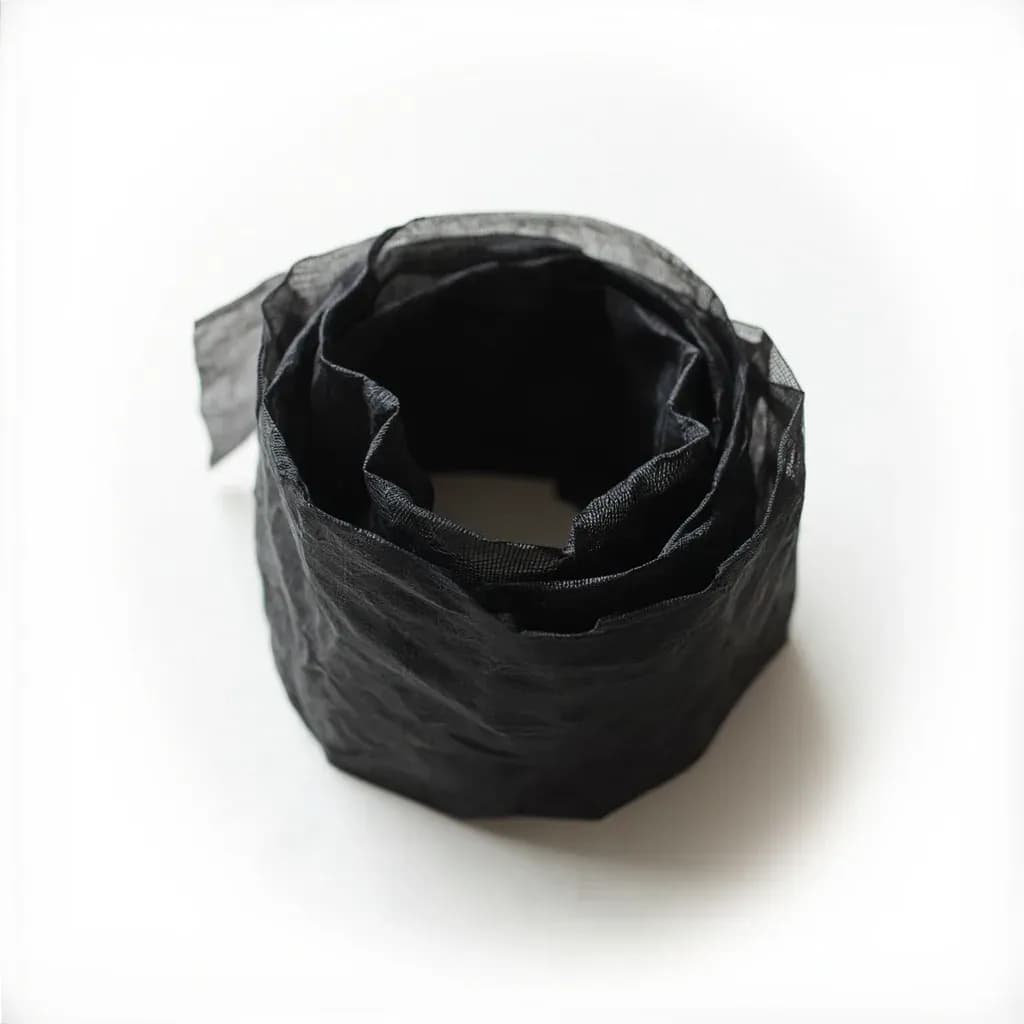
A trash can liner is a plastic bag sized to fit a kitchen waste bin, keeping the can clean and making disposal easy. Cooks rely on them to collect scraps, trimmings, and packaging during prep and cleanup. Heavy-duty grades resist tearing under wet kitchen waste and sharp bones or cans.
A trash can liner is a disposable plastic bag fitted inside a kitchen waste bin to catch food scraps, packaging, and other refuse so the bin itself stays clean. The right liner prevents leaks, contains odors, and makes it possible to toss a full bag into the outdoor can without touching the wet, sticky interior. In a working kitchen the liner is load-bearing equipment: a cheap or wrong-sized bag fails at the worst possible moment, while a properly matched one is invisible.
Modern kitchen liners are made from polyethylene, with two distinct families on the shelf. High-density (HDPE) bags are thin, crinkly, and inexpensive; they handle dry, light waste well but tear on bones, shells, and sharp scraps. Linear low-density (LLDPE) bags are thicker, stretchier, and puncture-resistant, which is why they have become the default for food waste. A separate category of compostable liners, made from PLA or paper, fits in the compost crock rather than the trash can and only breaks down in industrial facilities, not a backyard pile.
For most home cooks the workhorse is a 13-gallon LLDPE drawstring bag in the step-can, paired with a smaller compostable liner in the counter compost crock. Getting the size, thickness, and closure right is the whole game: it is the difference between a bag that holds, ties, and carries out cleanly and one that collapses into the bin or splits at the seam.
Alternatives
Types & varieties
Thin, crinkly, low-cost; good for dry paper waste and light kitchen refuse but tear easily on bones or sharp scraps.
Puncture- and tear-resistant; the default choice for food waste because they survive wet, greasy, and sharp-edged contents.
Built-in cinch cord for quick tying; standard on most premium kitchen lines and easiest to close one-handed.
Two integrated tie-flaps molded into the bag; the older, cheaper closure style still common in commercial settings.
Made from PLA, cornstarch, or paper; must meet ASTM D6400 / EN 13432 to legitimately be marketed as compostable.
Manufactured with post-consumer recycled (PCR) resin, usually 30–100% PCR; look for SCS or BPI third-party certification.
Infused with fragrance (typically citrus or lavender) to mask odors; not a substitute for actually emptying the bin.
2–3 mil thickness used in busy prep kitchens for bones, oyster shells, and metal-edged cans.
Sizing a liner to the bin
Gallon ratings are nominal, not exact, and the failure mode of an undersized bag is that it slips down inside the bin and lets refuse pool beneath it. The reliable test is the bag's lay-flat width, which is half the circumference of the bag when opened into a tube. A typical 13-gallon step-can has a rim circumference of roughly 40–44 inches, which pairs with a bag of about 24 inches of lay-flat width, leaving enough material to fold a few inches over the rim. When in doubt, go one size up; the extra material becomes a tie, not a problem.
- Measure the bin's rim circumference, not its height.
- Fold the top 3–4 inches over the rim to keep the bag from sliding down.
- If a bag 'suctions' to itself when lifted, push down in the center to break the seal before cinching.
Choosing between conventional and compostable
Conventional polyethylene liners are durable, cheap, and made from petroleum feedstock; they do not biodegrade in any practical timeframe. Compostable liners are made from renewable feedstocks but only break down in industrial composting facilities that hold 130–160 °F for several weeks. In a home backyard pile, a 'compostable' bag may sit intact for months, so it is worth knowing what your municipal program actually accepts before switching.
- Use conventional LLDPE for landfill-bound waste and most kitchen scraps.
- Use certified compostable (ASTM D6400 / EN 13432) liners only in a compost stream that goes to industrial composting.
- Do not put compostable bags in a standard trash load expecting them to disappear.
Storing and handling
Bags are usually sold as perforated rolls tucked beside or under the bin. The single most common storage mistake is standing the roll on its side, which lets the weight of the bag above pre-rip the perforation. Laying the roll flat, in a drawer or basket, keeps the perforations clean and the first bag tears off cleanly every time.
- Store rolls flat, not on edge.
- Keep rolls dry; a wet outer bag can fuse to the next one and tear unevenly.
- Tuck a fresh roll into the bottom of the bin so the next bag is ready when the current one goes out.
Common uses
Tips & pitfalls
- Use LLDPE or 'kitchen' labeled bags for food waste; HDPE economy bags tear on bones and shrimp shells.
- When using a drawstring bag, pull the cord fully and twist before letting it snap back, so the knot actually holds.
- Do not put hot ash, grease over 120 °F, or sharp metal in standard kitchen liners; they will melt through or puncture.
- Double-bag raw-meat drippings, fish scraps, or used cooking oil containers to contain odor and prevent leaks.
- Match the bag's lay-flat width to the bin's circumference, not just the gallon rating; an undersized bag won't reach over the rim.
- In a compost crock, switch to a small (4–8 gallon) certified compostable liner so the whole bag can go into the organics bin without unwrapping.
- If odors persist, the problem is usually the bin itself: wash it with a baking soda and hot water scrub before blaming the bag.
- Replace the liner more often than you think; a half-full bag left for a week leaks and smells more than a daily-tied one.
Good to know
- Primary material
- Polyethylene, either high-density (HDPE) for thin economical bags or linear low-density (LLDPE) for thicker, puncture-resistant bags.
- Standard kitchen sizes (US)
- 8 gallon for under-sink or counter bins, 13 gallon for the most common step-can, and 30–33 gallon for larger pull-out bins.
- Thickness
- Typically 0.5–1.5 mil (0.013–0.038 mm); heavier-duty 'contractor' or 'outdoor' bags run 2–3 mil.
- Closure types
- Flap-tie (early style), flat top (no closure), and drawstring (modern default).
- Color coding
- Black is standard for kitchen opacity; clear is used for recycling streams; blue, green, and red are widely used for sorting recyclables and organics.
- Compostable standard
- Bags labeled compostable are typically PLA or plant-starch and are certified to ASTM D6400 (US) or EN 13432 (EU); they require industrial composting, not a home bin.
- Capacity labeling
- Sizes are nominal; a '13 gallon' bag fits a bin rated 12–14 gallons with the bag folded over the rim.
- Commercial introduction
- Plastic trash bags entered the consumer market in the 1950s and displaced paper liners in most households by the 1970s.
Also called
Trash Can Liner · Bin Liner · Garbage Bag
Related

Freezer Bags
Thick, sealable bags built to fight freezer burn

Storage Bags
Resealable bags for fridge storage and marinating

Storage Container
Lidded container for leftovers, prep, and meal kits

Glass Container
Oven-to-fridge glass that won't stain or hold odors

Plastic Container
Lightweight, stackable storage for everyday leftovers

Vacuum Sealer Bags
Airtight bags for long freezing and sous-vide

Reusable Bags
Washable silicone bags that replace single-use plastic

Mason Jar
Sealed glass jar for preserves, pickles, and storage