Storage & Containers
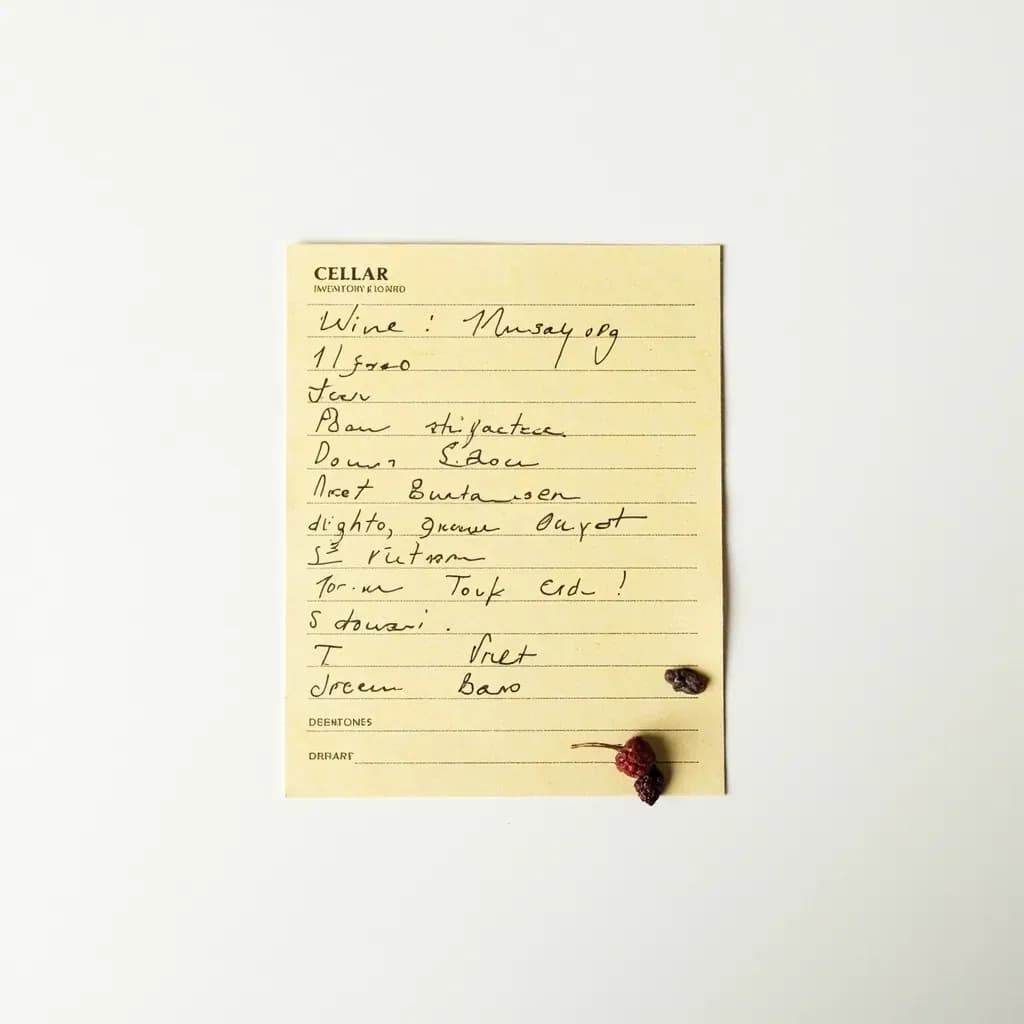
Cellar Inventory Card
A tracking card for recording wines or preserves stored in a cellar.
A cellar inventory card is a label or index card used to log what is stored in a wine or pantry cellar, including vintage, quantity, and location. It helps track aging stock and find bottles or jars without disturbing the rest. Cooks and collectors update the card as they add or pull items.
A cellar inventory card is a small paper record — typically index-card sized — used to track what is stored where in a wine cellar, root cellar, or canned-goods pantry. Unlike a printed label stuck to a single bottle, the card is a living entry: it carries the producer, vintage, bin location, count, and tasting notes for a single wine, or the batch date, recipe, and quantity for a row of jars. Its job is to make a dark, cool room searchable without opening every box.
The card earns its keep only if the entries are kept current. A card written once and never updated is just a label; a card maintained as bottles are pulled and jars are consumed is the difference between a collection and an organized collection. Cellar conditions — cool, often humid, sometimes damp enough to warp paper — shape every choice, from the writing implement to the card stock to where the file itself is kept. The card itself does not need special storage, but it should tolerate the ambient humidity of a real cellar (typically 50–75%) without curling, mildewing, or losing its writing.
Alternatives
Types & varieties
Plain 3×5 or 5×7 in cards kept in a recipe box or alphabetical file, cross-referenced to bin locations noted elsewhere in the cellar.
Cards with a slot or tab punched at the bottom, threaded onto a horizontal rod so cards swing free; removing a card signals a bottle pulled or a jar used.
Small card attached with string or wire directly to a rack shelf, crate, or storage bin, holding brief location-and-content information at the point of storage.
Sealed or plastic-coated card built for damp root cellars where unprotected cardstock would warp, soften, or grow mold.
Bound or loose-leaf pages modeled on traditional winery logbooks, used for large or formal cellars rather than casual home storage.
Common uses
Tips & pitfalls
- Write with a graphite pencil, not ink — most pen inks feather, smudge, or fade in a humid cellar over months and years, leaving the card unreadable.
- Always record the bin, rack, or shelf location; the card is useless if it cannot be matched back to a physical spot in the cellar.
- Include the date the entry was made and, for food, the date it was processed or harvested, so first-in, first-out rotation is possible.
- Update the count each time a bottle, jar, or bag is removed — an inventory card that lies about quantities is worse than no card at all.
- Store the card file itself in the cellar or just outside it so cards never travel far in damp hands; wet fingers warp unprotected cardstock quickly.
- Photograph or scan cards periodically as a backup; a single soaked card or one knocked into a puddle can erase months of records.
- Avoid adhesive labels on bottle necks as a long-term substitute — adhesive fails in cool damp conditions and damages the original label when removed.
- If using a T-card rod, number the rod positions to match a separate floor plan so removed cards can be reinserted in the correct slot.
Good to know
- Item type
- Tracking and labeling card for items in long-term storage — wine, home-canned preserves, and root-cellar vegetables are the most common.
- Common formats
- 3×5 in or 5×7 in index cards, hanging T-cards (slot-tab cards threaded on a metal rod), and bin tags tied to racks or crates.
- Typical material
- Heavy cardstock, ideally archival or acid-free; quality versions include a metal grommet, string, or wire hook for hanging.
- Writing implement
- Graphite pencil is the standard; ballpoint smudges and most other inks feather or fade in cool, humid cellar conditions.
- Standard fields (wine)
- Producer, vintage, varietal or cuvée, region or appellation, bin location, bottle count, purchase date and price, tasting notes, and drinking window.
- Standard fields (preserves)
- Contents, canning date, batch number, recipe or source, jar count, and best-by date.
- Digital alternatives
- Cellar management apps such as CellarTracker replicate the same fields and often export printable card templates.
- Working environment
- Designed for cool, dark, humid spaces; the cardstock should tolerate 50–75% relative humidity without warping or molding.
Also called
Cellar Log Card · Cellar Inventory Tag
Related

Freezer Bags
Thick, sealable bags built to fight freezer burn

Storage Bags
Resealable bags for fridge storage and marinating

Storage Container
Lidded container for leftovers, prep, and meal kits

Glass Container
Oven-to-fridge glass that won't stain or hold odors

Plastic Container
Lightweight, stackable storage for everyday leftovers

Vacuum Sealer Bags
Airtight bags for long freezing and sous-vide

Reusable Bags
Washable silicone bags that replace single-use plastic

Mason Jar
Sealed glass jar for preserves, pickles, and storage