Wraps & Liners
Chakin (Linen Matcha Cloth)
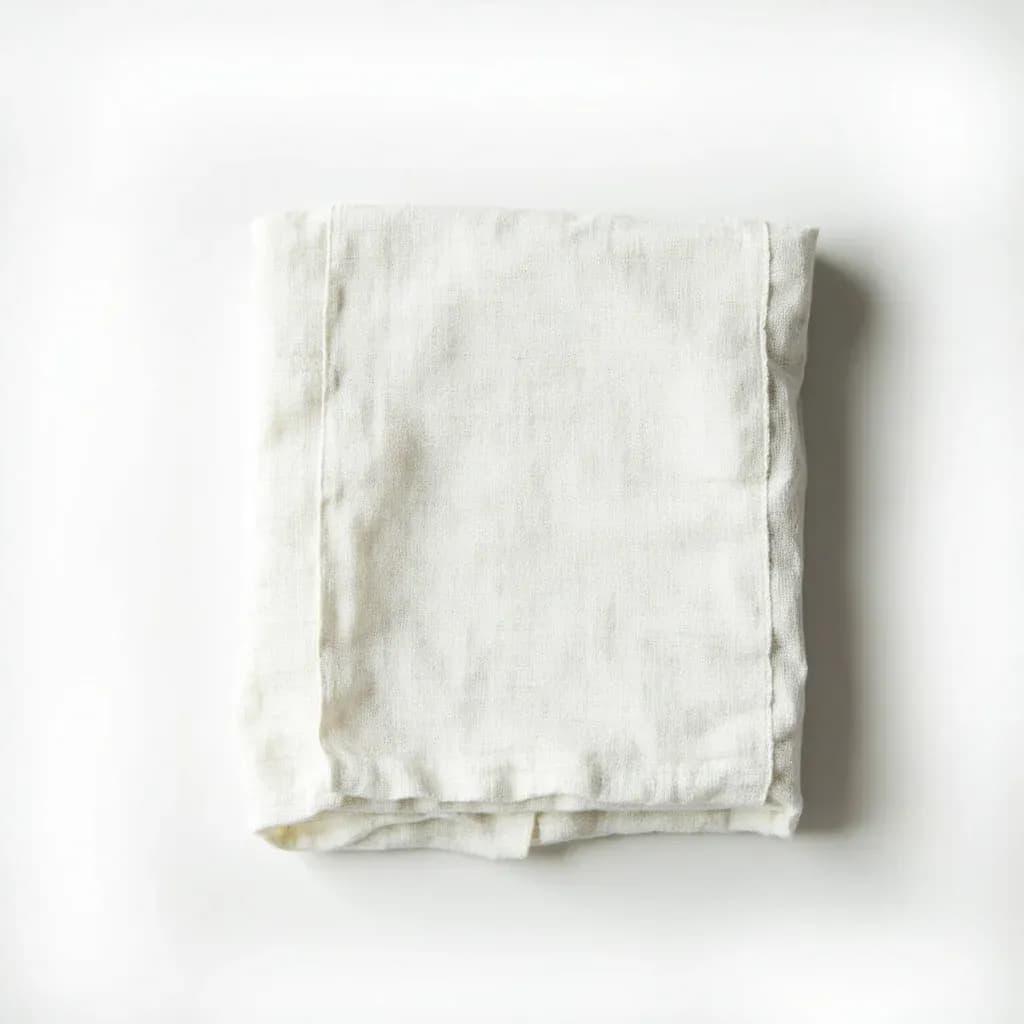
A small white linen cloth used to wipe the tea bowl in the Japanese tea ceremony.
A chakin is a small rectangular cloth of white linen or hemp used in the Japanese matcha tea ceremony to wipe and dry the tea bowl. The host folds it precisely and uses it to cleanse the bowl before whisking the tea. In cooking, a similar cloth shapes wrapped morsels such as chakin-zushi.
The chakin (茶巾, literally "tea cloth") is a small square cloth used in the Japanese tea ceremony to purify the chawan (tea bowl) between guests and between rounds. In formal chanoyu, every gesture is codified, and the chakin's whiteness and crispness carry the same weight as the bowl itself: each guest must receive tea from a vessel that has been ritually cleaned. The cloth is wetted with hot water, wrung out tightly, folded into a precise narrow rectangle, and drawn through the bowl in a single, deliberate motion to lift any residual matcha film from the glaze.
Traditionally woven from asa (hemp) for its superior absorbency and quick-drying weave, the chakin today is most commonly made from linen, with cotton as a softer, more affordable alternative. The plain or subtly puckered (shibo) weave genuinely outperforms an ordinary kitchen napkin at picking up the thin residue that rinsing leaves behind, and the cloth's texture helps the bowl dry without linting. For anyone preparing matcha at home, a dedicated chakin is a small investment that improves both function and the visual rhythm of the ritual.
Regional schools of tea — Urasenke, Omotesenke, Mushakōjisenke, and others — each prescribe slightly different fold dimensions and crease orientations, but the underlying principle is consistent: a clean white cloth, presented folded on the lid of the tea caddy, used once, and reset for the next guest. That repetition is the point. The chakin embodies the renewal that runs through the entire ceremony.
Alternatives
Types & varieties
The classical choice; highly absorbent with a slightly coarse, rustic hand, prized in traditional schools.
The most common modern version; crisp hand, durable, quick-drying, and holds a sharp, defined fold.
Softer and more affordable; folds less crisply and dries a touch slower than linen.
A longer, narrower format used in certain regional schools and tea styles; folded differently.
A crêpe-textured weave with a puckered surface that improves water pickup; named for the shibori cloth tradition.
Appears in casual or seasonal settings; white remains the default in formal chanoyu.
The role of the chakin in chanoyu
The chakin is one of the smallest but most codified tools of the tea ceremony. It is not merely a drying cloth: it is the visible sign that the host has refreshed the bowl between servings. In a multi-guest gathering (chakai), each participant receives tea from a bowl that has been rinsed, wiped with the chakin, and set down again — a quiet act of hospitality that precedes every sip.
The chakin is also a compositional element. After wiping the bowl, the host folds the cloth and rests it on the lid of the natsume (tea caddy) or kogo, where its small white rectangle anchors the arrangement of utensils on the mat. Removing and replacing the chakin signals the transition from one guest to the next, functioning almost like a punctuation mark in the choreography of temae.
- It is the host's tool — guests do not handle it during a formal ceremony.
- Its position on the caddy lid tracks the progress of the gathering: present between guests, absent during the host's own bowl of tea in some schools, and reset before the next round.
- Schools differ on whether the folded crease edges face the host or the guest; either way, the fold is meant to read as deliberate, not improvised.
Choosing and caring for a chakin
A good chakin should feel substantial in the hand even when dry, with a tight weave that does not stretch when wet. Linen is the practical default for most modern practitioners; hemp (asa) is the purist's choice for its absorbency and quick-drying weave. Cotton is acceptable for casual use but tends to look limp on the caddy lid and takes longer to dry between guests.
Whiteness is the cloth's working condition. The chakin should be hand-washed in mild, unscented detergent, rinsed thoroughly, and line-dried. Bleach shortens the life of natural fibers and can leave an odor; fabric softener coats the fibers and reduces absorbency. Iron or hand-press while damp so the cloth holds a crisp rectangular fold when dry.
- Pre-wash new chakin once before first use to remove sizing and soften the weave.
- Fold and stack a small supply in the tea utensil box so a fresh one is always on hand.
- Replace the chakin at the first sign of yellowing, staining, or fraying — in the tea room, whiteness is non-negotiable.
- Avoid tumble drying: heat sets in creases unevenly and weakens linen fibers over time.
Common uses
Tips & pitfalls
- Wet the chakin thoroughly with hot water and wring it out completely before wiping — a dry cloth will not lift the residual matcha film from the glaze.
- Wipe the bowl in a single, deliberate pass rather than scrubbing; the motion honors the bowl and avoids abrading fine glazes.
- Press or iron the chakin while damp so it holds a crisp rectangular fold on the caddy lid; a limp fold reads as careless in formal settings.
- Use only plain, unscented detergent — any fragrance will transfer to the next bowl of matcha and mute its aroma.
- Fold the chakin so the crease edges face the host, not the guest; this small detail is part of formal etiquette in most schools.
- Keep a small stack of folded chakin in the tea utensil box so a fresh cloth is always ready between guests, especially during multi-bowl servings.
- Never substitute a terry-cloth kitchen towel or a fleece-edged napkin: they leave lint on the bowl and cannot be folded to the required crispness.
- Replace the chakin the moment it shows yellowing or a stubborn stain; in chanoyu, a discolored cloth is considered unsuitable, not merely unfashionable.
Good to know
- Japanese name
- 茶巾 (chakin), literally "tea cloth"
- Origin
- Japan; formalized within the chanoyu (Japanese tea ceremony) tradition
- Primary material
- Asa (hemp) traditionally; modern versions use linen or cotton
- Size (cloth)
- Roughly 30–33 cm (12–13 in) square before folding
- Folded size
- Approximately 8–10 cm long, presented as a narrow rectangle
- Weave
- Plain weave, often with a puckered (shibo) texture for absorbency
- Standard color
- White; colored and patterned versions appear in informal settings
- Care
- Hand-wash in mild unscented detergent, no bleach, line-dry; replace when yellowed or frayed
Also called
Chakin Cloth · Matcha Cloth
Related

Aluminum Foil
Wraps, covers, and tents food for the oven and grill

Parchment Paper
Nonstick liner for clean, even baking and easy release

Wax Paper
Moisture-resistant sheet for wrapping and counter prep

Plastic Wrap
Clings tight to cover bowls and wrap leftovers

Silicone Baking Mat
Reusable nonstick liner that replaces parchment

Cheesecloth
Loose-woven cloth for straining stock and bundling herbs

Beeswax Food Wrap
Reusable wax wrap that molds around bowls and produce

Piping Tips
Shaped nozzles that turn frosting into stars and rosettes