Storage & Containers
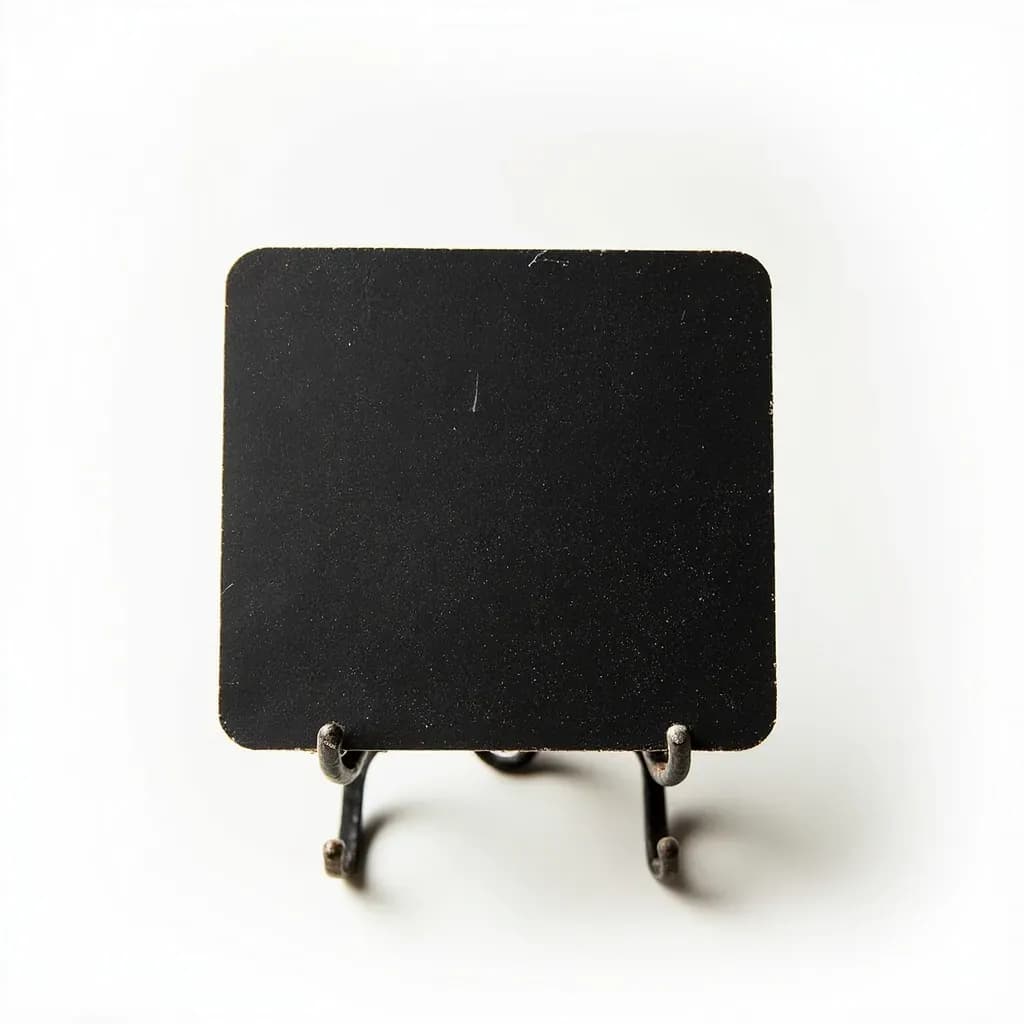
Chalkboard Price Sign
A small chalkboard for labeling dishes, prices, or specials at a market or counter.
A chalkboard price sign is a reusable slate used to display the name or price of food at markets, delis, and buffets. Vendors and cooks write with chalk or chalk markers, then wipe and rewrite as offerings change. The erasable surface makes it easy to update specials throughout the day.
A chalkboard price sign is a small writing surface — typically a framed piece of MDF, slate, or melamine with a black chalk-friendly face — used to label food, mark prices, and broadcast daily changes at a counter, case, or market stall. It matters because the front of any food display changes constantly: a new loaf is pulled from the oven, the soup runs out at noon, a cheese goes on special by the pound. A chalkboard lets a cook or counter worker rewrite that information in seconds without a printer, a label maker, or a new sign. Compared with paper cards, it survives splashes and handling; compared with permanent printed signage, it is honest about what is fresh today.
The board's behavior depends almost entirely on its surface and the writing medium used on it. Traditional chalk gives a soft, dusty, slightly uneven line that photographs with a pleasant matte quality but sheds onto nearby product — a real concern around uncovered pastries or open bins. Liquid chalk markers, water-based and erasable, lay down a denser, smudge-resistant stroke and have largely displaced chalk in modern food retail for that reason. Slate and melamine faces tolerate repeated wiping and the occasional rinse; painted MDF will stain, swell, and eventually peel if kept damp.
In day-to-day use, a chalkboard sign does three jobs at once: it identifies, prices, and qualifies. It tells the customer what something is, what it costs, and whether it carries an allergen flag, a "vegan" tag, a "sold out" mark, or a batch date. That is why even small operations keep a kit — board, marker, cloth — within arm's reach of the display.
Alternatives
Types & varieties
Free-standing with a hinged wood frame; sits on counters and is readable from two sides.
Folded panel that stands on its own; small footprint, ideal for table or plate-side labels.
Single-sided board hung on walls, pegboard, or shelves with clips or string.
Wood frame with a metal clip at the top to slide in paper inserts — combines a chalkboard back with a paper front.
Very small (~3–5 in) boards used on plates, cake stands, or pastry cases.
Larger board mounted on a wood track; flips between two messages (e.g., 'Open' / 'Closed').
Suspended from a hook, beam, or shelving; often used above bakery or deli counters.
Choosing a surface for the job
The frame matters less than the face. Slate is the most durable and the most expensive; it tolerates water, erases cleanly for years, and gives a faint tooth that holds chalk well. Melamine is the modern workhorse — food-safe, water-resistant, and the default for most commercial signs. Painted MDF is the budget option and the one most likely to ghost, stain, or swell when a damp cloth is left sitting on it. Match the surface to the environment: melamine or slate for refrigerated cases and outdoor stalls, painted MDF for dry indoor counters.
Chalk vs. liquid chalk markers
Traditional chalk is cheap, forgiving on rough surfaces, and easy to smudge into shaded backgrounds. It also dusts — a real problem near open bins of flour, sugar, or unwrapped bread. Liquid chalk markers (water-based, labeled erasable) give a uniform, opaque line that photographs well and does not shed, which is why most bakeries, cafés, and market stalls have switched to them. The trade-off is that liquid markers bond more aggressively to the surface the longer they sit, so quick daily wipes matter.
Labeling systems that pair well with chalkboards
- A consistent price format: weight on one line, price on the next, in the same position on every card.
- A small icon or color code for allergens (e.g., red dot for nuts) that can be added or erased in seconds.
- A daily reset ritual: erase at close, prime with a clean wipe, and write tomorrow's board at the same time so the message is never half-done during service.
Common uses
Tips & pitfalls
- Prime a new board by rubbing the entire surface with the side of a chalk stick, then wiping clean — this prevents 'ghost' marks from later erasing.
- Use liquid chalk markers for a crisp, smudge-resistant look that photographs well for social media.
- Rest the marker tip on the board for a second before moving to avoid streaks and skipped lines.
- Stick to 2 fonts and 3 colors maximum; legibility beats decoration in a busy market.
- Write in all capital letters, then step back at least 3 ft to check readability before walking away.
- Avoid solvent-based permanent markers on melamine surfaces — they can stain permanently.
- Wipe chalk markers off within 24 hours; the longer they sit, the harder they bond to the surface.
- Store flat or on edge in a dry area; leaning a framed board against a hot window can warp MDF over time.
Good to know
- Typical material
- MDF, slate, or solid wood frame with a black chalkboard (slate, melamine, or painted) surface
- Common sizes
- Mini table-tops (~4×6 in / 10×15 cm), small A-frames (~6×8 in), standard counter signs (~9×12 in), and large boards (~12×16 in and up)
- Writing tools
- Traditional chalk, chalk pencils, or liquid chalk markers (water-based, erasable)
- Cleaning
- Damp cloth for chalk; dry cloth for chalk markers; rubbing alcohol or chalkboard cleaner for stubborn marks
- Best for
- Labeling retail food items, daily specials, allergens, and pricing in markets, cafés, bakeries, and delis
- Durability note
- Melamine surfaces are food-safe and water-resistant; painted MDF can stain or swell with prolonged moisture
- Origin
- Slate chalkboards date to the early 19th century; the modern wood-framed counter sign became widespread in cafés and markets in the late 20th century
Also called
Chalkboard Label · Price Slate
Related

Freezer Bags
Thick, sealable bags built to fight freezer burn

Storage Bags
Resealable bags for fridge storage and marinating

Storage Container
Lidded container for leftovers, prep, and meal kits

Glass Container
Oven-to-fridge glass that won't stain or hold odors

Plastic Container
Lightweight, stackable storage for everyday leftovers

Vacuum Sealer Bags
Airtight bags for long freezing and sous-vide

Reusable Bags
Washable silicone bags that replace single-use plastic

Mason Jar
Sealed glass jar for preserves, pickles, and storage