Heat & Safety
Charcoal Briquettes
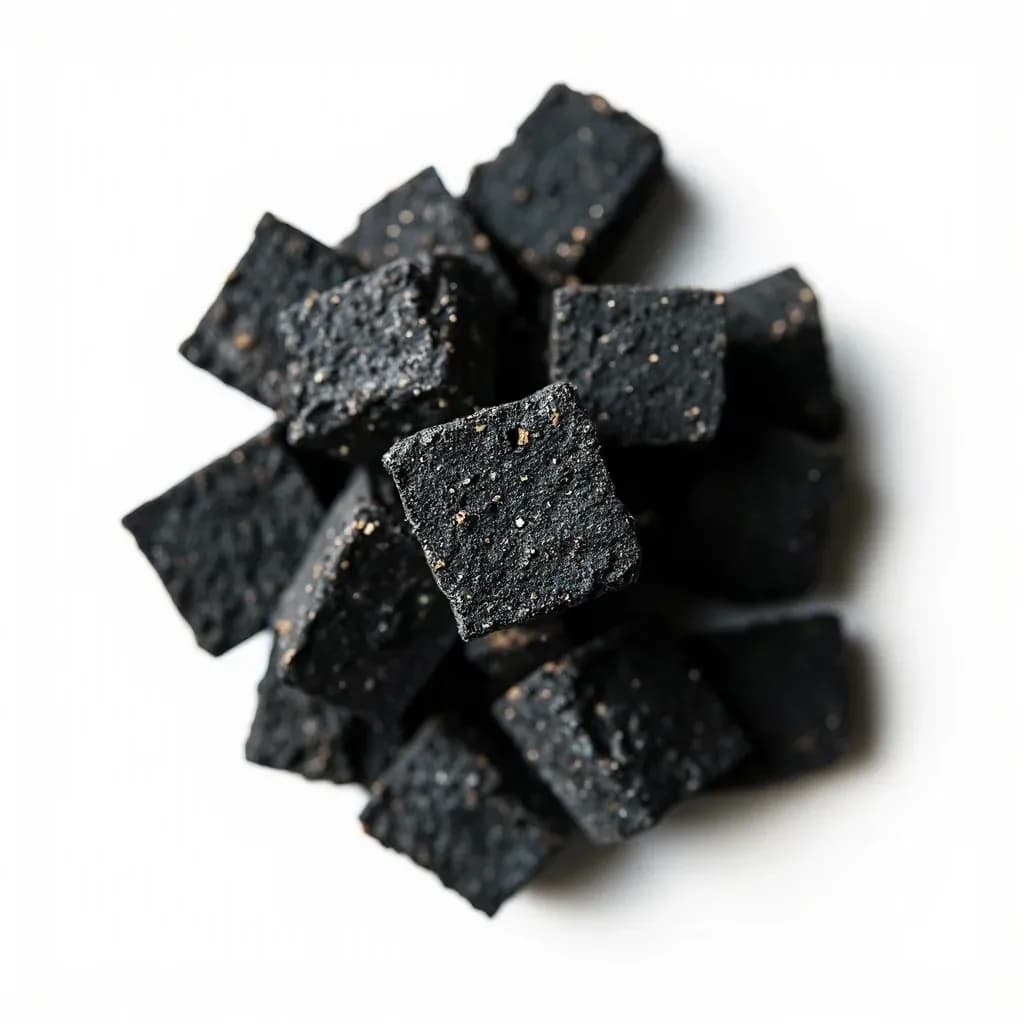
Compressed charcoal blocks that burn long and steady to fuel grills and smokers.
Charcoal briquettes are uniform blocks of compressed charcoal and binders that provide an even, long-lasting heat source for grilling and barbecue. Cooks light them in a chimney starter and spread the coals for direct or indirect cooking. Their consistent size and density give more predictable burn times than lump charcoal.
Charcoal briquettes are the compressed, pillow-shaped fuel blocks that power most backyard grills. They were invented in the early 1920s by Henry Ford and E.G. Kingsford, who figured out how to turn the sawdust and scrap wood from Ford's Model T plant into a uniform cooking fuel by binding powdered charcoal with starch and pressing it into dense pillows. The modern formula is largely unchanged: charcoal fines, a starch binder, sodium nitrate to help the blocks catch, and a small amount of limestone to whiten the ash.
Alternatives
Types & varieties
The familiar blue-bag workhorse; quick to light, steady heat, and the most consistent supermarket option.
Larger, denser blocks (often pillow-on-pillow) that burn longer and produce less ash; favored for low-and-slow competition cooks.
Made with little or no additives and a food-grade starch binder; cleaner flavor and lower ash, but slower to ignite.
Impregnated with petroleum lighter fluid or wax accelerant so they light from a single match; the trade-off is a faint petrochemical taste if not fully ashed over.
Mesquite- or hickory-scented briquettes exist but are uncommon; wood chunks or chips are the more common way to add smoke flavor.
The Ash-Over Rule
The single most important habit with briquettes is patience at lighting. Fresh-lit briquettes flame and pop; throwing food on at that stage scorches the outside and leaves the inside raw, and any residual lighter fluid or accelerant leaves a bitter, chemical edge. Wait until the coals are coated in a thin, even layer of gray-white ash — about 70% covered, usually 15–20 minutes from a chimney starter. The radiant heat from a fully ashed bed is also more even, which is what gives a clean sear on a steak or a steady 225°F on a bullet smoker.
- 70% ash coverage is the practical green light to start cooking.
- Hold a hand 4 inches above the grate: a 2-second pull means high heat, 3 seconds medium, 4+ seconds low.
- If flare-ups appear, slide food to the cool side of a two-zone fire rather than chasing it with a spray bottle.
Briquettes vs. Lump Charcoal
Lump is real charred wood; briquettes are a manufactured fuel. Each has a place. Briquettes are uniform, predictable, and forgiving — they hold shape when slightly damp, relight cleanly, and can be stacked or banked to set up a steady pit. Lump burns hotter and cleaner, with almost no ash, and is the choice for high-heat searing. For long, overnight, or competition cooks, the consistency of a dense briquette is hard to beat; for a quick steak night, lump's searing power often wins.
Common uses
Tips & pitfalls
- Wait until coals are 70% ashed over before putting food on — flaming, fresh-lit briquettes scorch the outside and leave the inside raw.
- Use a chimney starter instead of lighter fluid; you get more reliable ignition and zero chemical off-flavors.
- Build a two-zone fire by piling coals on one side for direct heat and leaving the other side empty for indirect cooking and recovery.
- Don't toss unlit briquettes onto a hot fire to 'extend' it — the cold mass drops grate temperature sharply and you'll spend the rest of the cook chasing heat.
- Spread coals in a single even layer for fast, hot grates; bank them up on one side for cooler, more radiant cooking.
- Keep the lid closed between flips — briquette grills lose heat slowly and recover faster than most people expect.
- Store opened bags in a lidded metal bin or heavy-duty plastic tub; a damp briquette is a hard briquette to light.
- Read a grill thermometer at grate level, not just at the lid vent; charcoal heat is uneven and the grate is what touches the food.
Good to know
- Invented
- Early 1920s in Kingsford, Michigan, by Henry Ford and E.G. Kingsford, using sawdust and scrap wood from Ford's Model T plant.
- Composition
- Charcoal fines, a starch binder (corn or wheat), sodium nitrate as an accelerant, and limestone to whiten the ash.
- Burning temperature
- Peak grate temperature roughly 700–1000°F (370–540°C) once fully ignited and ashed over.
- Burn time
- 60–90 minutes of useful cooking heat for a standard supermarket briquette; competition- or restaurant-grade blocks run 3–4+ hours.
- Ash yield
- About 8–10% by weight for standard briquettes; premium hardwood briquettes run lower.
- Ignition time
- 15–20 minutes in a chimney starter; 25–30 minutes with lighter fluid.
- Storage
- Keep in a sealed, dry container — humidity-soaked briquettes are notoriously difficult to light.
Also called
BBQ Briquettes · Grill Charcoal
Related

Paper Towels
Disposable sheets for spills, drying, and patting dry

Kitchen Towels
Reusable cloths for drying, gripping, and wiping

Oven Mitts
Heatproof gloves to handle hot pans and trays safely

Disposable Gloves
Single-use gloves for safe, mess-free handling

Cleaning Cloths
Reusable cloths for wiping counters and spills

Tortilla Warmer
Insulated holder that keeps tortillas warm and soft

Trivet
Heatproof stand that shields surfaces from hot pots

Ice Bath Setup
Bowl of ice water that halts cooking and sets color