Wraps & Liners
Cheese Bandage Cloth
Muslin cloth wrapped around aging cheeses to protect the rind and wick moisture.
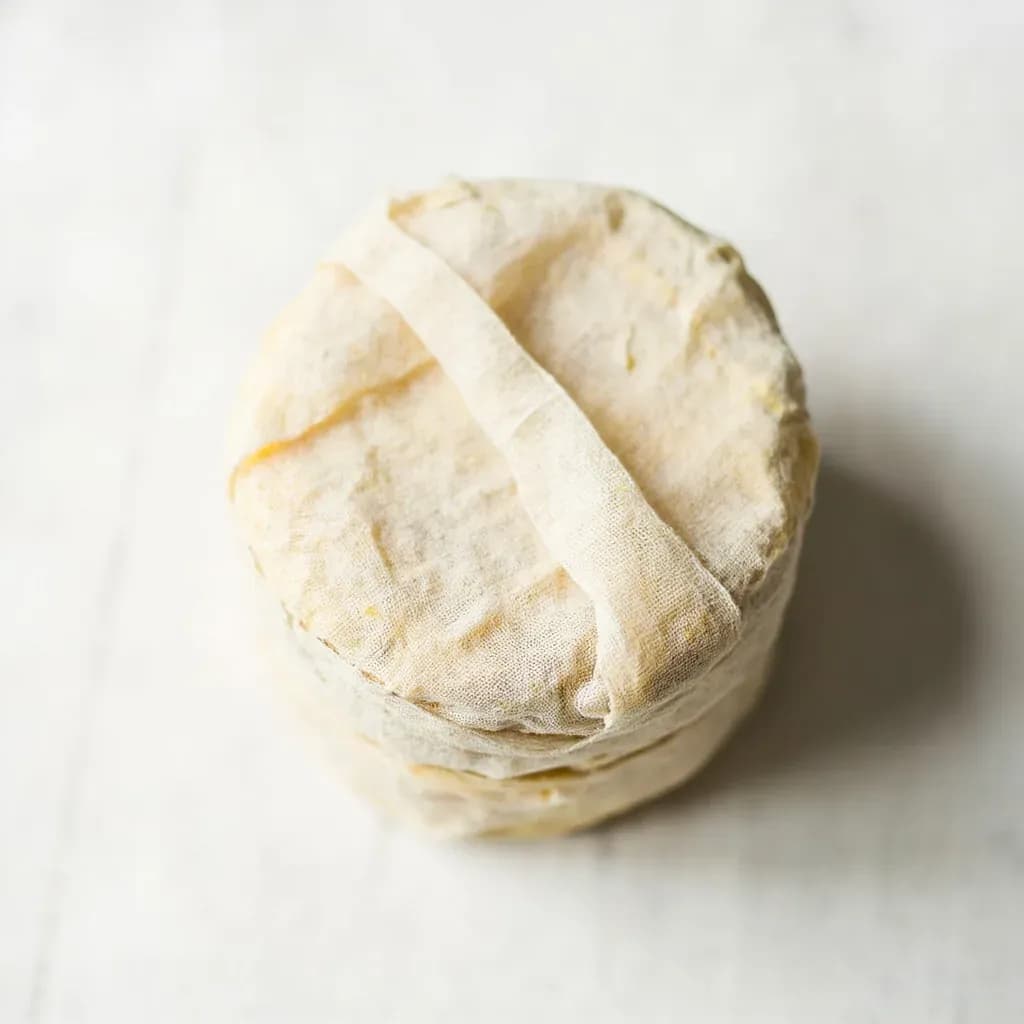
A cheese bandage cloth is a strip of fine muslin or cheesecloth wrapped tightly around hard cheeses like cheddar during aging, a technique called bandaging. It is usually rubbed with lard or butter to bind it to the surface, sealing the cheese while letting it breathe and develop a natural rind. The cloth keeps cracks from forming and protects against unwanted mold.
Cheese bandage cloth is a loose-woven, unbleached cotton fabric made specifically for wrapping wheels of cheese during long aging. It looks like a coarse, heavy muslin — distinctly more open and durable than the gauzy American kitchen cheesecloth sold for straining stocks — and it does a precise set of jobs: wicks surface moisture, shields the rind from handling and contamination, and holds the wheel's shape through months of slow water loss. The cloth is the literal source of the term "clothbound," and in farmhouse British cheesemaking it has been standard equipment for well over a century.
What sets bandage cloth apart from any ordinary cotton is the balance between permeability and strength. The open plain weave lets the rind breathe and lose moisture gradually — fast enough to discourage a slick of unwanted surface slime, slow enough to keep the interior paste from drying out or cracking. The same cotton is robust enough to survive a year or more of brushing, turning, and oiling, and it absorbs the layer of butter or lard rubbed in as a traditional seal on clothbound Cheddar. The wheel goes to market still wrapped in its bandage, and the cloth itself — molded to every fold and tuck over months of shrinking alongside the paste — is the visual signature of the style.
In a humidity-controlled cave the cloth alone regulates exchange with the environment; no wax, plastic, or vacuum bag is required. For cheesemakers without a cave, the bandage is still a useful intermediary layer over a waxed or oiled rind to keep dust, debris, and stray molds off the cheese during shelf storage.
Alternatives
Types & varieties
Standard choice for aging hard cheeses; natural cream color with no chemical residues.
Thicker, more durable weave for long-aged wheels (12+ months) needing maximum rind protection.
More open weave for faster moisture release, suited to younger or semi-hard styles.
Ready-sized sheets (typically 30–60 cm) for standard wheel diameters; often have finished edges.
Sold by the linear yard/meter for wrapping multiple or oversized wheels; cut to length on demand.
Certified organic option for makers avoiding conventionally grown, pesticide-treated fibers.
Wrapping a cheese wheel in bandage
The classic British farmhouse method for clothbound Cheddar is a deliberate process: the cheese is dried, the bandage is conditioned, and the wheel is wrapped snugly enough to hold shape but loosely enough to breathe. Wrinkles and tucks are part of the look and the function.
- Dry the surface of the wheel thoroughly — typically 24–48 hours of open-air drying — so the cloth adheres cleanly and moisture is not trapped against the rind.
- Cut a square of bandage roughly 1.5× the diameter of the wheel on each side, so all surfaces can be covered with overlap.
- Lay the wheel on the cloth, gather one side up the sidewall and across the top, then bring the opposite side over to overlap by at least 2–3 cm; smooth out slack but do not stretch the fabric.
- Tuck the overhanging cloth into the opposing open sidewall so every cut edge is sealed under a fold — raw edges wick unevenly and fray.
- Wrap a second band of cloth around the wheel's equator like a belt, overlapping the top and bottom wraps and tucking the ends underneath the wheel.
- For traditional Somerset Cheddar, rub the wrapped wheel with melted butter or lard so the bandage is fully saturated; this seals the rind and becomes the rind.
- Store on a wooden board in a cave at 85–95% relative humidity and 10–15°C; turn the wheel weekly and inspect for mould or drying.
Clothbound vs. waxed and vacuum-sealed
Each rind method shapes a different aging environment, and the choice has a real impact on flavor, texture, and how the cheese behaves over time.
- Clothbound: fully breathable, lets CO₂ and moisture exchange, supports complex surface flora, yields a rustic crinkled rind and a more concentrated, drier paste in long aging.
- Waxed rind: occlusive, slows moisture loss almost entirely, suited to cheeses meant to age in their own paste (e.g., Gouda, aged Gouda) with minimal rind development.
- Vacuum-sealed: fully anaerobic, used primarily for transport and short storage; suppresses rind activity altogether and is not a substitute for proper aging.
- Plastic bandaging (e.g., Cryovac): a commercial middle ground — controls moisture loss and can support rind washing for styles like Tomme, but cannot replicate the breathability of cotton.
Common uses
Tips & pitfalls
- Always use unbleached, food-grade cotton; bleached or dyed cloth can leach residues and taint the cheese.
- Sterilize before first use by boiling 10–15 minutes in clean water; a pinch of food-grade citric acid helps drive off any sizing.
- Wrap snugly but do not compress the paste — wrinkles are normal and desirable, as they texture the rind.
- Overlap every seam by at least 2–3 cm; the wheel will shrink as it loses moisture, and an under-overlapped bandage gaps open.
- Do not substitute American kitchen cheesecloth for long aging — it is too fine, holds moisture, and disintegrates quickly.
- Wash between batches in hot water with no fabric softener or scented detergent; residues transfer readily to cheese.
- Replace the cloth when it frays, thins, or holds persistent odor; aged bandage harbors molds you may not want next to a fresh wheel.
- Keep a dedicated bandage per cheese style — especially separating blue from smear-ripened wheels — to avoid cross-contaminating cultures.
Good to know
- Material
- Unbleached, food-grade cotton in a loose plain weave
- Weave
- Open, coarse construction — heavier and more open than American kitchen cheesecloth, with a lower thread count
- Common widths
- Sold by the yard/meter; rolls 36–60 in (90–150 cm) wide or pre-cut squares
- Origin
- Traditional British and European farmhouse cheesemaking; the "clothbound" descriptor for Cheddar refers to this wrapping
- Also called
- Cheese bandage, cheese wrapping cloth; British "cheesecloth" often means this (the finer American "cheesecloth" is closer to butter muslin)
- Food safety
- Must be food-grade, unbleached, low-lint; sterilized before first use
- Reusability
- Reusable if boiled in clean water between batches and dried thoroughly; replaced when frayed or odor-laden
- Primary cheeses
- Traditional clothbound Cheddar, Cheshire, Lancashire, Wensleydale, Double Gloucester, some farmhouse Tommes
Also called
Cheese Cloth Bandage · Cheddar Bandage
Related

Aluminum Foil
Wraps, covers, and tents food for the oven and grill

Parchment Paper
Nonstick liner for clean, even baking and easy release

Wax Paper
Moisture-resistant sheet for wrapping and counter prep

Plastic Wrap
Clings tight to cover bowls and wrap leftovers

Silicone Baking Mat
Reusable nonstick liner that replaces parchment

Cheesecloth
Loose-woven cloth for straining stock and bundling herbs

Beeswax Food Wrap
Reusable wax wrap that molds around bowls and produce

Piping Tips
Shaped nozzles that turn frosting into stars and rosettes