Wraps & Liners
Cheese Coating (Plastic)
A brushed-on or dipped plastic emulsion that seals a cheese rind against mold and moisture loss.
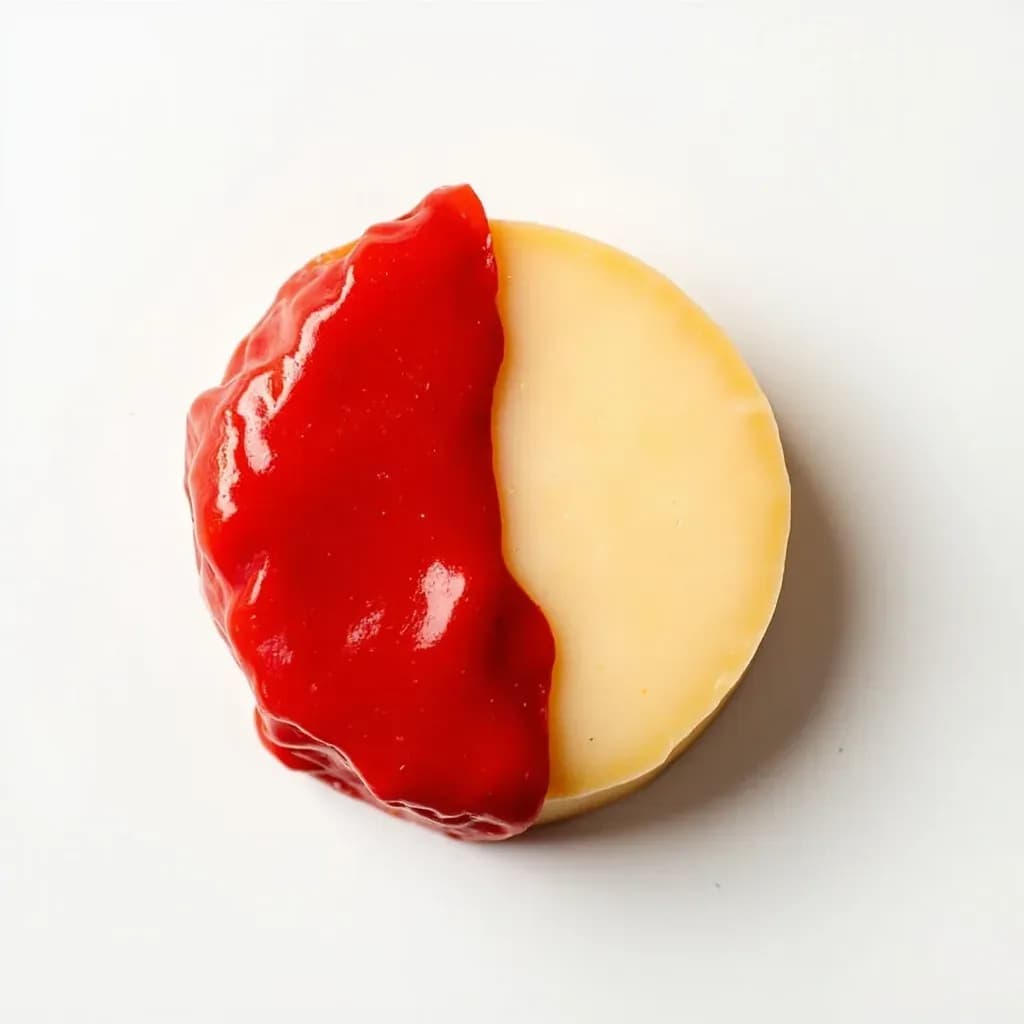
Cheese coating is a food-safe plastic or polymer emulsion (often a Cryovac-type product) painted or dipped onto a cheese wheel to form a flexible, breathable seal. It blocks unwanted mold and slows moisture loss while the cheese matures, giving a cleaner rind than wax. Multiple thin layers are applied and allowed to dry, and the coating can be peeled away before the cheese is sold.
Plastic cheese coating — also sold as rind emulsion or rind sealant — is a water-based liquid, almost always a polyvinyl acetate (PVA) copolymer with plasticizers, that cheesemakers brush or dip onto the dry natural rind of an aged wheel. As the water evaporates, the polymer particles coalesce into a thin, flexible film that clings to the rind for the rest of the cheese's life. It is the modern industrial successor to paraffin cheese wax and the standard finish on Dutch, German, and most Italian export wheels.
The film does three jobs at once: it slows moisture loss so wheels don't crack or shrink in the cave, it starves surface mold of a foothold on the rind, and it gives every wheel in a batch a uniform, branded appearance. Because the cured film stays pliable rather than going brittle, it moves with the cheese as it loses weight during aging — an advantage over wax, which often crazes and flakes. Functionally the coating is a sacrificial rind: the natural rind develops underneath only where intended, and the polymer skin is scored and peeled off before the wheel is cut for retail.
It is not a universal finish. The emulsion is formulated for semi-hard and hard pressed cheeses with low to moderate moisture — Gouda, Edam, Provolone, young Parmesan, Maasdam, Havarti — and it is unsuited to soft, high-moisture styles such as Brie, Camembert, and fresh cheeses, and to any cheese whose character depends on a bloomy or washed rind. Used on the wrong cheese, the coating suffocates the surface flora and traps the very moisture the maker is trying to drive off.
Alternatives
Types & varieties
The most common type. Forms a flexible, slightly glossy film that breathes modestly. Standard in Dutch and Italian wheel-cheese production.
Similar handling to PVA but typically forms a harder, glossier, less permeable film. Used where maximum moisture retention is desired.
Hybrid product — wax particles suspended in water. Easier to apply than molten cheese wax, gives a softer, more matte rind.
The traditional color for Gouda and Edam; pigmented with iron oxide or food-grade red pigment.
Used on Maasdam and other Swiss/Dutch-style wheels with eyes.
Traditional on aged farmhouse Gouda (boerenkaas), goat's-milk Gouda, and some Belgian wheels.
Used where a neutral appearance is wanted or as a base for further labeling.
Used on rindless Parmesan-style and other wheels where the natural rind appearance is preserved.
Plastic Coating vs. Cheese Wax
Both products do the same job — a sacrificial rind that controls moisture loss and keeps unwanted surface mold off the cheese while a living rind develops underneath only where intended — but they behave quite differently in the make room.
- Application: plastic emulsion is brushed or dipped at room temperature; wax must be melted (typically 90–120°C) and either poured or dipped, which is slower and uses more energy.
- Film character: plastic stays flexible and moves with the cheese as it shrinks in the cave; wax is thicker, more brittle, and tends to craze or flake on long-aged wheels.
- Moisture barrier: wax is the more effective moisture seal; plastic breathes modestly and is preferred where a small, steady moisture loss is wanted.
- Tradition: wax is the classic finish for English-style cheddars and many American artisan wheels; plastic is the modern industrial choice favored in Dutch, German, and Italian production.
- Removal: plastic is scored with a knife and peeled (warm the wheel slightly if stubborn); wax is cracked off in pieces or softened with a heat gun.
- Yield impact: both add non-edible mass; the thinner plastic film adds less.
Preparing the Wheel
A coated wheel must first have a properly dried natural rind, otherwise the polymer film bonds to damp curd instead of dry rind and lifts off in patches within weeks. Drying time depends on cheese style, size, and humidity, but most producers turn the wheels on a rack for 3–14 days before the first coat.
- Surface must be bone-dry, smooth, and free of loose curd, grease, or free moisture.
- Bring the emulsion to 15–25°C before use — cold emulsion lays too thick and skins over unevenly.
- Stir the emulsion slowly and thoroughly before each use; pigment and plasticizer settle on standing.
- Work in a ventilated, dust-free room — dust sticking to a wet coat mars the finish and gives mold a foothold, and the plasticizers off-gas as the film cures.
- Plan for two to three thin coats with full drying time between each — one thick coat cracks as the cheese shrinks in the cave.
Common uses
Tips & pitfalls
- Make sure the rind is bone-dry and smooth before the first coat — any moisture trapped under the film causes blistering and mold pockets.
- Apply thin coats rather than one thick one; a thick coat cracks as the cheese dries and shrinks during aging.
- Let each coat dry to the touch before applying the next — rushing causes the layers to slip and peel.
- If the emulsion skins over in the tin, strain it through a fine sieve or cut the skin away; do not stir it back in whole, as it forms lumps on the cheese.
- Do not use plastic coating on bloomy-rind, washed-rind, or fresh cheeses — it suffocates the surface flora and traps excess moisture.
- Do not freeze the emulsion — freezing breaks the emulsion and ruins the film-forming ability.
- Account for the coating in yield calculations; it adds a small amount of non-edible mass to each wheel.
- Keep brushes and dipping baskets dedicated to coating; residue contaminates the next batch.
- When aging coated wheels, leave a small uncoated breathing patch only if your recipe specifically calls for it — otherwise coat the whole surface.
Good to know
- Material base
- Water-based emulsion, most commonly polyvinyl acetate (PVA) copolymer with plasticizers; acrylic variants also exist.
- Form
- Pourable liquid, milky-white to off-white when uncolored; sold in tins or jerry-cans (typically 1 L, 5 L, and 25 L).
- Application
- Brushed on with a soft brush, or the wheel is dipped into the emulsion.
- Coats
- 2–3 thin coats, with 30–60 minutes of drying time between each.
- Coverage
- Roughly 1 L covers 25–40 small to medium wheels, depending on coat thickness.
- Working temperature
- Best at 15–25°C; cold emulsion lays unevenly and skins over.
- Best suited to
- Semi-hard and hard pressed cheeses with low to moderate moisture — Gouda, Edam, Provolone, young Parmesan, Maasdam, Havarti.
- Not suited to
- Soft, high-moisture cheeses (Brie, Camembert, fresh cheeses) and bloomy-rind or washed-rind styles.
- Standard colors
- Red, yellow, black, white, green, and clear/transparent — each tied to a regional tradition.
- Shelf life (unopened)
- Typically 6–12 months when stored sealed.
- Storage (opened)
- Seal tightly, keep cool (5–20°C), do not freeze; a thin skin may form on the surface and should be strained out or cut away.
- Food-contact status
- Approved food-contact coatings in commercial cheesemaking; check local regulations for home or small-producer use.
Also called
Plastic Cheese Coating (Crysvac) · Cryovac Coating · Cheese Latex Coating
Related

Aluminum Foil
Wraps, covers, and tents food for the oven and grill

Parchment Paper
Nonstick liner for clean, even baking and easy release

Wax Paper
Moisture-resistant sheet for wrapping and counter prep

Plastic Wrap
Clings tight to cover bowls and wrap leftovers

Silicone Baking Mat
Reusable nonstick liner that replaces parchment

Cheesecloth
Loose-woven cloth for straining stock and bundling herbs

Beeswax Food Wrap
Reusable wax wrap that molds around bowls and produce

Piping Tips
Shaped nozzles that turn frosting into stars and rosettes