Wraps & Liners
Plastic Draining / Aging Mat
Ridged or mesh plastic mat that lifts cheese off the surface so air and whey can circulate while it ages.
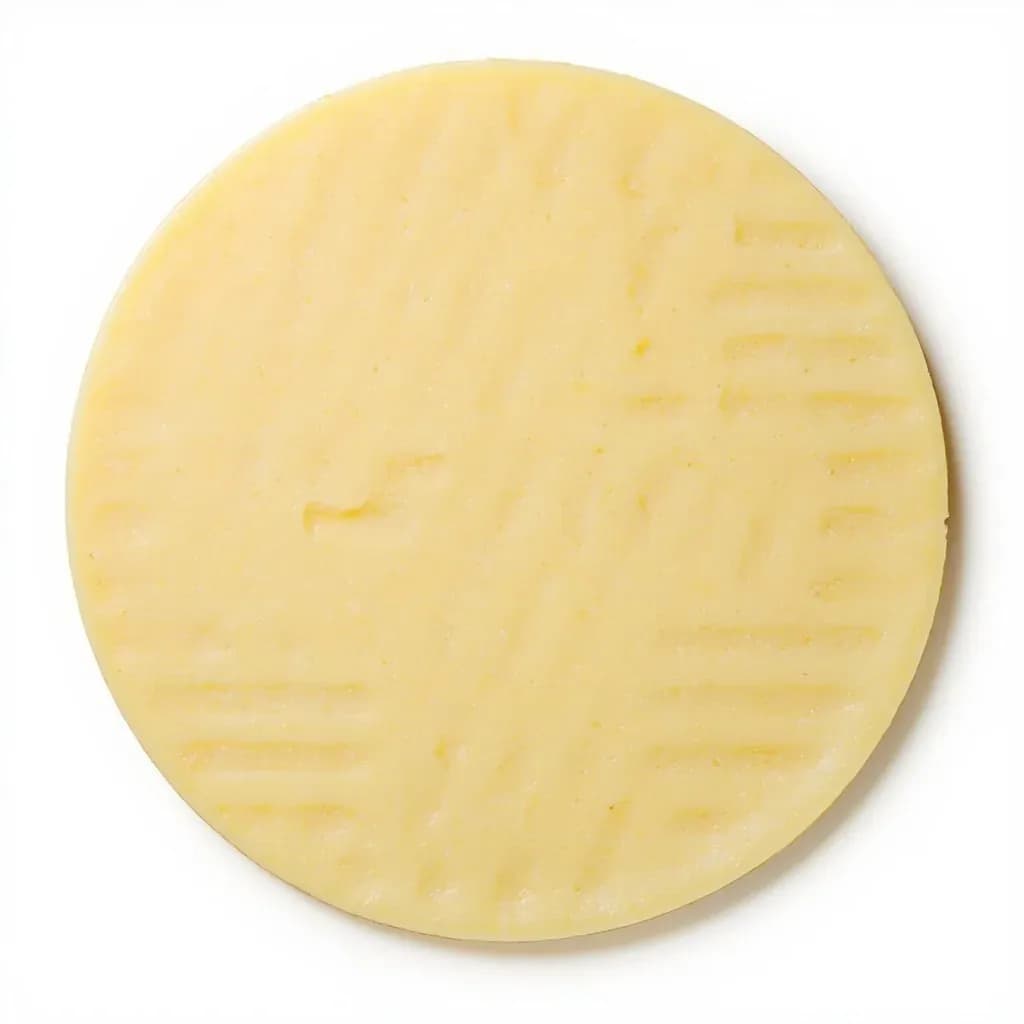
A plastic draining and aging mat is a ridged or open-weave mat that cheese rests on during draining and maturing. The raised surface keeps the wheel from sitting in its own whey and lets air reach the underside, preventing sogginess and uneven rinds. Affineurs and home cheesemakers flip cheeses on these mats regularly through the aging period to keep both faces drying evenly.
A plastic cheese mat is a flat sheet of food-grade plastic — usually high-density polyethylene or polypropylene — molded with ridges or punched with drainage holes to keep aging cheese from sitting in its own moisture. The two design families solve slightly different problems: ridged or footed mats lift a closed rind off the shelf so air can sweep beneath it, while perforated mats give whey an exit during the wet, early life of a wheel or fresh curd. In practice the mat is doing the work a straw mat or wooden board did in traditional European caves, but it does that work in a way that can go into a dishwasher.
The reason plastic has won this corner of the cheesemaker's kit is hygiene. Wood absorbs whey, harbors molds in its grain, and cannot be sterilized at high temperature, so it is a constant source of cross-contamination between batches. A plastic mat is non-absorbent, tolerates hot water and standard food-safe sanitizers, and shows wear as visible scratches that tell you when to retire it. For the home cheesemaker, this single piece of equipment is the difference between a setup that can be cleaned properly and one that has to be trusted on faith.
How a mat behaves depends on which type you choose. A ridged mat is essentially a drying rack in sheet form: it is correct for a wheel that has already formed a rind and just needs gentle, even air contact on the bottom face. A perforated mat is a sieve: it is correct for the hours or days when curds are still weeping whey and the cheese cannot be flipped often enough to clear it. Mismatching the two — for example, aging a young, wet wheel on a ridged mat — pools whey against the underside and invites a sour or slimy rind.
Alternatives
Types & varieties
Solid plastic sheet with molded ribs or feet on the underside so air circulates beneath the cheese; the right choice for aging wheels and blocks whose rind is already closed and that need bottom-face moisture release.
Flat sheet punched with a regular grid of small drainage holes; lets whey escape from fresh curds and from young wheels that are still actively draining.
Perforated mat with smaller holes, intended for soft cheeses and young curds that would sag through a coarser grid.
Large rolls or panels the maker trims to fit a cave shelf, a mold, or a draining tray; useful when standard sizes do not match the aging space.
Choosing between ridged and perforated
The decision is dictated by the moisture the cheese is still releasing. A perforated mat is for active drainage: fresh curds in a colander, a young wheel in its first day or two, a tomme still losing whey. The holes give the liquid somewhere to go faster than flipping alone could manage. A ridged mat is for passive drying: a wheel that has already formed a rind, a block of cheddar in the middle of its affinage, a tomme whose rind has closed. At that point the cheese no longer needs an exit for free whey; it needs air moving across the bottom face so that face does not stay damp enough to grow slime or slip. Many home cheesemakers keep both and switch between them as the same wheel matures.
- Use perforated for the first 24–72 hours of a young, high-moisture wheel, or any time whey still beads on the surface.
- Use ridged once the rind has closed and the cheese is in its long aging phase.
- For very soft fresh cheeses (chèvre, ricotta, fresh mozzarella), use a perforated mat set inside a colander over a bowl — never a flat solid mat, which will pool whey.
Sanitation and lifespan
A plastic mat's main advantage over a wooden board is that it can be made genuinely clean. Treat it like any other food-contact surface: wash in hot soapy water or run it through a dishwasher, then sanitize with a diluted food-safe sanitizer or white vinegar and let it air-dry fully before reuse. Scratches are the warning sign — they are hard to sanitize, they shelter bacteria, and they will imprint themselves into the rind of the next wheel. Once the surface is visibly clouded, deeply scored, or warped from heat, retire the mat to a non-cheese use and replace it.
- Replace the mat when it is deeply scratched, cloudy, or warped — visible wear means it can no longer be sanitized reliably.
- Sanitize with a food-safe sanitizer (diluted Star San, for example) or white vinegar between batches, especially when switching cheese styles.
- Air-dry completely before reuse; storing a damp mat in a closed bag is the fastest way to grow mold on the mat itself.
- Keep a separate mat for raw-milk and pasteurized-milk cheeses, or run a full wash and sanitize between them.
Common uses
Tips & pitfalls
- Set the mat on a rigid, flat board or shelf — a sagging mat will pool whey against the underside of the cheese and undo the whole point.
- Flip and rotate the cheese every 1–2 days so both faces dry evenly and the mat's pattern does not imprint into the rind.
- Match the mat to the moisture stage: perforated for actively draining curds, ridged for closed-rind aging.
- Replace mats that are deeply scratched or cloudy; scoring harbors bacteria that can taint the next batch.
- Do not substitute raw wood for plastic unless you can sanitize it thoroughly — plastic wins on hygiene because it tolerates high-temperature washing.
- Sanitize between batches with a food-safe sanitizer or white vinegar and let the mat air-dry completely to prevent mold carryover.
- Do not use the same mat for raw-milk and pasteurized-milk cheeses without a full wash and sanitize in between.
Good to know
- Material
- Food-grade plastic, typically high-density polyethylene (HDPE) or polypropylene
- Common sizes
- Roughly 10 × 10 in to 14 × 14 in; many are sold as cut-to-size sheets or rolls that the maker trims to fit a shelf or mold
- Configurations
- Two designs: solid sheet with raised ridges or feet, and flat sheet perforated with a grid of small drainage holes
- Temperature tolerance
- Dishwasher-safe; tolerates typical maturation temperatures of 10–15 °C / 50–59 °F
- Lifespan
- Reusable for several years; replace once deeply scratched, cloudy, or warped
- Cleaning
- Hot soapy water or dishwasher; sanitize between batches with a diluted food-safe sanitizer or white vinegar
- Cost
- Generally a few dollars per sheet
- Companion materials
- Used alongside cheese paper, wax, or vacuum bags once a hard cheese's rind has closed
Also called
cheese draining mat · cheese aging mat · sushi-style cheese mat
Related

Aluminum Foil
Wraps, covers, and tents food for the oven and grill

Parchment Paper
Nonstick liner for clean, even baking and easy release

Wax Paper
Moisture-resistant sheet for wrapping and counter prep

Plastic Wrap
Clings tight to cover bowls and wrap leftovers

Silicone Baking Mat
Reusable nonstick liner that replaces parchment

Cheesecloth
Loose-woven cloth for straining stock and bundling herbs

Beeswax Food Wrap
Reusable wax wrap that molds around bowls and produce

Piping Tips
Shaped nozzles that turn frosting into stars and rosettes