Wraps & Liners
Cheese Wrapping Paper (Two-Ply)
Breathable two-ply paper that wraps cut cheese so it keeps moisture without sweating.
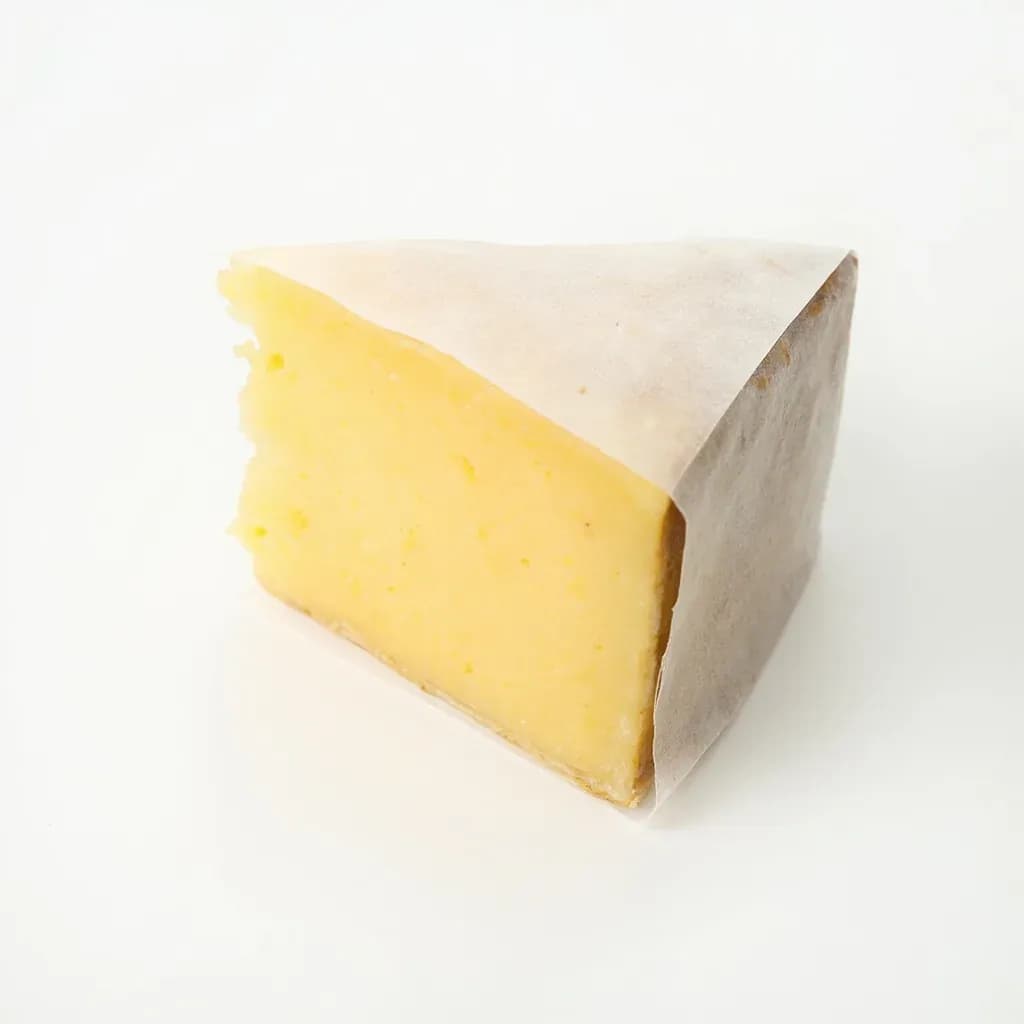
Cheese wrapping paper is a specialized two-ply sheet with a porous paper outer layer and a microperforated plastic inner layer. It lets a cut cheese breathe and release excess humidity while still holding enough moisture so the surface does not dry out or sweat. Cheesemongers and home cooks use it to store wedges far better than cling film, which suffocates the cheese.
Cheese wrapping paper, in its modern two-ply form, is a purpose-built laminate designed to solve a problem most home cooks don't realize they have: cheese stored in the refrigerator is almost always being stored wrong. A cut face of cheese needs to keep enough surface moisture to stay supple, but it also needs to breathe — to off-gas carbon dioxide and ammonia and to release excess humidity. Airtight plastic traps that moisture and the cheese sweats, then slimes, then turns bitter. Bare paper, on the other hand, lets the cut face desiccate into a hard rind within days. Two-ply cheese paper threads the needle by combining a porous kraft paper layer with a thin food-grade polyethylene film. The film side, against the cheese, holds a stable micro-environment of humidity; the paper side, facing out, wicks that humidity slowly outward and lets gases exchange with the refrigerator air.
In practice, the paper behaves less like a package and more like a controlled-aging envelope. A wheel of Comté or a hunk of aged cheddar wrapped in it will keep its texture and aromatic character for weeks rather than days, and a bloomy-rind cheese like Brie will continue to ripen gently on the cut face instead of either drying out or drowning in condensate. Cheesemongers adopted it for this reason, and the same logic is just as useful in a home fridge, where most cheese is bought by the piece and slowly consumed. A pack of pre-cut sheets in a kitchen drawer is, alongside a good knife and a microplane, one of the small upgrades that visibly changes how cheese behaves on the table.
It is worth knowing what two-ply cheese paper is not, because the kitchen drawer is full of near-misses. It is not wax paper (a paraffin-coated sheet that seals in moisture rather than managing it), not parchment (silicone-coated and fully permeable, so the cheese dries out), and not freezer paper (a heavier PE laminate designed to block air entirely to prevent freezer burn). It is also not a substitute for proper cheese caves for long affineur-style aging, but for the cook who simply wants leftover Gruyère to taste like Gruyère next Tuesday, it is the right tool.
Alternatives
Types & varieties
The best-known commercial two-ply cheese paper; available in pre-cut sheets, rolls, and custom-printed versions, and the product that brought the format into home kitchens in the mid-2000s
Unprinted kraft-and-film laminate sold under kitchen-supply or restaurant-supply labels; same function as the branded version at lower cost
Square sheets in 12 in and 14 in sizes, the most convenient format for home use
Continuous rolls cut to length on demand; preferred by cheesemongers, affineurs, and anyone wrapping irregular or large cheese shapes
Cheese shops and affineurs order branded versions for retail display and gifting
Why two layers, and why this specific pair
The design logic of two-ply cheese paper is worth understanding, because it explains why substitutes tend to fail. Cut cheese loses water from its exposed face at a rate driven by the humidity of the surrounding air. In a refrigerator that humidity sits around 30–40%, low enough to pull moisture out of the cheese steadily. A single sheet of kraft paper equalizes the cheese to that dry air and the surface toughens. A single sheet of polyethylene equalizes to nearly 100% humidity inside the wrap, but blocks gas exchange, so CO₂ and ammonia build up, the surface becomes anaerobic, and the cheese develops off flavors and bacterial slime.
The laminate works because each layer does a different job. The film facing the cheese is a partial barrier: thick enough to slow water loss to a manageable rate, but thin enough to allow a slow, controlled exchange of water vapor through the laminate and into the kraft paper layer. The kraft paper facing outward provides a larger surface area for that vapor to disperse into the fridge air, and a buffer against condensation forming on the outside of the wrap. The result is a stable equilibrium: the cheese neither dries nor sweats, and the cut face can be unwrapped days later still looking and smelling like cheese.
Two-ply vs. the papers already in your kitchen
Most cooks reach first for whatever is in the drawer, so it helps to know how the common substitutes stack up.
- Wax paper: a kraft paper coated with paraffin or soy wax. It is moisture-resistant but not breathable; cheese wrapped in it behaves much like cheese wrapped in cling film and will sweat within a day or two. Use it for lining a cheese board, not for storage.
- Parchment paper: silicone-coated and fully permeable. It is essentially bare paper with a nonstick surface and will let cheese dry out almost as fast as if it were unwrapped. Fine for short-term counter use; poor for the fridge.
- Aluminum foil: not breathable, and acidic or aged cheeses (cheddar, blue, washed-rind) can pick up a metallic taint within a week. Acceptable for very short storage of low-moisture cheese, but it hides what's inside and trims badly.
- Plastic cling film: the default in most refrigerators, and the most damaging. Trapped condensation accelerates slime on bloomy-rind and washed-rind cheeses, and anaerobic conditions blunt flavor in aged cheese. Use only for a day at most, or line it with a paper towel to absorb condensate.
- Freezer paper: a heavier PE-coated paper designed to block air completely to prevent freezer burn. It works, but it works too well — cheese stored in it stops breathing and develops off flavors within a week of refrigerator use. Reserve it for the freezer.
Common uses
Tips & pitfalls
- Wrap with the paper side facing out and the film side against the cheese — this is the orientation that lets the paper wick moisture while the film stabilizes humidity around the cut face. Confirm the orientation on your specific brand, as some print instructions on the sheet.
- Do not seal the wrap airtight. A loose envelope or a single fold that can be opened and re-closed is better than a tight, taped package; the cheese still needs to respire.
- Avoid plastic cling film for storage beyond a day. If you must use it temporarily, slip a sheet of parchment or a paper towel inside to absorb the condensate that will otherwise pool against the cheese.
- Do not use aluminum foil for long-term storage of acidic or strongly flavored cheeses. Foil does not breathe, and aged cheddar, blue, and washed-rind cheeses will pick up a metallic taint within a week.
- For very wet cheeses — washed-rinds, fresh goat in brine, or a bloomy-rind that is weeping heavily — pat the surface dry with a paper towel before wrapping, and plan to re-wrap every two or three days with a fresh sheet.
- Reuse sheets as long as they are clean, dry, and free of strong odors. Retire a sheet once it is stained, torn, or carrying the smell of a blue or washed-rind cheese that could transfer to a milder one.
- Label each wrapped piece with the cheese name and the date. Two-ply paper hides what's inside, and cheese inventories in a fridge are easy to forget within a day or two.
- Bring wrapped cheese to room temperature — 45 to 60 minutes on the counter, still wrapped — before serving. Cold mutes both aroma and texture, particularly in aged and bloomy-rind cheeses.
- Store wrapped cheese in the vegetable drawer or a dedicated cheese compartment rather than on an open shelf, where the paper can still dry out from constant refrigerator air circulation.
- For blue and other strongly aromatic cheeses, double-wrap or store in a sealed container set apart from butter and mild cheeses so their odor does not migrate.
Good to know
- Material
- Two-ply laminate of food-grade kraft paper bonded to a thin food-grade polyethylene (PE) film
- Construction
- Paper layer wicks and breathes; film layer holds a stable humidity micro-environment against the cheese surface
- Typical Sheet Sizes
- Pre-cut sheets commonly 12×12 in (30×30 cm) and 14×14 in (35×35 cm); rolls in 12 in and 18 in widths also available
- Storage Temperature
- Suitable for refrigerator use at 35–45°F (1–7°C) and for home cheese caves/cellars at roughly 50–55°F (10–13°C)
- Reusability
- Sheets are intended to be reused multiple times until soiled, torn, or odor-laden
- Food Contact
- Both layers are food-grade and FDA-compliant for direct contact with cheese
- Lifespan in Use
- A single sheet typically wraps a piece of cheese for 1–4 weeks, depending on moisture content and frequency of access
- Compostability
- Varies by brand; the paper layer is usually compostable, the PE film layer generally is not — check manufacturer specifications
Also called
Two-Ply Cheese Wrapping Paper · Cheese Paper · Formaticum Paper
Related

Aluminum Foil
Wraps, covers, and tents food for the oven and grill

Parchment Paper
Nonstick liner for clean, even baking and easy release

Wax Paper
Moisture-resistant sheet for wrapping and counter prep

Plastic Wrap
Clings tight to cover bowls and wrap leftovers

Silicone Baking Mat
Reusable nonstick liner that replaces parchment

Cheesecloth
Loose-woven cloth for straining stock and bundling herbs

Beeswax Food Wrap
Reusable wax wrap that molds around bowls and produce

Piping Tips
Shaped nozzles that turn frosting into stars and rosettes