Wraps & Liners
Chocolate Transfer Sheet
Printed acetate sheet that transfers cocoa-butter designs onto tempered chocolate as it sets.
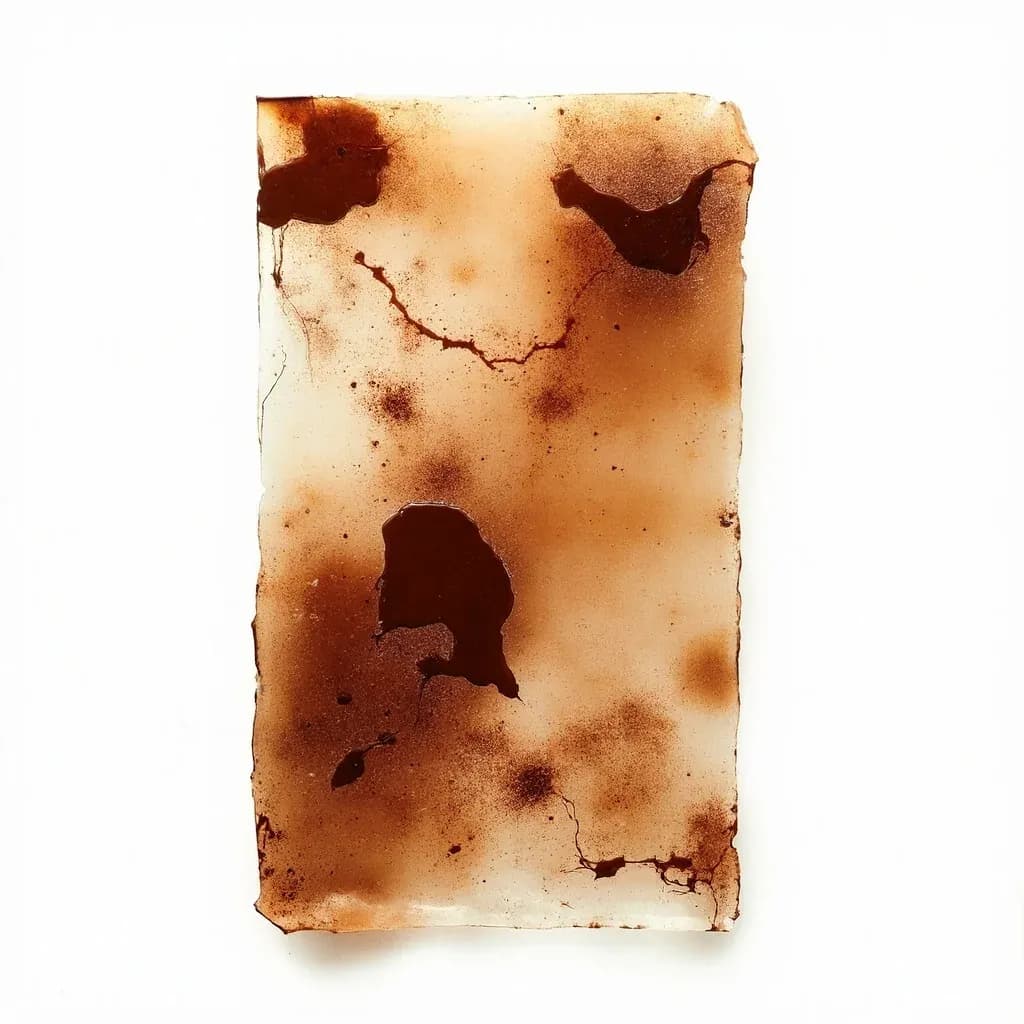
A chocolate transfer sheet is a thin acetate film pre-printed with colored cocoa-butter patterns. Tempered chocolate is spread or piped onto the printed side, and once it sets the acetate peels away leaving the design embedded in the glossy surface. Chocolatiers and pastry chefs use them to decorate bonbons, bark, garnishes, and entremets with fine printed motifs.
A chocolate transfer sheet is a flat sheet of food-grade cellulose acetate or PET film whose surface has been printed with designs made from colored cocoa butter. When pressed against freshly tempered chocolate, the cocoa-butter layer on the sheet softens slightly, melts into the chocolate's surface, and re-solidifies as the chocolate sets — leaving the printed pattern locked in when the acetate is peeled away. It is the simplest way for a home cook or small chocolatier to produce professionally decorated bars, bonbon faces, and garnish plaques without hand-painting or airbrushing.
The technique works because cocoa butter is fully compatible with chocolate — they are essentially the same material. The thin colored layer on the sheet is cocoa butter in a stable polymorphic form that fuses with the fat network of well-tempered chocolate, so when the two surfaces meet at the right temperature they crystallize together as one continuous layer. Because the print is only microns thick, it does not change the flavor or mouthfeel of the chocolate; it simply colors and patterns the surface.
Transfer sheets are not a substitute for molds. Molds give chocolate three-dimensional shape; transfer sheets only decorate a flat face. They are single-use — the design releases onto the chocolate and the acetate is discarded — but the visual payoff per sheet is high, especially for branded bars, holiday work, or any application where a clean graphic finish is desired.
Alternatives
Types & varieties
Commercial designs such as swirls, dots, chevrons, hearts, stars, holiday motifs, lace, and marbling
Made-to-order acetate with bespoke artwork for branding bars or bonbons
One hue per sheet (red, black, white, etc.) for clean graphic looks
Several cocoa-butter colors layered into one design
Gold, silver, or copper shimmer effects; usually a metallic pigment bound in cocoa butter
Unprinted sheet used as a release liner, sometimes lightly textured for a subtle finish
Round sheets sized to fit standard bar molds and tart rings
How the Transfer Actually Works
When tempered chocolate at roughly 27–29 °C (80–84 °F) meets the printed sheet, the thin cocoa-butter layer on the acetate is warmed just enough to soften. The two fat layers meet at the interface, the color pigments become suspended in the chocolate's own cocoa butter, and as the chocolate crystallizes during setting, the print is locked in. Peeling the sheet reveals the pattern because the cocoa-butter layer is now chemically one with the chocolate — it cannot lift back off the acetate. This is why the technique depends entirely on proper temper: untempered chocolate has no stable crystal network to receive the print, and the design will smear, bleed, or stick.
Common Failures and Fixes
- Smeared or partial transfer — almost always untempered chocolate; the print melts in but has no crystal structure to lock into. Re-temper and try again.
- Design lifts off with the sheet — chocolate was allowed to go fully hard before peeling; the cocoa-butter print has re-bonded more strongly to the acetate than to the set chocolate. Peel earlier, while the chocolate is just firm.
- Streaks or hazy patches — moisture or condensation contacted the sheet or chocolate. Work in a dry kitchen and never touch the printed side with damp fingers.
- Air bubbles trapped under the sheet — visible as bare circles in the print. Smooth the sheet with a clean, dry bench scraper immediately after laying it down.
- Sheet curls or wrinkles — stored improperly, or applied when chocolate was already too thick. Keep sheets flat in a sealed bag and apply while chocolate is still fluid.
- Print looks dull or bloomed — humidity in the workspace. Aim for below 60% relative humidity if possible, and avoid the fridge until the chocolate has set.
Common uses
Tips & pitfalls
- Temper the chocolate properly — untempered chocolate will smear the cocoa-butter print and stick stubbornly to the sheet.
- Lay the sheet printed-side-down onto the chocolate while it is still fluid and glossy; do not wait until it begins to set.
- Smooth out air bubbles with a clean, dry bench scraper immediately after contact — damp fingers leave marks and can streak the print.
- Peel the acetate while the chocolate is just firm to the touch, not rock-hard, or the design can lift off with the sheet.
- Keep moisture away at all costs — even a single drop of water will streak the cocoa butter and ruin the print.
- Cut sheets slightly smaller than your mold or frame so the edges stay clean and the acetate does not fold over the rim.
- Store sheets flat in a sealed bag; curling or creasing will distort the transferred image.
- Work in a cool, dry kitchen — humid environments cause blooming on the design and dull the colors.
Good to know
- Material
- Food-grade cellulose acetate or PET film, coated with a thin layer of colored cocoa-butter designs
- How it works
- Tempered chocolate is poured or spread against the printed side; as the chocolate sets, the cocoa-butter design transfers onto its surface
- Typical sheet size
- A4 (210 × 297 mm) and A5 are common; rolls and custom sizes are also sold
- Required chocolate state
- Must be used with properly tempered chocolate (dark, milk, or white)
- Single-use
- Yes — designs release onto the chocolate and the sheet is discarded
- Working temperature
- Apply when chocolate is fluid but starting to thicken, around 27–29 °C (80–84 °F) for dark
- Peel timing
- Peel once chocolate is firm at room temperature (or after brief refrigeration) but before fully hardened
- Storage
- Cool, dry place away from humidity and direct sunlight; store flat, ideally sealed in a bag
Also called
Transfer Sheet · chocolate acetate sheet · cocoa butter transfer sheet
Related

Aluminum Foil
Wraps, covers, and tents food for the oven and grill

Parchment Paper
Nonstick liner for clean, even baking and easy release

Wax Paper
Moisture-resistant sheet for wrapping and counter prep

Plastic Wrap
Clings tight to cover bowls and wrap leftovers

Silicone Baking Mat
Reusable nonstick liner that replaces parchment

Cheesecloth
Loose-woven cloth for straining stock and bundling herbs

Beeswax Food Wrap
Reusable wax wrap that molds around bowls and produce

Piping Tips
Shaped nozzles that turn frosting into stars and rosettes