Storage & Containers
Clamshell Takeout Container
A hinged-lid to-go box for packaging salads, mains, and leftovers.
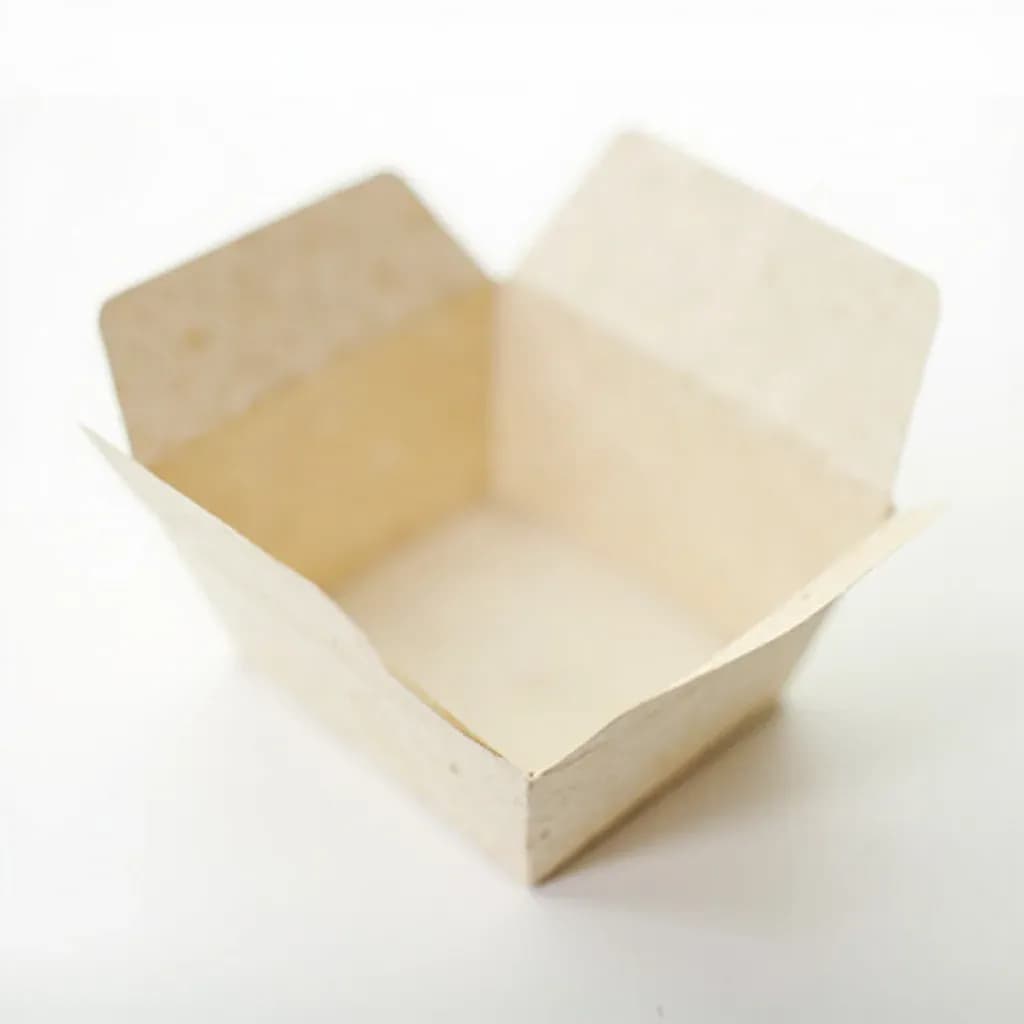
A clamshell takeout container is a hinged box, often plastic, foam, or molded fiber, that closes in one piece to pack salads, entrees, and leftovers. The attached lid snaps shut for a quick, spill-resistant seal during transport. Compartmented versions keep wet and dry components separate.
The clamshell takeout container is a one-piece hinged box whose lid and base share a single molded hinge, so it folds open like its namesake and snaps shut without loose parts. It became the workhorse of American food service in the 1970s and 1980s when expanded polystyrene foam made cheap, insulating packaging possible for fast-food takeout, and it remains the dominant format for delivery, grab-and-go, and leftovers today. The material — not the shape — is what determines whether a clamshell is right for the job: foam and clear polystyrene are cheap but single-use and not microwave-safe; polypropylene survives the dishwasher and reheating; molded sugarcane fiber (bagasse) has become the standard eco-friendly workhorse for hot and cold food; and aluminum still owns the niche of oven-to-table service. For cooks and small operators, the right container keeps food at temperature, resists grease, vents steam where it should, and survives the trip from kitchen to table without popping open or going soggy.
Alternatives
Types & varieties
Expanded polystyrene; the classic white takeout box. Cheap and insulating, but banned in many U.S. cities, not microwave-safe, and rarely recycled.
Opaque or semi-clear plastic, typically white, black, or translucent. Microwave- and top-rack dishwasher-safe; the only common type worth reusing.
Oriented polystyrene, clear and rigid, used when product visibility matters (pastries, sushi, salads). Single-use and not microwave-safe.
Clear, strong, and the best cold tolerance of the plastics; common for cold deli, fruit, and bakery items.
Molded sugarcane fiber. Industrial-compostable, microwave- and freezer-safe; the standard eco-friendly replacement for foam.
Bagasse blended with bamboo or wood pulp for a stiffer feel; industrially compostable.
Corn-starch bioplastic, often clear like plastic. Industrial-compostable only; softens at high heat, so not for hot soup or oven use.
Coated or unlined paperboard, sometimes with a PLA window. Industrial compostable; limited moisture resistance unless lined.
Foil or pressed aluminum with foil-laminated board lid. Oven-safe; used for grilled items, broiled entrées, and food-truck service.
Molded fiber base with a clear PLA or cellulose window so the contents are visible — common for bakery, sandwiches, and grab-and-go.
Has a perforated or tear-strip tab; used by grocers and meal-prep services to show the package was not opened.
Choosing the Right Material
Material drives nearly every practical decision about a clamshell. If you are packing hot, oily, or saucy food for delivery, reach for polypropylene (#5) or bagasse with a grease-resistant coating — both tolerate heat and won't collapse under a ladle of braising liquid. If the food is cold and visibility matters (sushi, fruit, a slice of cake), OPS or PET gives the clearest window and the cleanest presentation. If you want something a customer can reheat in the microwave, PP and bagasse are the safest standard options; PLA is also generally microwave-safe but softens at high heat, so it is best for short reheats of already-warm food rather than piping-hot entrées. EPS foam and OPS should never go in a microwave. For oven-to-table work — finishing a broiled entrée or holding a hot pressed sandwich under a salamander — aluminum is the only format that genuinely tolerates the heat.
- Hot and oily: PP or bagasse with grease-resistant coating
- Cold and visible: OPS or PET
- Microwave reheat at home: PP, bagasse, or PLA
- Oven or broiler finish: aluminum
Sizing and Depth
Clamshells cluster around four square footprints — 6, 8, 9, and 10 inches — and three useful depths. Match the depth to the food rather than buying one size for everything: shallow (~1.5–2 in) holds a burger or pressed sandwich without crushing the top bun; standard (~2.5–3 in) is the everyday size for rice bowls, pasta, and stir-fries; deep (~3–4 in) is built for salads, poke, and saucy entrées that need airspace under the lid. A common mistake is packing saucy food in a shallow box; the lid sags, the seal fails, and the contents arrive swimming in leaked dressing.
- 6×6 in shallow: sandwich, burger, slice of cake
- 8×8 in standard: rice bowl, pasta, stir-fry
- 9×9 in deep: salad, poke, saucy entrée
- 10×10 in XL: family-style share or meal-prep portion
Common uses
Tips & pitfalls
- Match depth to the food: shallow for burgers and sandwiches, deep for saucy mains, salads, and pasta — a shallow box is the most common cause of lid failure in delivery.
- Check the resin code on plastic clamshells: #5 polypropylene is the safest and the only type worth reusing; #6 polystyrene (foam and OPS) is single-use and not microwave-safe.
- Do not microwave EPS foam — it can warp, leach styrene, and in rare cases ignite. Transfer food to a plate, or use a PP or bagasse clamshell instead.
- Pre-warm bagasse or kraft containers briefly before ladling very hot food; extreme thermal shock can warp molded fiber and break the snap closure.
- Use vented clamshells for fried or steamed foods so steam escapes and the top doesn't pop open or turn the breading soggy.
- For oily or saucy items (burgers, ribs, saucy noodles), choose PP or bagasse with a grease-resistant coating; untreated kraft will soak through within minutes.
- Treat 'eco-friendly' and 'biodegradable' labels with skepticism — look for BPI or ASTM D6400 certification and confirm whether the container is home- or industrial-compostable.
- When stacking hot containers for delivery, leave airspace or use an insulated bag; trapped steam softens even sturdy lids and turns fried food limp.
- For freezing, prefer PP or PET; fiber containers absorb moisture and can split when thawed.
- Reusable PP clamshells make good home leftovers containers — label the lid with a dry-erase marker for date and contents, and they hold up well to repeated dishwasher cycles.
Good to know
- Form factor
- One-piece hinged box; lid and base share a living hinge
- Common sizes
- 6×6 in (sandwich), 8×8 in (standard), 9×9 in (large), 10×10 in (XL); oblong burger sizes also available
- Depths
- Shallow (~1.5–2 in) for sandwiches; standard (~2.5–3 in) for mains; deep (~3–4 in) for salads and pasta
- Common materials
- EPS foam, polypropylene (PP), oriented polystyrene (OPS), PET, bagasse, PLA, kraft paperboard, aluminum
- Microwave safety
- PP, bagasse, and PLA are generally microwave-safe; EPS foam and OPS are not
- Heat tolerance
- PP and bagasse handle hot foods to roughly 200–220°F (93–104°C); aluminum is oven-safe; PLA softens near boiling
- Recycling
- EPS rarely accepted curbside; PP (#5) accepted in some programs; fiber and PLA are not curbside recyclable
- Compostability
- Bagasse and unlined kraft are industrially compostable (ASTM D6400 / BPI); PLA is industrial-compostable only, not home-compostable
Also called
To-Go Clamshell Container · Foam To-Go Container · To-Go Container · hinged container
Related

Freezer Bags
Thick, sealable bags built to fight freezer burn

Storage Bags
Resealable bags for fridge storage and marinating

Storage Container
Lidded container for leftovers, prep, and meal kits

Glass Container
Oven-to-fridge glass that won't stain or hold odors

Plastic Container
Lightweight, stackable storage for everyday leftovers

Vacuum Sealer Bags
Airtight bags for long freezing and sous-vide

Reusable Bags
Washable silicone bags that replace single-use plastic

Mason Jar
Sealed glass jar for preserves, pickles, and storage