Wraps & Liners
Cloth Tortilla Wrap
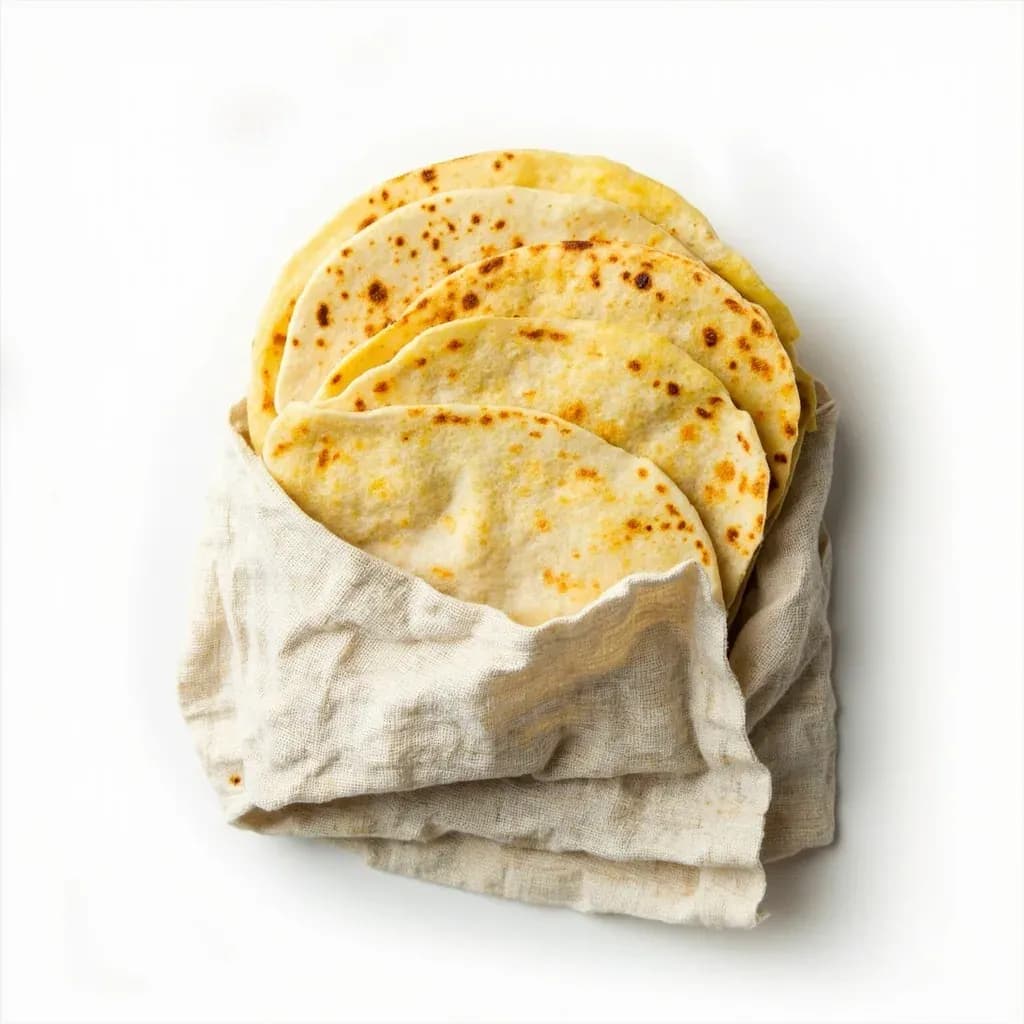
An insulating cloth that wraps a stack of tortillas to keep them warm and pliable at the table.
A cloth tortilla wrap is a cotton or padded fabric, often used inside a tortillero basket, that swaddles freshly cooked tortillas. It traps steam and heat so the tortillas stay soft, warm, and foldable through a meal instead of drying out and cracking. The same cloth lining lets fresh tortillas steam-finish gently after coming off the comal.
A cloth tortilla wrap — also called a tortillero, tortilla warmer, or tortilla keeper — is a small insulated fabric pouch designed to hold a stack of warm tortillas at the table without letting them dry out or stiffen. Unlike a basket or open napkin, it traps the steam tortillas release as they cool, creating a warm, humid microclimate that keeps each round pliable for twenty to thirty minutes. The cloth works on a simple principle: tightly woven cotton holds heat but breathes just enough to vent excess moisture, so the tortilla surface stays soft rather than wet or rubbery.
The form has deep roots in Mexican kitchens, where a clean square of cotton — a servilleta — was long used to wrap fresh tortillas straight from the comal. Modern dedicated pouches range from a cinched cotton bag to quilted, lined versions that hold heat for longer, plus handwoven Oaxacán pieces that double as folk-art tableware. Compared with the rigid plastic microwave warmers that filled U.S. kitchens from the 1990s onward, cloth gives more even insulation, never makes tortillas rubbery, and won't trap condensation the way plastic can.
A good warmer fits your stack snugly, with no air gaps between the cloth and the tortillas. Most are made from cotton because it absorbs excess moisture while insulating; flannel and terry hold even more heat but can over-steam in humid kitchens. Washed after every use and fully air-dried, a cloth tortilla wrap lasts for years and is one of the lowest-cost, highest-impact tools in a home cook's drawer.
Alternatives
Types & varieties
The most common form; a flat circular bag with a cord that cinches at the top, similar to a large produce bag.
Round pouch with a button- or Velcro-closure flap; stands upright on the table like a small lidded bowl.
Loop-terry interior holds more heat and a touch of moisture, useful in dry climates or for reviving day-old tortillas.
Two cotton layers with polyester or cotton batting between; sold as a 'thermal tortilla warmer' and holds heat the longest.
Woven on a backstrap loom from cotton or wool, often striped; doubles as a serving piece and as a kitchen textile.
A flat square of fabric — napkin-sized or larger — wrapped around a tortilla stack; the simplest and oldest form.
How It Works
A cloth tortilla wrap is a small humidity-and-heat management device. Freshly warmed tortillas off-gas steam as they cool; a tight cloth captures that steam and lets the fibers absorb just enough of it to keep the surface of each tortilla moist, while the fabric's loft slows heat loss. The key is the balance: too tight a seal and water drips back onto the bottom tortillas, making them gummy; too loose and the steam escapes and the tortillas go stiff within minutes. A snug fit with a small vent — a slightly open drawstring or an uncovered corner — is the sweet spot.
- Cotton fibers absorb a small amount of excess moisture without feeling wet to the touch.
- Quilted or flannel-lined versions add an air-trapping layer that extends hold time noticeably over a single-layer cotton wrap.
- Pre-warming the empty wrap is the difference between holding tortillas pliable for 20 minutes and having them cool almost immediately.
- A damp paper towel tucked into the stack raises humidity enough to re-plasticize dry or day-old tortillas.
Cloth vs. Plastic
Plastic microwave warmers are faster to use — drop in a stack, nuke, lid on — but the rigid walls don't breathe, so condensation pools on the underside of the lid and drips back onto the top tortilla, leaving it slick and the rest of the stack unevenly steamed. Cloth is slower to come up to temperature but holds heat longer, distributes humidity more evenly, and never leaves a plasticky off-flavor. For anyone serving more than four tortillas at a time, or anyone working with fresh masa tortillas that tear easily when over-steamed, cloth is the better tool.
- Cloth warmers must be pre-warmed; plastic warmers heat the tortillas directly.
- Cloth is forgiving of variable tortilla moisture; plastic exaggerates any wetness already on the surface.
- Plastic versions are typically top-rack dishwasher-safe; cloth versions need a short cold machine wash and flat air-drying.
- Handwoven cloth tortilleros from Oaxaca are often displayed on the counter between uses; plastic warmers are typically stashed in a cabinet.
Common uses
Tips & pitfalls
- Always pre-warm the empty cloth for 15–30 seconds in the microwave (a light spritz of water first) or 5 minutes in a low oven — putting room-temperature tortillas into a cold wrap is the single biggest mistake, and they cool almost immediately.
- Wrap tortillas tightly, stack-to-stack, with no air gaps; the trapped steam is what keeps them pliable.
- If your tortillas run dry, tuck a barely damp paper towel into the stack before wrapping — the steam will rehydrate the surface without making them soggy.
- Don't seal the closure airtight when tortillas are freshly steamed: condensation drips back down and turns the bottom rounds gummy. Leave a 1–2 inch vent or wait 30 seconds before cinching.
- Wash the warmer after every use — tortillas leave oils and starches that sour and smell within a day. Cold machine wash, air-dry flat.
- Air-dry completely before storing in a drawer; residual moisture causes mildew and a permanent sour smell that transfers to the next batch of tortillas.
- Cotton shrinks; buy one slightly larger than your tortilla stack, or wash and dry it once before first use to pre-shrink.
- For corn tortillas, warm them on a comal first (about 30 seconds per side) so they flex before going in the wrap — the cloth alone cannot rescue a stiff, cold corn tortilla.
- When serving a crowd, take tortillas from the bottom and add fresh ones on top, so the warmest rounds are always the ones being grabbed first.
Good to know
- Also called
- Tortilla warmer, tortillero, tortilla pouch, tortilla keeper
- Origin
- Traditional Mexican kitchen textile; cloth versions predate plastic microwave warmers by centuries
- Primary material
- Cotton (most common); also terry cloth, flannel, linen, or handwoven wool
- Typical size
- Round or oval flat pouch, 10–12 inches (25–30 cm) across to fit a stack of standard flour tortillas
- Capacity
- 6–12 standard tortillas; larger party versions hold 20 or more
- Closures
- Drawstring cord, button flap, Velcro, or simple fold-over; some have no closure at all
- Heat tolerance
- Safe for microwave (15–30 sec) and low oven (under 200°F / 95°C) for pre-warming; never direct stovetop or high oven
- Care
- Most are machine-washable cold; air-dry flat to prevent shrinking; dishwasher is not recommended
Also called
Tortilla Cloth · Tortillero Cloth · Cloth Tortilla Warmer
Related

Aluminum Foil
Wraps, covers, and tents food for the oven and grill

Parchment Paper
Nonstick liner for clean, even baking and easy release

Wax Paper
Moisture-resistant sheet for wrapping and counter prep

Plastic Wrap
Clings tight to cover bowls and wrap leftovers

Silicone Baking Mat
Reusable nonstick liner that replaces parchment

Cheesecloth
Loose-woven cloth for straining stock and bundling herbs

Beeswax Food Wrap
Reusable wax wrap that molds around bowls and produce

Piping Tips
Shaped nozzles that turn frosting into stars and rosettes