Heat & Safety
Coconut Husk Scrubber
A natural coir scrubber that scours pots, pans, and graters without scratching.
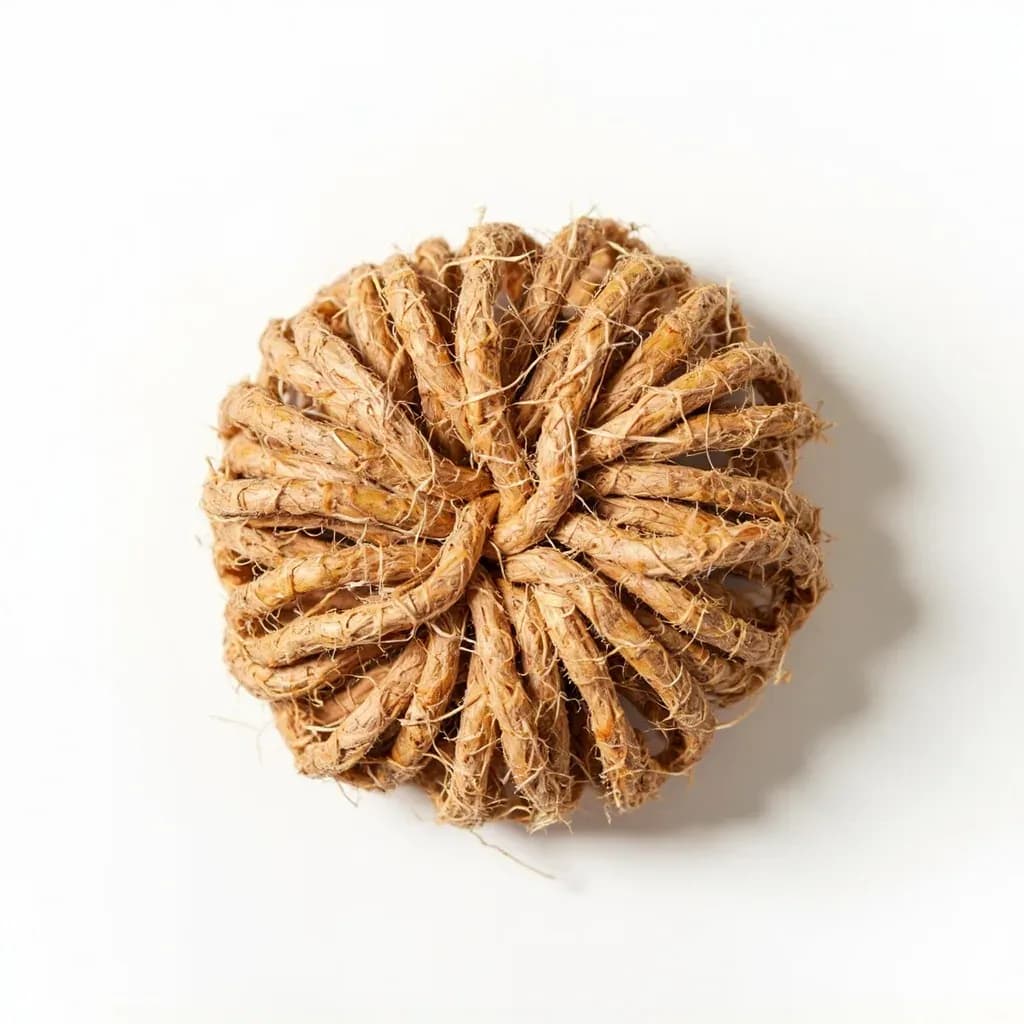
A coconut husk scrubber is a pad of stiff coir fibers used to scour pots, pans, graters, and stone tools clean of stuck-on food. Its natural abrasiveness lifts grime while being gentle enough not to gouge most surfaces, and it dries fast to resist odor. It is a durable, compostable alternative to synthetic sponges.
A coconut husk scrubber is a pad made from coir — the tough, springy fibers that sit between a coconut's hard shell and its outer husk. Those fibers are a byproduct of the copra and coconut water industries in South and Southeast Asia, and they have a naturally abrasive, slightly stiff texture that makes them superb for scouring cookware. They occupy a useful middle ground in the kitchen: noticeably firmer than a cellulose sponge, yet far gentler than stainless steel wool or copper mesh, so they can be used on surfaces where steel would be too aggressive.
That middle-ground quality is exactly why they earn a place in a serious kitchen. Enameled cast iron, ceramic bakeware, seasoned carbon steel, and stainless steel all respond well to coir's scratchy-but-not-scratchy action. A coir pad will lift baked-on starch, cheese, and caramelized fond from a Dutch oven without dulling the enamel or stripping seasoning, and it clears the fine teeth of a box grater or microplane without bending them. The fibers also rinse cleaner than a sponge and shed food residue rather than holding it.
The one operational reality that determines whether a coir scrubber lasts weeks or days is moisture. The fibers breathe, but they will rot, sour, and crumble if they sit wet. Hang it, stand it on edge, or lay it across a dish rack so air moves through it after every use. Managed properly, a single pad will outlast several cellulose sponges and end its life in the compost bin rather than a landfill.
Alternatives
Types & varieties
The most common form — a flat coin shape, often with a cotton loop; general-purpose for dishes and pans.
Shaped to fit the hand with an integrated cotton or sisal loop for hanging; popular in eco-friendly cleaning lines.
A solid rectangular bar of compressed coir, sometimes sold in bulk; can be cut to size and lasts the longest of any form.
Has a natural rubber or latex base for grip and stability — the backing is usually the first part to fail.
Fluffier, looser construction with a softer scrubbing action; suited to washing vegetables and more delicate items.
Where Coir Sits in the Abrasive Spectrum
Choosing a scrubber is really about matching abrasion to the cookware surface. Coir fills a specific slot, and understanding the neighbors helps a cook decide when to reach for it and when to reach past it.
- Cellulose sponge — softest; fine for everyday dishwashing and glass, but lacks the bite for baked-on food.
- Coconut coir scrubber — medium-firm; the workhorse for enamel, ceramic, seasoned cast iron, and graters.
- Synthetic scouring pad — medium abrasive with a foam core; good for stainless steel, less ideal for non-stick coatings.
- Copper mesh — gentle on non-stick but tarnishes quickly and can react with acidic foods, so it is best kept away from tomato, citrus, and wine residue.
- Stainless steel wool — the harshest option; reserved for sheet pans, grill grates, and truly carbonized residue, and will mark enamel, soft metals, and seasoned surfaces.
Keeping It Alive
Coir's main weakness is also its main virtue: it is a natural fiber that breathes. Treat it like a wooden spoon or a linen towel — let it dry — and it will serve faithfully for weeks. Soak it in standing water and it will sour in days.
- Rinse well after each use, squeeze out excess water, and stand it on edge or hang it so air moves through the fibers.
- Sanitize weekly by pouring a kettle of boiling water over it, or run it through the dishwasher's top rack.
- A sour smell is most often a drying failure; a vinegar soak or boiling-water rinse often revives the pad without retiring it.
- Retire the scrubber the moment fibers start shedding or the surface feels slick and soft — a spent coir pad harbors more bacteria than it removes.
- When the day comes, toss the coir into the compost bin; cut off any cotton loop or rubber backing first, since those do not break down.
Common uses
Tips & pitfalls
- Always rinse thoroughly, squeeze out the water, and hang or stand the scrubber upright so air circulates through the fibers after every use.
- Never leave a coir scrubber sitting in a puddle at the bottom of the sink — trapped moisture is the single biggest reason these pads rot and smell.
- Pour boiling water over the scrubber weekly, or run it through the dishwasher's top rack, to kill odor-causing bacteria without shortening its life.
- Test on an inconspicuous spot before scrubbing a non-stick coating; most coir pads are safe, but heavy pressure on Teflon can still leave marks.
- Pair with a grease-cutting dish soap for burnt-on food — the coir provides the mechanical action that soap alone cannot deliver.
- Replace the scrubber as soon as fibers start shedding or the surface feels soft and slimy; a spent pad is less hygienic than a fresh sponge.
- On graters and microplanes, scrub along the grain of the blades in one direction so trapped food clears without bending the cutting edges.
- If the scrubber develops a sour smell before it physically wears out, sanitize with boiling water or a white vinegar soak before deciding to retire it.
Good to know
- Material
- Coconut coir — the fibrous husk layer between the hard inner shell and outer coat — sometimes bound with natural latex or rubber and stitched with cotton thread.
- Source regions
- India, Sri Lanka, the Philippines, and Indonesia, where coir is a byproduct of the copra and coconut water industries.
- Form
- Round discs, palm-shaped scrubbers with a hanging loop, rectangular bricks or blocks, rubber-backed pads, and loose ball-style pads.
- Abrasiveness
- Medium-firm — firmer than a cellulose sponge, gentler than stainless steel wool or copper mesh on most cookware surfaces.
- Lifespan
- Roughly 4–12 weeks of daily kitchen use before the fibers loosen, shed, and need replacement.
- Heat tolerance
- Can be sanitized with boiling water poured over it or by running it through a dishwasher's top rack.
- Compostability
- Fully compostable at end of life; coir breaks down in months in a home compost pile.
- Odor
- Neutral to faintly earthy when new; develops a sour smell if kept damp, usually a sign to sanitize and improve drying, though sometimes the pad is simply spent.
Also called
coir scrubber · coconut fiber scrubber · husk scourer
Related

Paper Towels
Disposable sheets for spills, drying, and patting dry

Kitchen Towels
Reusable cloths for drying, gripping, and wiping

Oven Mitts
Heatproof gloves to handle hot pans and trays safely

Disposable Gloves
Single-use gloves for safe, mess-free handling

Cleaning Cloths
Reusable cloths for wiping counters and spills

Tortilla Warmer
Insulated holder that keeps tortillas warm and soft

Trivet
Heatproof stand that shields surfaces from hot pots

Ice Bath Setup
Bowl of ice water that halts cooking and sets color