Storage & Containers
Compostable Cup Lid
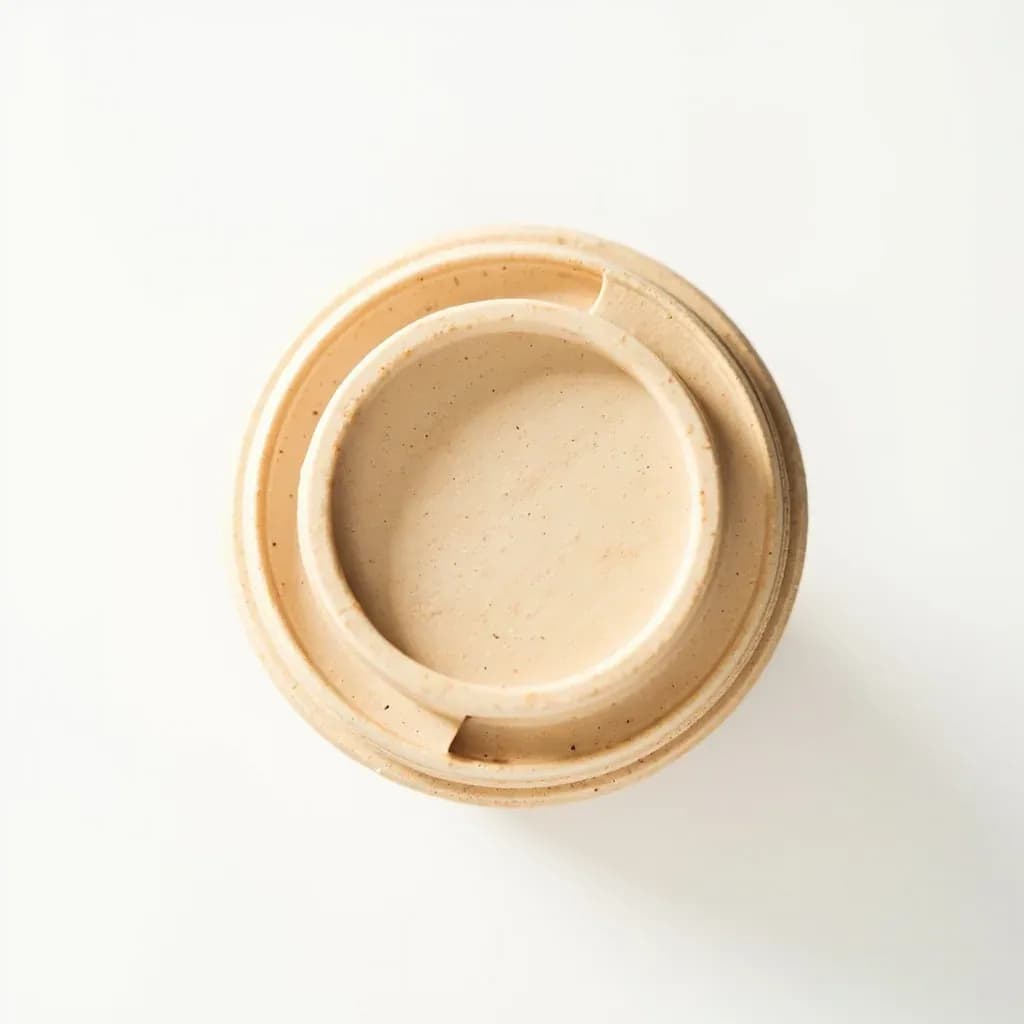
A plant-based, biodegradable lid that snaps onto a takeaway cup to prevent spills.
A compostable cup lid is a drink cup lid molded from plant-based materials such as PLA bioplastic or fiber pulp instead of petroleum plastic. It snaps onto hot or cold takeaway cups to stop spills and is designed to break down in commercial composting. Cafes and food stalls use them to cut single-use plastic waste while still keeping drinks covered.
Compostable cup lids are the spill-stopping tops that finish a takeaway cup, made from plant-derived polymers or molded plant fiber rather than expanded polystyrene. They serve the same mechanical job as a conventional plastic lid — snapping onto a cup rim, sealing in liquid, and giving the drinker a clean sip — but they're engineered to break down in industrial composting rather than persist in landfill. Most are molded from PLA (polylactic acid, derived from corn starch or sugarcane) or crystallized CPLA for heat tolerance, while heavier-duty versions are pressed from bagasse (sugarcane fiber) or bamboo pulp, and a third family uses folding paperboard with a thin PLA or bio-wax lining.
In practice, the materials behave quite differently. Standard PLA softens near 55–60 °C, so a clear PLA lid will deform over a fresh-pour latte; CPLA tolerates roughly 85–90 °C and is the default for hot beverages. Bagasse and bamboo fiber lids are also heat-tolerant and have a sturdier, more fibrous feel. All of these lids share one weakness: humidity slowly degrades PLA over time, so storage matters as much as the material itself.
The honest caveat is in the word 'compostable.' Certified lids (ASTM D6400, EN 13432, BPI, TÜV OK Compost) will break down in roughly 90–180 days inside an industrial composting facility where temperatures sustain ~58 °C. A backyard bin rarely reaches those conditions, and a landfill is anaerobic with stagnant moisture and no sustained heat, so the lid persists there much like any other plastic. Choosing a compostable lid is a real step forward only when the venue or municipality actually composts food-service ware — otherwise it should go in the trash, never the paper recycling, because a PLA lining contaminates paper bales.
Alternatives
Types & varieties
Opaque, off-white lid with a raised drinking tab; the workhorse for hot coffee, tea, and matcha because CPLA resists softening up to ~90 °C.
Clear or translucent lid for cold and ambient drinks; lower cost but deforms on fresh-pour hot beverages.
Cross-cut or X-slit for a paper or PLA straw; standard for iced coffee, cold brew, soda, juice, and smoothies.
Tall, rounded top that gives headroom for whipped cream, foam, boba, or layered toppings; pairs with cold cups and bubble tea.
Molded sugarcane pulp; sturdy, heat-tolerant, home-compostable in many grades, with a fibrous feel rather than glossy plastic.
Molded bamboo pulp offering similar performance to bagasse, often chosen for a more natural look and feel.
Folding flat lid with a thin bio-film for moisture resistance; common on soup cups and single-wall paper coffee cups.
Heavier fiber-molded lid that fits sugarcane bowls for hot soups, ramen, pho, curries, and grain bowls; some grades tolerate brief microwaving.
Matching the lid to the drink
The first decision is temperature, because it dictates the material. Hot drinks above roughly 60 °C need CPLA, bagasse, bamboo, or a paperboard-plus-lining construction; standard clear PLA will visibly warp and lose its snap-fit within minutes of contact. Cold and iced drinks are more forgiving — PLA, bagasse, and paperboard all work — so the choice becomes about shape. Flat straw-slot lids are the everyday pick for coffee shops serving iced drinks, while dome lids earn their keep anywhere foam, whipped cream, or boba needs vertical clearance.
- 80 mm rim diameter typically fits 8/10/12 oz hot cups; 90 mm fits many 12/16/20 oz cold cups — the mismatch between these two is the most common cause of leaky lids.
- Dome lids need a cup that's at least 2 oz under the cup's nominal fill line, or toppings get crushed against the dome.
- Straw-slot lids are cut for a specific straw diameter; oversized paper straws can pop the slit open and cause leaks.
End-of-life reality
Compostable is a meaningful claim only when the lid actually reaches industrial composting. PLA needs sustained heat around 58 °C, controlled moisture, and active microbial populations — conditions a home bin rarely sustains and a landfill never provides. In anaerobic landfill, a compostable lid can persist for years much like conventional plastic. The practical guidance for operators and home users is the same: if your hauler accepts compostable foodservice ware, the lid belongs there; if not, send it to trash. It should never enter paper recycling, because PLA or bio-wax films contaminate paper bales and can shut down a recycling load.
- Look for ASTM D6400, ASTM D6868, EN 13432, BPI Compostable, TÜV OK Compost, or the Seedling logo on the case.
- OK Home Compost certification is a stricter claim — only some bagasse and bamboo grades carry it.
- 'Biodegradable' on its own is a marketing word, not a certification; demand the standard number.
Common uses
Tips & pitfalls
- Match the lid to the cup brand or confirm rim diameter — a loose lid is the single most common cause of spill complaints, and 80 mm vs 90 mm confusion is the usual culprit.
- For hot drinks, choose CPLA, bagasse, or paperboard with lining — not standard clear PLA, which will deform on a fresh-pour latte.
- Seat the lid with even pressure around the rim rather than pressing one spot; a quick twist-and-press gives the cleanest snap-fit.
- Store lids in their original sealed bag in a dry area — humidity slowly hydrolyzes PLA and can leave you with brittle, warped lids before they're ever used.
- Don't confuse 'biodegradable' with 'compostable.' Only BPI- or EN 13432–certified lids break down in industrial composting; in landfill they behave much like plastic.
- Never put a compostable lid in paper recycling. The PLA or bio-wax lining contaminates the batch; compost or trash are the only correct streams.
- If customers reheat soup in the cup, vent the lid first or switch to one rated for brief microwave exposure — standard compostable lids warp and can pop off.
- Buy cups and lids from the same supplier and confirm matching rim diameter on the spec sheet; the cost of one leaky delivery usually exceeds the savings of mixing vendors.
Good to know
- Common materials
- PLA from corn starch or sugarcane; CPLA (crystallized PLA) for heat; molded bagasse (sugarcane fiber); bamboo fiber; FSC paperboard with PLA or bio-wax lining.
- Heat tolerance
- Standard PLA softens around 55–60 °C (131–140 °F); CPLA holds up to ~85–90 °C (185–194 °F) for hot coffee and tea.
- Cold tolerance
- Fine for iced drinks and brief freezer storage; PLA becomes brittle below about 0 °C but tolerates normal chilled service.
- Microwave safety
- Not microwave-safe — PLA warps or melts and bio-coatings can degrade. Use a vented or microwave-rated lid if reheating is needed.
- Compostability standards
- ASTM D6400 / ASTM D6868 (US) and EN 13432 (EU) certify industrial compostability; look for BPI, TÜV OK Compost, or the Seedling logo.
- Decomposition time
- 90–180 days in a commercial composting facility. Home composting usually isn't hot enough for PLA.
- Recycling note
- Not curbside recyclable. Even paperboard lids with PLA lining must go to compost, never the paper bin — the film contaminates the batch.
- Shelf life
- About 12–24 months when stored cool and dry; PLA slowly hydrolyzes in humid conditions, so keep lids in sealed packaging.
Also called
Biodegradable Cup Lid · PLA Cup Lid · Compostable Lid
Related

Freezer Bags
Thick, sealable bags built to fight freezer burn

Storage Bags
Resealable bags for fridge storage and marinating

Storage Container
Lidded container for leftovers, prep, and meal kits

Glass Container
Oven-to-fridge glass that won't stain or hold odors

Plastic Container
Lightweight, stackable storage for everyday leftovers

Vacuum Sealer Bags
Airtight bags for long freezing and sous-vide

Reusable Bags
Washable silicone bags that replace single-use plastic

Mason Jar
Sealed glass jar for preserves, pickles, and storage