Storage & Containers
Compostable Produce Bag
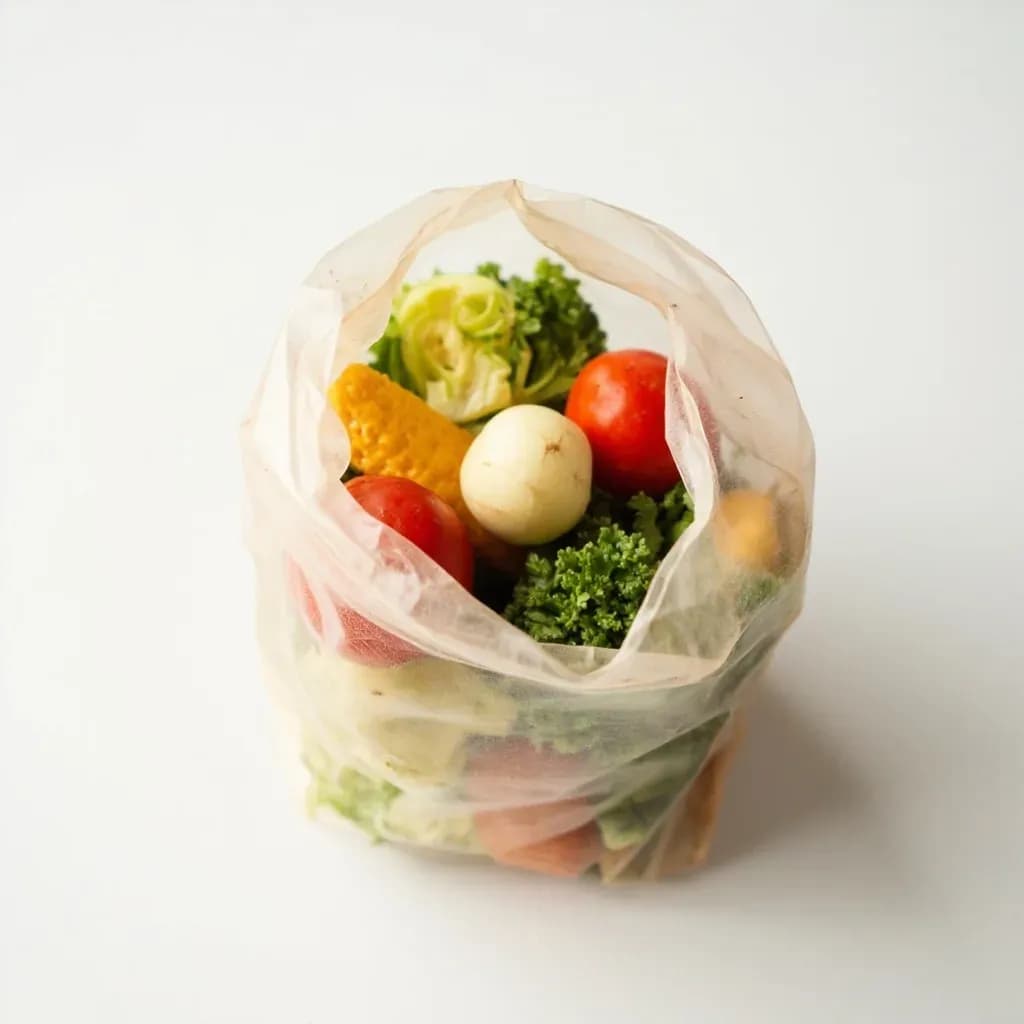
A plant-based bag for holding loose fruit and vegetables that breaks down in compost.
A compostable produce bag is a thin, lightweight bag made from plant starch or other biodegradable film for carrying loose fruit and vegetables. It replaces conventional plastic produce bags and breaks down in home or industrial composting once discarded. Markets and grocers offer them so shoppers can bag produce without adding plastic to landfill.
Compostable produce bags are plant-based sacks designed to replace the thin polyethylene bags found in grocery store produce sections. Most are made from polylactic acid (PLA) derived from corn starch or sugarcane, sometimes blended with PBAT for flexibility; a smaller share are cellulose film, kraft paper, or starch-based. They feel and behave much like a conventional produce bag — flexible, slightly crinkly, and lightweight — but their performance envelope is narrower. PLA films are less breathable than perforated polyethylene, so moisture from washed greens or warm produce condenses inside and softens the film. They also turn brittle below about 23°F, ruling out freezer use, and they degrade prematurely when stored near heat, so a kitchen drawer beside the stove is a poor home for a backup supply.
The single most important distinction for a home cook is between industrial and home compostability. Bags sold in most U.S. supermarkets as "compostable" are certified to ASTM D6400 or EN 13432, meaning they break down only in a commercial facility that maintains 130–160°F with controlled moisture and microbial activity, generally within roughly 180 days of composting. In a backyard pile, those same bags can persist for years; in a landfill, where oxygen is limited, PLA can generate methane. A genuinely home-compostable bag — one carrying the TÜV OK Compost HOME or BPI Home Compostable mark — is formulated to disintegrate in a cooler, slower backyard system over months. Reading the certification, not the marketing copy, is what determines where the bag actually ends up.
In practice, the decision most cooks face is whether the bag will reach a real composting endpoint at all. If your municipality sends food-waste collections to a commercial composter that accepts bags, an industrial-compostable PLA bag is a reasonable choice. If you compost at home, choose a starch or cellulose bag with home-compost certification, a kraft paper bag, or skip the bag entirely in favor of a reusable mesh or cotton produce bag. None of the three reusable or paper alternatives depends on infrastructure you may not have.
Alternatives
Types & varieties
The most common type; clear or lightly tinted; certified industrially compostable only.
PBAT improves flexibility and tear resistance; still industrial-compostable, not home-compostable.
Same PLA chemistry as corn-starch but from a different plant feedstock; same industrial-only end-of-life requirements.
Paper-like, often semi-transparent; some formulations pass home-compost certification.
Uncoated or lightly coated paper; widely accepted in home compost bins, but opaque at the checkout scanner.
Carry TÜV OK Compost HOME or BPI Home Compostable marks; genuinely break down in a backyard pile in months rather than years.
Reading the certification
Front-of-package language is unreliable. Words like "biodegradable," "eco-friendly," and even "compostable" without a qualifier are not regulated to a specific endpoint and should be treated as marketing. What matters is a third-party mark tied to a defined standard:
- BPI (Biodegradable Products Institute) — the North American mark for ASTM D6400 industrial compostability; a separate BPI Home Compostable mark exists.
- TÜV OK Compost INDUSTRIAL — the European equivalent of BPI industrial certification.
- TÜV OK Compost HOME — confirms disintegration in a backyard pile at ambient temperatures over months.
- Seedling mark (EN 13432) — European industrial-compostable certification.
- If a bag carries none of these, treat the claim with skepticism regardless of the brand's environmental messaging.
Storage and in-use behavior
PLA behaves differently from polyethylene once it leaves the store. A few practical notes for everyday kitchen use:
- Store unopened bags in a cool, dry drawer — not above the dishwasher or beside the oven. Warmth and humidity shorten shelf life and can fuse a stored stack of bags together.
- Do not reuse thin PLA bags for wet loads. A single rinse of greens can soften the film enough to tear when lifted.
- Line the bag with a dry paper towel when bagging washed lettuce, berries, or herbs; the towel absorbs condensation and the bag survives the fridge stay.
- For bulk-bin shopping, twist-tie or fold the top so fine items (poppy seeds, ground spices, dried herbs) do not sift through the seams.
Common uses
Tips & pitfalls
- Do not put compostable bags in curbside recycling. PLA contaminates the PET and polyethylene streams, and most material recovery facilities reject the entire bale when it is present.
- An industrial-only bag tossed in a backyard compost pile will sit there for years. Match the certification to the disposal pathway you actually have access to.
- Check your municipal composter's accepted-items list before buying. Many drop-off programs accept food scraps but exclude bags and film; others accept only certified bags.
- Keep the bag supply away from heat sources. A cabinet above the dishwasher or a shelf next to the oven shortens shelf life and may leave you with a fused clump of plastic by the time you reach for it.
- Skip thin produce bags as a substitute for a compost caddy liner. Under the weight of wet food scraps they tear and leak; use a dedicated heavier compostable caddy bag instead.
- For freezer storage, transfer produce to a freezer-rated zip-top or vacuum-seal pouch. PLA becomes brittle around 23°F and will crack open in the freezer.
- If you buy berries in volume, a rigid reusable plastic clamshell or a ventilated glass container protects them far better than any thin compostable film, which crushes easily and traps moisture.
- Pre-portion bulk-bin dry goods (rice, beans, oats) into the bag at the store, then decant at home into labeled jars. The bag never needs to be washed, and the dry contents are gentle on the film.
Good to know
- Common materials
- Polylactic acid (PLA) from corn starch or sugarcane, often blended with PBAT; some are cellulose film or uncoated kraft paper.
- Industrial compost standard
- ASTM D6400 / EN 13432 — must break down within roughly 180 days in a commercial facility at 130–160°F.
- Home compost standard
- TÜV OK Compost HOME or BPI Home Compostable; only certain bags qualify, and they break down in backyard piles over months.
- Typical size range
- Small (~8 × 10 in) for berries and herbs; medium (~10 × 14 in) for apples, peppers, citrus; large (~12 × 20 in) for potatoes, lettuce heads, broccoli.
- Shelf life
- About 1–2 years stored cool, dry, and away from sunlight; heat and moisture accelerate degradation before first use.
- Breathability
- PLA films are less breathable than perforated plastic, so condensation from wet produce weakens the film and can cause tearing.
- Freezer behavior
- Standard PLA becomes brittle below about 23°F and cracks; not suitable for freezer storage.
- Cost vs. plastic
- Roughly 2–3× the price of conventional polyethylene produce bags.
Also called
Biodegradable Produce Bag · Compostable Bag · Starch Produce Bag
Related

Freezer Bags
Thick, sealable bags built to fight freezer burn

Storage Bags
Resealable bags for fridge storage and marinating

Storage Container
Lidded container for leftovers, prep, and meal kits

Glass Container
Oven-to-fridge glass that won't stain or hold odors

Plastic Container
Lightweight, stackable storage for everyday leftovers

Vacuum Sealer Bags
Airtight bags for long freezing and sous-vide

Reusable Bags
Washable silicone bags that replace single-use plastic

Mason Jar
Sealed glass jar for preserves, pickles, and storage