Storage & Containers
Cryovac Shrink Bag
Heat-shrink vacuum pouch that seals tight around meat, cheese, and prepared foods.
A vacuum pouch that shrinks tight around its contents when sealed and briefly heat-dipped, giving a skin-tight, airtight wrap. It is used to package primal cuts of meat, whole cheeses, and prepared foods for long refrigerated or frozen storage and for wet-aging. The tight seal removes oxygen, extending shelf life and preventing freezer burn; it requires a vacuum chamber or impulse sealer to close.
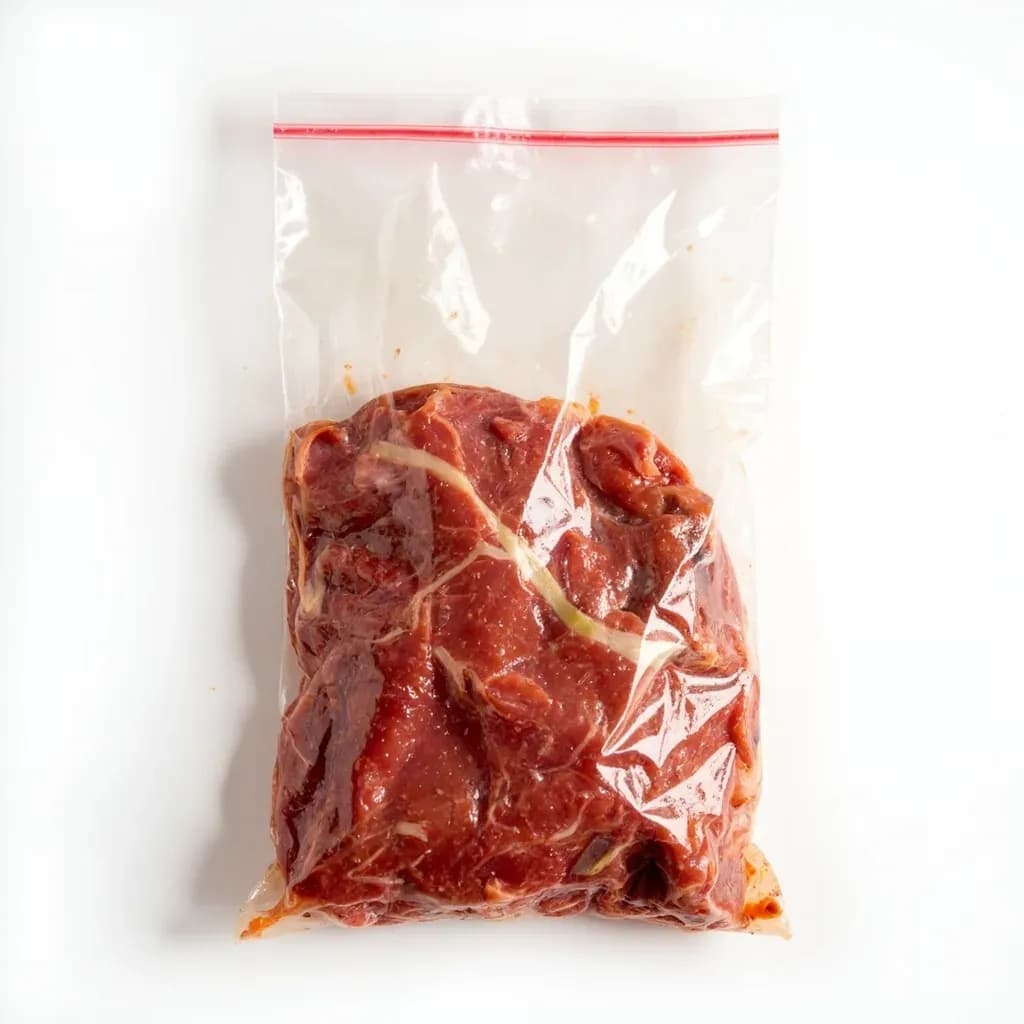
A Cryovac bag — properly a heat-shrink vacuum pouch — is a multi-layer plastic bag that evacuates air in a chamber vacuum sealer and then collapses into a tight, glossy second skin when dipped briefly in hot water. The film is biaxially oriented during manufacture so that heating triggers an even, predictable shrink that conforms to whatever is inside, whether that's a whole bone-in ribeye, a wheel of Comté, or a pork shoulder heading into a sous vide bath. The result looks like a sausage casing: smooth, transparent, and clinging, with almost no trapped air or surface moisture to invite spoilage.
For working cooks the bag matters because it solves problems that ordinary non-shrinking vacuum pouches handle poorly: long aging of cheese and dry-cured meats, where surface case-hardening and mold growth ruin product; presentation of whole primals and bone-in roasts, where loose film looks sloppy and bones pierce through; and cook-in applications, where a bag that clings to the food transfers heat evenly and keeps juices where they belong. The shrink is the point, not a side effect, and the bag cannot be used with an external edge-style home sealer — the most common mistake home cooks make with this product.
Alternatives
Types & varieties
General-purpose polyolefin bag for cheese, fresh meat, fish, and prepared foods; moderate oxygen barrier.
Multi-layer bag with an oxygen-barrier core; the right choice for long aging of hard cheese, dry-cured meats, and anything sensitive to oxidation.
Heavier-gauge, puncture-resistant film for whole primals, bone-in roasts, and game; often tinted to mask any minor bone show-through.
Rated for sous vide or water-cook temperatures (typically up to about 195–200°F / 90–93°C); conforms tightly so heat transfers evenly and juices stay with the product.
A top web that shrinks onto a rigid tray for ready meals and retail butcher presentation — distinct from loose-bag shrinkage.
Same film available in black, smoked-flavor tints, or printed for retail branding; confirm food-grade certification before buying colored stock.
Why a chamber sealer, not an edge sealer
The bag's open end is sealed inside the chamber while air is being evacuated, so both sides of the seal are under equal vacuum pressure when the bar closes. An external edge sealer only pulls air from one side of the open bag — the same side as the seal bar — and the bag collapses on itself before air can escape, leaving trapped air and a weak, often leaky seam. If you do not have access to a chamber machine, you cannot properly use these bags, and no amount of clever clamping will fix that.
The shrink dip: a quick technique
After the chamber sealer pulls and seals, drop the bagged product into a pot of hot water just long enough for the film to relax and tighten against the food. The film is doing all the work — you are not squeezing moisture out, and you are not cooking the product. Pull the bag too early and you are left with loose wrinkles and trapped air pockets; hold it too long and the film starts pulling against the seam, which is the most common cause of leaks during aging or cook-in use.
- Heat a pot of water to 195–205°F (90–96°C); a controlled-heat steam table or circulating bath works well.
- Submerge the bag flat, agitating gently so water contacts the whole surface.
- Lift after 1–3 seconds — the bag should look glassy and tight, with no visible slack.
- Cool briefly in cold water if the bagged product will be refrigerated or frozen, to stop residual heat from cooking delicate items like fish or fresh cheese.
Choosing the right bag for the job
Most cooks reach for whatever shrink bag is on the shelf, but the wrong bag quietly ruins long projects. Bone points puncture standard film during shrink; oxidation ruins months of cheese aging in a polyolefin-only bag; a non-cook-in bag will cloud, weaken, or leach flavor when held at sous vide temperature.
- Bone-in primals, game, and whole birds: use a bone-in-rated bag (4+ mil) or double-bag a standard one.
- Hard and semi-hard cheese aging beyond a few weeks: specify a high-barrier (EVOH) bag — standard film will let in enough oxygen for surface mold and measurable weight loss.
- Dry-cured charcuterie (bresaola, coppa, lonza): high-barrier bag, with the product patted dry and conditioned before sealing.
- Sous vide and cook-in: confirm the bag is rated for the target temperature; ordinary shrink bags are not all cook-in approved.
- Retail presentation: vacuum-skin (Darfresh-style) film on a tray gives the glossiest, most tamper-evident finish.
Common uses
Tips & pitfalls
- Use a chamber vacuum sealer; an external edge-style home sealer will not evacuate a shrink bag and the seal will fail.
- Do not cut the bag to size and re-seal the open end like a regular pouch — the open end is already the factory seal edge. Leave it open, load the product, and lay the open end across the chamber seal bar.
- Dip briefly — 1 to 3 seconds in 200°F (93°C) water is usually enough. Over-shrinking pulls the film away from the seam and ruptures the bag.
- For bone-in products, double-bag or switch to a bone-in-rated bag; bone points will pierce even heavy film during the shrink.
- For cheese aging longer than a few weeks, use a high-barrier (EVOH) bag; standard polyolefin film lets in enough oxygen for mold and weight loss over months.
- Pat the product dry before bagging — surface moisture causes bubbles and uneven shrinkage, and adds free water that microbes love.
- Label before sealing (or stick a strip of freezer tape to the bag and write on that). The tight second skin makes post-seal labeling effectively impossible.
- Buy from restaurant- or butcher-supply vendors. Industrial shrink-film rolls from non-food channels may not be food-contact certified and can leach additives into fatty foods.
Good to know
- Brand owner
- Sealed Air Corporation; 'Cryovac' is a registered trademark now used generically by butchers and cheesemakers for any heat-shrink vacuum bag.
- Origin of name
- Trademark dates to the mid-20th century; the Cryovac brand was developed by the Dewey and Almy Chemical Company, now part of Sealed Air. The 'cryo' prefix refers to cold-chain packaging, not to the heat-shrink process the bag uses.
- Material
- Co-extruded multi-layer polyolefin film; high-barrier versions add an EVOH (ethylene vinyl alcohol) core for very low oxygen transmission.
- Sealing equipment
- Requires a chamber (suction) vacuum sealer — the open end of the bag is sealed inside the chamber under vacuum. External edge-style home sealers will not evacuate these bags properly.
- Shrink temperature
- About 195–205°F (90–96°C) hot water; check the manufacturer's data sheet for the exact range.
- Dip time
- Roughly 1–3 seconds — longer immersion stresses the seam and can cause the bag to pull away from the seal.
- Typical gauges
- Standard 2.5–3 mil (60–75 micron); bone-in versions run 4+ mil to resist puncture from sharp bone ends.
- Sizing
- From roughly 6×8 in (15×20 cm) up to 24+ in (60+ cm) long for whole primals, whole birds, and large cheese wheels.
- Storage of unused bags
- Store flat, away from heat and UV; bags become brittle with age or cold but otherwise keep a long shelf life.
- Reusability
- Generally treated as single-use in commercial settings; can be rinsed and reused for non-critical storage if unpunctured, though seal integrity drops after the first cycle.
- Cost
- Sold by the case (typically 500–1,000 bags) through restaurant- and butcher-supply channels; per-bag price drops sharply at case quantities.
Also called
Heat-Seal Pouch · Heat-Seal Bag · Vacuum Shrink Bag · Cryovac Bag
Related

Freezer Bags
Thick, sealable bags built to fight freezer burn

Storage Bags
Resealable bags for fridge storage and marinating

Storage Container
Lidded container for leftovers, prep, and meal kits

Glass Container
Oven-to-fridge glass that won't stain or hold odors

Plastic Container
Lightweight, stackable storage for everyday leftovers

Vacuum Sealer Bags
Airtight bags for long freezing and sous-vide

Reusable Bags
Washable silicone bags that replace single-use plastic

Mason Jar
Sealed glass jar for preserves, pickles, and storage