Storage & Containers
Cup Lid
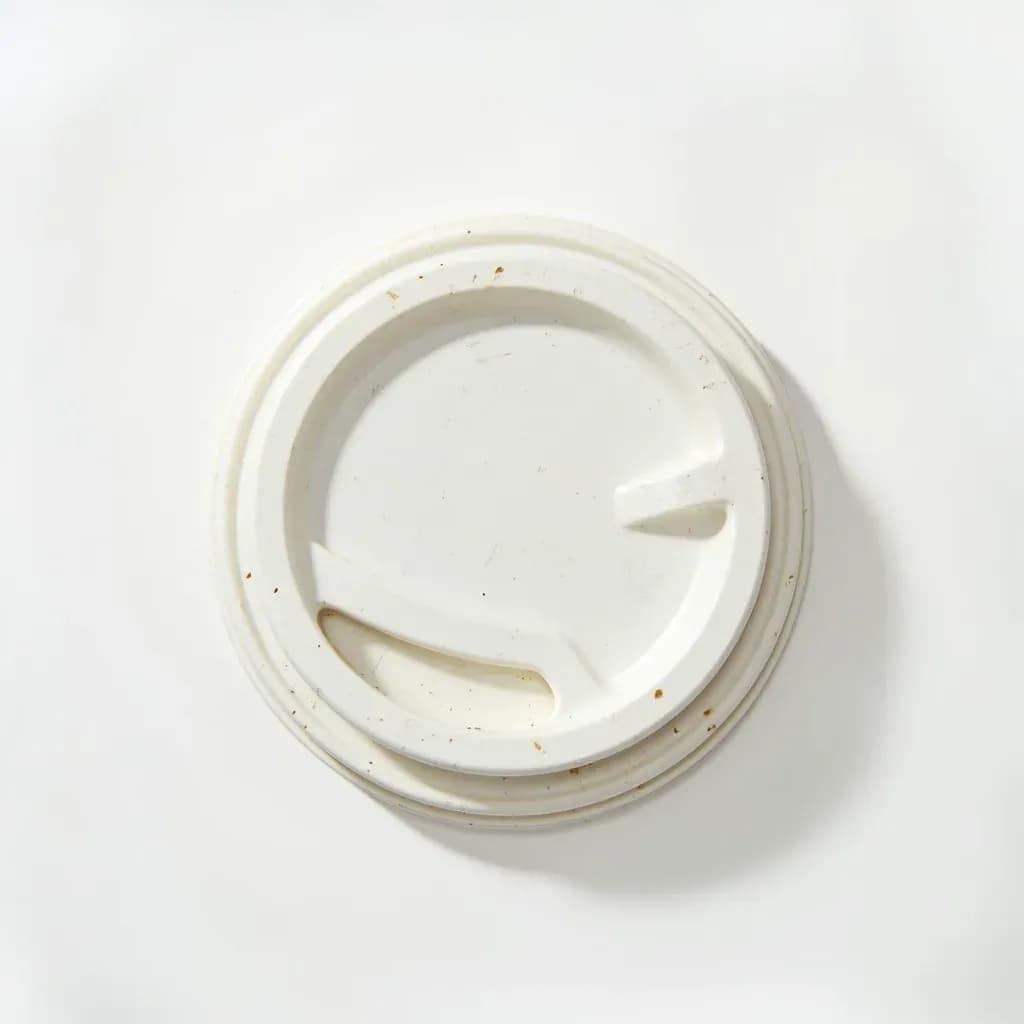
A snap-on lid that covers a takeaway drink cup to prevent spills and hold in heat.
A cup lid is a plastic or fiber cover that snaps onto a disposable drink cup. It seals the top to stop spills in transit and slows heat loss from hot beverages, often with a sip hole or fold-back tab. Cafes match lids to cup sizes for hot coffee, cold drinks, and smoothies.
A cup lid is the molded plastic, paperboard, or film closure that snaps, seals, or plugs onto the top of a disposable or reusable beverage cup. In foodservice it does three quiet jobs at once: it stops spills during transit, it holds in heat or chill, and it gives the customer a controlled way to sip. The engineering is deceptively precise — a good lid seats with a definite snap, tolerates steam without warping, and presents a sipping hole or straw slot that actually works in motion. For a cook scaling takeaway coffee, batching iced drinks, or running delivery, the cup lid is one of the small decisions that has an outsized effect on whether a drink arrives looking right.
The lid you reach for is dictated by the cup it sits on, the temperature of the drink, and whether the goal is quick service, tamper evidence, or compostability. Hot drink lids are almost always polystyrene or paperboard with a tear-back sip tab, sized to a 90 mm brim. Cold drink lids are PET or polypropylene with a straw slot or cross-cut, often domed to clear whipped cream or cold foam. Beyond those staples there are heat-seal films for bubble tea, vented lids for microwaving soup, and reusable silicone caps that turn a personal tumbler into a travel cup. Getting the right match matters: a 90 mm hot lid and a 90 mm cold lid are not always interchangeable because cup brim geometry differs between the two series.
Alternatives
Types & varieties
Polystyrene or paper with a tear-back tab and sipping hole; the standard for takeaway coffee and tea in 8–20 oz cups.
PET or PP with a cross-cut or X-slot; pairs with PET cold cups for soft drinks, iced coffee, and water.
Raised profile, usually with a sipping hole and straw slot; leaves clearance for whipped cream, cold foam, or ice cream on frappés and milkshakes.
Solid flat plastic or paper for sealing sample cups, portion cups, and pre-portioned sauces during transport or storage.
Cornstarch-based bioplastic that mimics conventional plastic but requires industrial composting at ~55–60 °C / 130–140 °F.
Molded pulp or paperboard marketed as plastic-free; carries a thin PLA or wax coating for moisture resistance.
Laminated film sealed by a commercial machine for tamper-evident bubble tea, smoothie, and yogurt drink cups.
Plastic dome plug fitted into the top of a cold cup; standard on convenience-store self-serve soda fountains.
Stretch-fit cap with a sipping hole or straw port that replaces disposable lids on personal cups and tumblers.
PP lid with a built-in steam vent for reheating soup, ramen, or pasta in a cup with minimal splatter.
PP or silicone with a sliding closure over the sipping hole; sold with reusable travel mugs.
Matching a lid to its cup
The single most common mistake in drink service is grabbing the nearest sleeve of lids and assuming they fit. Cup series are designed as matched sets, and a 90 mm hot cup and a 90 mm cold cup — even from the same manufacturer — will usually have different brim geometries, wall thicknesses, and rollover profiles. A hot lid is engineered to grip a thick paperboard rim; a cold lid is engineered to bite into the thinner PET lip. Fit them cross-wise and the lid either sits loose enough to pop off on tilt or crushes down so hard that it splits the cup wall. Always check the cup maker's compatibility chart before buying lids in case quantities of 1,000 or more.
- Measure the cup top across the rim, not the side wall.
- Check whether the lid is for 'hot' or 'cold' series even when diameters match.
- Test-seat a full sleeve against a sleeve of cups before committing to a case order.
Sustainability and end-of-life
The lid is where most 'eco-friendly' cup claims come undone. A PLA compostable lid looks and behaves like plastic, but it only breaks down in an industrial composting facility running at 55–60 °C / 130–140 °F; in a home bin, a landfill, or most municipal programs it will persist for years. Paper fiber lids almost always carry a thin PLA or wax coating to keep moisture out, which means they cannot be recycled with mixed paper. The cleanest current choices are PP (#5) and PET (#1) lids sent to facilities that actually accept those streams, or a reusable silicone lid on a cup that gets washed rather than discarded.
- PLA = resin code #7, requires industrial composting, not backyard bins.
- Paper lids with PLA or wax liners are not recyclable as paper.
- PP (#5) and PET (#1) are among the most widely accepted disposable lid resins in curbside recycling where accepted.
- Communicate the disposal route clearly to staff and customers; 'compostable' is the most over-claimed term in the category.
Common uses
Tips & pitfalls
- Match the lid to the cup by top diameter AND series — a 90 mm hot lid and a 90 mm cold lid are not always interchangeable; always check the manufacturer's compatibility list.
- Do not put a polystyrene hot lid on a drink above ~90 °C / 195 °F — it can warp; switch to PP for very hot pours.
- Never microwave a sealed disposable lid without a vent — pressure builds and the lid can blow off or split the cup.
- PLA lids soften and deform near 55–60 °C / 130–140 °F, so they are not safe for very hot drinks or hot-holding cabinets.
- For frothy or blended drinks, choose a dome lid — a flat lid will crush whipped cream or cold foam and pop off under the pressure.
- A press-fit cold cup lid should seat with an audible snap; if it sits loosely, the wrong size is in use and will leak on tilt.
- Store lids flat in a dry area away from heat sources — paper lids absorb moisture and lose rigidity, and PET lids can warp near ovens or grills.
- When stacking lidded cups for transport, rotate so the sipping holes face inward, away from the wall of the cup above, to avoid dribbling down the side.
Good to know
- Primary materials
- Polypropylene (PP), polystyrene (PS), polyethylene terephthalate (PET), polylactic acid (PLA), paperboard, silicone, and aluminum
- Common top diameters
- Most US takeaway cups share a 90 mm (3.5 in) top diameter spanning roughly 8–24 oz sizes; smaller 4–6 oz cups typically use 62 mm or 70 mm tops
- Hot cup lid standard
- Polystyrene or paperboard, sip-through opening, 90 mm, suited to 8–20 oz hot drinks
- Cold cup lid standard
- PET or polypropylene, cross-cut or straw-slot opening, often domed to clear foam or whipped toppings
- Compostable option
- PLA (cornstarch-based) lids require industrial composting at ~55–60 °C / 130–140 °F; they do not break down in home bins or landfill
- Temperature tolerance
- PP lids: roughly -20 °C to 120 °C / -4 °F to 250 °F; PS hot lids: up to ~90 °C / 195 °F; PLA lids begin to deform near 55–60 °C / 130–140 °F
- Microwave behavior
- Most disposable lids are not microwave-safe; vented lids with steam slits or raised tabs exist specifically for reheating
- Recycling codes
- PP = #5, PS = #6, PET = #1; bioplastic PLA is resin code #7; paper lids vary by their coating
- Heat-seal film
- Heat-sealable peel-off PET/PP laminates used by commercial sealing machines for bubble tea, yogurt, and smoothie cups
- Typical pack sizes
- Sold in sleeves of 50 or 100 and cases of 1,000 (50 sleeves) or 2,000 (100 sleeves) for foodservice
- Origin
- Disposable cup lids spread with mid-20th-century takeaway culture; the modern sip-through hot lid was popularized in the 1980s alongside specialty coffee
Also called
Drink Lid · Coffee Cup Lid · Takeaway Lid
Related

Freezer Bags
Thick, sealable bags built to fight freezer burn

Storage Bags
Resealable bags for fridge storage and marinating

Storage Container
Lidded container for leftovers, prep, and meal kits

Glass Container
Oven-to-fridge glass that won't stain or hold odors

Plastic Container
Lightweight, stackable storage for everyday leftovers

Vacuum Sealer Bags
Airtight bags for long freezing and sous-vide

Reusable Bags
Washable silicone bags that replace single-use plastic

Mason Jar
Sealed glass jar for preserves, pickles, and storage