Heat & Safety
Cup Sleeve
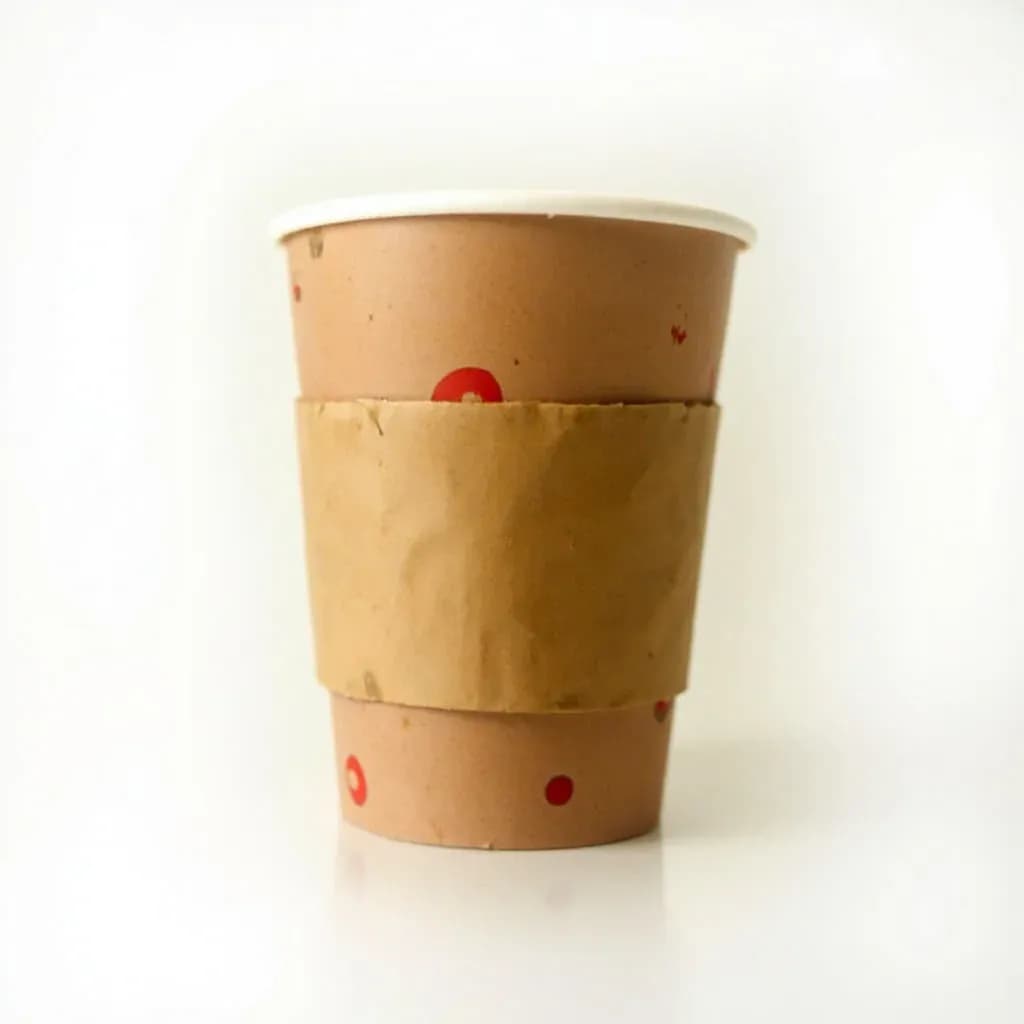
An insulating cardboard band that slips over a hot cup so it can be held comfortably.
A cup sleeve is a corrugated cardboard or foam band that wraps around a hot drink cup. It insulates the hand from the heat so a fresh coffee or tea can be carried without burning fingers or needing double-cupping. Most are made of recycled paperboard and are recyclable or compostable.
A cup sleeve is the fluted cardboard band wrapped around a takeaway paper cup — a small but quietly essential piece of food-service infrastructure that solves two problems at once. It stops a freshly filled cup of coffee or tea from scalding the drinker's hand, and it gives a smooth, condensation-prone paper cup a surface that is actually grippable. Invented in 1991 by Jay Sorensen after a reported hand-burn at a church coffee hour, the sleeve (originally branded the Java Jacket) has become so standard in cafés that most customers no longer see it. For a working cook or barista, however, the sleeve is worth understanding on its own terms: it is the cheapest, lightest way to add meaningful thermal resistance to a thin-walled paper cup, and the choices of size, material, and reusability have real consequences for comfort, safety, and waste.
The classic design works on a simple physical principle. Corrugated paperboard has a fluted inner layer that traps pockets of still air, and still air is a remarkably poor conductor of heat — its thermal conductivity is several times lower than paper, so the trapped air does most of the insulating work. A sleeve weighing only 2–4 g therefore buys a useful margin of comfort between a near-boiling drink and human skin, without the bulk or cost of a double-walled cup. That same economy is why the corrugated sleeve has dominated commercial coffee service for three decades — and why reusable silicone, molded-pulp, and neoprene variants now occupy their own niches for the home cook, the eco-minded café, and the branded-promotional market.
Alternatives
Types & varieties
The classic fluted cardboard sleeve found in nearly every coffee shop — cheap, recyclable, and the original format.
Pressed paper pulp, sometimes bagasse or wheat-straw fiber; stiffer feel, often marketed as fully compostable.
Slip-on silicone band for personal travel mugs; dishwasher-safe, far more durable, and pays back its cost quickly.
Stretchy fabric-style sleeve (the 'koozie' material) often used for branded giveaways; insulates both hot and cold drinks.
Cotton batting between layers of fabric; usually homemade or boutique, and machine-washable.
Same corrugated stock but printed with shop branding, seasonal art, or marketing messages.
Some paper cups now ship with an integrated corrugated outer wall, eliminating the need for a separate sleeve.
Made with FSC-certified or recycled-content board and water-based inks for a lower environmental footprint.
How the corrugated flute actually insulates
A corrugated sheet is not just thick paper — it is a sandwich of two flat liners held apart by a wavy middle layer called the flute. The flute creates a continuous series of air pockets that do not circulate, and because still air conducts heat several times less efficiently than paper, that trapped air does most of the insulating work. A sleeve therefore slows conductive heat transfer from the cup wall to the hand far more effectively than a flat card of the same weight would. It does almost nothing for radiative loss from the lid, however, which is why steam escaping around a plastic lid can still scald regardless of how good the sleeve is.
- Air is the actual insulator — the paper just holds it in place.
- The sleeve mainly blocks conductive heat to the hand; lid steam is a separate hazard.
- A second sleeve nested on top of the first adds almost no extra benefit — go up a cup size instead.
Sizing and fit
Sleeves are sold in nominal sizes — 8, 12, 16, and 20 oz being the standards — but cups taper, and the fit that matters is the fit where the hand actually grips, which is roughly two-thirds up the cup wall. A '12 oz' sleeve slid onto an 8 oz cup will feel loose and slide down; the right answer is the smaller sleeve, not more friction. Sizing by the cup's middle rather than its rim gives the snug, secure wrap that the sleeve was designed for.
- Match the sleeve to the cup's mid-height, not its rim diameter.
- Push the sleeve up about half an inch from the base so it sits above any drip ring.
- Custom-printed sleeves from a supplier typically come in the same four sizes; specify the cup you actually use.
Reusable alternatives for the home cook
For anyone who drinks coffee from the same travel mug daily, a silicone sleeve is the meaningful upgrade. It survives the dishwasher indefinitely, grips better than cardboard, and replaces hundreds of disposable sleeves over its lifetime. Molded-pulp and FSC-certified corrugated sleeves are the better pick for a café that wants the disposable format with a smaller waste footprint; the home cook rarely needs to stock either.
- Silicone sleeves pay back their cost quickly for daily commuters, replacing weeks of disposable cardboard.
- Neoprene koozie-style sleeves insulate cold drinks too, which cardboard does poorly.
- A wet cardboard sleeve cannot be recycled — compost or trash it instead of putting it in the paper bin.
Common uses
Tips & pitfalls
- Slip the sleeve on with the seam toward the back of the cup so any printed logo faces the drinker and the seam does not catch on the hand.
- Push the sleeve up about half an inch from the cup base so it does not sit in the drip ring and stay dry and recyclable.
- A sleeve reduces but does not eliminate heat — warn customers that steam venting around the lid can still scald, especially at near-boiling temperatures.
- If a sleeve feels loose or slides down, the cup size is wrong; a 12 oz sleeve will not grip an 8 oz cup, no matter how hard you press it on.
- Reusable silicone sleeves are a worthwhile upgrade for daily commuters — they pay back in cost and landfill waste within a few weeks of regular use.
- Cardboard sleeves are recyclable only when dry; a sleeve soaked through with coffee belongs in compost or trash, not the paper bin.
- Custom-printed sleeves are a high-leverage branding tool because the customer looks directly at the print for the entire time they are drinking.
- Do not confuse a cup sleeve with a cup carrier — the carrier is the molded tray that holds several cups for transport; the sleeve is the single-cup insulator.
Good to know
- Inventor
- Jay Sorensen, 1991 (commercialized 1993)
- Standard material
- Corrugated paperboard with fluted interior for air-pocket insulation
- Insulation principle
- Trapped air in the flute slows conductive heat transfer
- Typical sizes
- Designed to fit 8 oz, 12 oz, 16 oz, and 20 oz paper cups
- Approximate weight
- Roughly 2–4 g per single-use corrugated sleeve
- Distinction
- Not the same as a cup carrier (the molded multi-cup carry tray)
- Recyclability
- Cardboard sleeves are curbside-recyclable when dry; saturated sleeves belong in compost or trash
- Primary environment
- Coffee shops, cafés, concession stands, and offices
Also called
Coffee Sleeve · Cup Jacket · Java Jacket
Related

Paper Towels
Disposable sheets for spills, drying, and patting dry

Kitchen Towels
Reusable cloths for drying, gripping, and wiping

Oven Mitts
Heatproof gloves to handle hot pans and trays safely

Disposable Gloves
Single-use gloves for safe, mess-free handling

Cleaning Cloths
Reusable cloths for wiping counters and spills

Tortilla Warmer
Insulated holder that keeps tortillas warm and soft

Trivet
Heatproof stand that shields surfaces from hot pots

Ice Bath Setup
Bowl of ice water that halts cooking and sets color