Heat & Safety
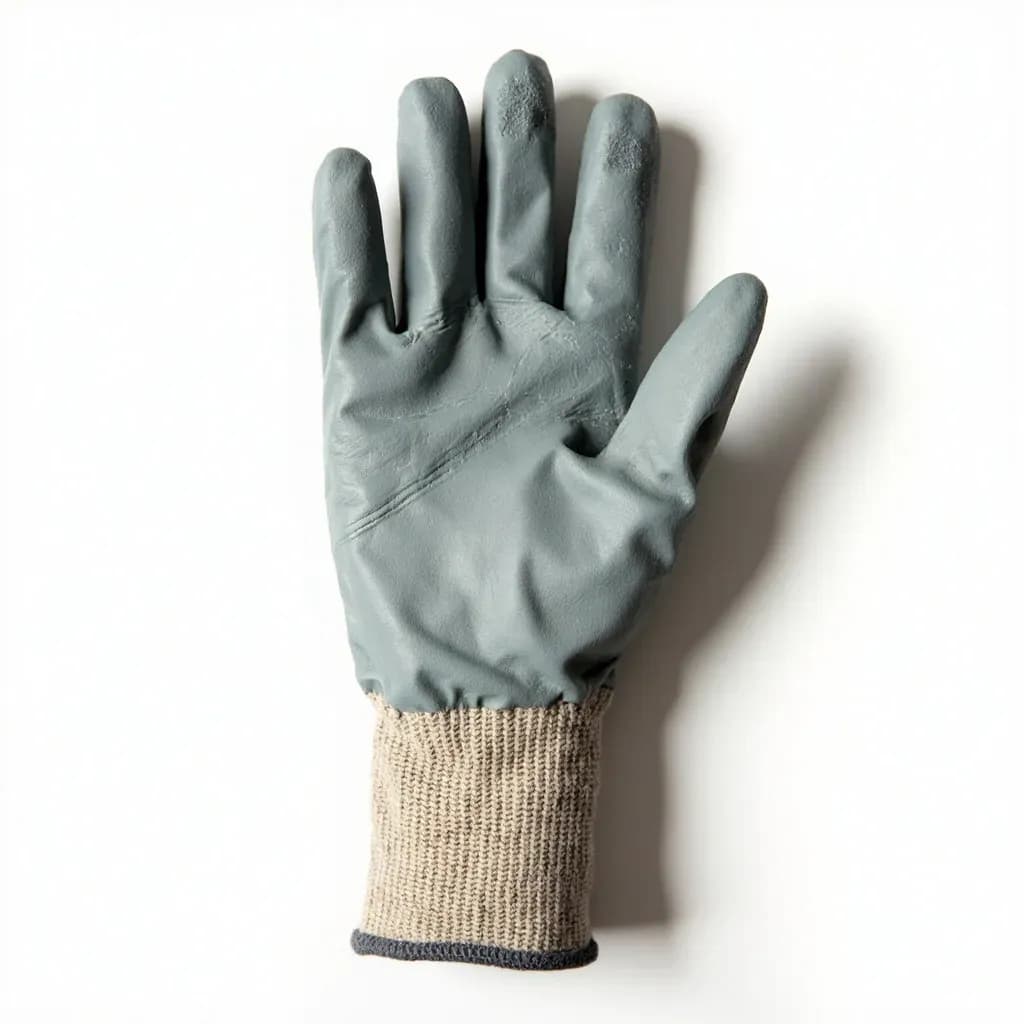
Cut-Resistant Glove
Knit safety glove that protects the hand while slicing, boning, or using a mandoline.
A snug knit glove of cut-resistant fiber such as Dyneema or steel mesh, worn on the guiding hand during slicing, boning, oyster-shucking, and mandoline work. It guards against blade slips without sacrificing dexterity or grip. Food-grade versions are washable and worn under a disposable glove when handling raw product directly.
Cut-resistant gloves are the single most practical piece of safety equipment a home cook can own, because they address a stubborn statistical fact: in nearly every slicing accident, the wound happens on the hand that holds the food, not the hand that holds the knife. A modern knit glove — usually made from high-performance polyethylene fibers, sometimes blended with aramid or fine stainless steel filaments — stops a blade that skids across a cutting board, a mandoline, or a boning knife, and it does so without the rigidity of older chainmail or mesh designs. Most cooks reach for one the first time they run a butternut squash through a slicer and never go back to bare-handed prep for that job.
The idea is not new. Medieval butchers and fishmongers wore chainmail gauntlets for the same reason, and stainless steel mesh gloves have been standard in meat plants for decades. What changed in the 1990s was the arrival of ultra-high-molecular-weight polyethylene fibers (HPPE, sold as Dyneema and Spectra) that could be knitted into a thin, breathable glove genuinely resistant to a knife edge while still letting the cook feel what they were doing. Today's versions are rated on the ANSI/ISEA 105 scale, A1 through A9, which measures the force in grams a blade must exert to cut through. For most kitchens, an A4 to A6 knit glove is the sweet spot — protective enough for a slicer or a chicken back, dexterous enough that you forget you are wearing it.
The trade-offs are worth knowing before you buy. Cut resistance is not puncture resistance: a needle-thin blade tip, a boning hook, or a shrimp vein remover can still get through most knit gloves. HPPE melts at temperatures well below what an oven reaches, and stainless steel conducts heat straight to the skin, so the glove is not a substitute for an oven mitt. And a glove that fits poorly bunches in the palm and pulls your grip off the handle — a sloppy fit is more dangerous than no glove at all. Treat it as a piece of equipment with a lifespan, not a permanent accessory: wash it, inspect it, and replace it the moment it thins or snags.
Alternatives
Types & varieties
The everyday kitchen standard. Light, breathable, ambidextrous, machine-washable. Most come in A3–A6 ratings.
Traditional metal-link glove used in meat processing for decades. Very cut- and puncture-resistant but heavy, rigid, and hand-specific; usually worn only on the non-cutting hand.
A medieval-derived style with linked metal rings; favored by some professional butchers and salumi makers for deboning and trimming. Sells mostly to pro kitchens, not home cooks.
Aramid-fiber glove that adds a degree of contact-heat and flame resistance. Slightly less cut protection per thickness than HPPE; popular where ovens and slicing meet.
HPPE or nylon knit wrapped with fine stainless or tungsten filaments. Reaches A7–A9 ratings for heavy butchery, with a real trade-off in flexibility and skin feel.
Cut down to thumb, index, and middle finger to free the fingertips for gripping shells; the remaining fingers and palm stay armored.
Not a glove but often grouped with them: an arm sleeve that protects the wrist and forearm from slicer and grater injuries, worn under a regular glove.
Choosing a cut level
ANSI/ISEA 105 rates cut resistance from A1 (light, around 200 grams of force) to A9 (industrial, around 6,000 grams), and most home cooks only need a sliver of that range. Think of the rating as the maximum blade force the glove can survive, not a guarantee — a freshly sharpened or serrated blade will defeat a higher-rated glove more easily than the number alone suggests. The right pick depends on what you actually do in the kitchen, and going one level higher than you need buys you less dexterity than you might expect.
- A2–A3: light prep, paring knives, opening clamshell packaging, peeling produce
- A4: the everyday home glove — slicing tomatoes, breaking down a chicken, running vegetables over a box grater
- A5–A6: serious mandoline work, deboning poultry and fish, trimming brisket and pork shoulder
- A7–A9: heavy butchery, primal cuts, shucking large oysters in volume; usually overkill and too stiff for home use
Care, cleaning, and when to retire it
Knit gloves wear out quietly, and the failure mode is not dramatic — they don't shred, they thin. A spot that looked fine last month can let a blade through this month, especially along the side of the index finger where the glove rubs against the cutting board. Make a habit of inspecting before each use and replace without sentiment; a worn glove gives false confidence and is worse than no glove because it dulls your reflexes.
- Machine-wash knit gloves cold in a lingerie bag; air-dry flat. Hot water and chlorine bleach weaken HPPE.
- Mesh and chainmail go on the top rack of the dishwasher; they tolerate bleach and high heat.
- Replace at the first hole, thin spot, snag, or persistent fuzz that does not brush off.
- Store rolled or flat, never folded — sharp creases weaken the knit at the bend.
- Keep a spare. The day you need a glove is the day you do not have time to order one.
Common uses
Tips & pitfalls
- Match the cut level to the task: A3–A4 is plenty for vegetables and poultry, A5–A6 for deboning and mandoline work, A7 and up for industrial butchery.
- Fit is everything. A glove that bunches inside the palm pulls your grip off the handle and increases the chance of slipping. Try the smaller of two sizes.
- Wear the glove on the hand that holds the food, not the hand that holds the knife. The non-cutting hand is where almost every slicing injury happens.
- Knit gloves protect against slicing but not against pointed puncture. A needle-thin blade tip, a boning hook, or a shrimp vein remover can still get through.
- Don't use a cut-resistant glove as a heat glove. HPPE melts at well below oven temperatures; stainless steel conducts heat straight to the skin; even Kevlar handles only brief contact.
- Take it off for fine, controlled work like peeling garlic, trimming silverskin, or turning a tourné. The bulk dulls tactile feedback and causes over-cuts.
- Replace at the first sign of a thin spot, a hole, or a snag. A worn glove is no glove at all and gives a false sense of security.
- If a glove feels slippery on a wet handle, wear a thin nitrile or latex disposable underneath, or roughen the palm with light sandpaper to restore grip.
Good to know
- Primary materials
- HPPE (high-performance polyethylene), aramid fibers (Kevlar), and stainless steel wire, often blended with fiberglass, nylon, or spandex for fit
- US cut-resistance standard
- ANSI/ISEA 105, levels A1 (lightest, ~200 g) through A9 (highest, ~6,000 g), measured in grams of force
- EU cut-resistance standard
- EN 388, with a 4-digit code for abrasion, cut, tear, puncture; cut rated A–F under the 2016 revision
- Typical home-kitchen cut level
- A4–A6, the balance point between protection and dexterity for knife and mandoline work
- Sizes
- Usually XS through XXL; fit is snug, like a second skin
- Ambidextrous?
- Most knit styles are ambidextrous; stainless steel mesh and chainmail are sold as left- or right-hand specific
- Heat protection
- None for HPPE (melts at relatively low temperature) and stainless steel (conducts heat rapidly); aramid versions tolerate brief contact heat but are not oven mitts
- Puncture protection
- Limited; a sharp narrow point such as a skewer, needle, or boning hook can still penetrate
- Cleaning
- Knit fibers are machine-washable cold in a lingerie bag; stainless steel mesh and chainmail are dishwasher-safe and bleach-tolerant
- Typical price range
- About $10–$25 for knit HPPE, $20–$60 for stainless steel mesh or chainmail
- Typical lifespan
- Several months of regular home use; replace as soon as a hole, thin spot, or fraying appears
Also called
Cut Glove Liner · Cut-Proof Glove · Mesh Glove · Safety Glove
Related

Paper Towels
Disposable sheets for spills, drying, and patting dry

Kitchen Towels
Reusable cloths for drying, gripping, and wiping

Oven Mitts
Heatproof gloves to handle hot pans and trays safely

Disposable Gloves
Single-use gloves for safe, mess-free handling

Cleaning Cloths
Reusable cloths for wiping counters and spills

Tortilla Warmer
Insulated holder that keeps tortillas warm and soft

Trivet
Heatproof stand that shields surfaces from hot pots

Ice Bath Setup
Bowl of ice water that halts cooking and sets color