Heat & Safety
Dairy Alkaline Detergent (CIP)
An alkaline cleaner that breaks down milk fat and protein residue in dairy equipment.
A dairy alkaline detergent is a caustic cleaning agent used in clean-in-place (CIP) systems for milk and cheese processing. Its high pH dissolves fats, proteins, and organic soils that build up inside tanks, lines, and pasteurizers. It is the primary cleaner in a dairy cleaning rotation, usually followed by an acid cleaner to remove mineral scale.
Dairy alkaline CIP detergent is a class of formulated cleaning chemicals — not a single product — built around sodium hydroxide (caustic soda) and used in every milk and milk-product processing plant as the first half of the standard two-step Clean-in-Place (CIP) wash. It targets the two soils that define dairy work: milk fat and milk protein. The hydroxide ion saponifies triglycerides into soap, swells and hydrolyzes casein and whey protein, and built-in surfactants lift the resulting slurry into the rinse water. Without this step, fat films and protein films simply sit on stainless steel and harden into milkstone once they combine with the calcium phosphate that the later acid wash removes.
The detergent only works when three things line up: heat (typically 150–160°F / 65–71°C at the return line), turbulent flow (Reynolds number above about 3,000 in the piping), and enough contact time (10–30 minutes of circulation). Drop the temperature, cut the time, or run laminar flow and the chemistry stalls — fat will not emulsify, protein cooks onto plates, and biofilm begins to grow under gaskets. The alkaline wash is almost always followed by an acid detergent (nitric or phosphoric) to dissolve milkstone, then a final rinse and a sanitizer such as chlorine, iodine, quat, or peroxyacetic acid. This sequence is what food-safety auditors and 3-A Sanitary Standards expect to see documented.
Home cooks and tiny farmstead operations will not own a CIP loop, but anyone making cheese, butter, yogurt, or ice cream in volume will eventually meet these chemicals through their co-packer, dairy supply house, or shared processor. Knowing what the alkaline wash does — and why it must come before the acid — is the difference between a vat that releases cleanly and one that slowly furs up with milkstone and ruins the next batch.
Alternatives
Types & varieties
Mostly sodium hydroxide; economical and very effective on fat, but limited on protein and hard water.
Caustic plus sodium hypochlorite; the standard choice for HTST pasteurizer CIP because it boosts protein removal and helps prevent milkstone.
Used in cheese plants and cultured-dairy operations where residual chlorine could affect starter cultures or downstream corrosion.
Caustic blended with EDTA, phosphonates, or polyacrylates to handle hard water and stop mineral redeposition.
Contains sodium metasilicate to protect soft metals such as aluminum and tin in mixed-metal lines.
Spray-dried caustic/silicate/phosphate blends; lower cost and long shelf life, but slower to dissolve in the wash tank.
Defoamed for high-velocity CIP loops where entrained air would cause centrifugal-pump cavitation and incomplete coverage.
The Two-Step CIP Sequence
A standard dairy CIP runs in a fixed order; the alkaline wash is the first cleaning stage and the acid wash is the second. Skipping the order, or running them simultaneously, defeats both steps and is one of the most common causes of recurring milkstone.
- Pre-rinse with ambient water until the return runs clear — this knocks off loose soil and saves detergent.
- Alkaline wash at 150–160°F for 10–30 minutes; saponifies fat, hydrolyzes protein, emulsifies the soil.
- Intermediate rinse with ambient water to flush the alkali before the acid stage.
- Acid wash (typically 1.5–2% nitric or phosphoric at 130–150°F for 15–20 minutes) to dissolve milkstone — the calcium phosphate film that the alkaline stage leaves behind.
- Final rinse with potable water to remove acid residue.
- Sanitize with chlorine, iodine, quat, or peroxyacetic acid at the manufacturer's label rate, then drain or hold per protocol.
Why Temperature and Flow Matter
Alkaline chemistry without heat and turbulence is incomplete chemistry. Below about 130°F milk fat will not emulsify cleanly and the wash leaves a greasy film; above 180°F milk protein begins to denature and bake onto stainless, creating the very deposit you were trying to remove. Turbulent flow — not just movement, but a Reynolds number above roughly 3,000 in the return line — is what physically scours the surface and brings fresh chemistry into contact with the soil. Many CIP failures blamed on the detergent are actually failures of plumbing: dead legs, sagging lines, and undersized pumps all create laminar pockets where biofilm quietly grows under gaskets.
Handling and Storage
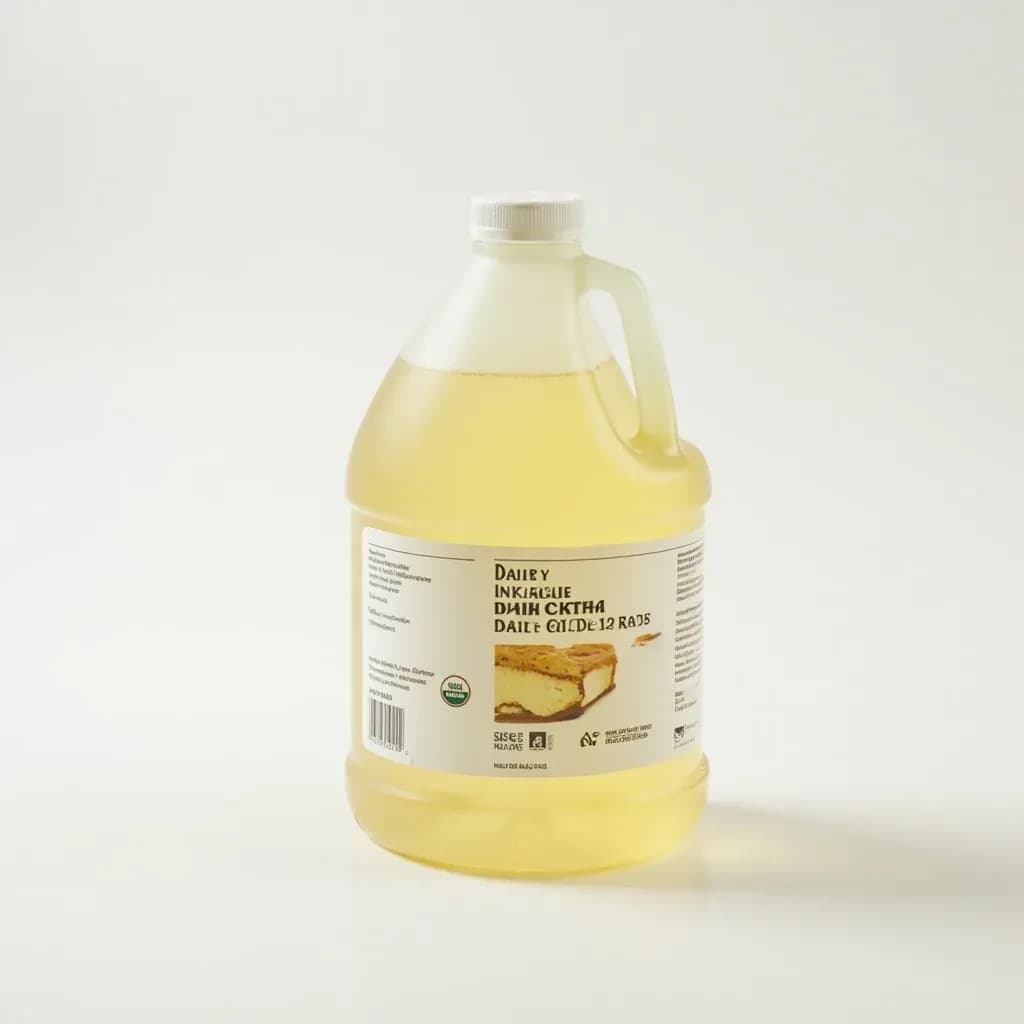
Concentrate is typically a colorless to pale yellow, slightly viscous liquid with a slippery feel. It will cause immediate skin burns at 50% strength and serious eye damage at any concentration, so it deserves the same respect a serious cook gives lye: alkali-resistant gloves, chemical splash goggles, and an apron. Store sealed in the original HDPE container, away from any acid, in a cool dry place. Never decant into a vessel that once held acid — even trace cross-contamination neutralizes both products and can off-gas chlorine if chlorinated alkaline meets residual acid.
Common uses
Tips & pitfalls
- Always run the hot alkaline wash BEFORE the acid wash — alkalies saponify fat and denature protein; only then does acid remove milkstone. Reversing the order leaves a chalky film that builds with every cycle.
- Hold wash temperature between 150–160°F. Below 130°F fat will not emulsify cleanly; above 180°F protein can cook on and bake to the surface.
- Verify concentration at the return line with a titration kit or conductivity probe — a 10% drop in strength usually means a failed wash, not a normal soil load.
- Always rinse between alkaline, acid, and sanitizer stages — even trace mixing can neutralize the sanitizer or generate chlorine gas.
- Choose chlorinated alkaline for high-protein systems (cheese, whey); choose non-chlorinated where residual chlorine could affect starter cultures or accelerate stainless corrosion.
- Use low-foam formulations in any CIP loop with a centrifugal pump — foam causes cavitation and leaves parts of the line untouched.
- Include a sequestrant (EDTA or phosphonate) when source water exceeds roughly 4 gpg hardness, otherwise minerals deposit and undo the wash.
- Test plate heat-exchanger plates visually or with ATP swabs weekly — biofilm grows first under gaskets where CIP coverage is poorest, and no amount of detergent fixes a coverage gap.
Good to know
- Type
- Industrial cleaning chemical for Clean-In-Place (CIP) systems in dairy processing
- Primary active
- Sodium hydroxide (caustic soda), often blended with potassium hydroxide, silicates, phosphates, and surfactants
- Typical pH
- 11–14 in concentrate; 11–12.5 in use solution
- In-use concentration
- 1–3% by weight (varies by soil load and water hardness)
- Operating temperature
- 120–180°F (49–82°C); commonly 150–160°F (65–71°C)
- Contact time
- 10–30 minutes circulation per CIP cycle
- Pair chemistry
- Almost always followed by a separate acid wash, then a sanitizer step
- Forms available
- Liquid (most common), powder, and gel
Also called
Alkaline Detergent · CIP Alkaline Cleaner · Caustic Detergent
Related

Paper Towels
Disposable sheets for spills, drying, and patting dry

Kitchen Towels
Reusable cloths for drying, gripping, and wiping

Oven Mitts
Heatproof gloves to handle hot pans and trays safely

Disposable Gloves
Single-use gloves for safe, mess-free handling

Cleaning Cloths
Reusable cloths for wiping counters and spills

Tortilla Warmer
Insulated holder that keeps tortillas warm and soft

Trivet
Heatproof stand that shields surfaces from hot pots

Ice Bath Setup
Bowl of ice water that halts cooking and sets color