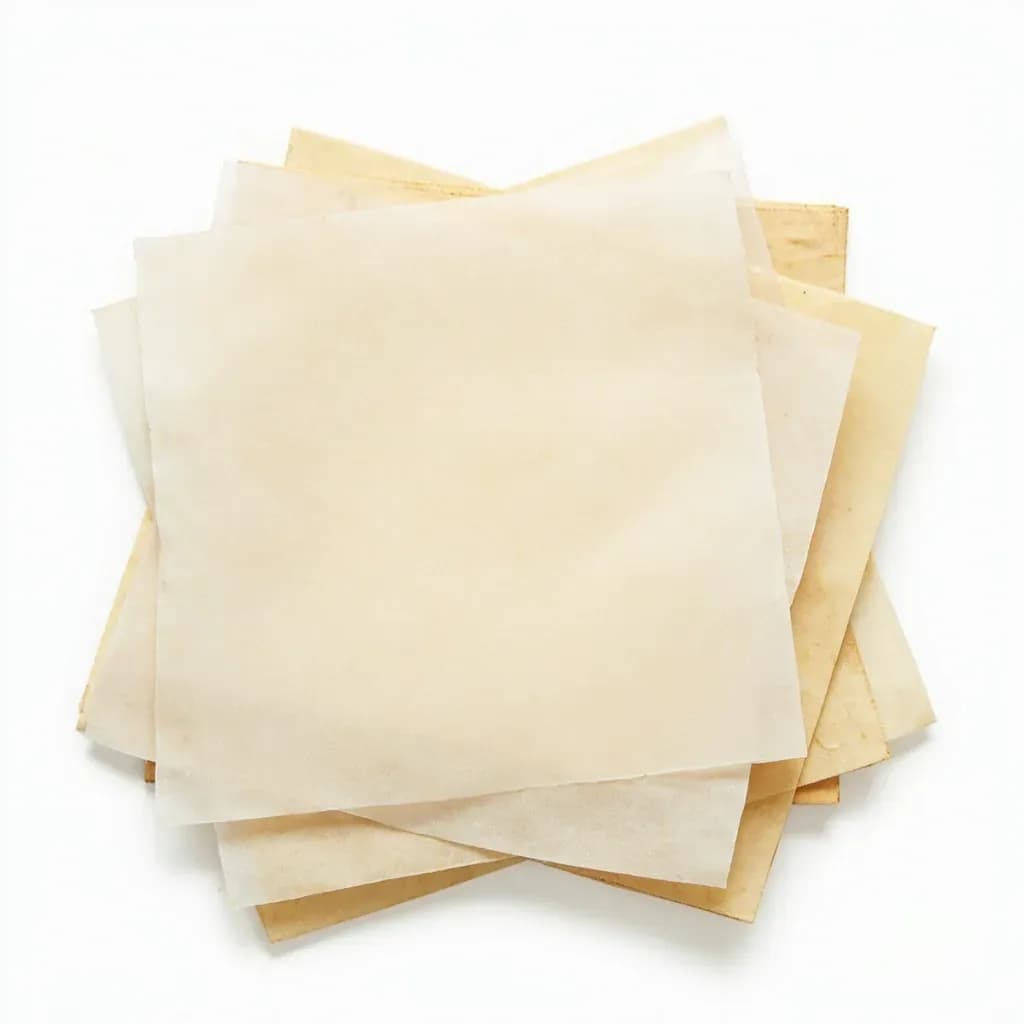
Wraps & Liners
Deli Sheet Paper
Lightweight grease-resistant sheets for wrapping sandwiches, lining baskets, and separating slices.
Deli sheet paper is a thin, often wax- or silicone-treated tissue used to wrap sandwiches, line serving baskets, and separate cold cuts or cheese slices. It resists grease without fully sealing, so it keeps fried and oily foods presentable for service. Pre-cut sheets speed up plating and takeout assembly in busy kitchens.
Deli sheet paper is a lightweight, flexible, grease-resistant paper stock developed specifically for the commercial sandwich and food-service trade. Made from sulfite or semi-sulfite base stock—sometimes with a light silicone treatment for enhanced non-stick properties—it bridges the gap between plain butcher paper and non-stick parchment. Its defining qualities are a fine, pliable drape that conforms easily around irregular sandwich shapes and a resistance to grease penetration that keeps wrapped food looking appetizing and hands clean. Originally standardized in US delicatessens and sandwich shops by the mid-20th century, it descends from the longer tradition of butchering and general-provisions wrapping but was engineered specifically for the wet, fatty character of deli foods. Unlike wax paper (coated on both sides with petroleum wax) or parchment (silicone-coated for high-heat baking), deli paper relies on its inherent paper density and occasional surface treatment to resist grease while remaining thin enough for food wrapping. Most standard food-service grades are single-use disposable; certified compostable versions made from unbleached sulfite or recycled content are widely available and meet ASTM D6868 standards.
The practical advantages of deli paper are straightforward: it separates food from surfaces, prevents sticking and sogginess from leaking fillings, absorbs minor grease bleed-through, and presents food in a clean, orderly way that looks professional in display cases and takeaway orders. It is not designed for heat exposure—it can soften, discolor, or ignite if used in ovens, microwaves, or near open flames—and while it resists grease well, it is not fully waterproof. Extended moisture from items like tomato slices, vinaigrette-based dressings, or sitting fried foods will eventually saturate it. For these cases, a simple double-wrap technique or a moisture barrier beneath the sandwich solves the problem without switching to an entirely different wrapping material.
Understanding the distinction between deli paper and similar products matters at the supply shelf. Butcher paper—most commonly the familiar pink Kraft version used in butcher shops—is uncoated and designed for wrapping raw cuts of meat; it lacks meaningful grease resistance. Wax paper adds a moisture barrier but the wax can transfer to foods and is not suitable for any heat use. Parchment's silicone coating makes it excellent for baking but gives it a stiffer hand that does not drape or fold around sandwiches the way deli paper does. Each product serves its own domain, and reaching for deli paper specifically means you need its particular balance of flexibility, grease resistance, and food-safe surface.
Alternatives
Types & varieties
Standard restaurant-grade; clean appearance preferred for retail sandwich display
Brown or natural finish; rustic aesthetic; slightly heavier weights available for heavier sandwich styles
Branded or patterned designs; used by sandwich shops and cafes for takeaway branding and visual identity
Enhanced non-stick surface; best for sticky fillings, glazable sauces, or baked goods that might otherwise adhere
Individually cut to size; ready to use; most common format in food-service operations
Continuous roll; user cuts to desired length; more economical for high-volume operations
Deli Paper vs. Similar Papers
The shelf of food-service papers can be confusing because several products look superficially similar but behave very differently. Deli paper, butcher paper, wax paper, and parchment each occupy a distinct functional niche.
Deli paper is the thinnest and most flexible of the group. Its grease resistance comes from the density of the sulfite fiber and optional light treatments—it is not a coating. This makes it ideal for wrapping sandwiches, lining baskets, and separating food items where you want the paper to conform to the food's shape.
Butcher paper, especially the pink Kraft type, is heavier and uncoated. It was designed for wrapping raw cuts of meat in butcher shops; it offers no meaningful grease resistance and is better suited to dry goods or as a general surface cover. It is not a substitute for deli paper when grease or moisture is involved.
Wax paper has a petroleum-wax coating on both sides, which gives it better moisture resistance than deli paper but makes it unsuitable for any heat exposure—the wax can melt and transfer to food. It also has a noticeably stiffer hand than deli paper.
Parchment paper has a silicone coating that makes it genuinely non-stick and heat-safe up to high temperatures. This is the right choice for baking, lining sheet pans, or cooking en papillote. But its coating makes it stiffer and less drapable, so it does not fold around irregular sandwich shapes the way deli paper does.
Using the wrong paper in the wrong application is one of the most common mistakes in food service: wax paper in a microwave, parchment used to wrap a meatball sub, butcher paper used to line a fried-food basket. Knowing the differences saves both product quality and potential food-safety issues.
- Deli paper: flexible, grease-resistant, no coating, for wrapping and lining
- Butcher paper: heavy, uncoated, no grease resistance, for raw meats and dry goods
- Wax paper: wax-coated both sides, moisture-resistant, not heat-safe
- Parchment: silicone-coated, non-stick, heat-safe, stiff hand, for baking
Common uses
Tips & pitfalls
- Tear or cut sheets to the exact size needed rather than folding excess paper underneath—clean-cut edges look more professional and the fold is more secure
- Store deli paper flat in its original packaging or a dedicated paper holder; do not toss loose stacks into drawers where humidity will cause them to curl and weaken
- For deli counter display cases, change the lining paper frequently throughout service—saturated, grease-spotted paper looks unsightly and can compromise food quality
- Use food-safe markers directly on the paper to label custom orders, dietary modifications, or build times—deli paper accepts ink cleanly without bleeding
- When wrapping unusually thick or multi-ingredient hoagies, pre-fold the sheet into a loose cone or pocket shape before inserting the sandwich to avoid tearing
- Do not use deli paper in a microwave or near any direct heat source; unlike parchment, it has no heat-resistant coating and can ignite or melt
- Printed branded deli paper works as both a functional wrap and a marketing tool—invest in custom prints if your operation relies on takeaway brand recognition
- For catering or large orders, pre-cut and stack sheets in the exact quantity needed per sandwich to keep the assembly line moving without constant measuring
Good to know
- Material
- Sulfite or semi-sulfite paper stock; some grades silicone-treated or coated for enhanced grease resistance
- Typical Sizes
- 10" × 10", 10" × 14", 12" × 12", 15" × 15"; available as individual sheets or continuous rolls
- Paper Weight
- 30–40 lb basis weight (US paper industry standard)
- Heat Resistance
- Not designed for oven, microwave, or direct high-heat use; can soften, discolor, or ignite
- Water Resistance
- Grease-resistant, not fully waterproof; extended moisture exposure causes saturation
- Food Safety
- FDA-approved for direct food contact when unbleached or whitened with food-safe agents
- Origin
- Standardized in US delicatessens by the mid-20th century; descends from butchering and general-provisions wrapping traditions
- Storage
- Keep flat in dry conditions; humidity causes curling, weakening, and loss of stiffness
Also called
Deli Tissue Sheets · Deli Wax Paper Sheet
Related

Aluminum Foil
Wraps, covers, and tents food for the oven and grill

Parchment Paper
Nonstick liner for clean, even baking and easy release

Wax Paper
Moisture-resistant sheet for wrapping and counter prep

Plastic Wrap
Clings tight to cover bowls and wrap leftovers

Silicone Baking Mat
Reusable nonstick liner that replaces parchment

Cheesecloth
Loose-woven cloth for straining stock and bundling herbs

Beeswax Food Wrap
Reusable wax wrap that molds around bowls and produce

Piping Tips
Shaped nozzles that turn frosting into stars and rosettes