Heat & Safety
Detectable Bandage (Blue)
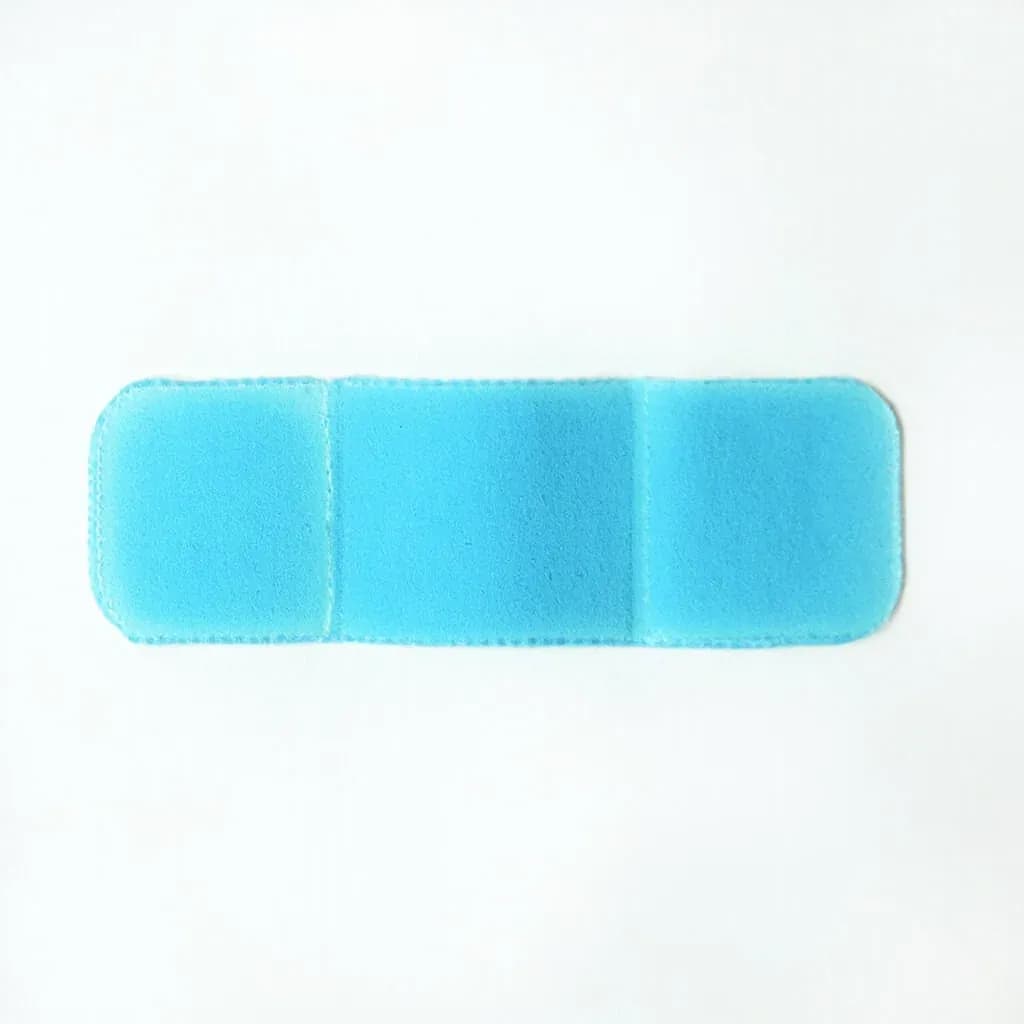
A bright blue, metal-strip bandage that stands out in food and trips metal detectors if it falls in.
A detectable bandage is a blue adhesive plaster containing a thin metal strip, designed for food-handling workers. The vivid blue color is unnatural to food so it is spotted easily if it comes loose, and the embedded metal triggers a production line's metal detector. It is a food-safety standard for covering cuts in commercial kitchens.
A detectable bandage is a single-use wound dressing designed specifically for people who handle exposed food. It looks much like a household plaster — a small absorbent pad on a flexible strip with adhesive wings — but two features set it apart. The entire dressing is dyed a vivid blue, and a thin metal strip (most often aluminum foil) is laminated into the backing. The blue color is chosen because blue is uncommon in natural foods: meat, poultry, fish, dairy, baked goods, vegetables, and grain products all read in the warm yellow-red-green range, so a dropped bandage stands out the moment a line worker or QA technician sees it. The metal strip gives a second line of defense by triggering the in-line metal detectors that most processors already run to catch tool fragments and machine wear.
For a working cook or food plant, the practical consequence is that this is the only acceptable bandage anywhere near open product. A regular tan or flesh-toned plaster is genuinely dangerous in a HACCP environment: it falls off a knuckle, disappears into a tray of diced chicken, and exits the door as part of someone's dinner. The detectable version exists to make that scenario visible — first to the human eye, then to the machine. They are a controlled piece of personal protective equipment in most audited facilities, issued from a first-aid station, counted out at shift start, and counted back at shift end.
The dressings are deliberately built for the conditions of food work: latex-free adhesives for allergen-controlled lines, waterproof backings for wet stations like fish processing or dishwashers, and shaped formats that actually stay on a knuckle or fingertip during long shifts of repetitive motion. They are inexpensive, single-use, and considered consumable PPE rather than first-aid equipment — the underlying first-aid protocol (clean wound, treat, document) is the same as for any minor cut, but the dressing itself is governed by food-safety rules.
Alternatives
Types & varieties
Most common 7×2 cm format for general cuts on fingers or hands
Shaped to wrap the fingertip and cover pad or tip injuries
H-shaped or pre-shaped to flex over the joint without peeling
Longer strip for wrapping thumbs, longer fingers, or wider wounds
Dual-detectable for plants running X-ray inspection lines
Coated backing for wet work areas like fish processing, produce washing, or butchery
Cloth-like backing for comfort on long shifts; still contains the metal strip
For handlers with latex sensitivities and allergen-controlled facilities
How the detection actually works
There are two independent detection systems working together, and understanding both is what separates a compliant kitchen from one that just stocks blue plasters. The first is purely visual: blue is almost absent from natural food matrices, so a quality-control technician on a trim line or a cook doing a final scan of a tray will see a stray bandage immediately. The second is mechanical: a thin strip of aluminum (sometimes paired with a detectable plastic or ferrous additive in higher-spec versions) is sealed into the backing. When a finished pack passes over an in-line metal detector, the disturbance in the electromagnetic field flags the unit and the line stops or the product is rejected.
- Aluminum is the most common strip material because it is non-toxic, inexpensive, and reliably triggers most balanced-coil metal detectors — confirm with your detector manufacturer, since some older units are calibrated for ferrous metals only.
- X-ray-detectable versions add a higher-density component for plants that run X-ray inspection (typical in dairy, ready meals, and baby food) where metal detection alone is not the final check.
- Visual detection still matters even in a fully metered plant: a bandage that drops between the station and the detector head can reach a customer if the line is running fast. The blue color is the backup for human error.
- The two systems are not redundant in practice — they catch different failure modes. Blue catches a bandage that escapes before the detector; metal catches one that gets through the visual scan.
Choosing the right shape and material
A standard 7×2 cm strip is fine for the flat of the hand or the back of a forearm, but a cook spends most of their shift on fingertips and knuckles, where a flat strip will lift within an hour. The shaped variants are not a luxury — they are the difference between a dressing that stays on for a full service and one that ends up in the soup. Material choice follows the station: waterproof film for wet or steamy environments, fabric for comfort on long prep shifts where the dressing flexes constantly, latex-free across the board for allergen-controlled lines.
Common uses
Tips & pitfalls
- Keep detectable bandages in a dedicated, clearly marked first-aid station at every line — loose pockets are how non-detectable plasters sneak in.
- Replace the bandage at the start of every shift and immediately if it becomes wet, soiled, or starts to lift; a curling adhesive edge is the single most common way these end up in product.
- Confirm the metal strip is intact and not bent or torn when you apply it; a damaged strip defeats the detector and the dressing should be discarded.
- Verify the bandage's metal content matches your detector's settings — small aluminum strips will not trigger detectors calibrated for ferrous metals only, and some high-frequency units need detectable-plastic options.
- Use finger-tip or knuckle shapes for cuts on the joints; standard strips rarely survive an hour of kitchen work on a moving knuckle.
- Run a visual count at end of shift: bandages issued versus bandages returned. Any missing unit means the line stops and the surrounding product is quarantined until it is found.
- Switch to waterproof detectable versions in wet or high-heat stations (dishwashers, steam tables, fish processing, produce wash) to prevent early lift-off.
- Check that the adhesive is registered as a food-contact material in your jurisdiction — the dressing is technically in contact with food if it ever lands on product, even briefly.
Good to know
- Category
- Food-safety PPE / first-aid supply
- Primary function
- Cover minor cuts and wounds on food handlers while remaining visible and detectable if lost in product
- Detection method
- Embedded aluminum strip triggered by in-line metal detectors; high-visibility blue color for visual spotting
- Color rationale
- Bright blue is rare in most natural foods and contrasts with the warm tones of meat, dairy, baked goods, and produce
- Typical sizes
- Finger-tip, knuckle, standard strip (about 7 × 2 cm), and extra-long/wraparound formats
- Material
- PE/PVC or fabric backing with absorbent pad, acrylic adhesive, aluminum foil strip; many are latex-free
- Compliance
- Designed for HACCP, BRC, IFS, and FDA food-safety requirements; adhesive is food-contact safe
- Replacement
- Single use; change at the start of every shift or sooner if soiled, wet, or lifting at the edges
Also called
Blue Detectable Bandages · First-Aid Blue Bandage · Metal-Detectable Plaster
Related

Paper Towels
Disposable sheets for spills, drying, and patting dry

Kitchen Towels
Reusable cloths for drying, gripping, and wiping

Oven Mitts
Heatproof gloves to handle hot pans and trays safely

Disposable Gloves
Single-use gloves for safe, mess-free handling

Cleaning Cloths
Reusable cloths for wiping counters and spills

Tortilla Warmer
Insulated holder that keeps tortillas warm and soft

Trivet
Heatproof stand that shields surfaces from hot pots

Ice Bath Setup
Bowl of ice water that halts cooking and sets color