Heat & Safety
Dish Sponge
Soft absorbent sponge, often with a scrub side, for washing dishes and wiping surfaces.
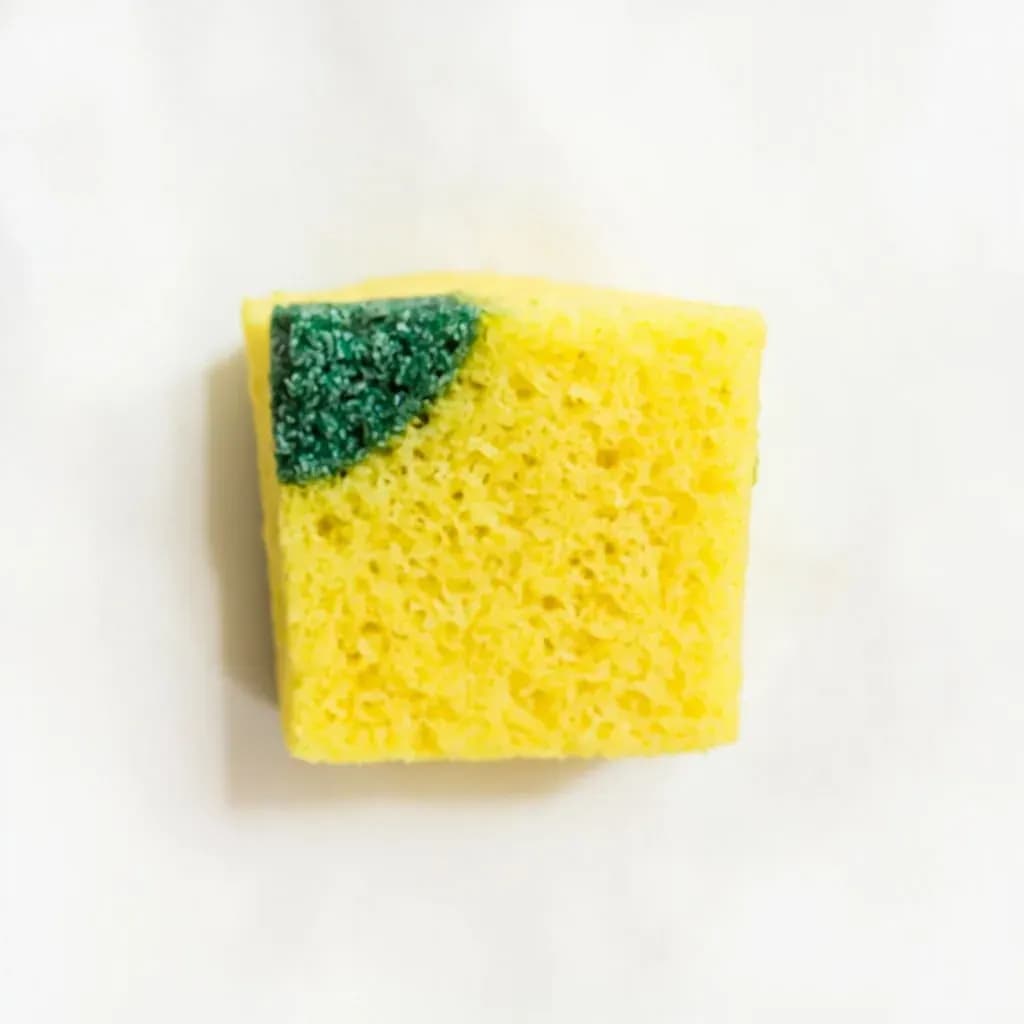
A dish sponge is a soft, absorbent sponge, usually paired with an abrasive scrub layer, used with dish soap to wash dishes, utensils, and wipe down counters. It is the everyday workhorse at the sink for general cleaning between cooking tasks. Sponges harbor bacteria when left damp, so cooks rinse and dry them, microwave or replace them often, and keep separate ones for raw-meat areas.
The dish sponge is the workhorse of kitchen sanitation—a porous, resilient cleaning tool that bridges the gap between aggressive scouring and gentle surface care. Whether made from wood-pulp cellulose, open-cell polyurethane foam, or the natural marine variant, its essential function is the same: to absorb water and food soils while providing enough mechanical texture to dislodge baked-on residue. A quality sponge can hold ten to twenty times its weight in liquid, making it far more efficient than a cloth for wiping up spills or distributing soap across a surface. In a cooking context, the sponge is not merely a convenience—it is a primary line of defense between raw ingredients, cooked food, and the bacterial environment that thrives in a busy kitchen. Its open-cell structure, while responsible for superior absorbency, also creates an ideal habitat for microbial growth if the sponge is not properly sanitized and dried. Understanding the material, the care requirements, and the correct application for each sponge type transforms a mundane supply item into a precision hygiene tool.
Alternatives
Types & varieties
The classic yellow-and-green kitchen sponge; wood pulp based, highly absorbent, tends to retain odors if not dried thoroughly between uses
Polyurethane open-cell foam; lightweight, quick-drying, less prone to odor than cellulose but with lower absorbency
Cellulose or foam core with embedded nylon or silica abrasive particles; one textured side for stuck-on food, one soft side for dishes and surfaces
Soft abrasive surface safe for Teflon, cast iron seasoning, and polished metals; typically marked with a colored border or layer
Tight nylon mesh construction; aggressive scouring for baked-on carbon and burnt residues, rinses clean more easily than porous sponges
Harvested marine organism with a soft, flexible structure; more durable and naturally resistant to bacterial growth than synthetics; preferred for delicate glassware and nonstick cookware
Sponge head on a long handle; allows scrubbing pots and dishes without submerging hands in wash water, useful for deep stockpots and roasting pans
Treated with silver ions or synthetic antimicrobial agents; inhibits bacterial regrowth between uses but does not eliminate the need for regular sanitation
Rehydratable cellulose cloth that functions like a sponge but dries flat against the counter; resists odors better than puffy sponges and lays flat for easy storage
Sponge Hygiene and Food Safety
Research consistently identifies dish sponges as among the most contaminated items in household kitchens, sometimes harboring more bacteria than a toilet seat. This is not a reason to avoid sponges—it is a reason to respect them. The same open-cell structure that makes a sponge effective at absorbing soils also creates micro-pockets where moisture and organic matter accumulate, feeding bacterial populations between uses. The solution is not a single practice but a system: sanitize, dry, and replace. A microwave-safe sponge nuked on high power for 90 seconds to 2 minutes kills 99.9% of bacteria on a damp sponge. Dishwasher sanitizing on the hottest dry cycle achieves similar results. Neither method is a substitute for replacement—over time, even well-maintained sponges degrade mechanically and become colonized beyond redemption.
- Microwave only sponges labeled as microwave-safe; never microwave metal-impregnated or conductive sponges
- Replace sponges every 1–2 weeks regardless of apparent condition in a cooking household
- Store sponges in a dry, ventilated holder; never leave sitting in pooled water in the sink basin
- Consider color-coding sponges: one for dishes, one for countertops, one for floor cleanup
Choosing the Right Sponge for the Task
Not all cleaning tasks demand the same sponge, and mismatching tool to task wastes resources while potentially damaging surfaces. Delicate glassware, polished stainless, and nonstick cookware demand a soft cellulose or sea sponge with no abrasive additive. Cast iron seasoned with oil should never see a sponge—use a stiff-bristled brush or chain-mail scrubber to protect the seasoning layer. For stainless steel pots with browned fond or enameled cast iron with caramelized residue, a scrub sponge with the appropriate grit for the soil level does the job efficiently. Mesh scrub sponges handle the heaviest baked-on carbon but will scratch bare aluminum, bare steel, and polished surfaces—reserve them for restoration cleaning, not daily maintenance.
- Use non-scratch sponges (marked with colored border or layer) for all nonstick, enamel, and polished surfaces
- Reserve coarse mesh or high-grit scrub sponges for restoration tasks; rinse immediately after heavy use
- Designate separate sponges for raw meat/poultry cleanup versus general dishwashing
- Cut oversized sponges in half for smaller tasks or to extend the time between replacements
Common uses
Tips & pitfalls
- Replace sponges every 1–2 weeks or sooner if they develop persistent odor, discoloration, or slimy texture
- Microwave a damp sponge on high for 1–2 minutes to sanitize, or run through a hot dishwasher cycle—do not use metal-impregnated or conductive sponges in the microwave
- Store sponges in a dry, well-ventilated holder; never leave sitting in pooled water in the sink basin
- Use the soft side for general wiping and the scrub side only for stuck-on food to extend sponge life and prevent surface damage
- Ring out sponges thoroughly after each use and store upright or clipped to a rack so they air-dry completely
- Do not use the same sponge to clean the floor and then dishes; designate separate sponges for different kitchen zones
- Rinse sponges immediately after scrubbing greasy pans to prevent oil saturation, rancid odor development, and premature degradation
- Cut a large sponge in half with clean scissors for smaller tasks or to stretch usage between replacements
- Avoid using sponges on cast iron after seasoning—use a stiff brush or chain-mail scrubber instead to protect the oil polymer layer
- For stubborn odors, soak sponges in a solution of 1 part white vinegar to 3 parts water for 5 minutes before rinsing thoroughly
Good to know
- Primary Material
- Cellulose (wood pulp), open-cell foam (polyurethane), or natural sea sponge
- Standard Size
- 3–4 inches long × 2–3 inches wide × 1 inch thick
- Typical Lifespan
- 1–4 weeks of regular use before replacement recommended
- Water Retention
- Quality cellulose sponge holds 10–20× its weight in water
- Bacterial Load
- 10^7–10^9 bacteria per square inch without proper sanitation
- Scrub Grit
- Abrasive side rated 400–600 grit equivalent for heavy-duty scouring
- Heat Tolerance
- Foam melts at 200°F (93°C); cellulose chars above 300°F (149°C)
- Disposal
- Synthetic sponges are not biodegradable; cellulose and natural sponges compost fully
Also called
sponge · cleaning-sponge · scrub-sponge · scrubbing-sponge · scouring-sponge · sponge-scrubber · sponge-scourer · washing-up-sponge
Related

Paper Towels
Disposable sheets for spills, drying, and patting dry

Kitchen Towels
Reusable cloths for drying, gripping, and wiping

Oven Mitts
Heatproof gloves to handle hot pans and trays safely

Disposable Gloves
Single-use gloves for safe, mess-free handling

Cleaning Cloths
Reusable cloths for wiping counters and spills

Tortilla Warmer
Insulated holder that keeps tortillas warm and soft

Trivet
Heatproof stand that shields surfaces from hot pots

Ice Bath Setup
Bowl of ice water that halts cooking and sets color