Heat & Safety
Disposable Chopsticks
Single-use wooden or bamboo chopsticks for eating, mixing, and light prep.
Single-use chopsticks of split wood or bamboo, supplied for eating and doubling as a clean prep tool for stirring, tasting, and lifting delicate items. Cooks use them to whisk small amounts, check tempura oil bubbling, and flip frying foods. The split (waribashi) style is snapped apart in pairs and discarded after one use.
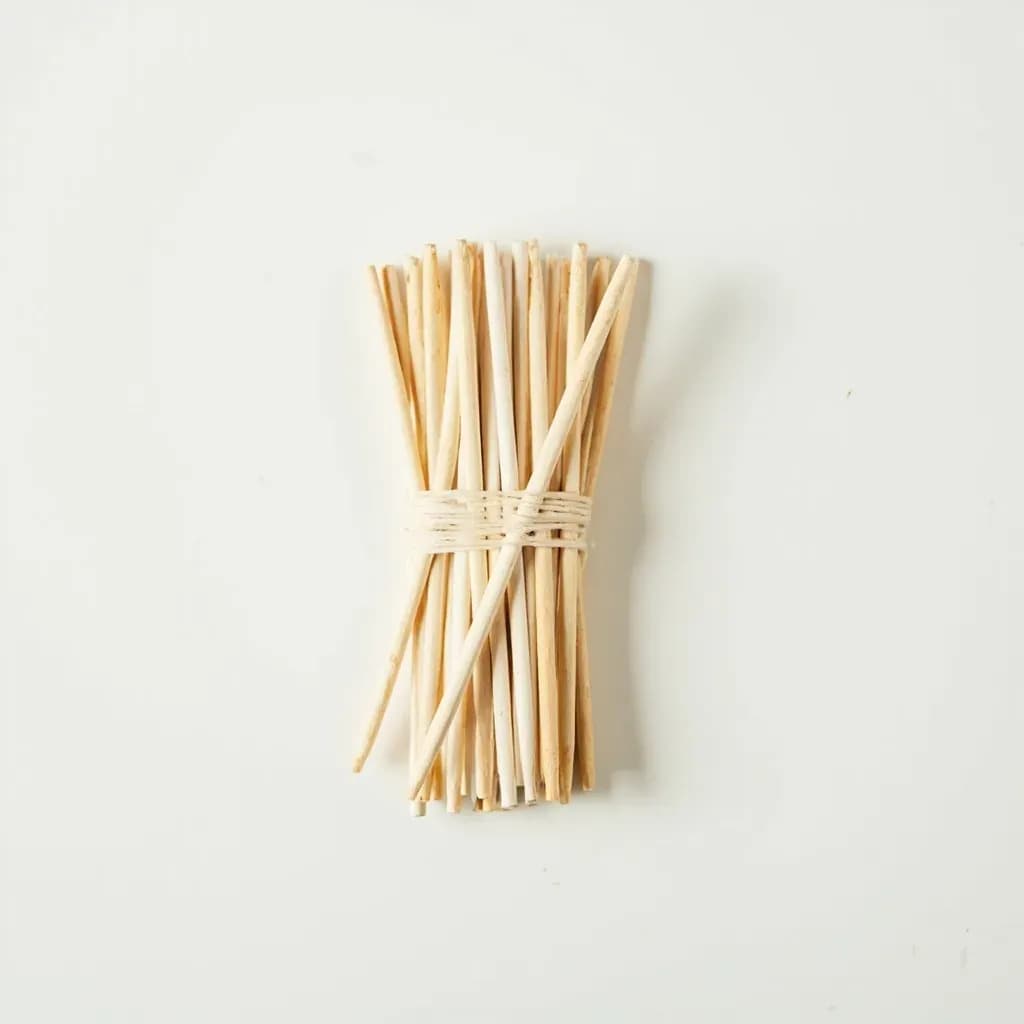
Disposable chopsticks are the single-use eating sticks served at casual restaurants, takeaway counters, izakayas, food stalls, and homes across East and Southeast Asia. In Japan they are called waribashi (割り箸), in Mandarin kuaizi (筷子), and in Korean jeotgarak (젓가락); virtually every traveler has snapped a pair apart from its paper sleeve at some point. They are almost always made from bamboo or fast-growing softwoods like birch and aspen, milled into two tapered lengths, and joined at the squared (thick) end with a small dab of food-safe adhesive or a thin paper band so the sticks arrive as a single unit.
For cooks they pull double duty. Beyond their obvious job as an eating utensil for noodles, rice bowls, dumplings, and sushi, a sleeve of waribashi lives on many a kitchen counter or stovetop because the sticks are ideal for tasting broths, stirring small pots, plating delicate garnishes, and doing quick, low-effort prep work. The eating tip is thin enough to pinch a piece of nigiri or lift a sliver of fish cleanly, the back end is blunt and strong enough to score a vegetable, and the whole thing gets tossed when the job is done. That low cost and zero cleanup is exactly why professional and home cooks alike keep them within arm's reach of the stove.
Quality varies more than most people realize. Bamboo pairs are firm, slightly fibrous, and split cleanly down the grain; birch and aspen pairs feel smoother and warmer in the hand but are softer on the tip. Tapered round-tip styles suit sushi and lighter dishes, while the square-tip style common in China, Korea, and Taiwan gives more surface area for picking up heavier or slicker foods like dumplings and braised meat. Knowing these small differences helps you stock the right shape for the food you actually serve.
Alternatives
Types & varieties
The most common type; pale, lightweight, slightly fibrous, and splits cleanly down the grain
Softer and smoother in the hand than bamboo; common in Chinese-made pairs; pale cream color
Joined end forms a small block that acts as a hashioki (chopstick rest) once the sticks are snapped apart
Two separate sticks with no band; used where the break-and-rest design is not needed, such as with individually paper-wrapped pairs
Eating end is rounded and narrow; favored for sushi and lighter dishes
Thicker blunt ends; the standard style for Chinese, Korean, and Taiwanese table service
Each pair sealed in its own printed sleeve; the norm in Japanese restaurants for hygiene
Loose pairs in bags; common in homes, offices, and food stalls
The kakehashi mechanism and built-in rest
Many pairs, especially the Japanese waribashi served at restaurants, are designed so the squared joined end is intentionally oversized. When you pull the sticks straight apart, that block detaches from the tips and becomes a small chopstick rest (hashioki). Laying the eating ends across it keeps the part that touches your mouth off the table, which is both hygienic and respectful. To get a clean separation, hold the sleeve or the joined block with one hand and pull the loose stick straight out with a steady lateral motion rather than bending or twisting. Bending snaps the thin tip and leaves splinters; a clean pull reveals a smooth, even rest that won't wobble.
Etiquette at the table
A few small habits separate a confident chopstick user from a hesitant one. Rest the sticks horizontally across the top of your bowl or on a rest between bites; never stick them upright into a bowl of rice, which mirrors the incense offered at a Japanese funeral. When sharing a plate, flip them around and use the blunt back end to take food from communal dishes in more formal Japanese settings. And at the end of the meal, lay the tips together rather than crossing them; crossed chopsticks are sometimes placed on a Buddhist funeral altar as an offering for the deceased, so leaving them crossed on the table reads as a careless echo of that. None of this matters for a quick lunch at a noodle counter, but it is worth knowing before you sit down for a multicourse meal.
Common uses
Tips & pitfalls
- Snap them apart with a clean lateral pull rather than bending; bending splinters the thin eating end and ruins the built-in rest
- Once split, lay the eating tips across the detached joined block so they never touch the table
- Hold them toward the front third, not the back, for fine control when picking up noodles or small pieces
- Rest them across the bowl or on a chopstick rest between bites; never stand them upright in rice, which carries funeral associations in Japanese culture
- Avoid microwaving them for more than a few seconds; the adhesive band can scorch and the wood dries and cracks
- If a pair feels rough or splintery on the eating end, give it a quick buff with a slightly damp paper towel before setting the table
- Store loose pairs in a dry, ventilated container; humidity causes mold and warps the tips before you ever use them
- Do not wash and reuse; the grain raises after one soaking and the joint glue softens and fails
- If sustainability matters, look for FSC-certified bamboo or brands that mill and finish the wood in the same region to cut transport footprint
Good to know
- Also known as
- Waribashi (割り箸) in Japan, kuaizi (筷子) in Mandarin, jeotgarak (젓가락) in Korean
- Primary materials
- Bamboo or untreated softwoods such as birch, aspen, poplar, and spruce
- Typical length
- Around 20–24 cm (8–9.5 in); shorter children's versions are also sold
- Construction
- Two sticks joined at the squared end with food-safe adhesive or a paper band; the rounded thin end is the eating tip
- Packaging
- Usually wrapped in a printed paper sleeve; bulk cartons hold 50–500 pairs
- Heat tolerance
- Brief contact with hot food is fine; not made for stovetop, oven, or microwave use
- Shelf life
- Indefinite if kept dry; humidity causes warping, swelling, and eventually mold
- Per-capita use
- Japan discards more per capita than any other country, with tens of billions of pairs used each year
Also called
Disposable Wooden Chopsticks (Waribashi) · Waribashi · Bamboo Chopsticks (disposable)
Related

Paper Towels
Disposable sheets for spills, drying, and patting dry

Kitchen Towels
Reusable cloths for drying, gripping, and wiping

Oven Mitts
Heatproof gloves to handle hot pans and trays safely

Disposable Gloves
Single-use gloves for safe, mess-free handling

Cleaning Cloths
Reusable cloths for wiping counters and spills

Tortilla Warmer
Insulated holder that keeps tortillas warm and soft

Trivet
Heatproof stand that shields surfaces from hot pots

Ice Bath Setup
Bowl of ice water that halts cooking and sets color