Storage & Containers
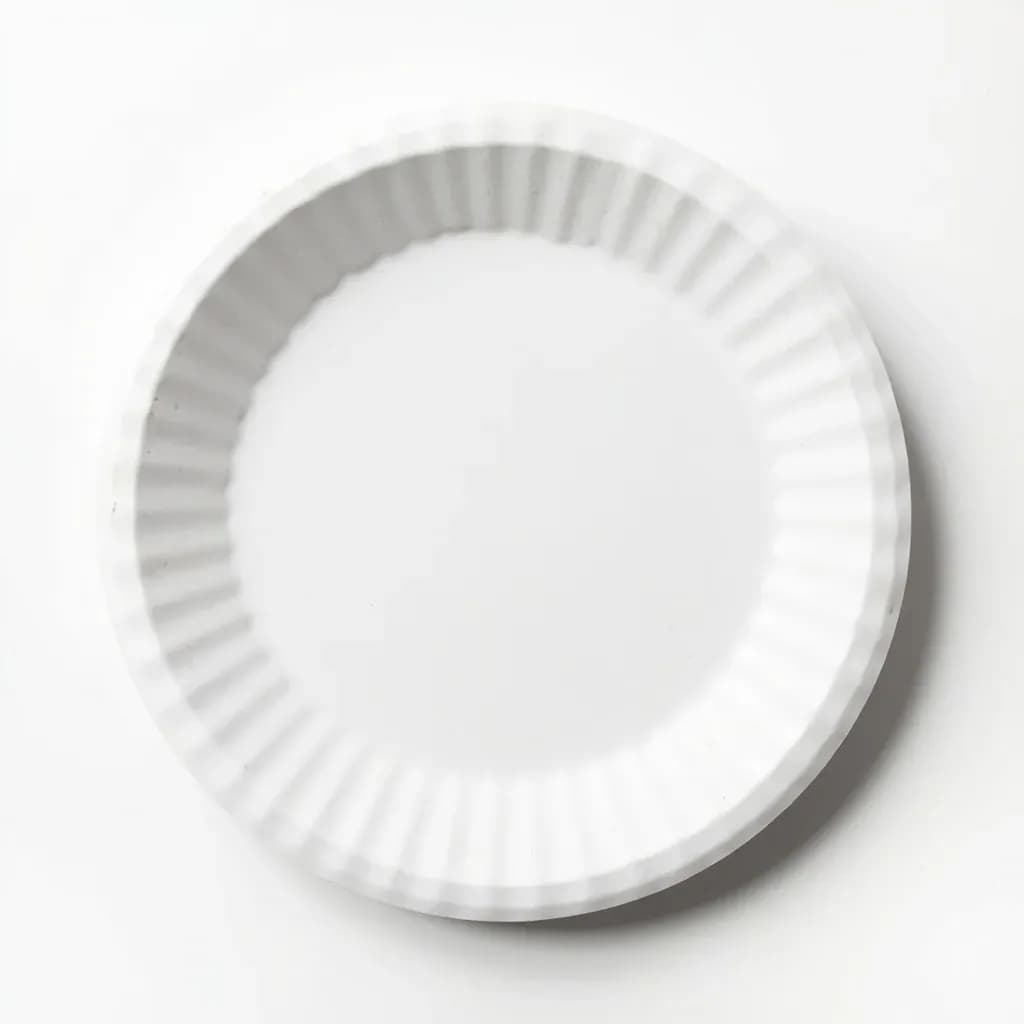
Disposable Plate
Single-use paper, plastic, or molded-fiber plate for casual serving and events.
A disposable plate is a single-use serving plate made of paper, coated paperboard, plastic, or compostable molded fiber. Picnics, parties, and high-volume service rely on them to serve food without dishwashing, with sturdier laminated or compartmented versions handling saucy or hot meals. Compostable bagasse and palm-leaf options are common where waste sorting is in place.
A disposable plate is any single-use serving surface made from paper, plastic, molded fiber, palm leaf, or foil, engineered to carry a portion from pass to guest without the labor of washing. In a working kitchen, disposables absorb a specific bottleneck: when volume, location, or turnover outpace the dish sink, they keep service moving. For everyday home cooking, they earn their place at picnics, sick days, and large gatherings rather than in the daily rotation. The real judgment call is matching material to the food in front of you, because a 6-ounce paper plate that handles cake cleanly will buckle under saucy pasta or a piled-burger plate, and a foam plate that survives chili will warp in a microwave in under a minute.
The distinctions that matter in practice are weight rating, grease resistance, heat tolerance, and disposal pathway. Coatings — wax, polyethylene, or PLA — turn a flimsy paper plate into one that holds a slice of pizza or a pulled-pork sandwich without soaking through. Molded-fiber plates made from bagasse (sugarcane pulp) are the workhorse of the eco-friendly end: sturdy, microwave-tolerant for short reheats, and commercially compostable. Palm-leaf and bamboo plates sit at the premium tier, rigid enough to plate like real dishware, with a wood-grain look that photographs well. Foam is the cheapest and best insulator, but it cannot go in the microwave and most curbside programs reject it. PLA bioplastic looks and feels like clear plastic but only breaks down in industrial composting, a fact the labeling rarely emphasizes.
From a waste-policy angle, the strongest move is right-sizing the order: heavy-duty only where the food demands it, lighter stock for cake and crackers, and a small stack of real dishware for everyday meals. Check local composting and recycling rules before committing to a case — many municipalities reject coated paper and foam even when the package claims recyclability, and 'biodegradable' on a label almost never means backyard-compostable.
Alternatives
Types & varieties
Virgin or recycled paper with a PE or PLA liner; resists grease for pizza, cake, and saucy mains.
Plain pressed paper; inexpensive but soaks through with wet or greasy food.
Pressed from sugarcane pulp or recycled paper; sturdy, microwave-tolerant for short reheats, commercially compostable.
Expanded polystyrene; light, cheap, a good insulator, but not microwave-safe and largely unrecyclable.
Higher-end disposable; rigid enough to hand-wash and reuse once; recyclable where #5 PP is accepted.
Corn-starch-based; clear or opaque, looks like plastic, requires industrial composting to break down.
Pressed from areca palm sheaths; premium, rigid, oven-warmable to ~350°F, fully compostable, distinctive wood grain.
Laminated or pressed bamboo; marketed as eco-friendly, generally sturdy and compostable.
Oven-safe, common for hot-hold service and casseroles; never microwave.
Molded with 2–5 wells to keep entrée, sides, and dessert separate; standard in school and hospital foodservice.
Reinforced rim and thicker stock; rated for ribs, brisket, carved turkey, and other heavy mains.
Choosing the right plate for the food
The fastest way to make a disposable plate fail is to ignore what you're putting on it. A short decision tree:
- Dry, light, or sweet portions (cake, cookies, crackers, sandwiches) — uncoated paper or lightweight coated paper is plenty.
- Greasy or saucy mains (pizza, burgers, ribs, pasta, curries) — coated paper, bagasse, or palm leaf; uncoated paper soaks through within minutes.
- Hot-hold service straight from the oven or warmer — palm leaf, aluminum, or heavy bagasse; never foam, PLA, or thin paper.
- Microwave reheating of leftovers — paper or bagasse only; never foam or aluminum; check the case for PP or PLA symbols.
- Styled buffets or photography — palm leaf, matte-black rigid plastic, or bamboo; glossy foam and flimsy paper read as cheap.
Storage and handling
Disposable plates fail in storage more often than in service. A few habits prevent the most common problems:
- Keep cases sealed and stored flat in a dry area — warped paper plates rock on the table and spill food.
- In humid climates, slide a sheet of parchment or wax paper between stacked plates so coated surfaces don't fuse together.
- Rotate stock: paper and fiber plates degrade in long storage, especially in damp back rooms or outdoor sheds.
- Label cases by type on the shelf — foam, PLA, and paper look similar from the outside and are not interchangeable in the microwave or compost bin.
Common uses
Tips & pitfalls
- Match plate weight rating to the food: a 6-oz paper plate handles cake but buckles under saucy pasta — choose heavy-duty or molded fiber for wet or heavy mains.
- Never microwave polystyrene foam plates. They warp, can release styrene, and may scorch in under a minute. Use paper, bagasse, or rigid PP instead.
- For brief oven warming, reach for palm leaf or aluminum — not paper, foam, or PLA, which soften or scorch well below baking temperatures.
- Greasy foods (burgers, ribs, pizza) call for poly-coated or bagasse plates; uncoated paper soaks through within minutes.
- Stack plates with a sheet of parchment or wax paper between them in humid kitchens to keep coatings from sticking together.
- Don't confuse 'biodegradable' with 'compostable' — PLA and most coated paper plates need an industrial facility, not a backyard pile.
- A rigid PP or palm-leaf plate can be hand-washed and reused once for casual service; skip the dishwasher, which warps both.
- Check local disposal rules before buying: many curbside programs reject coated paper and foam even when the case is labeled 'recyclable'.
Good to know
- Common materials
- Paper (coated and uncoated), molded fiber (bagasse or recycled pulp), expanded polystyrene foam, polypropylene, PLA bioplastic, areca palm leaf, bamboo, and aluminum
- Standard diameters
- 6" appetizer/cake, 7" dessert/salad, 9" luncheon, 10" dinner, 10.25"–12" dinner/platter, 12"+ turkey or party platter
- Weight capacity
- Light paper holds ~4–8 oz; mid-grade 8–16 oz; heavy-duty or coated paper 16–32 oz; foam and molded fiber typically 1–2 lb; palm leaf exceeds 2 lb
- Microwave safety
- Paper and bagasse are generally OK for brief reheating. EPS foam is NOT microwave-safe. Aluminum is NOT microwave-safe. PP and PLA vary by manufacturer
- Heat tolerance
- Paper/pulp ~200–220°F short term; polypropylene ~250°F; EPS foam ~150–180°F; palm leaf tolerates brief oven warming up to ~350°F
- Coatings
- Wax, polyethylene (PE), or PLA bio-coating applied to resist grease and moisture
- Compostability
- Uncoated paper, bagasse, and palm leaf are commercially compostable; PLA requires industrial composting; coated paper and foam generally are not
- Foodservice cost (U.S., 2023–24)
- Roughly $0.04–$0.15 per plate for paper/plastic; $0.20–$0.50 for bagasse or palm leaf; foam cheapest at bulk pricing
Also called
paper-plate · paper plate · bagasse plate · party plate
Related

Freezer Bags
Thick, sealable bags built to fight freezer burn

Storage Bags
Resealable bags for fridge storage and marinating

Storage Container
Lidded container for leftovers, prep, and meal kits

Glass Container
Oven-to-fridge glass that won't stain or hold odors

Plastic Container
Lightweight, stackable storage for everyday leftovers

Vacuum Sealer Bags
Airtight bags for long freezing and sous-vide

Reusable Bags
Washable silicone bags that replace single-use plastic

Mason Jar
Sealed glass jar for preserves, pickles, and storage