Wraps & Liners
Disposable Tablecloth
Single-use plastic or paper table cover for messy communal meals and events.
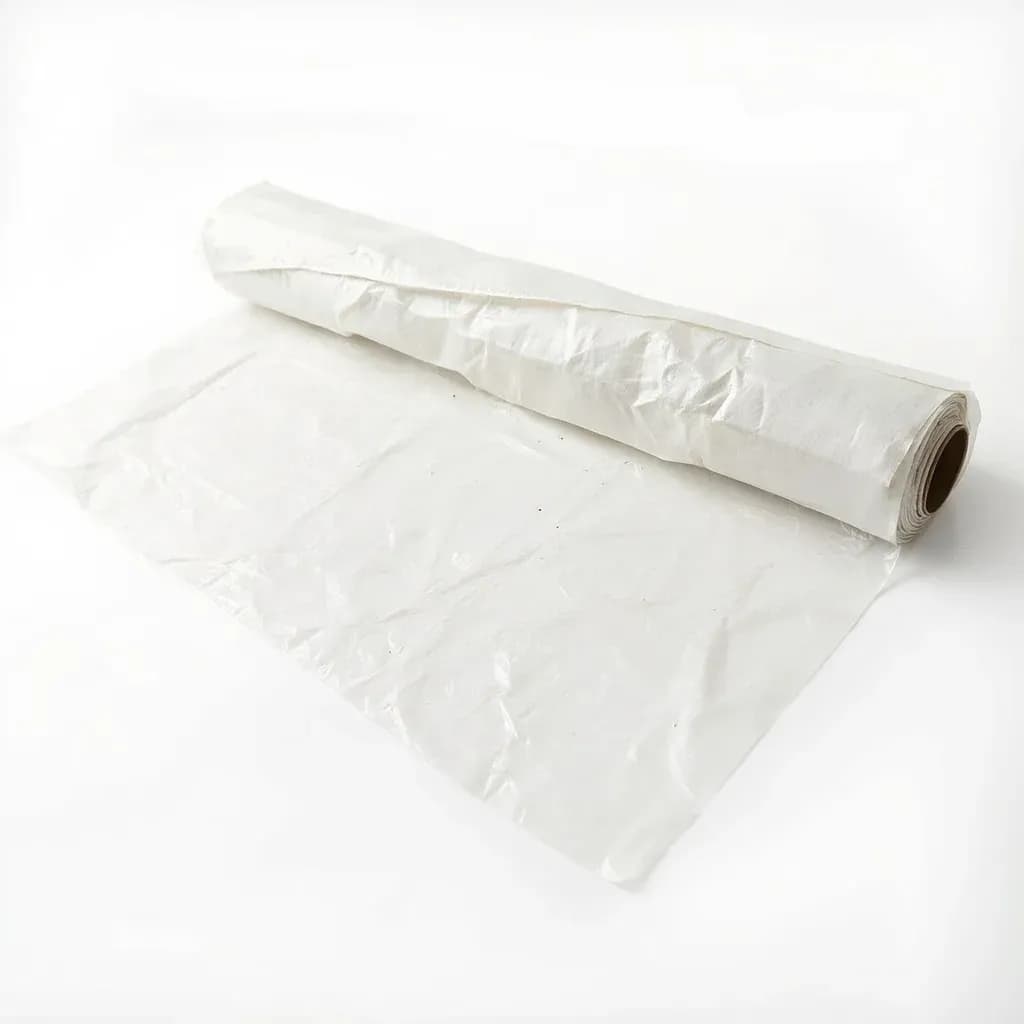
A roll or sheet of plastic or paper used to cover a table for one meal, then discarded with the mess. It is the default for hands-on communal feasts such as crawfish boils, calçotada, and seafood spreads where food is tipped straight onto the table. Quick to lay and quick to clear, it spares the work of laundering linens.
A disposable tablecloth is a single-use surface cover designed to absorb or shed spills, grease, paint, and food debris across the duration of a meal or messy project. In cooking and food-service contexts it does the work of a traditional tablecloth without laundering — most are made from low-density polyethylene film, with paper and non-woven polypropylene as the main alternatives. The category also includes hybrid poly-coated paper and thicker "vinyl" (PVC) versions that drape more like real linen.
The behavior of a disposable cover is governed by three properties: wet strength, food-contact safety, and heat tolerance. Standard PE film is waterproof and rated food-safe under FDA and EU standards, which is why it dominates buffets, catering halls, and outdoor boils — but it softens and can melt above roughly 220°F (104°C), so any sizzling platter or hot pot must be set on a trivet. Paper covers handle cold and warm food fine but begin to degrade near 180°F (82°C); PVC drapes beautifully but is not recommended for direct contact with hot food at all. Thickness, measured in mils, is the single best predictor of feel: under 1 mil feels like a grocery bag, 1–1.5 mil is the standard party grade, and 2 mil reads almost like vinyl.
End-of-life is now part of the buying decision. Clean PE (#2/#4) is recyclable in many municipal programs; PVC (#3) usually is not; paper and PLA versions are industrially compostable where facilities exist. EU single-use plastics rules and a patchwork of US state bans have pushed venues and home cooks toward fiber-based or reusable-disposable options, so the modern cover is as much a materials decision as a styling one.
Alternatives
Types & varieties
The standard cheap party cover; waterproof, lightweight, available in solids, prints, and clear
Heavier, drapes like real linen; often sold as 'disposable vinyl'; quieter than PE but not for hot food contact
Single-ply or two-ply kraft or airlaid; biodegradable, paint-and-craft friendly
Paper with PE or wax film for spill resistance; balances an eco profile with wet strength
Soft, fabric-like hand; marketed as 'eco' reusable-disposable; resists tearing better than film
Long perforated roll, custom-cut to table length; standard in catering halls
Pre-printed for Christmas, Halloween, birthdays, bridal showers; usually PE film
Showcases the table beneath; popular for weddings and upscale events
Reading the mil: thickness and feel
Mil rating is the fastest way to predict how a disposable cover will perform in service. Most failures — tears, blow-aways, soak-through — trace back to a cover that was too thin for the job.
- Under 1 mil: very thin and noisy, the texture of a produce bag. Fine as a top layer over a flannel pad, or for a short kids' party where weight and cost matter more than drape.
- 1–1.5 mil: the standard party grade. Holds up to a normal plated dinner, drapes adequately over a fitted table, and is the most common retail offering.
- 2 mil and up: banquet or heavy-duty weight. Reads almost like vinyl, lies flatter, resists tears, and is the right call for a shellfish boil, a buffet with heavy chafing dishes, or a windy outdoor table.
- Non-woven polypropylene is graded differently (often in grams per square meter) but the same logic applies: heavier = quieter, more absorbent, more reusable.
Picking the right cover for the job
Match the material to the meal, the mess, and the disposal stream rather than reaching for whatever is on the shelf.
- Dry buffets and cake tables: any food-grade PE or paper works; choose by look and recyclability rather than strength.
- Wet or greasy service (boils, carved meats, paella): go PE film 1.5 mil+ or poly-coated paper, and double up at the serving zone where drippings concentrate.
- Hot platters and chafing dishes: never rely on the cover alone — set a trivet, board, or sheet pan under any vessel above 180°F to prevent softening or melt-through.
- Kid craft tables: paper wins twice. It takes paint and marker without beading, and rolls up around the finished artwork for transport.
- Outdoor events: weight the corners with full plate stacks or use adhesive tablecover clips; an unsecured PE cover becomes a sail in the first breeze.
- Plastic-banned venues (EU SUPD, certain US states, many municipal contracts): specify paper, poly-coated paper, or PLA/bioplastic covers and confirm the venue accepts them in their waste stream.
Common uses
Tips & pitfalls
- Tape corners down with painter's tape before guests arrive — wind will catch an unsecured cover like a sail.
- Layer a cheap PE cover over a flannel-backed table pad to cut the plastic-on-plastic noise and keep plates from skating on the surface.
- For very wet meals (shellfish boils, paella), double up or switch to PE-coated paper; PE film is waterproof but doesn't absorb, so liquids pool, channel off the edge, or escape through any small puncture, and an absorbent underlayer buys time.
- Pre-cut a few extra feet when using a banquet roll — table lengths vary by venue and you cannot add length back once the cut is made.
- Always set a trivet, sheet pan, or wooden board under any hot serving dish; PE softens near 220°F and PVC even sooner, and a melted cover ruins the table beneath.
- Avoid PVC covers for direct food contact — stick with PE or paper when plates, bread, or fruit will sit straight on the cloth.
- Cut a folded PE cover into rectangles to make custom drip trays under deep fryers, oil-cured fish, or honey bottling; they fold up around the mess for disposal.
- Save the cleanest plastic covers to reuse as dust covers for stand mixers, grills, patio furniture, or stored appliances between seasons.
Good to know
- Common materials
- Polyethylene (PE), polyvinyl chloride (PVC), paper, wax-coated paper, polypropylene non-woven fabric
- Typical plastic thickness
- 0.4–2 mil (10–50 microns); heavier banquet grades run 1.5–2 mil
- Standard rectangular size
- 54 in × 108 in (full banquet), 54 in × 84 in (half banquet)
- Standard round size
- 84 in round (fits a 60 in table with full drop)
- Food contact
- Food-grade PE and paper versions are FDA/EU food-contact safe; PVC is generally not recommended for direct hot-food contact
- Temperature tolerance
- PE handles cold to roughly 220°F (104°C); paper degrades above ~180°F (82°C); PVC can soften near 158°F (70°C)
- Pack formats
- Pre-folded single-use, bulk packs, and perforated rolls for cutting custom lengths
- Recyclability
- Clean PE (#2/#4) is recyclable in many programs; PVC (#3) usually not; paper and PLA versions compostable where industrial facilities exist
Also called
disposable-table-cover · Disposable Table Cover · Plastic Tablecloth · Paper Tablecloth
Related

Aluminum Foil
Wraps, covers, and tents food for the oven and grill

Parchment Paper
Nonstick liner for clean, even baking and easy release

Wax Paper
Moisture-resistant sheet for wrapping and counter prep

Plastic Wrap
Clings tight to cover bowls and wrap leftovers

Silicone Baking Mat
Reusable nonstick liner that replaces parchment

Cheesecloth
Loose-woven cloth for straining stock and bundling herbs

Beeswax Food Wrap
Reusable wax wrap that molds around bowls and produce

Piping Tips
Shaped nozzles that turn frosting into stars and rosettes